
How to Find the Gaps in Your Home and Land Before They Matter
Preparedness failures rarely come from a lack of effort. They come from unseen dependencies, single points of failure, and assumptions that never get tested until stress exposes them.

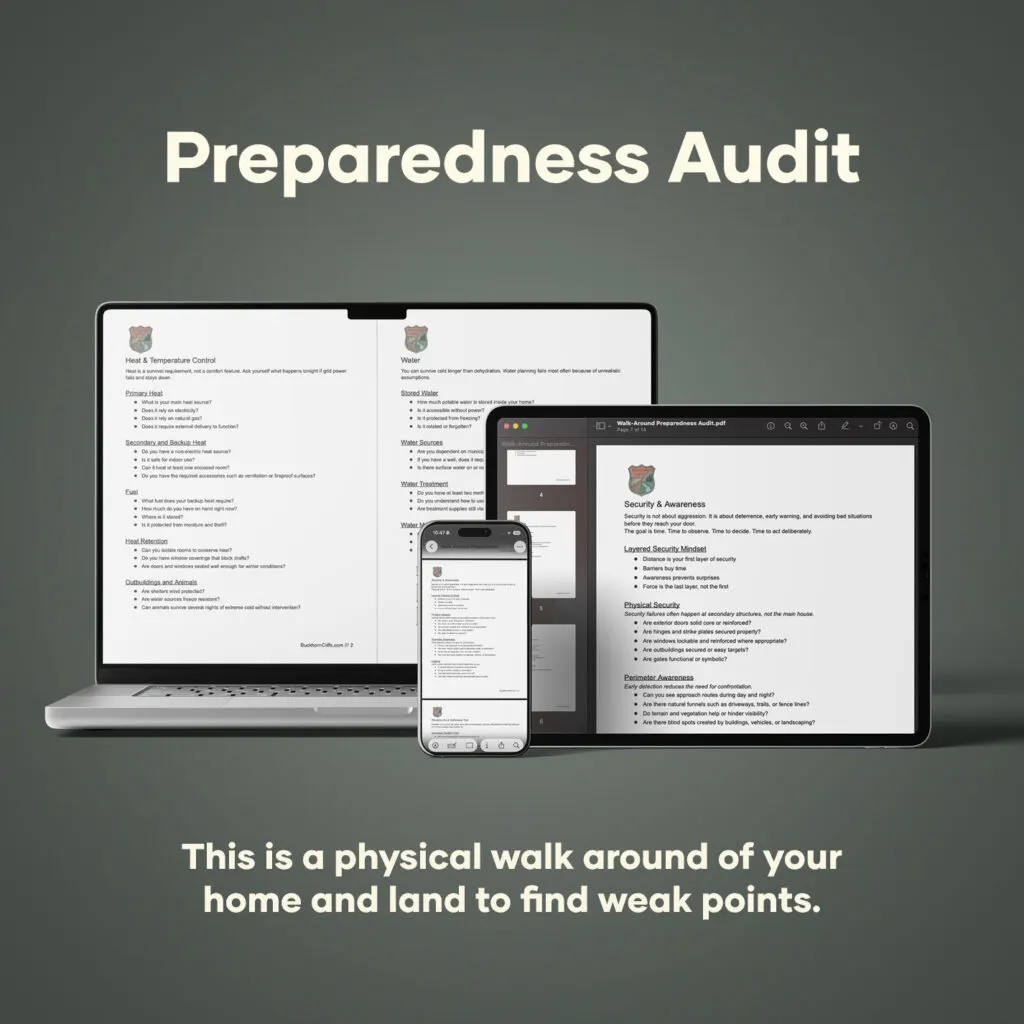
This post is designed to be used physically. Walk your house. Walk your land. Open doors. Look at systems. Touch equipment. Take notes.
You are not looking for perfection. You are looking for weak points.
There is a PDF download available for $5. This gives you a printable, walk-around checklist you can use to identify preparedness gaps in your home and on your land, and revisit seasonally as your setup changes.
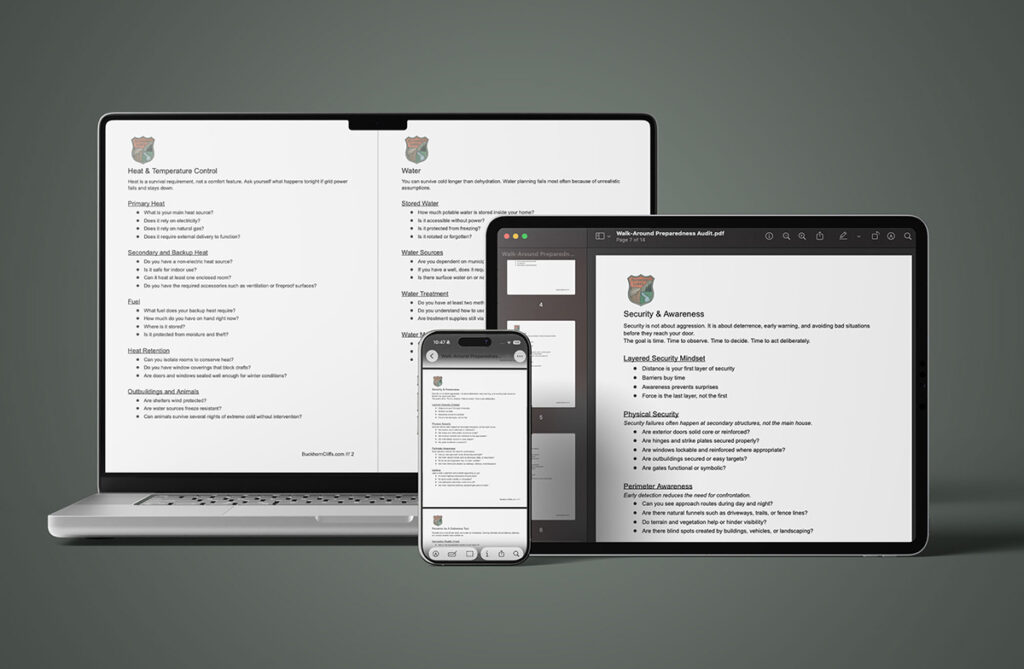
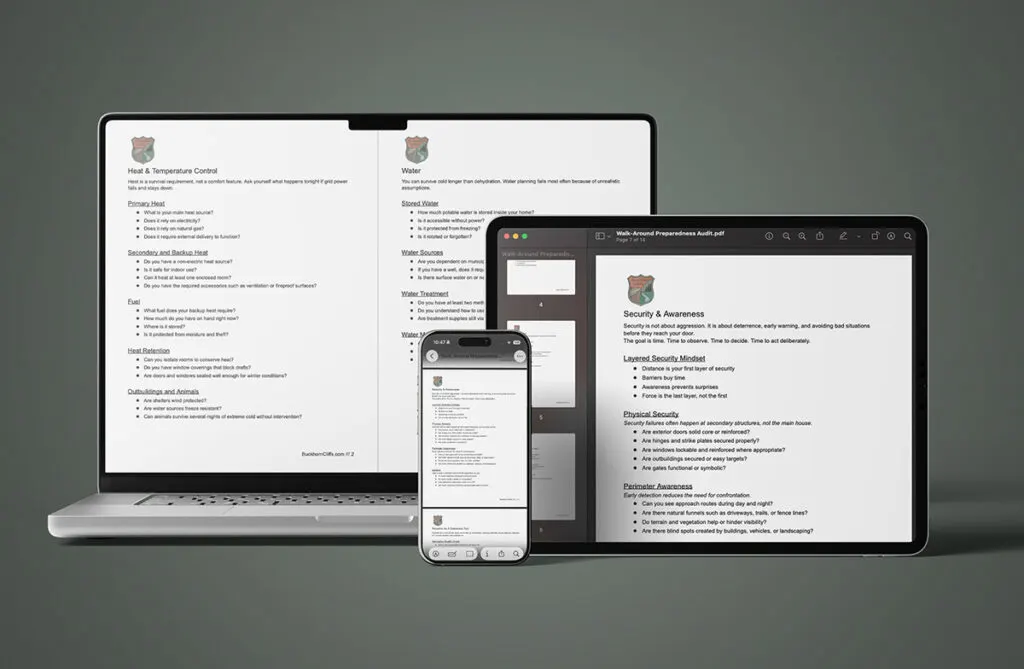
This PDF download is also available to subscribers. Available on Instagram, YouTube, TikTok, and Facebook for $2.99 per month. Click on whichever platform is your favorite to join.
When you subscribe: you get PDF downloads, full video instructions, and detailed recipes for long lasting chemical compounds and long shelf life food items.
HEAT AND TEMPERATURE CONTROL
Heat is a survival requirement, not a comfort feature.
Ask yourself what happens tonight if grid power fails and stays down.
Primary Heat
- What is your main heat source?
- Does it rely on electricity?
- Does it rely on natural gas?
- Does it require external delivery to function?
Secondary and Backup Heat
- Do you have a non electric heat source?
- Is it safe for indoor use?
- Can it heat at least one enclosed room?
- Do you have the required accessories such as ventilation or fireproof surfaces?
Fuel
- What fuel does your backup heat require?
- How much do you have on hand right now?
- Where is it stored?
- Is it protected from moisture and theft?
Heat Retention
- Can you isolate rooms to conserve heat?
- Do you have window coverings that block drafts?
- Are doors and windows sealed well enough for winter conditions?
Outbuildings and Animals
- Are shelters wind protected?
- Are water sources freeze resistant?
- Can animals survive several nights of extreme cold without intervention?
WATER
You can survive cold longer than dehydration.
Water planning fails most often because of unrealistic assumptions.
Stored Water
- How much potable water is stored inside your home?
- Is it accessible without power?
- Is it protected from freezing?
- Is it rotated or forgotten?
Water Sources
- Are you dependent on municipal water?
- If you have a well, does it require power?
- Is there surface water on or near your property?
Water Treatment
- Do you have at least two methods to make water safe?
- Do you understand how to use them correctly?
- Are treatment supplies still viable?
Water Movement
- Can you move water without pumps?
- Do you have containers that can be carried by hand?
- Can you access water during winter conditions?
FOOD
Food storage is not food readiness.
Calories, preparation, and continuity matter.
Stored Food
- How many days of food do you actually have?
- Is it calorie dense or filler?
- Do you know how to prepare it without modern appliances?
Cold Storage Dependency
- What food spoils first if power fails?
- Do you have a plan to cook or preserve it quickly?
- Can you realistically consume it in time?
Cooking Capability
- What is your primary cooking method?
- What is your backup?
- What fuel does it require?
- Can it be used indoors safely?
Food Production
- Do you produce any food yourself?
- Is it seasonal?
- What happens outside that season?
POWER AND ENERGY
Preparedness is not about running everything. It is about running what matters.
Immediate Power Loss
- What stops working instantly?
- What fails within hours?
- What fails after several days?
Backup Power
- Do you have batteries, a generator, solar, or a hybrid system?
- How long can it realistically run critical loads?
- Do you know the actual runtime, not the advertised one?
Fuel and Charging
- How is backup power fueled?
- Is that fuel stored safely?
- Can devices be charged without grid power?
Critical Loads
- Refrigeration
- Medical equipment
- Communications
- Lighting
MEDICAL AND HYGIENE
Emergencies rarely happen in clean conditions.
First Aid
- Do you have supplies for minor injuries?
- Do you have supplies for trauma?
- Do you know how to use what you own?
Medications
- Does anyone rely on daily prescriptions?
- How many days of supply do you actually have?
- Are medications stored correctly?
Hygiene
- What happens if plumbing stops?
- How will waste be handled?
- Do you have hygiene supplies that do not rely on running water?
SECURITY AND AWARENESS
Security is not about aggression. It is about deterrence, early warning, and avoiding bad situations before they reach your door.
The goal is time. Time to observe. Time to decide. Time to act deliberately.
Layered Security Mindset
- Distance is your first layer of security
- Barriers buy time
- Awareness prevents surprises
- Force is the last layer, not the first
Physical Security
- Are exterior doors solid core or reinforced?
- Are hinges and strike plates secured properly?
- Are windows lockable and reinforced where appropriate?
- Are outbuildings secured or easy targets?
- Are gates functional or symbolic?
Security failures often happen at secondary structures, not the main house.
Perimeter Awareness
- Can you see approach routes during day and night?
- Are there natural funnels such as driveways, trails, or fence lines?
- Do terrain and vegetation help or hinder visibility?
- Are there blind spots created by buildings, vehicles, or landscaping?
Early detection reduces the need for confrontation.
Lighting
- Is exterior lighting independent of grid power?
- Do lights create visibility or silhouettes?
- Can lighting be selectively turned on or off?
- Are there handheld and head mounted light options inside?
Light is both a deterrent and a liability depending on use.
Firearms as a Defensive Tool
Firearms are a tool of last resort, not a plan by themselves.
Owning a firearm without training, planning, and context creates false confidence.
Ownership Reality Check
- Who in the household is trained to use firearms?
- Who is not?
- Who should never have access?
- Are firearms stored securely yet accessible if needed?
Role Definition
- Who is responsible for defense?
- Who is responsible for communication?
- Who is responsible for children, elderly, or animals?
Defense planning fails when everyone assumes someone else will act.
Firearm Selection and Readiness
This is not about collecting equipment. It is about suitability.
- Are firearms appropriate for defensive use, not just sporting?
- Are they reliable and tested?
- Are they zeroed and maintained?
- Are magazines, ammunition, and spare parts available?
A defensive firearm that is not maintained is not a defensive firearm.
Ammunition and Sustainment
- Do you have enough ammunition for training and emergencies?
- Is it stored safely and protected from moisture?
- Is it consistent with your firearms?
- Is defensive ammunition clearly separated from training rounds?
Shortages do not announce themselves ahead of time.
Safe Handling and Legal Awareness
- Does everyone understand safe handling rules?
- Are you familiar with local and state laws?
- Do you understand use of force boundaries?
- Have you planned how to avoid legal mistakes under stress?
Ignorance does not protect you after the fact.
Defensive Planning Inside the Home
- Are there safe rooms or defensible positions?
- Can doors be locked quickly?
- Is cover available or only concealment?
- Do family members know where to go during an emergency?
Movement without a plan creates chaos.
Training and Practice
- Are skills practiced or assumed?
- Do you train under stress?
- Do you practice communication, not just shooting?
- Is training ongoing or a one time event?
Tools do not create competence. Practice does.
Avoidance and De Escalation
The best defensive encounter is the one that never happens.
- Do you have plans to avoid contact?
- Can you delay rather than confront?
- Can you disengage safely?
- Do you understand when to retreat?
Winning is staying alive and out of trouble, not proving a point.
Community and Mutual Awareness
Isolation increases risk.
- Do you know your neighbors?
- Do you have informal agreements for mutual observation?
- Can information be shared quickly?
Prepared communities are harder targets than prepared individuals.
After Action Considerations
- What happens immediately after a defensive event?
- Who calls for help?
- Who renders aid?
- What information is shared and what is not?
Planning must include what happens after the incident, not just during it.
COMMUNICATION
Information loss increases panic and bad decisions.
Internal Communication
- Does everyone know the plan?
- Are roles clear?
- Are instructions written down?
External Communication
- What happens if cellular service fails?
- Do you have radio capability?
- Do you have power for communication devices?
Information Intake
- Weather updates
- Emergency alerts
- Situational awareness beyond social media
TRANSPORTATION AND MOBILITY
Leaving may be impossible. Staying may require movement.
Vehicle Readiness
- Is fuel above half a tank?
- Do you store fuel safely?
- Is the vehicle mechanically reliable?
Access Routes
- What roads are required to leave?
- What happens if they are blocked?
- Are there seasonal limitations?
On Foot
- Can you move essential supplies without a vehicle?
- Do you have footwear and packs capable of carrying weight?
TOOLS AND REPAIR
The ability to fix problems prevents escalation.
Basic Repairs
- Plumbing tools
- Electrical tools
- Mechanical tools
- Consumables such as fasteners, sealants, and tape
Manual Capability
- Can you operate without power tools?
- Do you own hand tools that cover core tasks?
Land Maintenance
- Drainage
- Fencing
- Tree and debris management
ANIMALS AND LAND
If you have animals, they multiply responsibility.
Feed
- How many days of feed are stored?
- Is it protected from moisture and pests?
Water
- Is water accessible in freezing conditions?
- Does delivery rely on electricity?
Shelter
- Can animals survive severe weather without intervention?
- Are structures sound?
Land Risks
- Fire exposure
- Flooding
- Erosion
- Access during storms
SKILLS AND KNOWLEDGE
Skills weigh nothing and cannot be taken from you.
Practical Skills
- Fire
- Water treatment
- Food preparation
- First aid
- Repair
Documentation
- Paper copies of plans
- Reference materials
- Manuals for equipment
Training Gaps
- Supplies owned but not understood
- Skills assumed but never practiced
FINAL PRIORITIZATION
Now review your notes.
- Identify single points of failure
- Fix low cost, high impact gaps first
- Address life safety before comfort
- Revisit this audit seasonally
Preparedness is not about fear or hoarding. It’s about understanding your systems before stress reveals their weaknesses.
Walk your ground. Fix the gaps. Then repeat.
Pin it

Janet
Saturday 7th of February 2026
Thank You so much for all the time you put into producing this for us. I have learnt so much following you. I appreciate your ideas.
Rob Benson
Sunday 8th of February 2026
Thank you!
Debbie
Thursday 8th of January 2026
Thank for this list. I appreciate the tips you have been sharing on your YT channel.
Rob Benson
Friday 9th of January 2026
You're welcome, and thank you!