Quick facts
- ParticipantsOver 7,500
- Took 3+ actions83 percent (57 percent in 2023)
- High preparedness efficacy32 percent
- Top barrierCost, 26 percent
- Top worryLosing access to water, 67 percent
- Expect help from family or friends71 percent
The 2024 FEMA National Household Survey reveals a complex but encouraging picture of how Americans are preparing for disasters. With over 7,500 participants from every state and U.S. territory, the data offers insight into what people are doing right, where they are falling short, and what needs to change.
Preparedness Is on the Rise
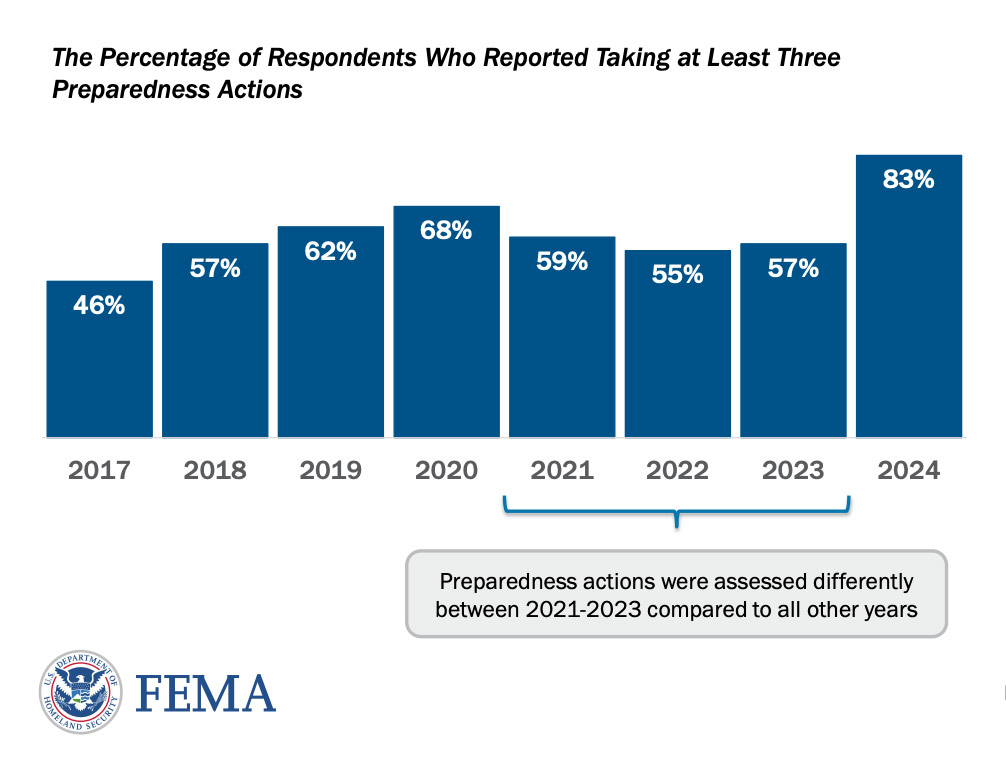
- 83 percent of Americans reported taking at least three preparedness actions, a large jump from 57 percent in 2023.
- Only 32 percent feel confident in both their ability to prepare and that it would make a significant difference.
- Cost was the top barrier to taking action, reported by 26 percent of respondents.
Why People Prepare
- 44 percent said the primary reason for preparing was to keep themselves and their family safe.
- 30 percent said they worried about a disaster in the past year, but many still hadn't taken action.
- Health and financial stress topped the list of general concerns, followed by fear of being affected by a disaster.
What People Worry About Losing Access To
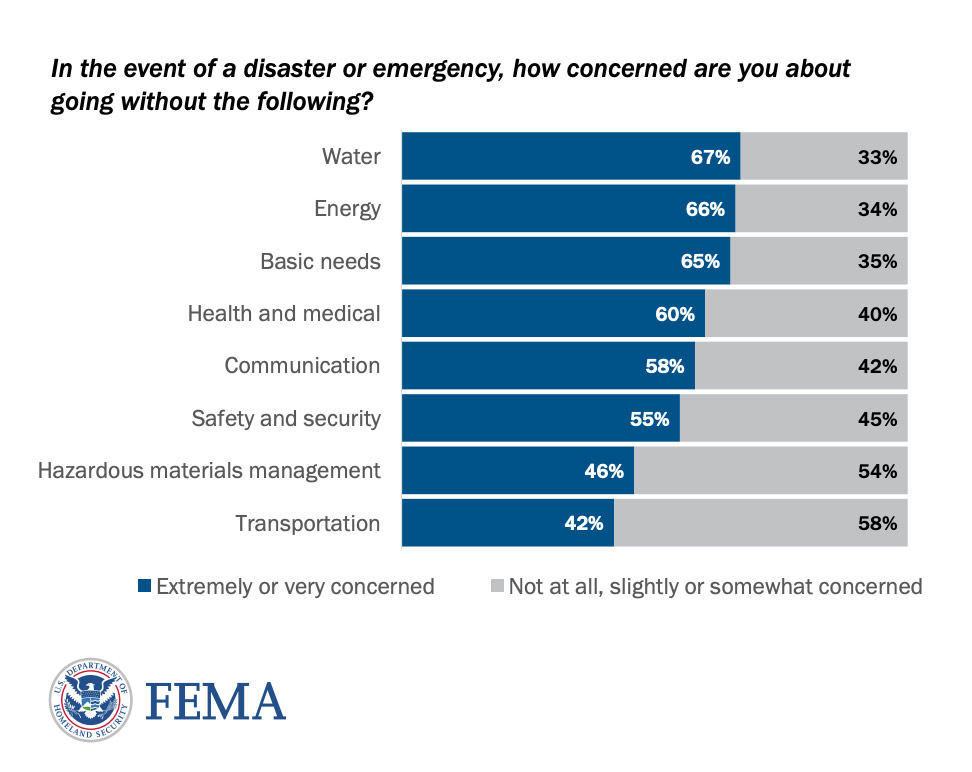
- 67 percent were very concerned about losing access to water.
- 66 percent said electricity.
- 65 percent said basic needs like food, shelter, and medical support.
Who Do People Expect to Help?
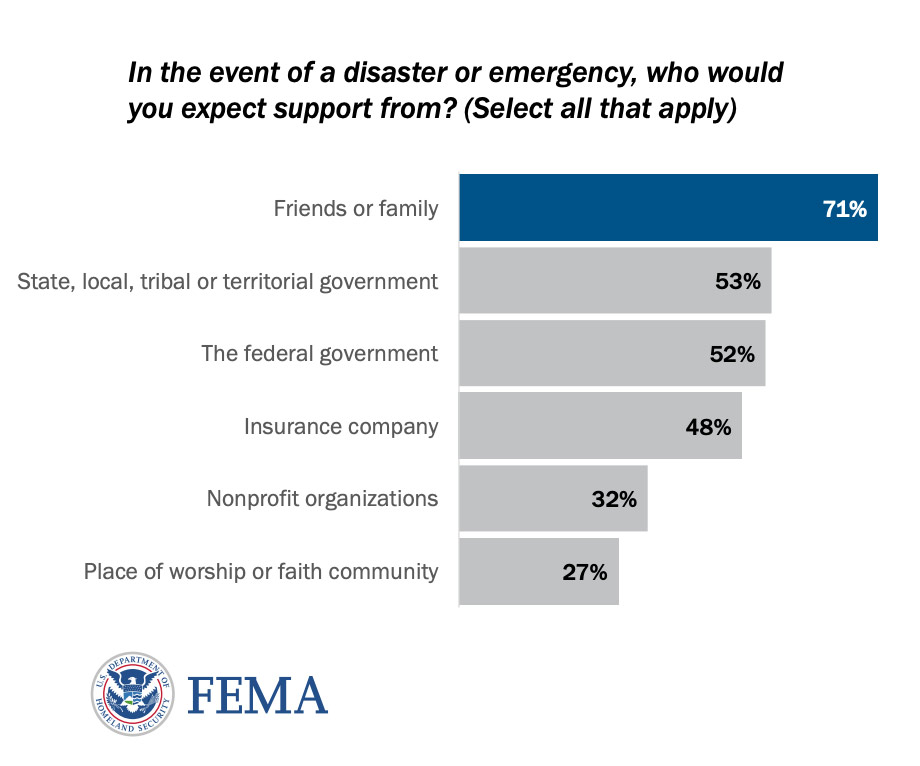
- 71 percent expect help from family or friends.
- 52 percent expect support from the federal government.
- The top needs people anticipate after a disaster include food, water, temporary shelter, and first aid.
Preparedness by Demographics Race and Ethnicity
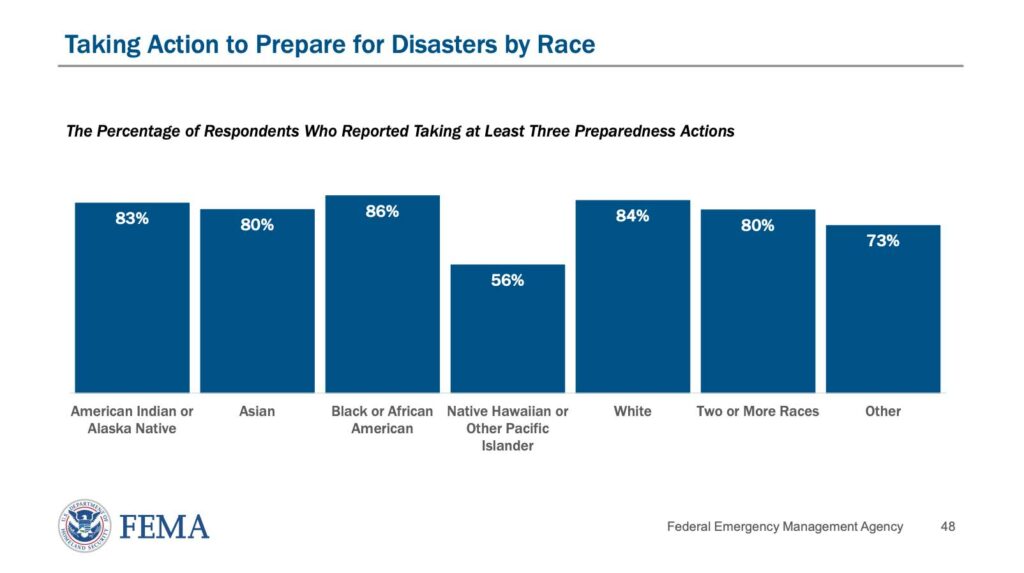
| Group | Took 3+ Actions | Prepared Over 1 Year |
|---|---|---|
| White | 84 percent | 30 percent |
| Black or African American | 86 percent | 24 percent |
| Hispanic or Latino | 73 percent | 23 percent |
| Asian | 80 percent | 21 percent |
| American Indian or Alaska Native | 83 percent | 30 percent |
| Native Hawaiian or Pacific Islander | 56 percent | 26 percent |
Age Groups
- Those 60 and older are more likely to have been prepared for more than a year (42 percent).
- Younger adults are more likely to say they intend to prepare in the future but haven’t taken steps yet.
Income Level
- Only 35 percent of lower-income individuals had money saved for emergencies.
- Just 39 percent had any form of property insurance compared to 82 percent among higher-income groups.
Homeownership
- Homeowners are far more prepared than renters.
- 87 percent of homeowners had insurance versus 43 percent of renters.
- 73 percent of homeowners had emergency supplies compared to 60 percent of renters.
Where People Get Their Preparedness Info
- 78 percent had seen or heard preparedness info in the past year.
- Top sources were the internet (45 percent), social media (36 percent), and TV (35 percent).
- Very few people received information on how to help neighbors or get involved in their community.
Preparedness Confidence Is Low
- Just 32 percent scored high on what FEMA calls preparedness efficacy: confident they can prepare and convinced that preparing would make a real difference.
- Those with past disaster experience or who had access to information were more likely to feel capable.
Top Barriers to Being Ready
- 26 percent said it costs too much.
- 25 percent said they didn’t know what to do.
- 23 percent said they hadn’t had time.
What It Means
Preparedness is improving, but there are still gaps. Confidence is low, and affordability continues to be a major obstacle. Renters and low-income households lag behind in key areas like insurance coverage and emergency savings.
This survey shows the need for better outreach, community-based education, and practical, low-cost ways for everyone to get ready.
Take the Next Step: Build Your Own Self Managed Insurance Plan
Reading the stats is one thing. Acting on them is what makes the difference. If you're unsure where to start, I’ve created a foundational guide to walk you through the process of becoming more self-sufficient, step by step.
This is your reference guide to creating a SELF MANAGED INSURANCE PLAN. It’s a proactive survival strategy that helps you prepare before disaster strikes. This page covers the skills, supplies, and systems needed to manage risk, protect your family, and stay independent when outside help is unavailable.
Learn more and start building your plan today.
Questions this answers
Tap a question for the short answer.
How prepared are americans for disasters?
Better than before, but not confident. In FEMA's 2024 survey, 83 percent reported taking at least three preparedness actions, up from 57 percent in 2023. Only 32 percent scored high on preparedness efficacy: confident they can prepare and convinced that preparing would make a real difference.
What did the fema 2024 national household survey find?
With over 7,500 participants, it found 83 percent took at least three preparedness actions, up from 57 percent in 2023, yet only 32 percent scored high on preparedness efficacy. Cost was the top barrier at 26 percent, water was the top worry at 67 percent, and 71 percent expect help from family or friends.
What is the biggest barrier to getting prepared?
Cost. In the survey, 26 percent said preparing costs too much, 25 percent said they did not know what to do, and 23 percent said they had not had time.
What do people worry about losing in a disaster?
Water tops the list, with 67 percent very concerned about losing access to it. Electricity follows at 66 percent, and 65 percent named basic needs like food, shelter, and medical support.
Are homeowners more prepared than renters?
Yes, by a wide margin. In the survey, 87 percent of homeowners had insurance versus 43 percent of renters, and 73 percent of homeowners had emergency supplies compared to 60 percent of renters.
Keep going
Related to this
Membership · $49.95 per year
There is a lot more behind the lock
Every recipe and resource from the Prepper's Chemical Survival Guide, all six field guides to read here and download, the full audit and logbook, all twelve reference charts, and no ads.
My Manual · included
Build your own field manual
The most useful thing a membership gives you. Save any page on this site, recipes, charts, and whole field guides included. Arrange them in the order you want, name it, and print one manual with a cover and contents, or keep it as a PDF that opens with no signal.
- It works when this site does not
- Only your pages
- Anyone in the house can use it
- One current copy, not a pile of printouts
- The house binder
- A copy for the bug-out bag or truck
- A copy for family
- An offline PDF
Stay Ready
New entries, updates, and useful instruction.
Stay one step ahead on your preparedness journey.