Quick facts
- Self-sufficiency targetAt least a week
- WaterSweden: three liters per person per day. I store 1 gallon per person per day
- CashEnough for at least a week, small denominations
- Food
- Non-perishable
- energy-dense
- plus high-fat options
- InformationBattery or solar-powered radio, written contact numbers
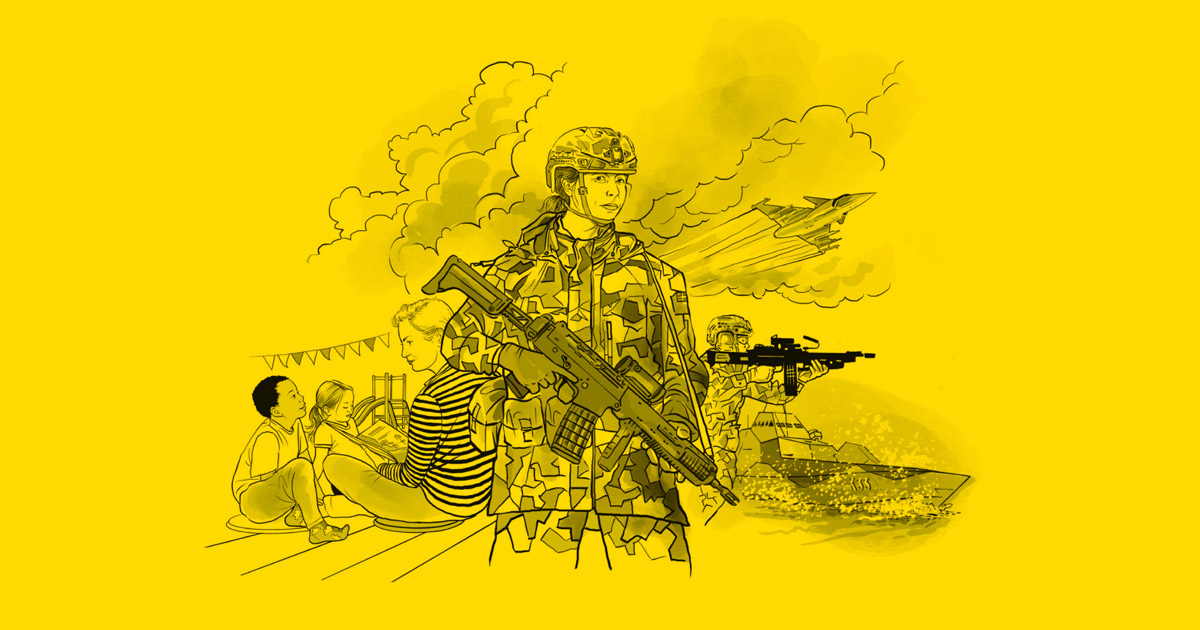
In November 2024, the Swedish government began sending an updated pamphlet titled In Case of Crisis or War to every household in the country. It’s a practical, straightforward guide that highlights the importance of personal and collective preparedness during emergencies.
While it’s tailored to Sweden’s unique context, the principles outlined are universal.
Below is a recap of the key recommendations, paired with insights on how you can adapt them to your preparedness strategies.
1. Home Preparedness is Key
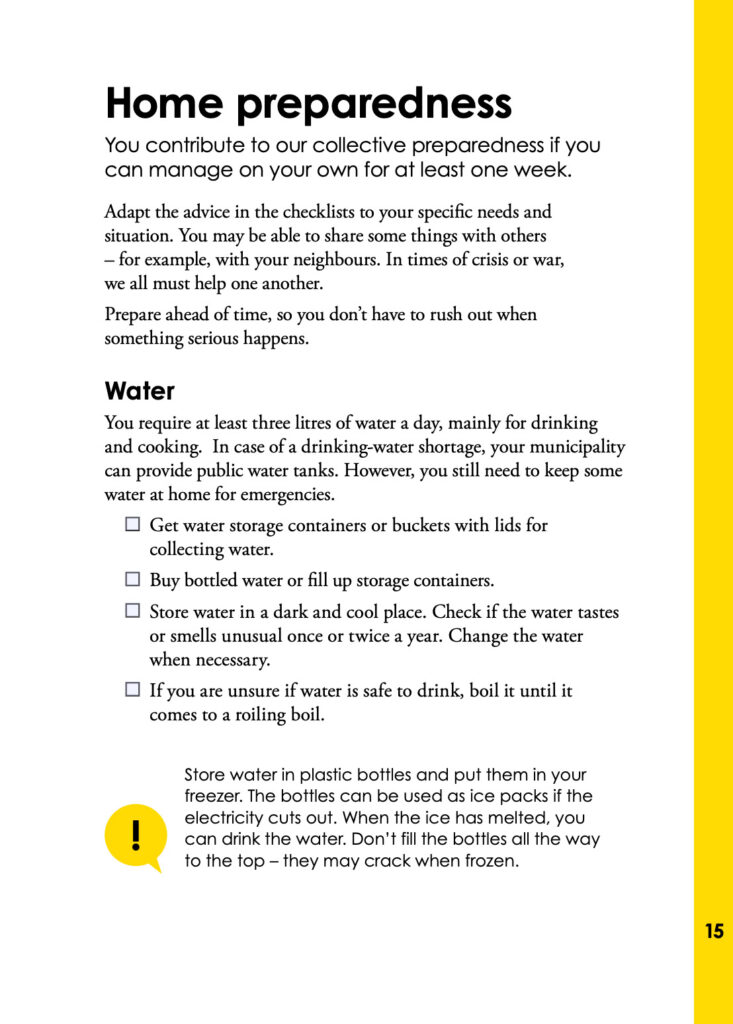
The Swedish government encourages individuals to be self-sufficient for at least a week. This starts with creating a home stocked with essentials:
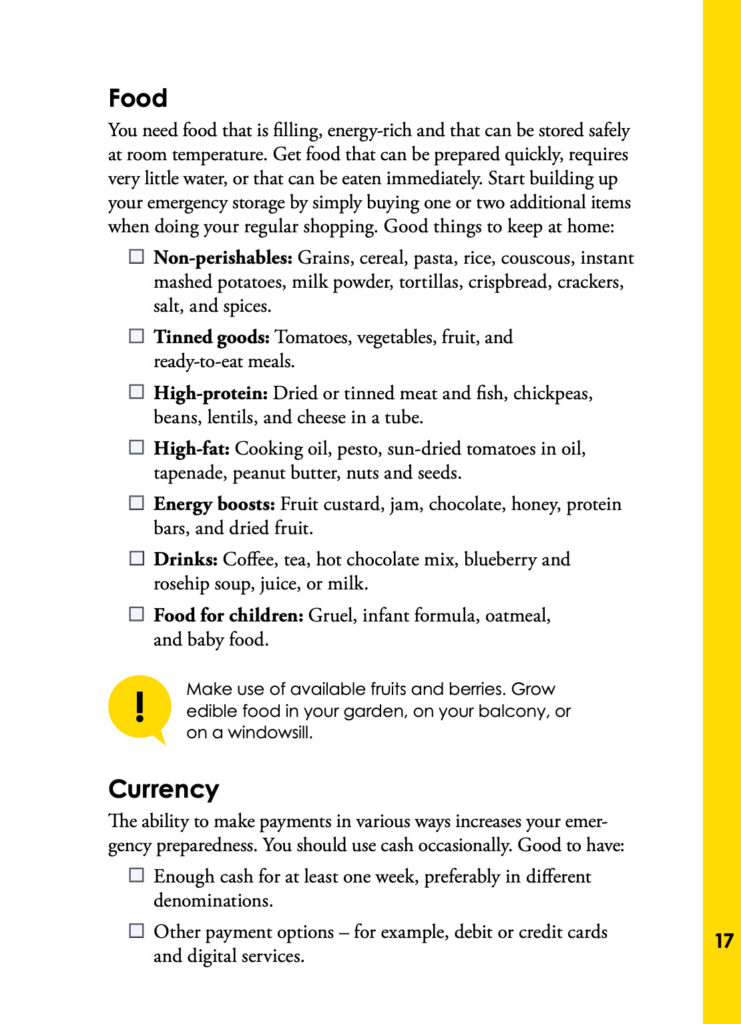
The overarching message? Stock up ahead of time to avoid scrambling during a crisis.
Related: Why the Royal Berkey Is a Must-Have for Preparedness
2. Communication and Information
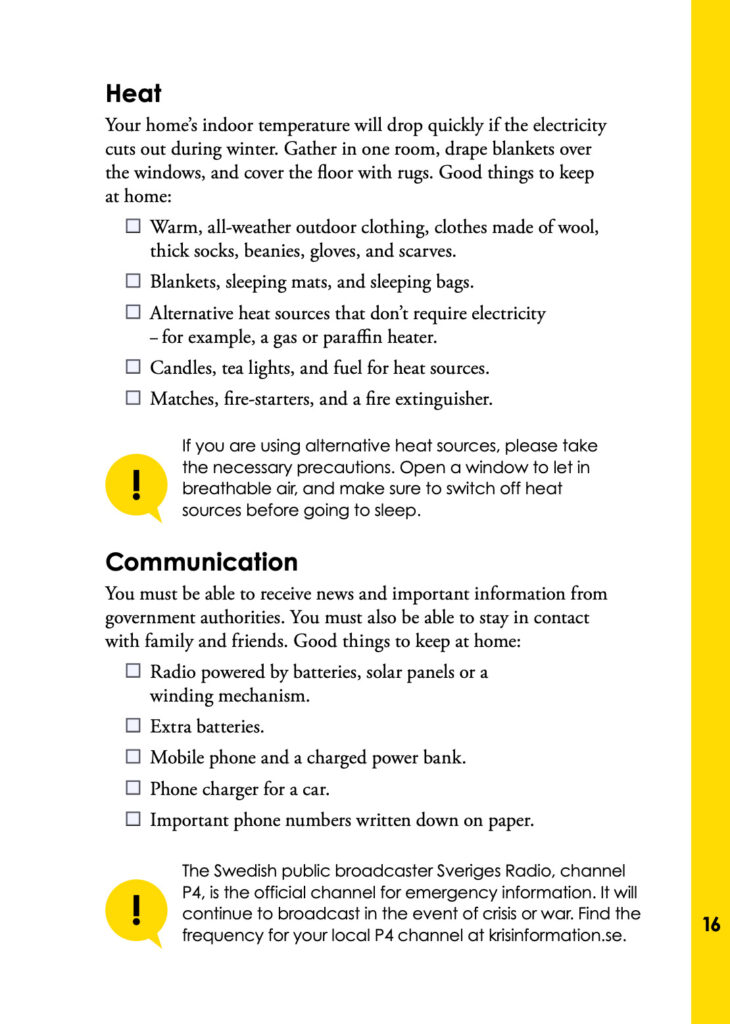
In emergencies, staying informed is critical. Sweden’s approach emphasizes the need for multiple communication methods to ensure access to vital updates:
- Keep a battery- or solar-powered radio to tune in to emergency broadcasts.
- Store extra batteries, a fully charged power bank, and written copies of important contact numbers in case digital systems fail.
This aligns with the principle of redundancy, always having backups for your most critical tools.
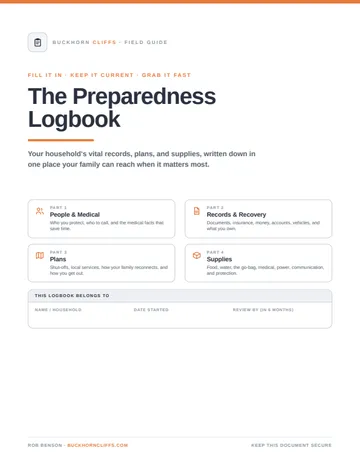
Read next: The Preparedness Logbook
Read next: Communicate without cell service or internet (GMRS radios)
Free download
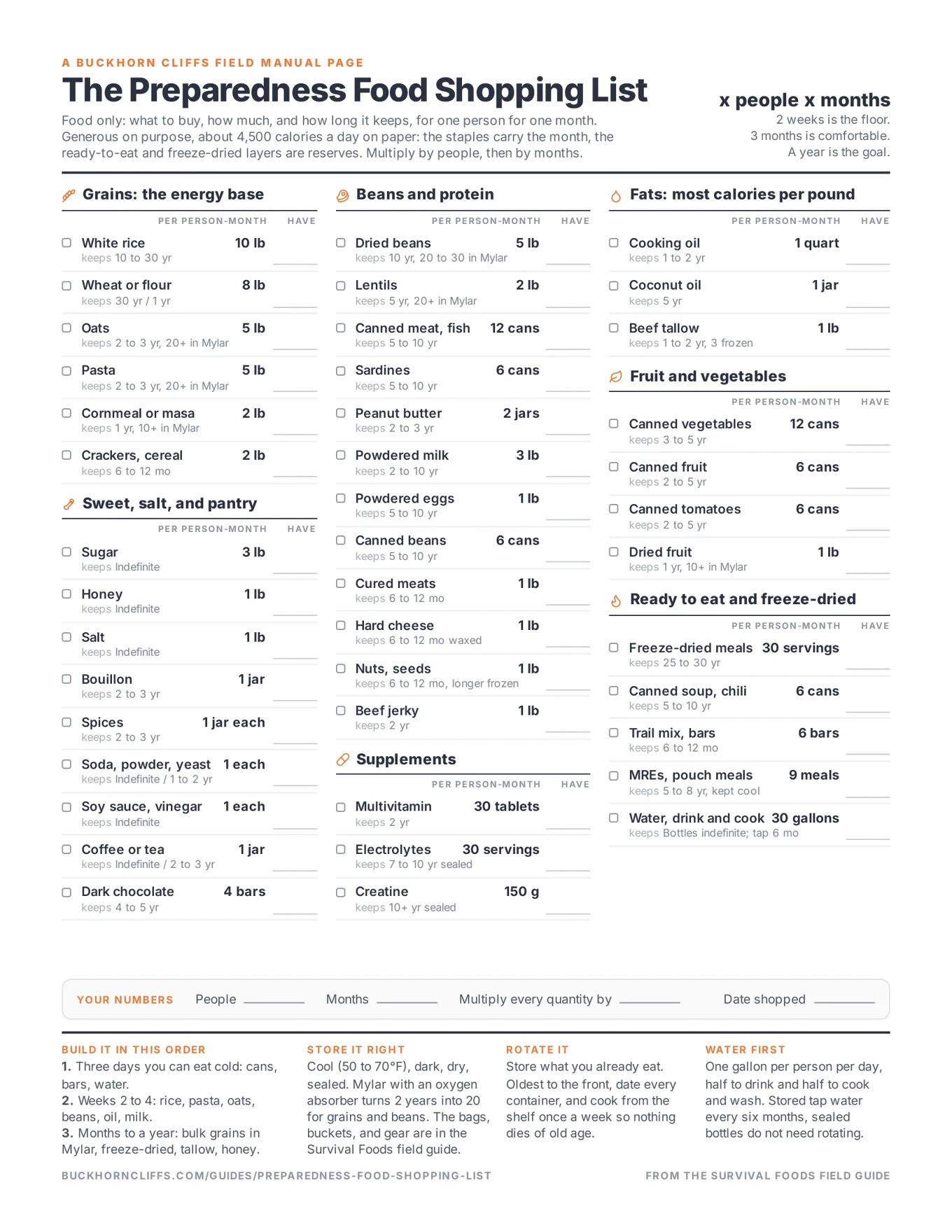
Get the one-page food shopping list
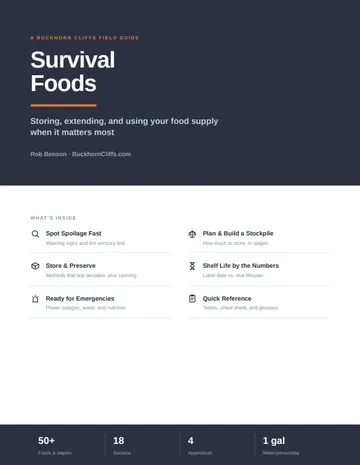
What to store, how much of it for one person for one month, and how long it keeps. One page with checkboxes, built from the Survival Foods field guide. Print it, multiply by your people and months, and take it to the store.
The PDF comes by email, with my newsletter now and then. Already on the list? You still get it. Read the full page.
3. Financial Readiness
The Swedish government advises having enough cash on hand to last at least a week. Digital payments run your daily life, and cash becomes invaluable when electronic systems go down. Store small denominations for flexibility.
4. Evacuation Readiness
Preparedness isn’t just about staying put; it’s also about knowing when and how to leave safely. The pamphlet recommends having a go-bag ready with essentials like food, water, warm clothing, ID, and medications. Additionally, identify nearby shelters or safe zones and map out evacuation routes in advance.
5. Civil Defense and Community Resilience
One unique aspect of Sweden’s approach is their emphasis on civil defense. The country maintains shelters designed to protect residents from bomb fragments, chemical threats, and radioactive fallout. They also encourage community collaboration, working with neighbors to share resources and strengthen local preparedness networks.
In your context, while you may not have formal civil defense shelters, you can focus on identifying safe spaces in your home or community that offer similar protection.
6. Digital and Psychological Preparedness
Sweden highlights the risk of disinformation and cyberattacks during crises. To combat this:
- Use strong passwords and avoid clicking suspicious links.
- Verify news from multiple reliable sources before sharing it.
Additionally, the pamphlet addresses psychological resilience, encouraging people to stay connected with loved ones, maintain healthy routines, and limit overexposure to distressing news. These practices can help manage anxiety and ensure mental clarity during emergencies.
Related: Medications you can order online
What You Can Learn
The Swedish government’s In Case of Crisis or War guide reinforces the importance of proactive, practical preparation. Whether it’s stocking your home with essentials, planning evacuation routes, or staying informed through trusted channels, the message is clear: preparedness is a shared responsibility.
And as you know, I'm committed to helping you stay ready for anything. Whether you’re facing a natural disaster, a societal disruption, or something as serious as war, the principles of preparedness remain the same. Start building your self managed insurance plan today.
Stay prepared, stay resilient, and as always, be ready for everything.
Questions this answers
Tap a question for the short answer.
What does sweden tell its citizens to stockpile?
The pamphlet calls for a week of essentials: at least three liters of water per person per day, non-perishable, energy-dense food like rice, beans, canned vegetables and protein bars plus high-fat items such as nuts, peanut butter and cooking oil. It also lists warm clothing, blankets, sleeping bags, non-electric heat, a battery or solar radio, and cash.
How much water should I store per person per day?
Sweden's guidance is at least three liters per person per day for drinking and cooking. I store one gallon per person per day, half for drinking and half for hygiene, and aim for at least a two-week supply. Use durable containers, rotate the water regularly, and consider freezing some bottles as ice packs.
How much cash should I keep on hand for an emergency?
The Swedish advice is enough cash to last at least a week. Keep it in small denominations for flexibility, because cash becomes invaluable when electronic payment systems go down.
How long should a household be able to be self-sufficient?
The Swedish government encourages every household to be self-sufficient for at least a week. That means having water, food, heat and shelter stocked ahead of time so you are not scrambling once a crisis starts.
What is the swedish in case of crisis or war pamphlet?
In Case of Crisis or War is a practical preparedness guide the Swedish government distributed to every household in the country. It covers home supplies for at least a week, backup communication, cash, evacuation go-bags, civil defense shelters and community cooperation, plus guarding against disinformation and looking after psychological resilience.
Keep going
Related to this
Membership · $49.95 per year
There is a lot more behind the lock
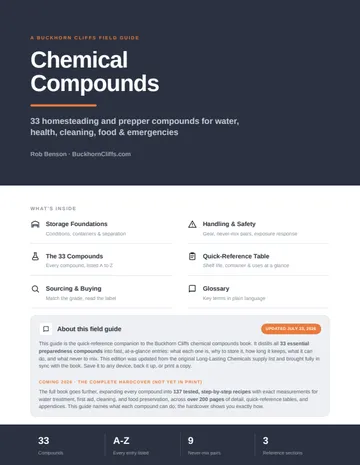
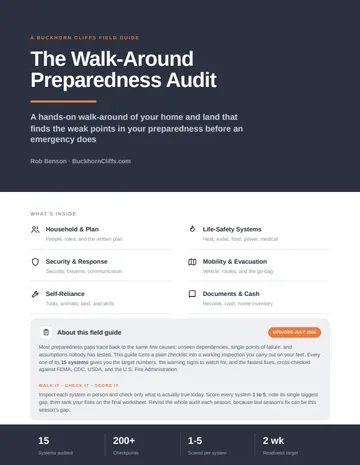
Every recipe and resource from the Prepper's Chemical Survival Guide, all six field guides to read here and download, the full audit and logbook, all twelve reference charts, and no ads.
My Manual · included
Build your own field manual
The most useful thing a membership gives you. Save any page on this site, recipes, charts, and whole field guides included. Arrange them in the order you want, name it, and print one manual with a cover and contents, or keep it as a PDF that opens with no signal.
- It works when this site does not
- Only your pages
- Anyone in the house can use it
- One current copy, not a pile of printouts
- The house binder
- A copy for the bug-out bag or truck
- A copy for family
- An offline PDF
Stay Ready
New entries, updates, and useful instruction.
Stay one step ahead on your preparedness journey.