Quick facts
- NylonStrongest, stretches to absorb shock, loses 10 to 15 percent of its strength wet
- Polyester
- Low stretch
- best in sun
- same strength wet or dry
- Polypropylene
- Floats
- cheapest
- weakest
- breaks down fastest in sunlight
- Working loadAbout one tenth of the rated break strength for general use
- Stock100 feet of 1/2 inch nylon, 200 feet of 3/8 inch polyester, 100 feet of 3/8 inch poly, 200 feet of paracord
- NeverHardware store rope for holding a person; that takes certified life-safety rope
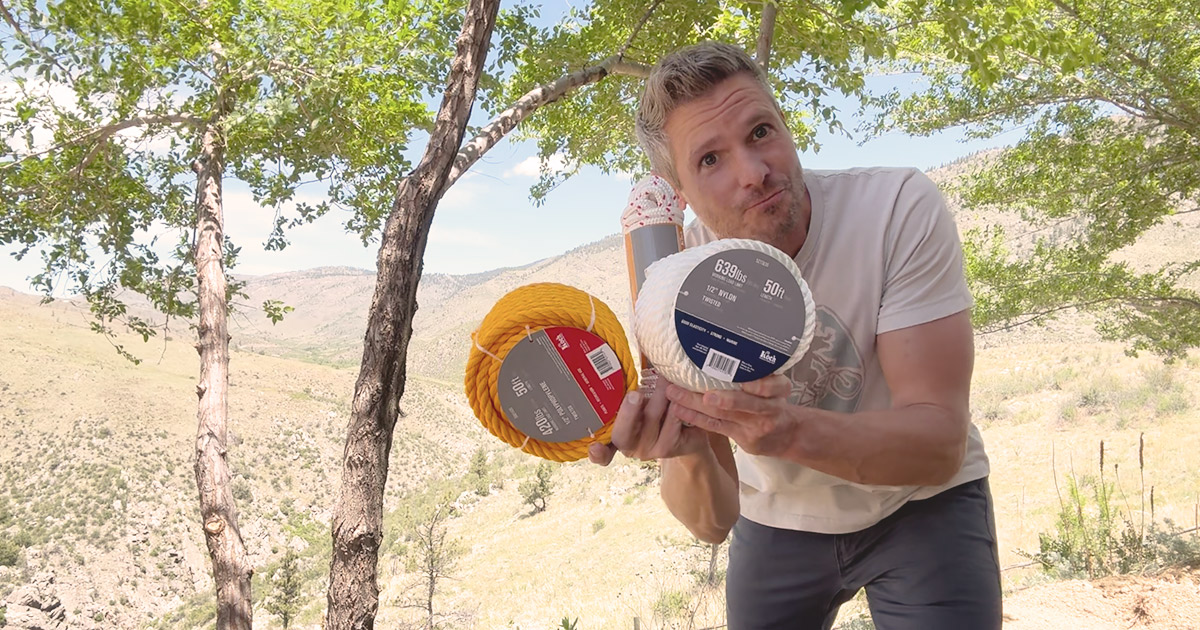
Every hardware and ranch store sells the same three ropes, and most people buy whichever one is cheapest for whatever they are doing that day. The three are not interchangeable. One stretches, one does not, one floats; one shrugs off sunlight and one falls apart in it. Buy the right one for the job and it lasts years; buy the wrong one and it sags, rots in the sun, or lets go under a jerk. This page is the three ropes compared, the job each one is for, how much of each to keep, and the specialty fibers that come up when you shop.
Strongest of the three. Stretches 15 to 30 percent before it breaks, which is what lets it absorb a jerk. Sinks. Loses 10 to 15 percent of its strength while wet. Good in sun. Melts around 450 to 500°F.
Nearly as strong as nylon, with very little stretch. Does not absorb water; same strength wet or dry. The best sun and abrasion resistance at the store. Sinks. Melts around 480°F.
Weakest and lightest. Floats. Does not absorb water and resists chemicals and mildew. Breaks down fast in sunlight and melts around 330°F, so it cannot take friction. Costs the least by far.
Nylon: for anything that jerks
Nylon rope, 1/2 inch three-strand or double braid
Hauling, towing, tie-outs, anchor linesA 1/2 inch three-strand nylon line breaks at roughly 5,000 to 6,000 pounds new and dry, and it stretches as it loads, which turns a jerk into a pull. That is why it is the rope for dock lines and anchor lines, for dragging a log or a stuck ATV at walking pace, for a tie-out that a large dog will hit at a run, and for a load that will shift. It absorbs water, so it gets heavier, stretches more and loses 10 to 15 percent of its strength while wet, then gets it back dry. It resists sun and abrasion well and outlasts polypropylene by years outdoors.
Two cautions. First, the stretch that makes nylon safe under shock is what makes it dangerous when it breaks: a loaded nylon line stores energy and snaps back. Stand clear of the line when towing, and drape a jacket or a blanket over the middle of it to kill the recoil. Second, no hardware store rope, nylon included, is rated for holding a person. Climbing, rappelling and rescue take certified life-safety rope with a known history.
Polyester: for anything that has to stay tight or live outside
Polyester rope, 3/8 inch three-strand or braid
Tarps, ridgelines, tie-downs, clotheslines, anything permanentPolyester gives up a little strength to nylon and gains everything else: it barely stretches, so a tarp ridgeline or a tie-down set tight in the morning is still tight at night; it does not absorb water, so rain does not change it; and it has the best sun resistance of any rope at the store, so a line left outside for a season is still a rope. It is the rope for tarp and tent guy lines, for a clothesline, for lashing a load that must not shift, for a permanent line on a gate, a well bucket or a flagpole, and for the trucker's hitch, because it holds the tension you put into it.
The low stretch cuts the other way under shock: a polyester line loaded with a jerk passes the whole jerk to whatever it is tied to. Use nylon for towing and tie-outs.
Polypropylene: for water and for cheap
Polypropylene rope, 3/8 inch, hollow braid or three-strand
Water, livestock, temporary jobs, anything that gets lost or cutPoly is lighter than water, so it floats where you can see it and grab it: throw lines, a line to a boat or a bucket, a swim area, a line across a creek. It does not absorb water or rot, it shrugs off manure and most chemicals, and it costs a fraction of the other two, which makes it the rope for fencing repairs, tying gates, temporary corrals, hay, and any job where the rope will get cut, lost or left. Handle it with gloves; the fibers are stiff and cut skin under load.
Its two weaknesses decide where it does not go. Sunlight breaks it down faster than any other rope; a poly line left outside for a summer can lose most of its strength while still looking fine, so store it in the shade and replace it on a schedule. And it melts at a low temperature, so it cannot take friction: never run poly over a fast-moving edge, and never use it where a rope slides under load.
How much a rope actually holds
The number on the package is the break strength: a new, dry rope, pulled straight, once. Nobody uses rope that way.
What to stock
- 100 feet of 1/2 inch nylon. towing at walking pace, hauling, tie-outs, shock loads
- 200 feet of 3/8 inch polyester. tarps, guy lines, tie-downs, clotheslines, permanent lines
- 100 feet of 3/8 inch polypropylene. water, livestock, temporary and disposable jobs, stored in the shade
- 200 feet of 550 paracord. everything small, from boot laces to a bear hang
- Recovery rope. Two kinetic recovery straps or a recovery rope with soft shackles for the truck; see the car kit
- Four ratchet straps. Rope is for the jobs straps cannot reach
- Chafe sleeve. Or old garden hose, to pad edges
Store rope coiled, dry, out of the sun, off a concrete floor. Whip or melt the ends so they do not unravel. Wash a muddy rope in a bucket of fresh water and dry it in the shade; grit inside the strands is a slow saw. The what to stock guide and the unconventional essentials kit put rope in the context of the rest of the supply.
The specialty fibers
Two families come up when you shop beyond the hardware store. They are sold under several brand names, but there are only two materials.
High modulus polyethylene. Stronger than steel wire at the same weight, almost no stretch, floats, and does not absorb water. Used for winch lines, sailboat rigging, hammock straps and ultralight guy lines. Expensive, slippery enough that knots slip and splices are used instead, and it melts at a low temperature, so it cannot take friction heat.
Very strong and does not melt; it chars at several hundred degrees, which is why fire departments and industry use it where heat is the problem. It hates sunlight and sharp bends, holds knots poorly, and sinks. Not a home supply rope.
For a home supply, nylon, polyester, polypropylene and paracord cover everything. A short length of Dyneema winch line is worth having if you own a winch, and that is the only place it earns its price.
Questions this answers
Tap a question for the short answer.
What is the difference between nylon and polyester rope?
Nylon is a little stronger and stretches a lot, which lets it absorb a shock load; that is why it is used for dock lines, anchor lines and recovery ropes. Polyester barely stretches, holds a set tension, resists sunlight better than anything else at the store, and is just as strong wet as dry. Nylon for anything that jerks; polyester for anything that has to stay tight or live outside.
What kind of rope floats on water?
Polypropylene. It is lighter than water, so a poly line stays on the surface where you can see it and grab it, which is why throw bags, ski ropes and swim area lines use it. Dyneema also floats. Nylon and polyester sink.
What is the strongest synthetic rope for heavy loads?
Of the three common ropes, nylon; a 1/2 inch three-strand nylon line breaks at roughly 5,000 to 6,000 pounds, polyester a little under that, polypropylene around 3,500 to 4,000. For serious loads at low weight, Dyneema (HMPE) is many times stronger than nylon at the same diameter, which is why winch lines and sailboat rigging use it. Whatever the rope, work it at about a tenth of the break strength.
What rope should I use for tarps and tents?
Polyester for ridgelines and guy lines that have to stay tight in sun and rain, or paracord for a light tarp where the lines are short. Nylon sags as it stretches and as it soaks up rain, so a nylon ridgeline needs retightening every morning. The taut-line hitch on the guy lines lets you take up slack without untying.
Does nylon rope lose strength when wet?
Yes, about 10 to 15 percent while it is wet, and it stretches more and gets stiffer as it dries. It gets the strength back when it dries. Polyester and polypropylene do not absorb water and keep their full strength wet.
What kinds of rope should I stock at home?
Four things. About 100 feet of 1/2 inch nylon for hauling, towing at walking pace, and anything that shock loads. About 200 feet of 3/8 inch polyester for tie-downs, clotheslines, tarps and anything that lives outside. About 100 feet of 3/8 inch polypropylene for water, livestock and cheap jobs, stored out of the sun. And 200 feet of 550 paracord for everything small. Add a set of ratchet straps for the truck; rope is for the jobs straps cannot reach.
How much weight can a rope hold?
The number printed on the package is the break strength of a new, dry rope pulled in a straight line. Knots cut it by a third to a half, a sharp bend over an edge cuts it more, and age, sun and wear take the rest. For general use, work the rope at about one tenth of its break strength: a 1/2 inch nylon rated at 5,700 pounds is a 500 pound working line. Never use any hardware store rope to hold a person.
What is dyneema rope used for?
Dyneema and Spectra are brand names for HMPE, a polyethylene fiber that is stronger than steel wire at the same weight, barely stretches, and floats. It is used for winch lines, sailboat halyards, hammock suspension and ultralight guy lines. It is expensive, it is slippery so knots slip and splices are preferred, and it melts at a low temperature, so it cannot take friction heat. Kevlar and Technora are aramids: heat resistant and strong, but they hate sunlight and sharp bends, so they are specialty ropes for fire and industry.
Keep going
Related to this
Membership · $49.95 per year
There is a lot more behind the lock
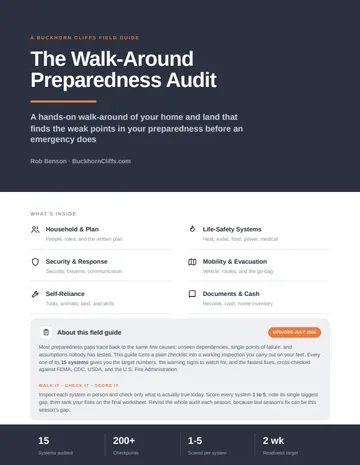
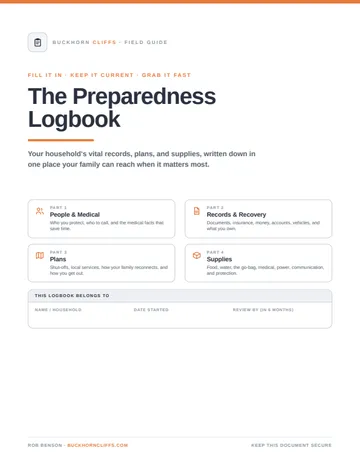
Every recipe and resource from the Prepper's Chemical Survival Guide, all six field guides to read here and download, the full audit and logbook, all twelve reference charts, and no ads.
My Manual · included
Build your own field manual
The most useful thing a membership gives you. Save any page on this site, recipes, charts, and whole field guides included. Arrange them in the order you want, name it, and print one manual with a cover and contents, or keep it as a PDF that opens with no signal.
- It works when this site does not
- Only your pages
- Anyone in the house can use it
- One current copy, not a pile of printouts
- The house binder
- A copy for the bug-out bag or truck
- A copy for family
- An offline PDF

Stay Ready
New entries, updates, and useful instruction.
Stay one step ahead on your preparedness journey.