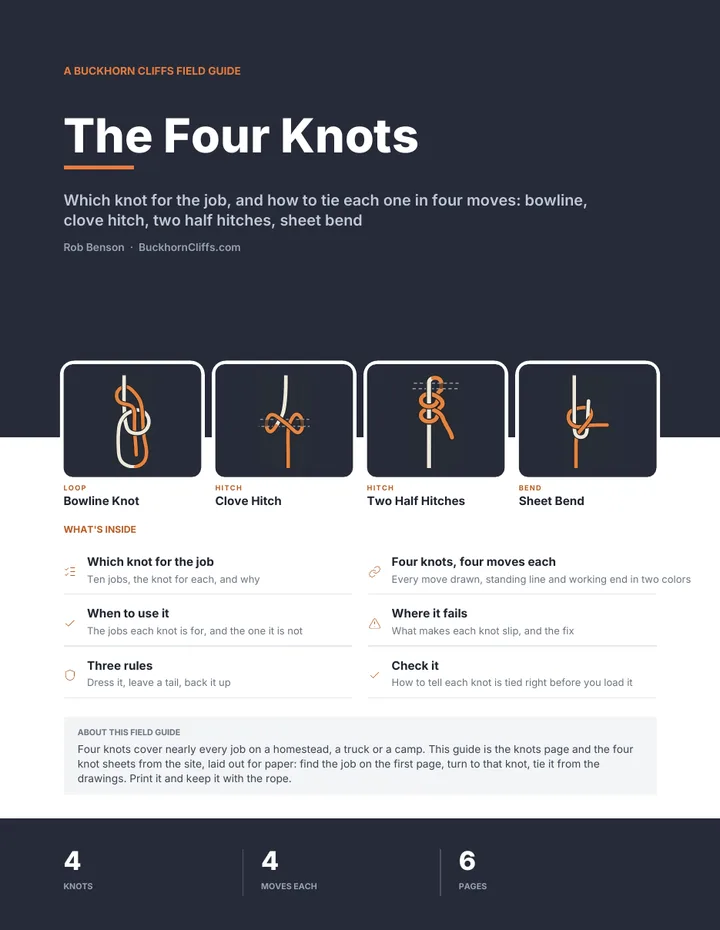
FOUR KNOTSDRAWN STEPS
Quick facts
- A loop that will not closeBowline
- Tie to a post under loadTwo half hitches
- Tie to a pole and adjustClove hitch
- Join two ropesSheet bend
Rope is only useful once it's tied to something, and most jobs come down to four knots. Pick the knot by the problem, not the name: tie to a post, join two ropes, make a loop that will not close, put up a tarp. Each knot below has its own page with the four moves drawn, when it's the right one, and the one mistake that makes it slip.
Pick the knot by the job
Find the problem, then tap the knot. Where two are listed, the first is the usual answer.
Tie a rope to a tree, post, ring or stake
Join two ropes
Make a loop that will not tighten
Put up a tarp or ridgeline
Tie to a tarp corner with no grommet
Start or finish a lashing
Hang gear off a rail or line
Tie off something that will swing or jerk
Extend a guy line, tow line or cord
Tie to a strap eye, webbing or bag handle
Lock a knot that keeps working loose
The four knots

Loop
Bowline Knot
A fixed loop that holds under load, won't slip, and unties easily after.
- Rescue loop
- Tie off to an anchor
- Hoist gear
- Tarp and guy lines
Fails when: Slack and shaking, or stiff slick rope
How to tie it, step by step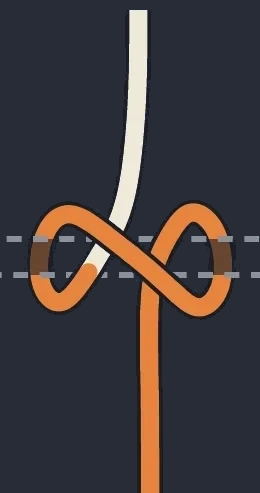
Hitch
Clove Hitch
Two wraps and a tuck. Fast, adjustable, quick to untie.
- Start a lashing
- Tie to a pole or rail
- Guy lines to a stake
- Hang gear
Fails when: Sideways pull, slack, square posts, slick rope
How to tie it, step by step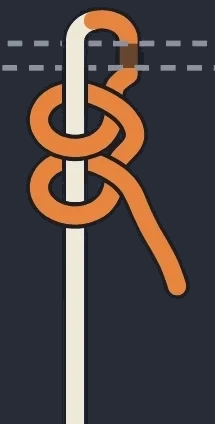
Hitch
Two Half Hitches
Two turns round its own line. Works under load.
- Posts and rings
- Under tension
- Square or slick
- Ridgelines
Fails when: Hitches turned opposite ways (a cow hitch), or a tail too short
How to tie it, step by step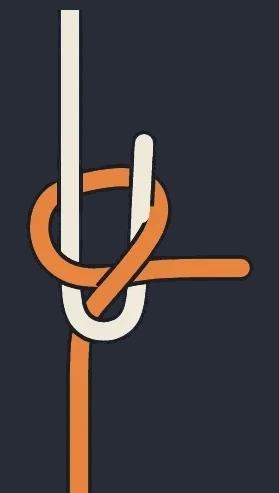
Bend
Sheet Bend
Joins two ropes, equal or not. Holds, then unties easily.
- Join two ropes
- Extend a line
- Tarp corner
- Tie to a loop or eye
Fails when: Tails on opposite sides (left-handed), or slack and shaking
How to tie it, step by stepSide by side
Every knot fails somewhere. Know where before you trust it.
| Knot | Type | Holds when | Fails when | Unties after load |
|---|---|---|---|---|
| Bowline Knot | Loop | Steady pull on the loop | Slack and shaking, or stiff slick rope | Yes, even after a hard load |
| Clove Hitch | Hitch | Steady, straight pull on a round pole | Sideways pull, slack, square posts, slick rope | Yes, unless thin cord was pulled hard |
| Two Half Hitches | Hitch | Any steady pull, any post shape | Hitches turned opposite ways (a cow hitch), or a tail too short | Yes, and it ties and unties while loaded |
| Sheet Bend | Bend | Two ropes under a steady pull, even different sizes | Tails on opposite sides (left-handed), or slack and shaking | Yes, it breaks open after loading |
Three rules that keep any knot holding
- Dress it, then set it. Lay the turns flat with nothing crossed that should not cross, then pull it tight in the direction it will be loaded. A knot loaded loose slips.
- Leave a tail. A hand long in rope, ten times the thickness in cord. Every knot on this page fails first by the tail pulling through.
- Back it up when it sits slack. A clove hitch on a swinging load and a bowline on a slack line both work open. Two half hitches from the tail lock either one.
Words used on these pages
- Standing line
- The part of the rope under load, running to the anchor or the weight.
- Working end
- The end you move to tie the knot. Drawn orange on every step here.
- Tail
- What is left of the working end after the knot is tied. Too short and the knot pulls through.
- Bight
- A U of rope that does not cross itself.
- Loop
- A circle of rope that crosses itself.
- Hitch
- A knot that ties a rope to something else: a post, a rail, a ring. Take the object away and it falls apart.
- Bend
- A knot that joins two rope ends.
- Half hitch
- One turn of the working end round the standing line and through itself. The unit two half hitches is built from.
The rope itself
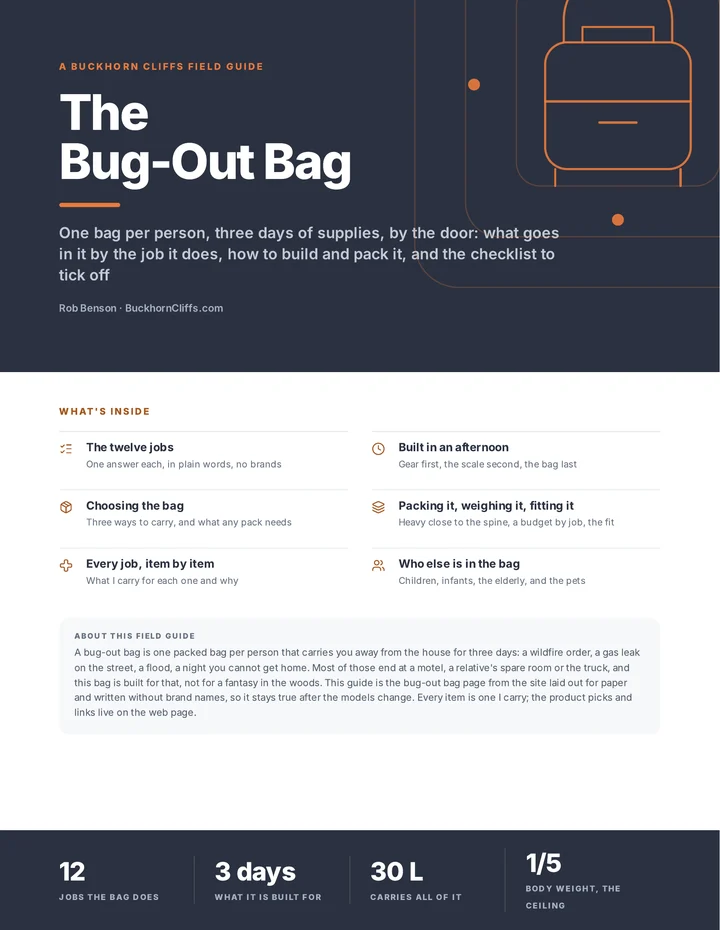
Knots hold better in some rope than others. Nylon stretches and grips, polyester holds its length wet or dry, and polypropylene floats but is slick, which is where clove hitches roll and sheet bends need the second turn. The differences and what to buy are on Synthetic rope: nylon vs polyester vs polypropylene. To keep rope and canvas from soaking up water, there is wax waterproofing for canvas, tarps and rope. Where rope sits in the bag is on the bug-out bag, and the tarp it holds up is on Staying warm and sheltered.
Prep hard, people.
Questions this answers
Tap a question for the short answer.
What are the most useful knots to know?
Four cover nearly everything: the bowline for a fixed loop, two half hitches to tie to a post under load, the clove hitch to tie to a pole you will adjust or to start a lashing, and the sheet bend to join two ropes. Each has its own page here with the steps drawn.
Which knot do I use to tie a rope to a post?
Two half hitches for a post, stake, rail or ring, especially under load or on a square or slick post. A clove hitch if it is a round pole and you want to slide the rope to adjust. A bowline if you would rather drop a fixed loop over it. For a heavy or jerking load, a round turn first, then two half hitches.
What knot joins two ropes?
The sheet bend, which works for two ropes of different sizes as well as equal ones. The thicker rope makes the bight. For a heavy pull, two bowlines linked loop through loop.
What is the best knot for a tarp or ridgeline?
A bowline at the first tree or grommet for a fixed loop, and two half hitches at the far end so you can pull the line tight and lock it. Clove hitches on poles you will adjust. A corner with no grommet gets bunched into a bight and a sheet bend tied to it.
What is the difference between a hitch, a bend and a loop?
A hitch ties a rope to something else, like a post, and falls apart if the post is removed: the clove hitch and two half hitches. A bend joins two rope ends: the sheet bend. A loop knot makes a fixed loop in one rope: the bowline.
Why do my knots come undone?
Three reasons cover most of it. The tail was too short and pulled through; leave a hand long in rope. The knot was loaded loose; dress the turns flat and set it tight in the direction of pull. Or it sat slack and shook: a clove hitch or bowline left slack works open, so back it up with half hitches from the tail.
Keep going
Related to this
Membership · $49.95 per year
There is a lot more behind the lock
Every recipe and resource from the Prepper's Chemical Survival Guide, all ten field guides to read here and download, the full audit and logbook, all twelve reference charts, and no ads.
My Manual · included
Build your own field manual
The most useful thing a membership gives you. Save any page on this site, recipes, charts, and whole field guides included. Arrange them in the order you want, name it, and print one manual with a cover and contents, or keep it as a PDF that opens with no signal.
- It works when this site does not
- Only your pages
- Anyone in the house can use it
- One current copy, not a pile of printouts
- The house binder
- A copy for the bug-out bag or truck
- A copy for family
- An offline PDF
Stay Ready
New entries, updates, and useful instruction.
Stay one step ahead on your preparedness journey.