Handle with careWorks without power
How it works
Quick facts
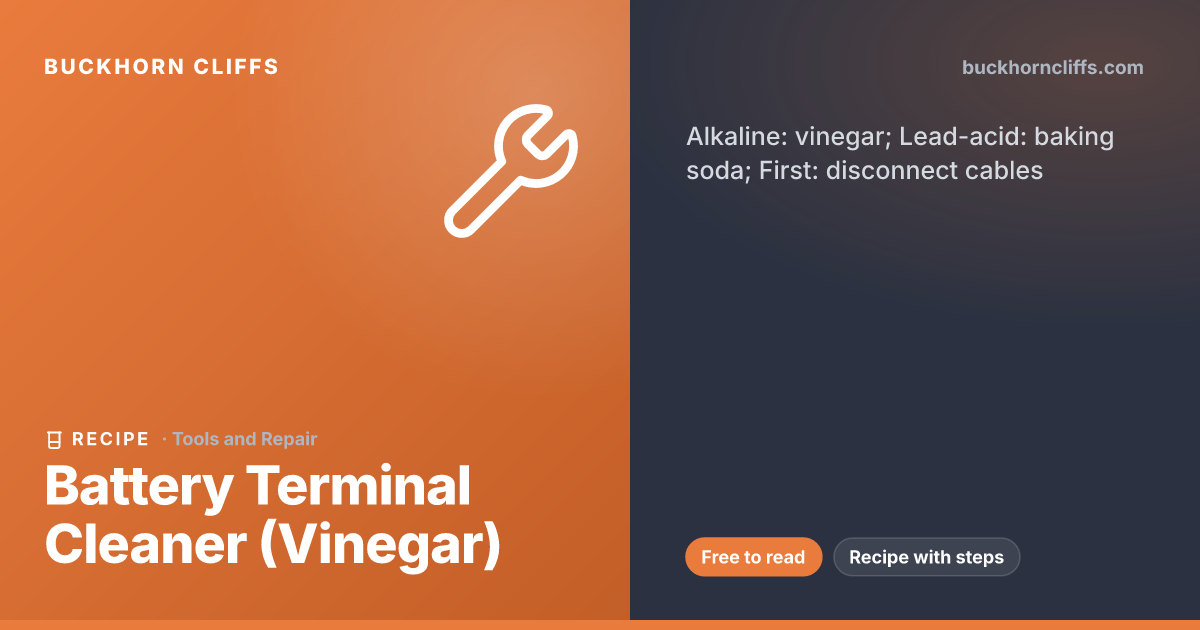
- Alkalinevinegar
- Lead-acidbaking soda
- Firstdisconnect cables
- Thenscrub & dry
- PPEgloves + goggles
Hazard
Always disconnect battery cables before cleaning; accidental shorts can damage electronics or cause injury. Use vinegar for alkaline corrosion and baking soda for lead-acid; never mix them up.
Vinegar neutralizes this alkaline corrosion because it is an acid reacting with a base, the opposite chemistry from vehicle battery corrosion. For car, truck, and marine batteries, which use sulfuric acid and produce acidic corrosion, use baking soda instead (see Chapter 9). Knowing which treatment matches which battery type keeps your flashlights, radios, vehicles, and emergency equipment running when replacements are not available.
What you'll need
- White vinegar (5% acidity)
- Baking soda (for lead-acid vehicle batteries only)
- Dielectric grease (for post-cleaning terminal protection)
Steps
- For alkaline battery corrosion in flashlights, radios, remote controls, and portable electronics, remove the batteries and dip a cotton swab or old toothbrush in undiluted white vinegar. Scrub the corroded terminals and battery contacts, letting the vinegar sit for 2 to 3 minutes to dissolve the residue. Wipe dry with a clean cloth. Repeat if residue remains. Once the contacts are clean and dry, insert fresh batteries and test
- For vehicle, marine, or deep-cycle lead-acid batteries, do not use vinegar; use baking soda paste instead (1 tablespoon baking soda mixed with a small amount of water). Always disconnect the negative cable first, then the positive cable before cleaning. Scrub terminals and cable ends with the paste using a stiff brush, rinse with clean water, and dry completely. Reconnect positive first, then negative. Apply a thin coat of dielectric grease to the clean terminals to prevent future corrosion
Warnings
Always disconnect battery cables before cleaning vehicle batteries; never skip this step, as accidental shorts can damage electronics or cause sparks near flammable hydrogen gas. Wear eye protection when working near lead-acid batteries. Do not use metal tools that could bridge both terminals simultaneously. Alkaline battery leakage (potassium hydroxide) is caustic and irritates skin; wear gloves and wash hands after handling corroded batteries. Dispose of damaged batteries properly; do not throw them in regular trash.
Storage and shelf life
Store vinegar in sealed glass or HDPE containers away from heat and light. Shelf life is indefinite when properly sealed. Best container: sealed glass or HDPE container. Avoid metal (vinegar corrodes all metals). See the Containers section.
Questions this answers
Tap a question for the short answer.
How do I clean corroded battery terminals?
Match the cleaner to the battery. For leaking alkaline batteries, scrub the contacts with undiluted white vinegar, let it sit 2 to 3 minutes, and wipe dry. For vehicle lead-acid batteries, disconnect the cables, scrub with a paste of 1 tablespoon baking soda and a little water, rinse, and dry completely.
Can I clean battery corrosion with vinegar?
Yes, for alkaline batteries like AA, AAA, C, and D. Their leakage is potassium hydroxide, a base, and vinegar's acid neutralizes it. Do not use vinegar on car, truck, marine, or deep-cycle lead-acid batteries. Their corrosion is acidic, so they get baking soda paste instead.
Do I need to disconnect a car battery to clean the terminals?
Yes, always. Skipping it risks an accidental short that can damage electronics or throw sparks near flammable hydrogen gas. Take the negative cable off first, then the positive. When you are done, reconnect positive first, then negative.
Which battery cable do I disconnect first?
Disconnect the negative cable first, then the positive. After cleaning, reverse the order: reconnect the positive first, then the negative. Avoid metal tools that could bridge both terminals at the same time.
What do I put on battery terminals to prevent corrosion?
Once the terminals are clean, dry, and reconnected, apply a thin coat of dielectric grease. It protects the clean metal and helps prevent future corrosion.
Keep going
Related to this
Membership · $49.95 per year
There is a lot more behind the lock
Every recipe and resource from the Prepper's Chemical Survival Guide, all six field guides to read here and download, the full audit and logbook, all twelve reference charts, and no ads.
My Manual · included
Build your own field manual
The most useful thing a membership gives you. Save any page on this site, recipes, charts, and whole field guides included. Arrange them in the order you want, name it, and print one manual with a cover and contents, or keep it as a PDF that opens with no signal.
- It works when this site does not
- Only your pages
- Anyone in the house can use it
- One current copy, not a pile of printouts
- The house binder
- A copy for the bug-out bag or truck
- A copy for family
- An offline PDF





Stay Ready
New entries, updates, and useful instruction.
Stay one step ahead on your preparedness journey.