HazardousWorks without power
How it works
Quick facts
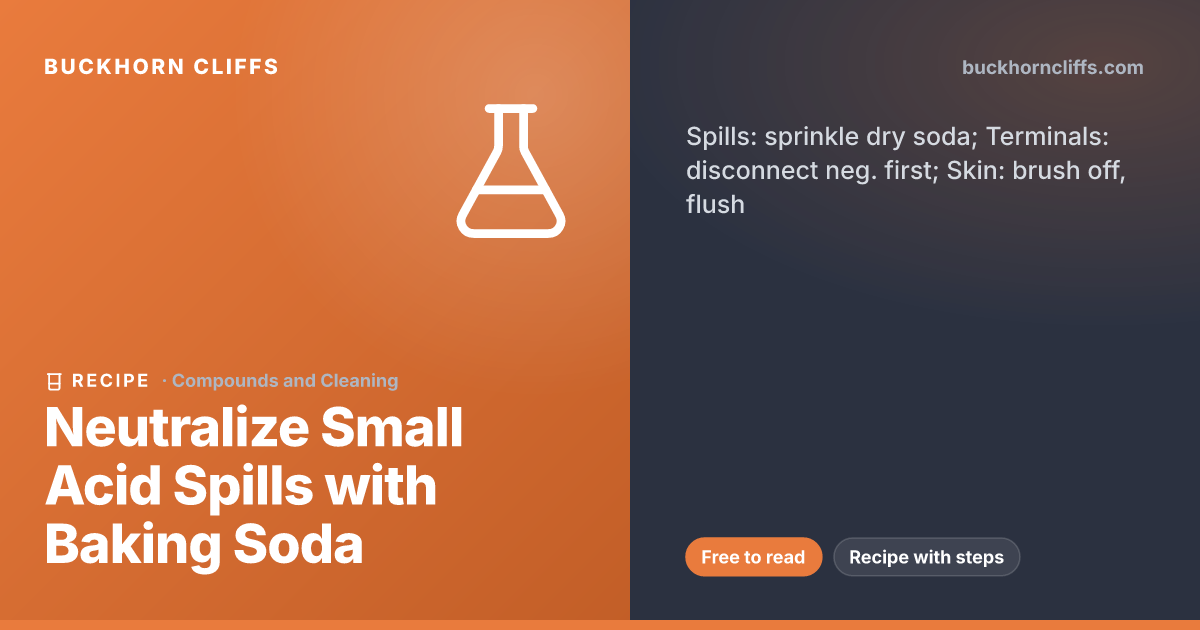
- Spillssprinkle dry soda
- Terminalsdisconnect neg. first
- Skinbrush off, flush
- PPEgloves + goggles
- Scopeminor spills only
Hazard
For minor spills only, not industrial quantities or chemicals of unknown composition. Wear gloves and eye protection. For acid on skin, brush off solids then flush with water.
Baking soda converts common acids into harmless sodium salts, water, and carbon dioxide, and the reaction works reliably on a hard surface in a garage or workshop. It handles sulfuric acid from car and deep-cycle batteries, hydrochloric (muriatic) acid used for pool and concrete work, phosphoric acid in rust removers, and weak acids like vinegar and citric acid. For anything beyond a minor spill, a professional cleanup or a purpose-built acid spill kit is a far better choice than a kitchen staple.
What you'll need
- Baking soda (sodium bicarbonate)
- Clean water for rinsing
- Optional: petroleum jelly for battery terminal protection
Steps
- For acid spills from batteries or household chemicals, put on gloves and eye protection first if available. Spread baking soda generously across the entire spill until the liquid is fully covered. It will fizz and bubble as the acid is neutralized, which is normal, but the reaction is exothermic and gives off real heat, so do not lean over the spill. Wait until the fizzing stops completely, then sweep or wipe up the residue with a cloth or stiff brush, and rinse the area with clean water if the surface allows.
- For corroded battery terminals, disconnect the cables first (negative cable first). Sprinkle baking soda directly onto the corroded or leaking areas, let the reaction finish, and wipe clean with a dry cloth. Apply petroleum jelly (Recipe 18.3) or dedicated terminal grease to the cleaned terminals before reconnecting to prevent future corrosion. Work in a well-ventilated area because lead-acid batteries normally vent hydrogen gas, which is explosive in high enough concentrations
- For acid on skin, get it off and flood it with water; do not try to neutralize a skin burn with baking soda, since the heat from that reaction can deepen the injury. Brush off any dry powder first and remove contaminated clothing or jewelry, then flush the area with plenty of cool (not cold) running water for at least 20 minutes, using a gentle flow rather than a hard spray. Do not apply creams, ointments, or home remedies, which can trap chemical against the skin. Cover loosely with a clean cloth and seek medical attention for any burn that blisters, covers more than a palm-sized area, or involves the eyes.
Warnings
Use this only for minor spills on hard, nonporous surfaces, never for industrial quantities or a chemical of unknown composition. Never use it to neutralize acid on skin or in the eyes; flush those with water only, as described above. For a large or unknown spill, ventilate the area and call your local poison control or emergency services.
Storage and shelf life
Store in sealed containers away from moisture and corrosive substances with indefinite shelf life when kept dry. Keep a labeled, dedicated container near battery storage, workshop, and tool areas for immediate access during a spill. Best container: sealed HDPE container or glass jar, keep moisture-free. Avoid metal in humid conditions (promotes corrosion). See the Containers section.
Questions this answers
Tap a question for the short answer.
How do I neutralize battery acid?
Put on gloves and eye protection, then spread dry baking soda generously until the spill is fully covered. It fizzes and gives off real heat, so do not lean over it. Wait until the fizzing stops completely, sweep or wipe up the residue, and rinse with clean water if the surface allows.
Can I use baking soda on a battery acid spill?
Yes, for a minor spill on a hard, nonporous surface. Baking soda converts sulfuric acid from car and deep-cycle batteries into harmless sodium salts, water, and carbon dioxide. For anything larger, a professional cleanup or a purpose-built acid spill kit is the better choice.
How do I clean a leaking battery terminal?
Disconnect the cables first, negative cable first. Sprinkle baking soda on the corroded or leaking areas, let the reaction finish, and wipe clean with a dry cloth. Coat the terminals with petroleum jelly or terminal grease before reconnecting, and work with good ventilation because lead-acid batteries vent explosive hydrogen gas.
How do I know when an acid spill is neutralized?
The fizzing and bubbling tells you the acid is still reacting with the baking soda. When the fizzing stops completely, the spill is neutralized and you can sweep or wipe up the residue and rinse the area with clean water.
What can I use if I don't have a commercial acid neutralizer?
Plain baking soda works for minor spills on hard surfaces. It handles sulfuric battery acid, hydrochloric or muriatic acid, phosphoric acid in rust removers, and weak acids like vinegar and citric acid. For a large or unknown spill, ventilate the area and call poison control or emergency services.
Keep going
Related to this
Membership · $49.95 per year
There is a lot more behind the lock
Every recipe and resource from the Prepper's Chemical Survival Guide, all six field guides to read here and download, the full audit and logbook, all twelve reference charts, and no ads.
My Manual · included
Build your own field manual
The most useful thing a membership gives you. Save any page on this site, recipes, charts, and whole field guides included. Arrange them in the order you want, name it, and print one manual with a cover and contents, or keep it as a PDF that opens with no signal.
- It works when this site does not
- Only your pages
- Anyone in the house can use it
- One current copy, not a pile of printouts
- The house binder
- A copy for the bug-out bag or truck
- A copy for family
- An offline PDF




Stay Ready
New entries, updates, and useful instruction.
Stay one step ahead on your preparedness journey.