INDEFINITEMULTI-USEWorks without power
Quick facts
- Strength~5% acetic acid
- FormClear liquid
- Hazard classMild acid
- Shelf lifeIndefinite
- StorageSealed glass or HDPE
- What to avoidMetal containers
See everything vinegar must never touch
What it's good for
Cleaning
All-purpose and descaler
Mold & mildew
Kills surface mold
Garden
Weed killer and deterrent
Food & body
Pickling and rinses
About five percent acetic acid, enough to cut scale, soap film, and many microbes, though it can etch stone and metal.
Good to know
Mild by design. Vinegar is a weak acid, meaning only a fraction of its molecules split apart at once, so it nibbles steadily at scale and soap film rather than attacking like a strong acid. That mildness is also a limit: it loosens grime and handles everyday bacteria and mildew but is not a hospital-grade disinfectant and will not reliably kill tougher germs like norovirus.
Handling and safety
Not on stone or metal
Its acid etches marble, granite, and some metals; skip those surfaces.
Weak on deep mold
It handles surface mildew but not deep mold in porous materials.
Cheap and food-safe
Plain 5% white vinegar is non-toxic and works for most jobs.
30% for tough weeds
Plain 5% kills seedlings; corrosive 30% vinegar (Recipe 13.6) burns down established weeds, not their roots.
Eight jobs it does
- Clean and disinfect surfaces
- Pickling and ferments
- Pest control for ants and weeds
- Mild wound and athlete's foot soak
- Descale kettles, pots, and pipes
- Rust removal (soak undiluted)
- General odor neutralizer (for skunk use the peroxide and baking soda wash)
- Laundry softener and hair rinse
If it goes bad Very stable. May cloud or sediment over years. Still safe and effective.
Field notes
Which vinegar I stock. White vinegar. It keeps its acidity where some other vinegars can fade, it is clear so it will not stain surfaces, clothes, or containers, and it is usually the cheapest type and sold in large quantities.
With baking soda. The acid and the base cancel each other into sodium acetate, water, and carbon dioxide. The fizz looks busy but does nothing that water would not; use vinegar or baking soda on its own, not both together.
In the kitchen. Vinegar tenderizes meat and acts as a leavening agent in baking.
In the garden. It cleans garden tools. Aim carefully, because it also harms wanted plants and beneficial insects.
Shelf-stable pickles. Vegetables pickled in vinegar keep for months without refrigeration.
- Use white or apple cider vinegar of at least 5% acidity.
- Wash and cut fresh produce. Cucumbers can go in whole.
- Boil a brine of vinegar, water, and salt, plus any sugar or spices, then cool it.
- Pack sterilized jars, cover the vegetables completely with brine, and leave headspace.
- Wipe the rims, seal with sterilized lids and rings, then process in a boiling water bath for the time your recipe and jar size require.
- Store cool and dark so the flavor develops before you open a jar.
Good picks: cucumbers, onions, carrots, cauliflower, green beans, peppers, apples, and pears.
My pick: white vinegar on Amazon.
Recipes for vinegar
- 13.1Descale and Disinfect Kettles and Coffee Makers (Vinegar)Full recipe
- 13.2Rust Removal for Tools and Hardware (Vinegar Soak)Full recipe
- 13.3Mold and Mildew CleanerMembers
- 13.4Insect Deterrent SprayMembers
- 13.5Body and Fabric DeodorizerMembers
- 13.6Weed Killer for Paths and Driveways (Vinegar)Full recipe
- 13.7Battery Terminal Cleaner (Vinegar)Full recipe
- 13.8Quick-Pickle & Fermentation BrineMembers
- 13.9Vinegar Shrub (Drinking Vinegar)Members
- 13.10Deodorize & Freshen Bedding and GearMembers
Questions this answers
Tap a question for the short answer.
What is vinegar used for?
Vinegar, at about 5% acetic acid, cleans and descales, kills surface mold and mildew, pickles food, removes rust when used undiluted, neutralizes odors, softens laundry, and controls ants and weed seedlings. It also serves as a mild wound and athlete's foot soak. Keep it off stone and some metals, which it etches.
How long does vinegar last in storage?
Vinegar keeps indefinitely and is very stable. Over the years it may turn cloudy or drop some sediment, but it remains safe and effective.
How do I store vinegar?
Keep vinegar in sealed glass or HDPE and avoid metal containers, since its acid can etch some metals. Stored that way it lasts indefinitely, and any clouding or sediment that shows up over the years does not affect its safety or strength.
Keep going
Related to this
Membership · $49.95 per year
There is a lot more behind the lock
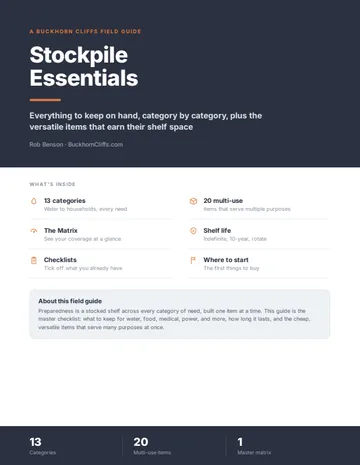
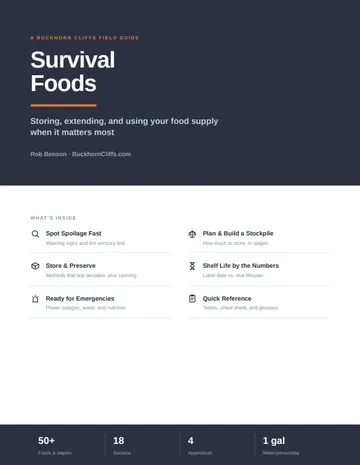
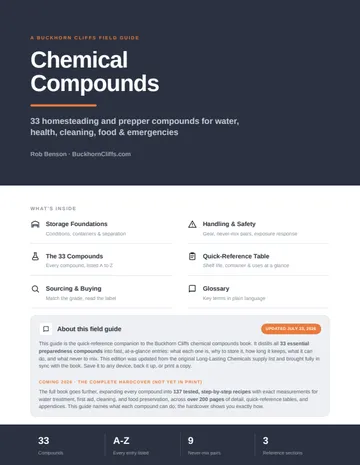
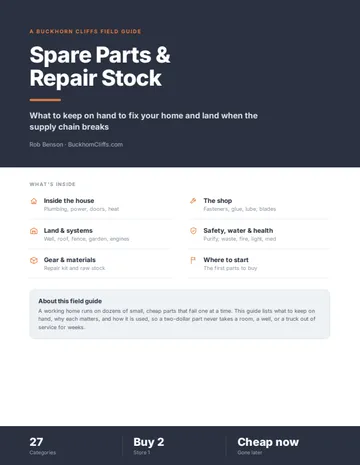
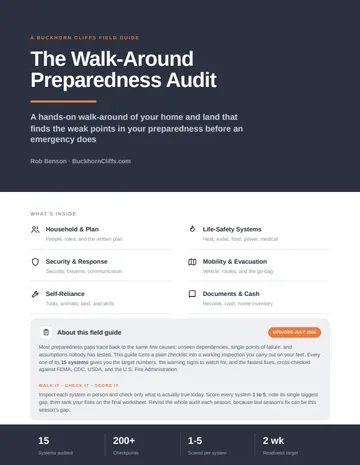
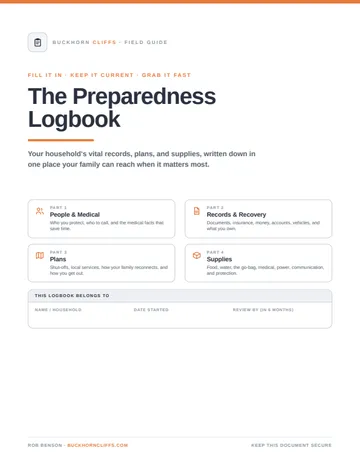
Every recipe and resource from the Prepper's Chemical Survival Guide, all six field guides to read here and download, the full audit and logbook, all twelve reference charts, and no ads.
My Manual · included
Build your own field manual
The most useful thing a membership gives you. Save any page on this site, recipes, charts, and whole field guides included. Arrange them in the order you want, name it, and print one manual with a cover and contents, or keep it as a PDF that opens with no signal.
- It works when this site does not
- Only your pages
- Anyone in the house can use it
- One current copy, not a pile of printouts
- The house binder
- A copy for the bug-out bag or truck
- A copy for family
- An offline PDF
Stay Ready
New entries, updates, and useful instruction.
Stay one step ahead on your preparedness journey.