Handle with careWorks without power
How it works
Quick facts
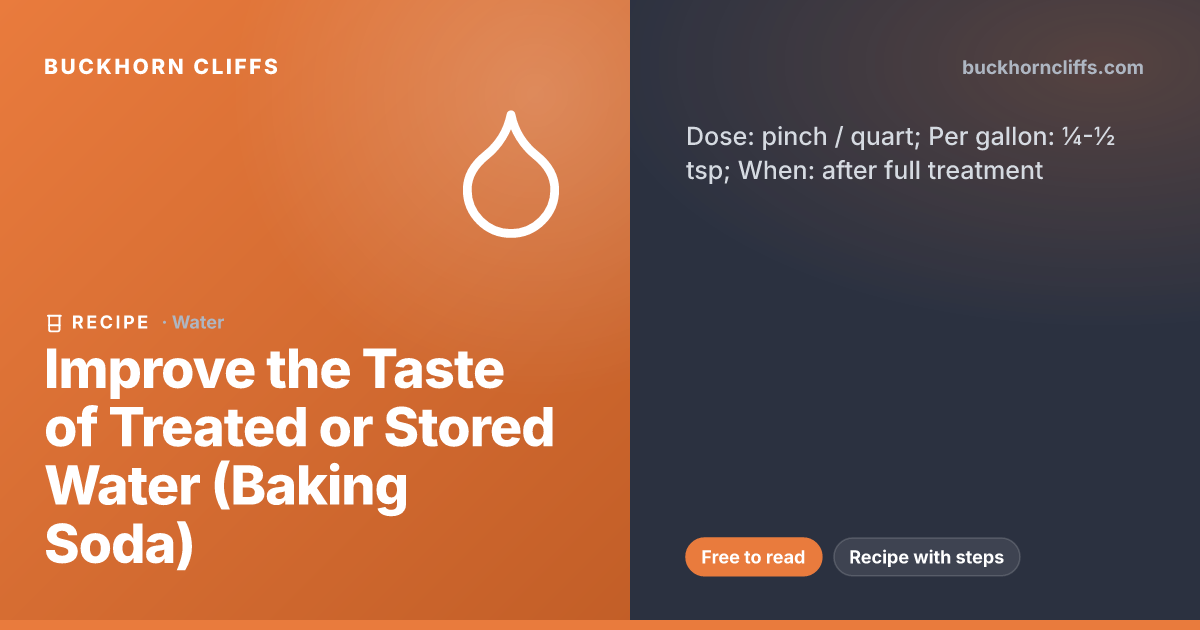
- Dosepinch / quart
- Per gallon¼-½ tsp
- Whenafter full treatment
- Effecttaste only
- Neverbefore disinfection
Hazard
Improves taste only; it does not purify water or neutralize contaminants. Never add baking soda before the disinfectant has finished its full contact time.
A small pinch of baking soda raises the water's pH, which shifts chlorine into its milder, less pungent form and softens the sharp chemical aftertaste that chlorine or iodine treatment leaves behind. It tones the flavor down rather than stripping the disinfectant out, so it will not undo treatment that is still doing its work. Pouring the water back and forth between two clean containers to aerate it helps in the same way and costs nothing.
What you'll need
- Baking soda (sodium bicarbonate)
- Treated or stored water that has already been made safe to drink
Steps
- After the water has been fully treated and the required contact time has elapsed, add a small pinch of baking soda (between 1/16 and 1/8 teaspoon) per quart, or 1/4 to 1/2 teaspoon per gallon. Stir until fully dissolved, taste, and adjust in tiny increments if needed; too much baking soda leaves the water tasting salty or soapy
- This works well for water treated with bleach or calcium hypochlorite (Chapter 5) or iodine (Chapter 6), and for water that has been stored in sealed containers for weeks or longer. A small pinch of salt per quart is another long-standing way to freshen flat or treated water and can be used in place of or alongside the baking soda. It is especially helpful for getting children and older adults to drink enough treated water during hot weather or illness.
Warnings
Never add baking soda before the disinfectant has done its job. Always complete the full treatment and wait time first, then adjust flavor. This improves taste only; it does not purify, disinfect, or remove any contaminant, and better taste is not evidence that water is safe to drink. Know the difference between masking and removing: baking soda hides the chlorine taste while leaving the disinfectant in the water, which is what you want for water you are keeping in storage. To actually strip the chlorine out, use ascorbic acid (Vitamin C) from Recipe 12.1, or sodium thiosulfate; both work, but they destroy the residual disinfectant, so save them for bathing or cooking water rather than water you need to keep safe over time.
Storage and shelf life
Store baking soda in a sealed, dry container with indefinite shelf life when protected from moisture. Keep a small labeled container with your water purification kit for convenient use. Best container: sealed HDPE container or glass jar, keep moisture-free. Avoid metal in humid conditions (promotes corrosion). See the Containers section.
Questions this answers
Tap a question for the short answer.
How do I make chlorinated water taste better?
After the water is fully treated and the contact time has passed, stir in a small pinch of baking soda per quart, between 1/16 and 1/8 teaspoon. It raises the pH, which shifts chlorine into a milder, less pungent form. Pouring the water back and forth between two clean containers also helps.
How much baking soda do I add to stored water?
Add a small pinch per quart, between 1/16 and 1/8 teaspoon, or 1/4 to 1/2 teaspoon per gallon. Stir until dissolved, taste, and adjust in tiny increments. Too much leaves the water tasting salty or soapy.
How do I get rid of the chemical taste in purified water?
A pinch of baking soda per quart softens the sharp aftertaste from chlorine or iodine while leaving the disinfectant in place. A pinch of salt or aerating between two containers also helps. To strip chlorine out entirely, use ascorbic acid or sodium thiosulfate, but save that for bathing or cooking water.
Can I add baking soda to water before purifying it?
No. Never add baking soda before the disinfectant has done its job. Complete the full treatment and wait time first, then adjust the flavor. Baking soda improves taste only; it does not purify, disinfect, or remove any contaminant, and better taste is not proof the water is safe.
Keep going
Related to this
Membership · $49.95 per year
There is a lot more behind the lock
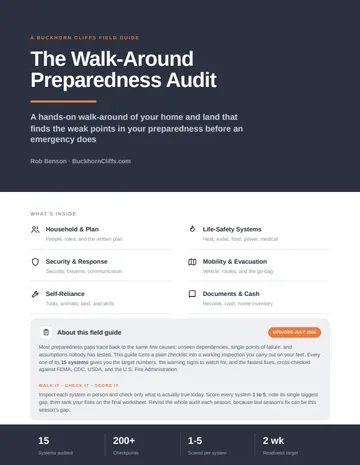
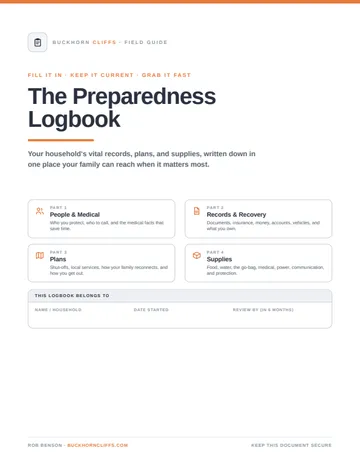
Every recipe and resource from the Prepper's Chemical Survival Guide, all six field guides to read here and download, the full audit and logbook, all twelve reference charts, and no ads.
My Manual · included
Build your own field manual
The most useful thing a membership gives you. Save any page on this site, recipes, charts, and whole field guides included. Arrange them in the order you want, name it, and print one manual with a cover and contents, or keep it as a PDF that opens with no signal.
- It works when this site does not
- Only your pages
- Anyone in the house can use it
- One current copy, not a pile of printouts
- The house binder
- A copy for the bug-out bag or truck
- A copy for family
- An offline PDF

Stay Ready
New entries, updates, and useful instruction.
Stay one step ahead on your preparedness journey.