UP TO 10 YEARSMULTI-USEHazardousWorks without power
Quick facts
- Active chlorine65 to 70%
- FormWhite granules
- Hazard classCorrosive oxidizer
- Shelf lifeUp to 10 years
- StorageGlass or HDPE, sealed
- What to avoid
- Moisture
- acids
- metal
See everything calcium hypochlorite must never touch
What it's good for
Drinking water
Kills bacteria and viruses
Surfaces
Mixes to bleach strength
Cisterns & tanks
Shock and store volumes
Tools & gear
General sanitation
Dissolved in water it releases the chlorine that kills microbes; that chlorine slowly escapes, so dry storage keeps it strong.
Good to know
What 'available chlorine' really means. The percent on the label is not how much chlorine is in the jar; it is a measure of oxidizing power, the yardstick all chlorine disinfectants share, which is why a little treats so much water. Not every pool product qualifies, though: stabilized tablets like trichlor and dichlor carry cyanuric acid to survive sunlight, the opposite of what drinking water needs. Reach only for plain calcium hypochlorite.
Handling and safety
Not for every microbe
Kills bacteria and viruses, but not Cryptosporidium; pre-filter cloudy water.
Never mix it
With acids or ammonia it makes toxic chlorine gas; add powder to water, never the reverse.
Keep it bone dry
It draws moisture and slowly weakens; a sharp chlorine smell means it is still good.
Buy it additive-free
For drinking water use pool shock with no algaecides or clarifiers.
Eight jobs it does
- Make a chlorine stock for water
- Treat clear water (1 tbsp stock/gal)
- Surface disinfection at 1,000 ppm
- Sanitize tanks and barrels
- Shock chlorinate a cistern
- Mold and mildew removal
- Algae control in stock tanks
- Sanitize canning surfaces
If it goes bad Decomposes with heat and moisture, releasing chlorine gas. Ventilate.
Field notes
Why metal is on the avoid list. Calcium hypochlorite, Ca(ClO)₂, oxidizes metal on contact. The reaction is most aggressive with aluminum, mild steel, and copper, and over time the corrosion weakens the metal until it fails. Store and handle it only with containers and tools that resist corrosion.
My pick: calcium hypochlorite on Amazon.
Recipes for calcium hypochlorite
Questions this answers
Tap a question for the short answer.
What is calcium hypochlorite used for?
It disinfects drinking water by killing bacteria and viruses, and a single pound can treat on the order of 10,000 gallons. It also mixes to bleach strength for surface disinfection at 1,000 ppm, sanitizes tanks, barrels, tools, and canning surfaces, shock chlorinates cisterns, removes mold and mildew, and controls algae in stock tanks.
How long does calcium hypochlorite last in storage?
Up to 10 years when kept dry and sealed. It draws moisture and slowly weakens, and a sharp chlorine smell means it is still good. Heat and moisture make it decompose and release chlorine gas.
How do I store calcium hypochlorite?
Keep it sealed in glass or HDPE and bone dry, away from moisture, acids, and metal. Never let it contact acids or ammonia, which produce toxic chlorine gas. If it decomposes from heat and moisture it releases chlorine gas, so ventilate.
Keep going
Related to this
Membership · $49.95 per year
There is a lot more behind the lock
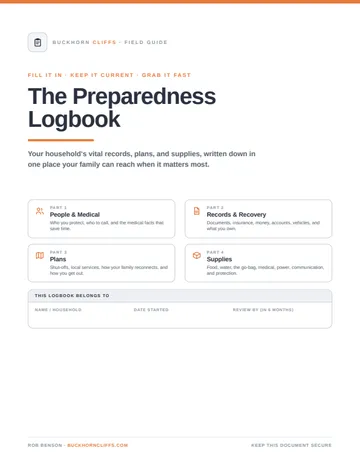
Every recipe and resource from the Prepper's Chemical Survival Guide, all six field guides to read here and download, the full audit and logbook, all twelve reference charts, and no ads.
My Manual · included
Build your own field manual
The most useful thing a membership gives you. Save any page on this site, recipes, charts, and whole field guides included. Arrange them in the order you want, name it, and print one manual with a cover and contents, or keep it as a PDF that opens with no signal.
- It works when this site does not
- Only your pages
- Anyone in the house can use it
- One current copy, not a pile of printouts
- The house binder
- A copy for the bug-out bag or truck
- A copy for family
- An offline PDF


Stay Ready
New entries, updates, and useful instruction.
Stay one step ahead on your preparedness journey.