Member articleHazardousWorks without power
How it works
Inside this article
The full text opens with membership.
What is in this article
- The method at a glance: test soil ph, then measure lime, then work in 6 in, then wait 2-4 weeks
- The exact numbers: target ph, moderate, very acidic, wait, max
- The full materials list (5 items, with grades and substitutes)
- The 6-step method, with every measurement in the step
- The hazard box and the caution notes: what never to mix it with and when to stop
- Storage and shelf life for the raw compound and the finished mix
- A printable one-page PDF of this article
Member article · $49.95 per year
Open this page, and the other 157 like it
One membership opens every amount on this page and everything else behind the lock, and turns the site into paper you can keep.
- 158member pagesopen in full, every amount and every step
- 138recipeswith exact amounts, from the book and beyond it
- 13field guides304 pages of PDFs, $130 bought one at a time
- 1manual of your ownbuilt from any page here, printed with your cover
- One payment, $49.95 per year. Cancel any time and keep access to the end of the year you paid for.
- Sign in by email. No password, and the sign-in renews itself on every visit.
- Most of the site stays free. Membership is for the depth, the PDFs and the paper.
- Every member article in fullAll 158 member pages, open: exact amounts, every step, every parts list.
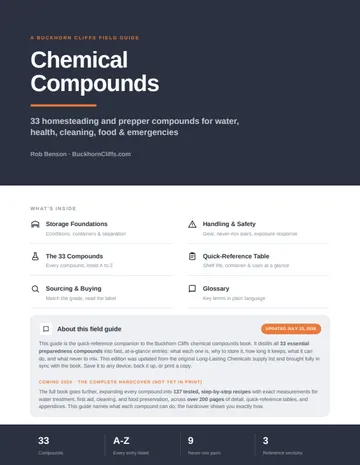
- Every recipe and resource in the bookAll 138 recipes and 33 compounds from Prepper's Chemical Survival Guide, with exact amounts, every step, every warning, and the reference charts.
- My Manual: build your own field manualSave any page, recipe, chart, or whole field guide, arrange them in the order you want, and print one manual with your name on the cover. Or keep it as a PDF that opens with no signal.
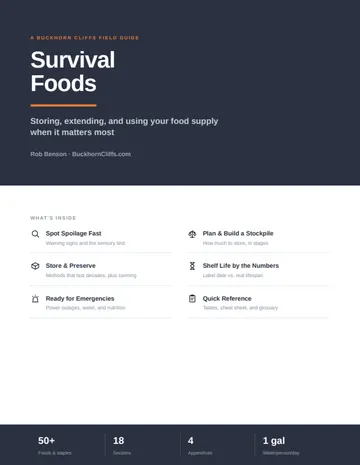
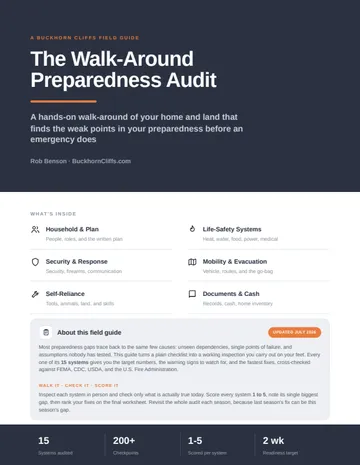
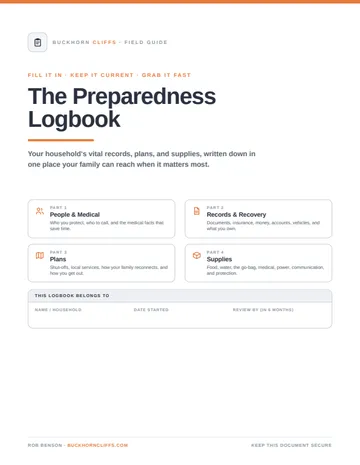
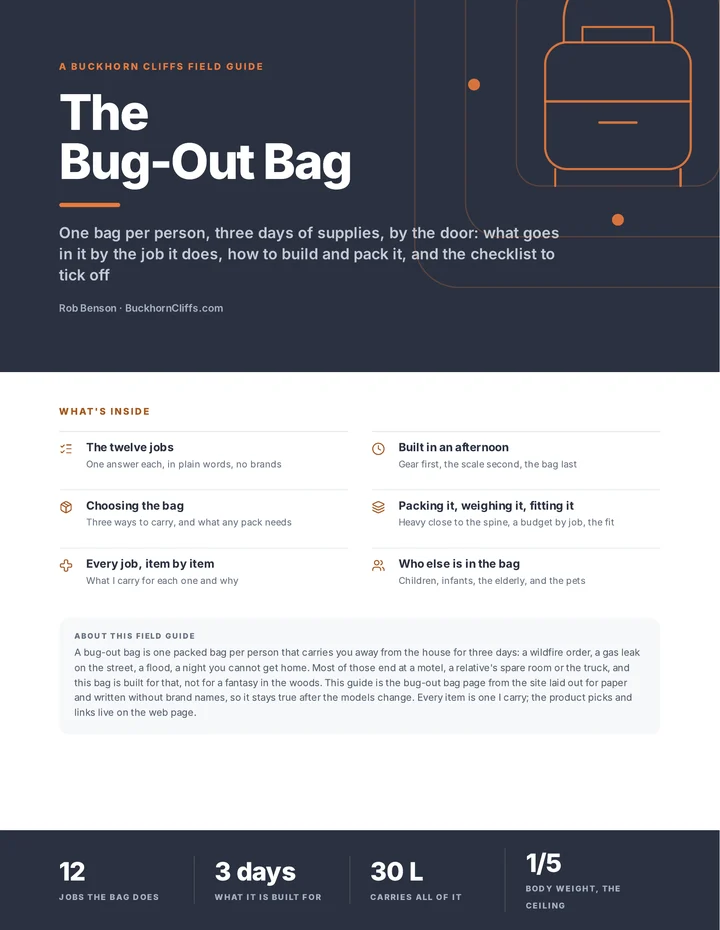
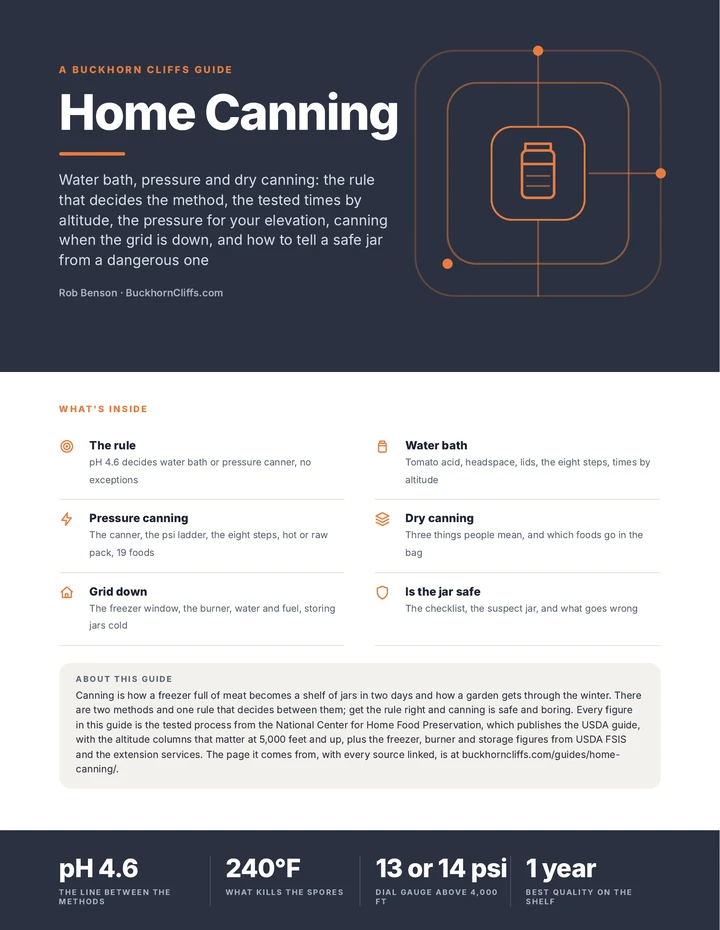
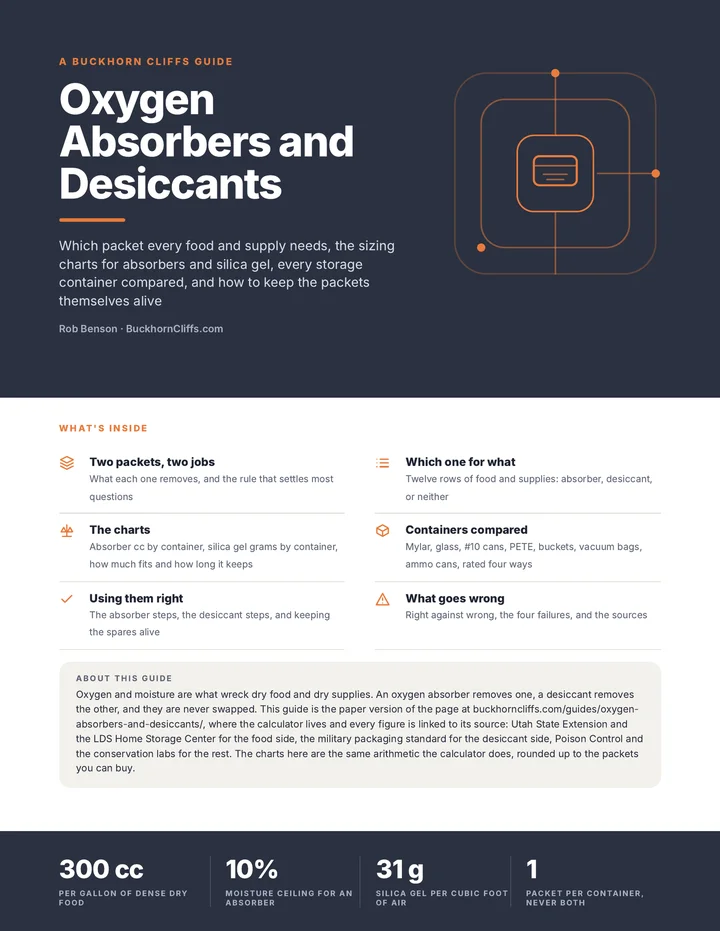
- All thirteen field guides, on screen and as PDFsStockpile Essentials, Survival Foods, Chemical Compounds, Spare Parts, the Audit, the Logbook, Portable Solar Power, Home Backup Power, The Four Knots, The Bug-Out Bag, Home Security and Defense, Home Canning, and Oxygen Absorbers and Desiccants. Read every one here, download the PDFs. $130 if bought one at a time.
- A clean PDF of any articleOne click gives a one-page sheet in the field guide layout, ready to print or save.
- Audit scores and checklists that follow youSaved to the account, so the phone, the laptop, and the shop computer all match.
- No adsMembers read the whole site without a single ad.
My Manual · included
Build your own field manual
The most useful thing a membership gives you. Save any page on this site, recipes, charts, and whole field guides included. Arrange them in the order you want, name it, and print one manual with a cover and contents, or keep it as a PDF that opens with no signal.
- It works when this site does not
- Only your pages
- Anyone in the house can use it
- One current copy, not a pile of printouts
- The house binder
- A copy for the bug-out bag or truck
- A copy for family
- An offline PDF
Prefer paper? This is Recipe 8.3, page 37, in Prepper's Chemical Survival Guide.
Questions this answers
Tap a question for the short answer.
How do I raise the ph of acidic garden soil?
Test the soil, then work hydrated lime into it. Lime raises pH and adds calcium, which frees nutrients that acidic soil locks away from roots. It only works where it contacts soil, so it has to be mixed in.
Members get the exact amounts and every step.
How much hydrated lime do I put on my garden?
The amount depends on how acidic your soil tests and on soil type, with sandy ground needing less than clay. Start low, retest, and split heavy corrections into separate treatments, since too much lime locks up other nutrients.
Members get the exact amounts and every step.
Can I use calcium hydroxide in the garden?
Yes. Hydrated lime raises soil pH faster than agricultural limestone and adds calcium that strengthens plants. It is caustic, so protective gear and a calm day matter.
Members get the exact amounts and every step.
When should I apply lime to garden soil?
Apply it after a soil test shows the ground is too acidic, on a calm day, and well ahead of planting so the lime has time to react. Retest before you plant.
Members get the exact amounts and every step.
Which plants should I not lime around?
Keep lime away from acid-loving plants such as blueberries, azaleas, rhododendrons, and potatoes. Over-liming anywhere locks up other nutrients, so retest before adding more.
Members get the exact amounts and every step.
Keep going
Related to this
Membership · $49.95 per year
Open this page, and everything else behind the lock
This page is one of 158 that open in full with membership, with every amount and every step. The rest of what you get is below.
- 158member pagesopen in full, every amount and every step
- 138recipeswith exact amounts, from the book and beyond it
- 13field guides304 pages of PDFs, $130 bought one at a time
- 1manual of your ownbuilt from any page here, printed with your cover
- Every member page in full. the exact amounts, every step, every parts list
- Every recipe and resource from the book. all 138 from the Prepper's Chemical Survival Guide, searchable here
- All 13 field guides. read them here or download the PDFs, 304 pages
- My Manual. save any page, recipe or whole guide, order it, print one binder with your own cover
- The audit and the logbook, saved. your scores and checklists on every device
- Print and Save as PDF on every page. and no ads
- One payment, $49.95 per year. Cancel any time and keep access to the end of the year you paid for.
- Sign in by email. No password, and the sign-in renews itself on every visit.
- Most of the site stays free. Membership is for the depth, the PDFs and the paper.






Stay Ready
New entries, updates, and useful instruction.
Stay one step ahead on your preparedness journey.