Handle with careWorks without power
How it works
Quick facts
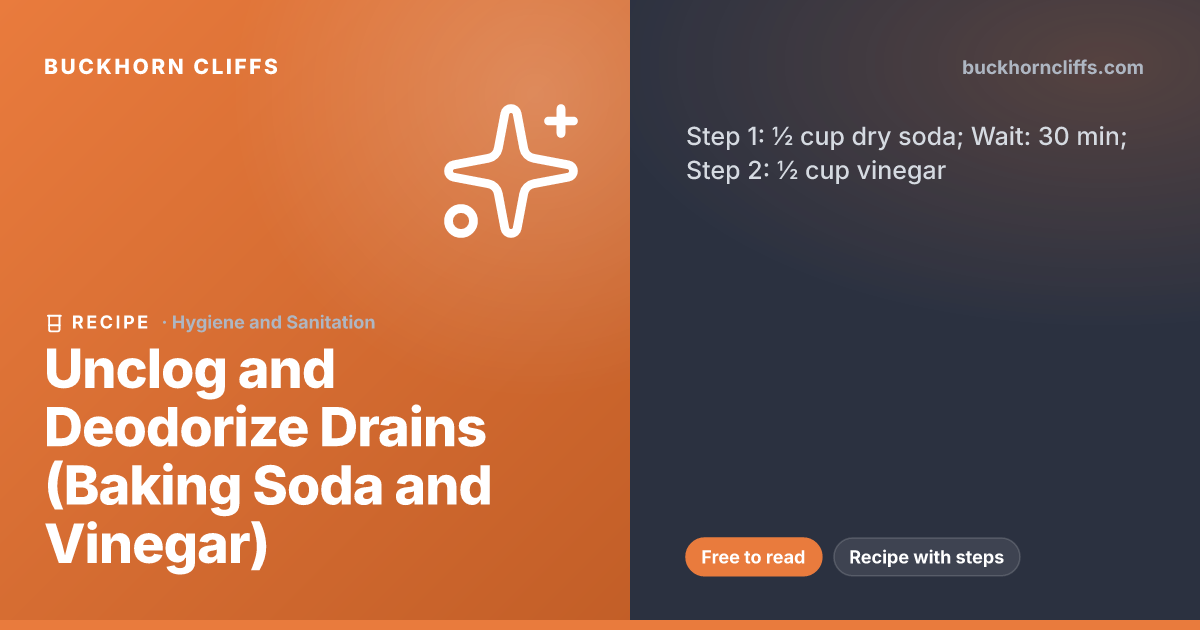
- Step 1½ cup dry soda
- Wait30 min
- Step 2½ cup vinegar
- Disposalssoda then citrus
- Repeatweekly
Hazard
Use the baking soda and vinegar as two separate steps with a flush in between, never mixed together. Mixing them directly just neutralizes both into salt water.
Baking soda neutralizes those acidic odor compounds on contact, which takes the smell out rather than perfuming over it. The catch is that the bacteria keep regrowing, so this is upkeep, not a one-time cure. A regular treatment keeps kitchen sinks, bathroom drains, and garbage disposals fresh between deeper cleanings. For an actual clog or grease buildup, use the washing soda treatment in Recipe 14.4, since baking soda is too mild to dissolve a blockage. For ongoing odor, though, baking soda is the better pick: it is gentle on pipes and safe for unlimited use on any plumbing, PVC included.
What you'll need
- Baking soda (sodium bicarbonate)
- White vinegar (5% acidity)
- Hot water
Steps
- Pour half a cup of dry baking soda directly into the drain and let it sit for at least 30 minutes; overnight is even better for stubborn odor, since the longer it sits, the more of the acidic compounds deep in the pipe it can neutralize. Then flush with a quart of hot tap water to push the spent powder through.
- After flushing, pour half a cup of white vinegar into the drain as a separate follow-up. The acid knocks back the odor-causing bacteria clinging to the pipe walls and helps loosen their slimy biofilm, though it will not fully clear a heavy buildup, which is why you repeat the routine. Let it sit for 10 to 15 minutes, then flush again with hot tap water. Do not pour vinegar onto dry baking soda still sitting in the drain: the acid cancels the baking soda before it can work, and the fizz does no real cleaning.
- For garbage disposals, pour half a cup of baking soda into the disposal, let it sit for 30 minutes, then run cold water and turn on the disposal for 15 to 20 seconds to flush the powder through the grinding chamber. Follow with half a cup of vinegar, wait 10 minutes, then flush with cold water.
- Repeat weekly for drains that turn odorous regularly, such as kitchen sinks with heavy food use or bathroom drains with standing water. Baking soda and vinegar are both safe for all pipe materials and septic systems at any frequency.
Warnings
The key to this recipe is using the baking soda and vinegar as two separate steps with a flush in between, not mixed together. Combining them directly just neutralizes both ingredients into sodium acetate and carbon dioxide, wasting their individual cleaning properties. Do not combine with commercial drain cleaners. This recipe controls odor only and will not clear slow or blocked drains.
Storage and shelf life
Store baking soda in a sealed container away from moisture and strong odors. Shelf life is indefinite when kept dry. Best container: sealed HDPE container or glass jar, keep moisture-free. Avoid metal in humid conditions (promotes corrosion). See the Containers section.
Questions this answers
Tap a question for the short answer.
How do I unclog a drain with baking soda and vinegar?
Baking soda and vinegar control drain odor only and will not clear a slow or blocked drain, because baking soda is too mild to dissolve a blockage. For an actual clog or grease buildup, use the washing soda treatment in Recipe 14.4 instead.
How much baking soda and vinegar do I pour down a drain?
Pour in half a cup of dry baking soda, leave it at least 30 minutes, and flush with a quart of hot tap water. Then pour in half a cup of white vinegar as a separate step, wait 10 to 15 minutes, and flush again. Never pour the vinegar onto dry baking soda.
How do I get rid of drain smell without chemicals?
Pour half a cup of dry baking soda down the drain and let it sit 30 minutes or overnight, which neutralizes the acidic sulfur compounds causing the smell. Flush with hot tap water, follow with half a cup of vinegar, and flush again. Bacteria regrow, so repeat weekly on problem drains.
Is baking soda and vinegar safe for septic systems?
Yes. Baking soda and vinegar are both safe for septic systems and for all pipe materials, PVC included, at any frequency. Do not combine the routine with commercial drain cleaners.
Keep going
Related to this
Membership · $49.95 per year
There is a lot more behind the lock
Every recipe and resource from the Prepper's Chemical Survival Guide, all six field guides to read here and download, the full audit and logbook, all twelve reference charts, and no ads.
My Manual · included
Build your own field manual
The most useful thing a membership gives you. Save any page on this site, recipes, charts, and whole field guides included. Arrange them in the order you want, name it, and print one manual with a cover and contents, or keep it as a PDF that opens with no signal.
- It works when this site does not
- Only your pages
- Anyone in the house can use it
- One current copy, not a pile of printouts
- The house binder
- A copy for the bug-out bag or truck
- A copy for family
- An offline PDF




Stay Ready
New entries, updates, and useful instruction.
Stay one step ahead on your preparedness journey.