Quick facts
- Bucket toilet5-gallon bucket, snap-on seat, heavy liner, and a scoop of cover material after every use
- Full bagTie at two-thirds full. Bury 100 feet or more from water and the garden. Never compost
- Disinfectant1½ level tsp of 65 to 70% pool shock, no additives, per gallon of water. Gloves on. Use within 24 hours
- Peroxide3% household strength. Surface must stay visibly wet 10 minutes
- Stored water1 gallon per person per day. Plan on three days at the least and aim for two weeks
- Pool shockDry granules stay usable for many years sealed, cool, dry, dark, losing a few percent of strength a year. Never in metal or near fuels and oils
- Never mixChlorine with acid, ammonia, or peroxide. Peroxide with vinegar
A house without running water gets sick two ways: waste that is not contained and hands that are not washed. This page gives you the order of work for the first hour, day, and week, the shelf item for each cleaning job, and a link to every recipe and parts list behind it. Most of what you need stores for years: soap, baking soda, pool shock, hydrated lime, bags, and a bucket.
The water just went offFive numbers to rememberJob to tool: what to pull off the shelfHuman waste: five barriers, from the bucket outWhat to build firstCommon situationsPests that follow poor sanitationThe deeper pagesRecipes index, by jobWhat goes wrongSpare parts, skills, audit, and labels
The water just went off
Work in this order. I put the toilet and hand washing first because those two are what make a house sick. Comfort comes later.
First hour
- Decide between a pour flush and the bucket toilet.If the sewer or septic still drains, a toilet flushes when you pour a bucket of water into the bowl. Use water you cannot drink for that: the clean-water guide keeps stored tub water for flushing. On a pumped septic or sewer system with the power out, do not pour flush: the pump cannot move the waste, so go straight to the bucket toilet. If drains are backing up, or there is no spare water, close the toilet and switch to the bucket toilet.Water purification methods
- Set up the bucket toilet. Line a 5-gallon bucket with a heavy garbage bag, then cover the bottom with a few inches of dry material such as sawdust, sand, dirt, leaves, or shredded paper.The starting layer absorbs moisture and controls odor from the first use.Survival bucket for under $300 from Walmart
- Put soap and water, or hand sanitizer, right beside the bucket.Washing hands after every use prevents more illness than the lime does.Field Body Wash and Shampoo Member
- Count your stored water and set the ration at 1 gallon per person per day.Plan on three days at the least and aim for two weeks. The water heater tank is a hidden reserve: shut off the gas or the breaker before you drain it, and leave it off until the tank has refilled. The toilet tank (never the bowl) is usable on three conditions: the water is clear, no drop-in cleaner or bluing tablet ever went into that tank, and you treat the water before anyone drinks it.
- Pull the gloves, cleaning cloths, contractor bags, and disinfectant into one place.Gloves and dedicated cloths let you clean without spreading germs.Hygiene and Sanitation checklist
First day
- After every use, add another scoop of cover material.Sawdust, peat, or litter controls odor and pathogens. Plain dirt still soaks up moisture and smell.Spare parts: Sanitation & Waste Member
- If you stock hydrated lime, start using it on the waste, wearing gloves, goggles, and a mask.It makes the waste very alkaline, which cuts down the cholera and dysentery germs and keeps flies off. It has to be hydrated lime: garden lime does nothing, and quicklime is dangerous. The member recipe has the amounts.Lime Treatment for an Emergency Toilet or Latrine Member
- Mix a surface disinfectant: 1½ level teaspoons of calcium hypochlorite granules in 1 gallon of water. The product is pool shock with 65 to 70% available chlorine and no additives or algaecides.Put the granules into the water, never water onto granules, in a glass or plastic container, with gloves and eye protection on and a window open. One minute wet handles everyday germs. Give tougher germs and porous surfaces 10 minutes. It fades fast, so use it within 24 hours. It is for hard surfaces, never the waste bucket: the reason is under Human waste below.Surface disinfectant from calcium hypochlorite (pool shock)
- Switch to basin washing with a castile bar. Use body wipes on the days you cannot spare water.A castile bar lathers in cold water, needs no prep, and covers hands, body, and hair. Hands are the use that matters most.Field Body Wash and Shampoo Member
- Wash dishes with castile soap. Scrub greasy pans with dry baking soda or a paste of 3 parts baking soda to 1 part water.Baking soda cleans but does not disinfect. A board or counter that touched raw meat or illness still needs the bleach solution.Baking soda surface cleaner and scrub
- Treat any water you are unsure of before anyone drinks it.This page is about hygiene and carries no drinking water doses. The clean-water guide explains the method and sends you to the free recipe Purify water with pool shock for every amount. That recipe is the link on this step.Purify water with calcium hypochlorite (pool shock)
First week
- Tie the toilet bag off at two-thirds full and bury it 100 feet or more from any water source and from the garden, downhill of your well or spring, above the flood line, and away from living areas.Never compost or spread human waste. Parasite eggs can survive in it, limed or not.Survival bucket for under $300 from Walmart
- Start hand laundry: stir 1 to 2 tablespoons of the shelf-stable laundry powder into a warm basin, then work the clothes through it.The powder is low suds and made for hand washing as well as machines. Borax and washing soda irritate skin and eyes, so wear gloves if your skin is sensitive, and keep the dry powder away from children and pets. A laundry bar does the same job and cuts grease and oils.Shelf-stable laundry powder (baking soda, borax, washing soda)
- Sun and air the bedding, sleeping pads, and boots you cannot wash.Vinegar mist, sun, and dry baking soda knock back odor and some of the bacteria between real washes. They freshen. They do not disinfect.Freshen bedding and sleeping pads without washing (vinegar, sun) Member
- Match hair care to the water you have.No water: cornstarch dry shampoo at the roots. A little water: an occasional baking soda wash with a vinegar rinse. Enough to rinse: castile soap.Dry Shampoo for Extended Field Use Member
- Keep brushing. When toothpaste runs out, baking soda on a soft brush is the fallback.It lifts plaque and neutralizes mouth acids. It has no fluoride, so it gives none of the cavity protection that fluoride toothpaste does.Baking soda for teeth and gums Member
- Dry between your toes every day and use a foot powder.Trapped moisture is what lets fungus thrive. Powder prevents trouble. It does not cure an active infection.Foot powder for moisture and friction (baking soda, cornstarch) Member
Longer than a week
- Plan a covered pit latrine if the outage has no end date.Site it by the same rule as the buried bags: 100 feet or more from any water source and from the garden, downhill of your well or spring, and above the flood line. The lime treatment page covers the rest of the siting, covering each deposit, and closing a pit out.Lime Treatment for an Emergency Toilet or Latrine Member
- Set traps and close entry points before rodents show up.Rodents chew wiring and spread disease, and they find an open bag of grain within days. Snap traps need no power. Steel wool, foam, and 1/4 inch hardware cloth block the gaps.Spare Parts and Repair Stock field guide: Pest & Rodent Control
- Make soap before the last bar is gone.Cold process bar soap is fat plus lye, and the bars must cure for weeks before they are mild enough to use. Lye is severely corrosive: goggles and gloves on, an HDPE, polypropylene, or stainless steel container (never glass, which can crack, and never aluminum) because the solution gets very hot, fresh air, and the lye always goes into the water, never the reverse. A grated castile bar also stretches into liquid soap for hands, dishes, and laundry.Cold Process Bar Soap Member
- Mix a full batch of laundry powder.One batch yields roughly 120 to 150 loads. If the washing soda runs out, you can make it from baking soda.Shelf-stable laundry powder (baking soda, borax, washing soda)
- Test old peroxide before you trust it.It keeps 1 to 3 years. Pour a little on raw potato or yeast: fizz means peroxide is still in there. Clean steel gives no fizz either way, so do not use it as the test.Hydrogen Peroxide
- Disinfect barrels and cisterns before you refill them.Bacteria, algae, and biofilm colonize stored-water containers fast. Scrub the inside first. The soak is a diluted pool shock fill of about 200 ppm: 2 gallons of the 1½ teaspoon per gallon solution for each 10 gallons the container holds, topped up with water. Leave it 6 hours minimum in a clean container, or 12 to 24 hours if you see biofilm or do not know its history. Then drain it onto bare ground, clear of plants, gardens, creeks, ponds, and storm drains, and rinse 2 to 3 times with clean water before you refill. Use the same 65 to 70% granules with no algaecides, handled by the same rules as the surface disinfectant.Disinfect water barrels and cisterns with calcium hypochlorite
Five numbers to remember
Job to tool: What to pull off the shelf
One row per job. The page column is where the method lives. Member pages hold exact recipe amounts.
Hands
- Use from the shelf
- Castile soap and water. Sanitizer or wipes only when there is no water
- Page to open
- DIY hand sanitizer (member)
- How long the supply keeps
- Castile: indefinite sealed, weeks once diluted. Sanitizer and wipes: 1 to 2 years
- Limit to know
- Sanitizer does not cut grease and is unreliable against norovirus
Body and hair
- Use from the shelf
- Castile bar or shampoo bar. Body wipes when there is no water
- Page to open
- Field body wash and shampoo (member)
- How long the supply keeps
- Bars: indefinite kept cool and dry. Wipes: 1 to 2 years
- Limit to know
- Hard water leaves a film: follow with a separate diluted vinegar rinse
Teeth and mouth
- Use from the shelf
- Toothbrush, tooth tabs, baking soda
- Page to open
- Baking soda for teeth and gums (member)
- How long the supply keeps
- Baking soda: indefinite sealed and dry. Toothbrush: durable
- Limit to know
- No fluoride: a fallback, not a permanent replacement
Laundry
- Use from the shelf
- Laundry bar, or laundry powder at 1 to 2 tablespoons per basin
- Page to open
- Shelf-stable laundry powder (free)
- How long the supply keeps
- Base powder: indefinite sealed and dry. With oxygen bleach: 12 to 18 months
- Limit to know
- Not for silk or wool. Never in a load with chlorine bleach
Dishes and pans
- Use from the shelf
- Castile soap. Baking soda paste, 3 parts soda to 1 part water
- Page to open
- Baking soda surface cleaner and scrub (free)
- How long the supply keeps
- Dry baking soda: indefinite. Mix the paste fresh each time
- Limit to know
- Cleans but does not disinfect. Keep off aluminum and natural stone
Disinfect hard surfaces
- Use from the shelf
- 65 to 70% pool shock, no additives: 1½ level teaspoons of granules per gallon
- Page to open
- Surface disinfectant from calcium hypochlorite (free)
- How long the supply keeps
- Dry granules: up to 10 years. Mixed solution: 24 hours
- Limit to know
- Gloves, eye protection, granules into water. Acid or ammonia makes toxic gas
Sickroom or closed space
- Use from the shelf
- 3% hydrogen peroxide, the household strength
- Page to open
- Surface and tool sanitizer (member)
- How long the supply keeps
- 1 to 3 years: test it on raw potato
- Limit to know
- Wet 10 minutes. Weak on norovirus and spores. Never with vinegar, bleach, or chlorine
Toilet and waste
- Use from the shelf
- Lined 5-gallon bucket, cover material, hydrated lime
- Page to open
- Lime treatment for an emergency toilet or latrine (member)
- How long the supply keeps
- Bucket and liners: durable. Sawdust, peat, lime: indefinite kept dry
- Limit to know
- Limed waste is still hazardous: bury it, never compost it
Odor in gear, closets, bedding
- Use from the shelf
- Dry baking soda in a wide dish, a pouch, or a thin layer on fabric
- Page to open
- Baking soda deodorizer for enclosed spaces (free)
- How long the supply keeps
- Indefinite sealed. Once set out, replace every 1 to 3 months
- Limit to know
- Deodorizes only. Modest help in a whole room or tent
Shelf lives assume sealed, dry, cool storage. The 10 year figure is for dry pool shock, which is why it outlasts liquid bleach on the shelf. Check the granules yearly for clumping or a weak chlorine smell, and store them by the rules under What to build first: no metal, nothing that burns nearby, out of reach of children and animals.
Human waste: Five barriers, from the bucket out
Each layer covers for the one before it. Skip one and the rest work harder.
1. Contain
Every deposit goes into a bag, not a dead toilet or the ground.
- A 5-gallon bucket with a snap-on seat is an emergency toilet that needs no water.
- Toilet liners or extra thick garbage bags hold the waste for disposal. The same bucket can carry your kit until the day you need it.
Spare parts: Sanitation & Waste Member Survival bucket for under $300 from Walmart
2. Cover
Keep odor down and flies off, every single use.
- Start with a few inches of dry material in the bottom, then add a scoop after each use.
- Sawdust, peat, litter, dirt, sand, leaves, or shredded paper all work. Store the dry ones now: they keep indefinitely.
Survival bucket for under $300 from Walmart Hygiene and Sanitation checklist
3. Treat
Knock down the germs while the waste waits for burial.
- Hydrated lime makes waste strongly alkaline. The high pH kills most of the bacteria and viruses that spread through water, cuts the smell, and stops flies from breeding on it.
- It is a stopgap. Lime does not sterilize and does not reliably kill parasitic worm eggs, so the waste stays hazardous.
- Lime is caustic, and it releases ammonia when it meets urine. Wear gloves, goggles, and a mask, work in fresh air, and keep children and animals away.
4. Dispose
Get it out of the house and away from water for good.
- Tie off at two-thirds full and bury at least 100 feet from any water source and from the garden, downhill of your well or spring, above the flood line, and clear of living areas.
- Contractor trash bags are the heavy outer layer for containing and hauling.
- Never reopen, spread, or compost it.
Survival bucket for under $300 from Walmart Spare parts: Sanitation & Waste Member Lime Treatment for an Emergency Toilet or Latrine Member
5. Wash
Break the path from waste to mouth.
- Soap and water, or a sanitizer setup, sits right next to the toilet. Wash every time you use the toilet or touch lime or a waste bag.
- The audit puts the whole routine in one line: bag it, cover it with litter or lime, sanitize.
- Wipe up any urine or spills with soapy water first. Then wipe the clean seat, lid, handles, and floor around the toilet with the pool shock surface disinfectant. Never pour or spray pool shock or bleach solution into the waste bucket or onto urine. Urine and lime give off ammonia, and chlorine plus ammonia makes toxic chloramine gas.
Lime Treatment for an Emergency Toilet or Latrine Member Audit: Medical & Hygiene Surface disinfectant from calcium hypochlorite (pool shock)
What to build first
Buy in this order. The full shopping list with shelf lives is on the category checklist.
- A bucket toilet kitA 5-gallon bucket, a snap-on seat, liners, and a sack of cover material. Build it even on city sewer. A gravity sewer still needs water at the house, and a pumped septic system needs power. Lose either and the bucket is the toilet. Spare parts: Sanitation & Waste Member
- Soap in depthCastile soap is one soap for body, dishes, and laundry, and sealed it keeps indefinitely. Add laundry bars for hand washing clothes. Fels-Naptha and Zote degrease harder but dry the skin, so keep those for laundry and cleaning. Castile Soap
- A disinfectant that storesDry calcium hypochlorite keeps up to 10 years and makes both a surface disinfectant and drinking water treatment. Buy granules with 65 to 70% available chlorine and no additives or algaecides. It is a strong oxidizer that can set organic material alight on contact, so store it sealed and dry in glass or HDPE, never metal, well apart from fuels, oils, and anything else that can burn, and where children and animals cannot reach it. Drinking water doses are not on this page: they are in the free recipe Purify water with pool shock, linked under The deeper pages and in the recipes index. Surface disinfectant from calcium hypochlorite (pool shock)
- Gloves, cloths, and no-water cleanupGloves and cleaning cloths let you clean without spreading germs. Body wipes and hand sanitizer clean with little or no water, but they are 1 to 2 year items, so rotate them. Hygiene and Sanitation checklist
- Hydrated lime and contractor bagsLime treats waste and odor in a pit or bin. Store it sealed and dry. Contractor bags contain and haul. Lime Treatment for an Emergency Toilet or Latrine Member
- Teeth and personal suppliesToothbrushes, tooth tabs, baking soda, a shampoo bar, and a deep, personal reserve of feminine and family supplies. Baking soda alone brushes, deodorizes, and scrubs. Hygiene and Sanitation checklist
- Water for washingBarrels and jugs filled now, a rain barrel and diverter to catch roof water for washing, and a way to purify more. Stored water runs out. Spare parts: Water Treatment & Storage Member
- Pest defensesSnap traps, 1/4 inch hardware cloth, steel wool and foam, mouse-proof bins, and window and vent screen. Protect the pantry first. Spare Parts and Repair Stock field guide: Pest & Rodent Control
Common situations
Pests that follow poor sanitation
Waste, garbage, and open food draw flies and rodents. The fixes are cheap and need no power.
The deeper pages
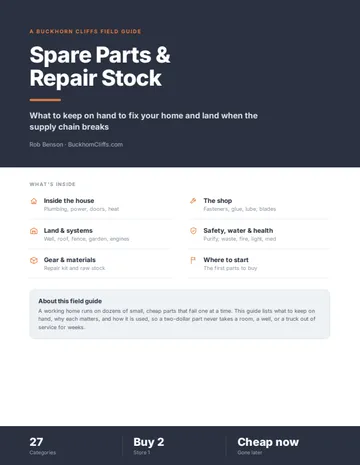
Spare parts: Sanitation and Waste Member
Nine parts that keep waste contained when the sewer or water stops, from the bucket and liners to septic wear parts and an auger.
- Bucket toilet plan even on city sewer
- Septic pump and float switch are the single point of failure on a pumped system
- Toilet auger and plunger clear blockages without water pressure
Lime treatment for an emergency toilet or latrine Member
Member recipe for using hydrated lime on a bucket toilet or pit: how much, where to site it, the protective gear, and how to close out a full bag or pit.
- Hydrated lime only: not garden lime, never quicklime
- Cuts germs, smell, and flies but does not sterilize
- Hand washing prevents more illness than the lime does
Survival bucket for under $300
A full kit in one 5-gallon bucket, and the bucket itself becomes the toilet. This is the free page with the bucket toilet method.
- Garbage bag liner plus a few inches of dry material: sawdust, dirt, sand, leaves, or shredded paper
- Another scoop after each use
- Tie at two-thirds full and bury 100 feet from water
Surface disinfectant from pool shock
The free recipe for a chlorine disinfectant made from dry calcium hypochlorite pool shock (65 to 70% available chlorine, no additives or algaecides): 1½ level teaspoons per gallon for about 1,000 ppm.
- 1 minute wet for everyday germs, 10 for tougher ones and porous surfaces
- Gloves, eye protection, fresh air, a non-metal container, and granules into water, never the reverse
- Store the dry granules out of metal and clear of fuels, oils, and anything that burns: they can ignite organic matter
Surface and tool sanitizer (peroxide) Member
Member page on using 3% peroxide where chlorine fumes are a problem, with the limits spelled out.
- Slow: the surface stays visibly wet 10 minutes
- Unreliable against norovirus, poor against spores
- Covers the prep, the rinse, and which materials it damages
Degrease, descale, disinfect
Cleaning is three jobs. Grease needs an alkali or soap, scale needs an acid, and germs need an oxidizer or antiseptic. The page matches common messes to the compound.
- Washing soda for baked-on pots and greasy stovetops
- Vinegar or citric acid for kettle scale and toilet bowl rings, vinegar for soap scum
- Never mix across families
Shelf-stable laundry powder
Free recipe: baking soda, borax, washing soda, and grated bar soap, with optional oxygen bleach. One batch covers roughly 120 to 150 loads.
- Machine: 2 to 3 tablespoons per load, up to 1/4 cup for heavy loads
- By hand: 1 to 2 tablespoons in a warm basin
- Pretreat stains with dry powder for 15 to 30 minutes
Castile soap
A gentle plant-oil soap for body, hair, dishes, laundry, and washing the skin around a cut, in bar or liquid form. It heads the category checklist.
- Sealed bar or concentrate keeps for years
- Home-diluted soap is good for a few weeks, a couple of months at best
- Any acid, vinegar included, curdles it
DIY hand sanitizer Member
Member recipe built on isopropyl alcohol with a very small amount of glycerin to protect skin. The whole job is keeping the alcohol high enough to work.
- A stopgap for when you cannot wash or buy sanitizer
- Does nothing against C. diff spores
- Store the ingredients and mix small batches
Water purification methods
How to store and make safe water, which everything on this page depends on. The method is there. It gives no amounts: every drinking water dose is in the pool shock purification recipe below, not on this page.
- 1 gallon per person per day
- Calcium hypochlorite does not kill Cryptosporidium: filter or boil when that is a risk
- A slight chlorine smell confirms treatment
Purify water with pool shock
The free recipe that holds every drinking water dose. You make a stock solution from the granules, add a measured amount of that stock to each gallon, and wait before drinking.
- Same granules as the surface disinfectant: 65 to 70% available chlorine, no additives or algaecides
- Does not remove chemical pollutants or heavy turbidity, and does not kill Cryptosporidium
- Never drink the stock solution or the dry powder
Recipes index, by job
Most of these are member recipes with exact amounts. The free ones are marked.
Hands and body
- Liquid castile soap from a barOne bar becomes gel soap for hands, dishes, laundry
- DIY hand sanitizerIsopropyl and glycerin rub for when you cannot wash
- Field body wash and shampooOne castile bar for hands, body, and hair
- Cold process bar soapTallow and lye bar soap. Lye burns: goggles, gloves
- Baking soda field scrubDry deodorant or scrub paste when there is no soap
- Vinegar deodorant and fabric sprayDiluted vinegar for underarms, feet, and gear
- Anti-chafing powderCornstarch dusting that heads off raw skin
- Baking soda bathSoak for widespread itch, heat rash, or sunburn
- Clay maskBentonite mask for oily skin and minor irritation
Hair
- Dry shampoo for extended field useCornstarch at the roots when there is no water
- Wash hair without shampooOccasional baking soda wash with a vinegar rinse
Feet and footwear
- Foot powderBaking soda and cornstarch for moisture and friction
- Baking soda foot soakWarm soak that eases odor and itch
- Antifungal foot soakBoric acid soak that slows athlete's foot fungus
- Deodorize shoes without washingVinegar mist, sun, then dry baking soda
Teeth and mouth
- Baking soda for teeth and gumsStand-in for both toothpaste and mouthwash
- Homemade squeezable toothpasteClay, calcium carbonate, and baking soda paste
Laundry and bedding
- Shelf-stable laundry powder (free)Low suds powder for hand or machine washing
- Laundry booster and fabric strippingWashing soda boost, plus a soak that strips buildup
- Odor-stripping soakLong soak for clothes that stink after washing
- Make washing soda from baking sodaBake your own when the washing soda runs out
- Freshen bedding and pads without washingVinegar mist and sun for foam, bags, and boots
- Mattress and upholstery freshenerBaking soda pulls odor and damp from padding
Dishes and kitchen
- Baking soda surface cleaner and scrub (free)Soap-free scrub for pans, counters, and sinks
- Hot degrease soakWashing soda soak for baked-on grease
- Surface degreaser spray and pasteWashing soda for what you cannot submerge
- Wash and disinfect produce (free)Baking soda for residue, vinegar for bacteria
- Deodorize drains (free)Baking soda, a flush, then vinegar as a second step
- Drain maintenance and grease clogsWashing soda for slow drains and grease buildup
- Descale kettles and coffee makers (free)Vinegar dissolves the scale that kills appliances
Surfaces and disinfecting
- Surface disinfectant from pool shock (free)Chlorine solution for hard surfaces and cleanup
- Surface and tool sanitizerPeroxide for sickrooms and closed spaces
- Surface and equipment disinfectant sprayEthanol spray that dries without residue
- Mold and mildew cleanerVinegar for mold on hard, non-porous surfaces
- Baking soda deodorizer (free)Neutralizes odor in coolers, closets, and gear
Toilet and waste
- Lime treatment for an emergency toilet or latrineHydrated lime over a bucket toilet or pit
Pests and outbuildings
- Limewash for coops, barns, and latrinesHydrated lime whitewash for outbuilding walls
- Chicken coop freshener powderBaking soda and DE for coop ammonia and mites
Wash water and drinking water
- Purify water with pool shock (free)Stock solution, then a measured dose per gallon
- Purify water with Lugol's iodine (free)Drops per quart for short-term emergencies
- Disinfect water barrels and cisterns (free)Long chlorine soak that clears biofilm
- Improve the taste of treated water (free)A pinch of baking soda after full treatment
What goes wrong
Spare parts, skills, audit, and labels
- Parts for the emergency toilet: bucket and snap-on seat, liners or waste bags, cover material, hydrated lime, contractor trash bags, and soap, sanitizer, and bleach.
- Parts for the real toilet: a toilet auger and plunger clear blockages without water pressure. The flapper and braided supply lines fail first, so keep two spares of each.
- On septic: baffle, lid, and filter are the wear parts. On a pumped system, add a spare pump and float switch.
- Skills to practice before you need them: building a bucket toilet, treating waste with lime, and rationing wash water.
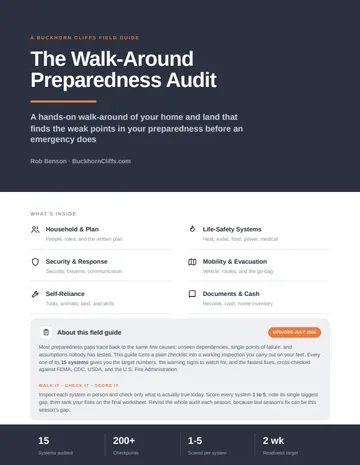
- Audit: the Medical and Hygiene section asks what happens if plumbing stops, how waste will be handled, and whether your hygiene supplies work without running water. Rate it from gap to solid.
- Labels: write the batch date on laundry powder and label any mixed spray. Keep cleaning-kit baking soda labeled and apart from the food-use containers.
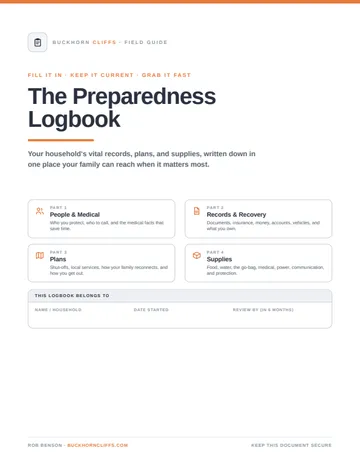
- Logbook: the same audit section ties to the free Preparedness Logbook, where the household medical snapshot holds blood type, allergies, daily medications, and providers for every person.
Category checklist with shelf livesSpare parts: Sanitation and WasteSpare parts: Plumbing and WaterSpare parts: Water Treatment and StorageField guide chapter: Sanitation and WasteField guide chapter: Pest and Rodent ControlAudit: Medical and HygieneNever-mix chart
Questions this answers
Tap a question for the short answer.
What do I do about the toilet when the water is off
It depends on drains and power. While the sewer or septic still drains, pouring a bucket of water into the bowl flushes the toilet, so use water you cannot drink. On a pumped septic or sewer system with the power out, do not pour flush: go straight to the bucket toilet. If drains are backing up, or spare water is gone, close the toilet and use the lined bucket.
How do I make a bucket toilet
Line a 5-gallon bucket with an extra thick garbage bag or a toilet liner. Cover the bottom with a few inches of dry material: sawdust, dirt, sand, leaves, or shredded paper. Every use gets one more scoop on top, which soaks up moisture and holds down odor. A snap-on seat makes the bucket a real toilet. Keep the lid on between uses.
Where do I dispose of bucket toilet waste
Tie the bag off at two-thirds full. Bury it at least 100 feet from any water source and from the garden, downhill of your well or spring, above the flood line, and well clear of where people live. Never compost or spread human waste, because parasite eggs can survive in it. Lime lowers the germ load but does not sterilize, so limed waste gets buried the same way.
What kind of lime goes in an emergency toilet
Plain hydrated lime. Its chemical name is calcium hydroxide, and stores also label it slaked lime or builders' lime. It makes the waste very alkaline, which cuts down the cholera and dysentery germs, reduces the smell, and keeps flies off. Garden or agricultural lime does nothing here. Quicklime is another product entirely and far more dangerous. Hydrated lime is caustic: wear gloves, goggles, and a mask.
How do I wash my hands without running water
Keep soap and water right beside the toilet and in the kitchen. A castile bar lathers in cold water. Hand sanitizer and body wipes cover the times you have no water to spare, but sanitizer does not cut grease, is unreliable against norovirus, and leaves hands flammable until they dry. Soap and water win whenever you can spare the water.
How do I disinfect surfaces without store bleach
Use calcium hypochlorite pool shock with 65 to 70% available chlorine and no additives or algaecides. Mix 1½ level teaspoons of granules into 1 gallon of water for about 1,000 ppm. Wear gloves and eye protection, open a window, use glass or plastic, and put the granules into the water, never the reverse. Everyday germs need 1 minute wet. Tougher germs and porous surfaces need 10. Use within 24 hours.
Can I use hydrogen peroxide instead of bleach
Yes, for everyday germs where chlorine fumes are a problem: a sickroom, a closed space, or a house with asthma. Use the 3% household strength and keep the surface visibly wet for 10 minutes. It is unreliable against norovirus and poor against spores, so a stomach bug calls for the pool shock solution. Never combine peroxide with vinegar, bleach, or the chlorine solution.
How do I wash clothes by hand without detergent
Use a laundry bar, or mix the free laundry powder recipe: baking soda, borax, washing soda, and grated bar soap. By hand, stir 1 to 2 tablespoons into a warm basin, then work the clothes through it. Borax and washing soda irritate skin, so wear gloves if yours is sensitive. Vinegar goes in the rinse, never the wash. Keep the powder off silk and wool.
How do I wash my hair with little or no water
Let the water decide. With none, dust cornstarch on the roots as a dry shampoo: it soaks up oil but does not clean, so it is a stopgap. With a little water, a baking soda wash followed by a vinegar rinse strips odor, for occasional use only. With enough water to rinse, do a real wash with a castile bar.
What can I brush my teeth with if toothpaste runs out
Baking soda. It is a very low abrasion cleaner that lifts plaque and neutralizes the acids mouth bacteria make, and it works as both a paste and a rinse. Use a soft brush with light pressure and do not swallow it. It has no fluoride, so it does not protect against cavities. It is a stand-in until toothpaste is back, not a permanent swap.
Which cleaners should never be mixed
Never let a chlorine disinfectant such as pool shock or bleach meet an acid like vinegar, which makes toxic chlorine gas, or ammonia, which makes toxic chloramine gas. Never mix peroxide with bleach or chlorine solution either: the two wipe each other out in a hot reaction, and the pressure can burst a capped bottle. Peroxide with vinegar makes corrosive peracetic acid. Use one product at a time.
How do I keep flies and rodents out when sanitation breaks down
Cover every toilet deposit and keep the lid closed so flies cannot reach the waste, and screen windows and vents. For rodents, keep many snap traps, block gaps with steel wool, foam, and 1/4 inch hardware cloth, and move food and seed into metal cans or thick totes. Rodents find an open bag of grain within days, and they spread disease.
Keep going
Related to this
Membership · $49.95 per year
There is a lot more behind the lock
Every recipe and resource from the Prepper's Chemical Survival Guide, all six field guides to read here and download, the full audit and logbook, all twelve reference charts, and no ads.
My Manual · included
Build your own field manual
The most useful thing a membership gives you. Save any page on this site, recipes, charts, and whole field guides included. Arrange them in the order you want, name it, and print one manual with a cover and contents, or keep it as a PDF that opens with no signal.
- It works when this site does not
- Only your pages
- Anyone in the house can use it
- One current copy, not a pile of printouts
- The house binder
- A copy for the bug-out bag or truck
- A copy for family
- An offline PDF
Stay Ready
New entries, updates, and useful instruction.
Stay one step ahead on your preparedness journey.