Quick facts
- .308 WinDeer, elk, moose, black bear; most ethical shots inside 300 yards
- .22 LRSquirrels, rabbits, raccoons, pests; 50 to 75 yards, 100 at most
- Scope for the .308
- Vortex Crossfire II 3-9x40
- Dead-Hold BDC reticle
- 1 inch tube
- Zero.308 at 100 yards; .22 LR at 50 yards
- CasePelican V800 Vault double rifle case, interior 53 x 16 x 6 inches, lockable
- Cost when I bought it$1,432 in August 2023 for both rifles, the scope and the case
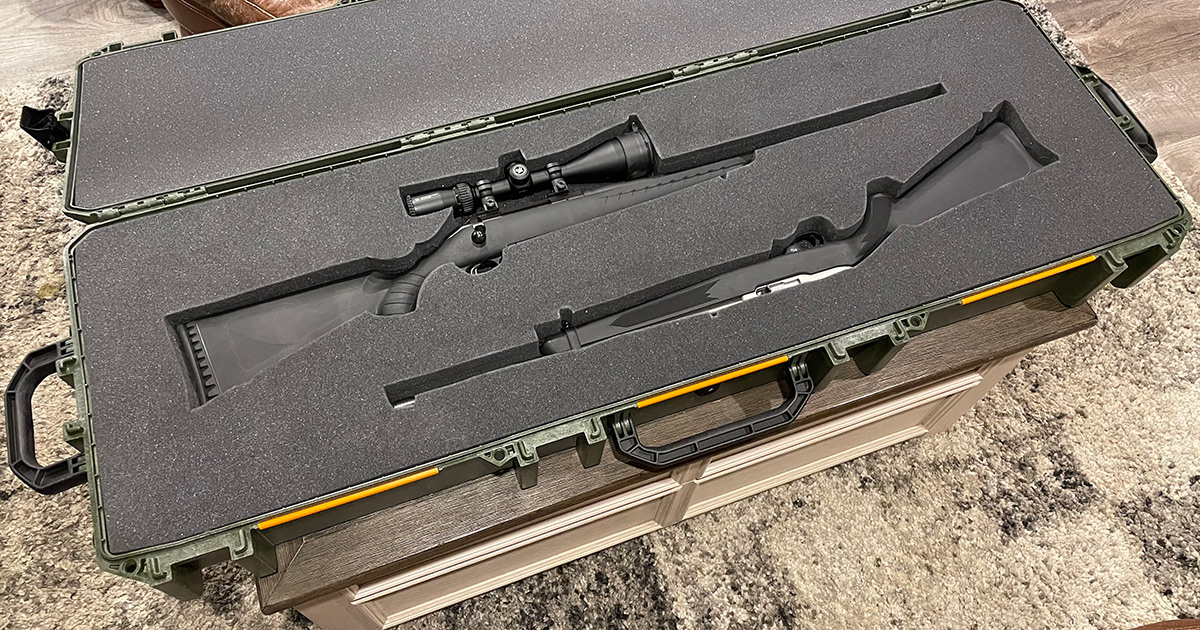
Two rifles cover nearly every hunting job on this continent, and neither one is exotic. A bolt action in .308 Winchester takes deer, elk, moose and black bear. A .22 Long Rifle takes squirrels and rabbits, keeps predators out of the chicken run, and teaches you to shoot for a few cents a round. Both cartridges are on the shelf at every store that sells ammunition, which matters more than any spec sheet when supply gets tight. This is the setup I would hand a new hunter: the two rifles, the one scope that matters, how to zero and store them, and how to cut a double case so they ride tight.
The .308 Winchester
Ruger American Rifle, .308 Win
Medium and large gameA bolt action with an adjustable trigger, a cold hammer forged barrel, a light synthetic stock and a soft recoil pad, at a price that leaves money for the scope. It is not a rifle anyone brags about, and it puts three rounds into a group you can cover with a coin, every time.
The cartridge has enough energy for deer, elk, moose, black bear, pronghorn and hogs at the distances hunters actually shoot, which is inside 300 yards. It will fly much farther, and target shooters use it to 800 yards and beyond, but an ethical shot on an animal depends on your ability to place it, and for most shooters that limit arrives well before the cartridge's. Recoil is real but manageable; it is the round most military and police rifles used for half a century, and a 12 year old can learn it with the pad and a bench.
Ammunition: a 150 grain soft point or bonded bullet for deer, 165 to 180 grain for elk and bear. Buy a case of one load, zero with it, and hunt with it; switching loads moves the zero. The ammunition by caliber page covers what to stock and proper ammo storage covers how to keep it.
The .22 Long Rifle
Ruger 10/22 Carbine, .22 LR
Small game, pests, practiceThe most common .22 rifle in America, with a 10 round rotary magazine that feeds without drama, a cold hammer forged barrel, and a scope base adapter in the box. Parts, magazines and upgrades are everywhere, and it will outlast you.
The .22 is for squirrels, rabbits and raccoons, and for the fox or skunk at the coop at 2 a.m., when you want accurate and quiet more than powerful. Clean kills happen inside 50 to 75 yards; the bullet drops fast and loses energy past 100. Recoil is close to none, which is why it is the rifle to learn on: trigger control, breathing and follow-through are the same skills at any caliber, and the .22 lets you practice them for a few cents a shot. One rule to know: federal law does not allow rifles for migratory birds such as doves, ducks and geese, so check your state's regulations before taking any bird with a .22.
Scope or iron sights
Vortex Crossfire II 3-9x40, Dead-Hold BDC
For the .308A one inch tube, a 40 mm objective, fully multi-coated glass and a reticle with holdover marks below the crosshair for the drop at 200, 300 and beyond. It is inexpensive, it holds zero, and Vortex replaces it if it ever breaks. Skip the 3-9x50 Straight Wall BDC version that turns up in the same search: its marks are calibrated for straight wall cartridges such as .450 Bushmaster and .45-70, not for a bottleneck round like the .308 that shoots much flatter.
Whatever scope you pick, mount it with a torque wrench to the ring maker's spec and confirm every holdover mark on paper before you trust it on an animal. The marks are a starting point; your load and your barrel decide where the bullet lands.
Zeroing both rifles
Every session with the .308 costs a dollar or more a round and beats your shoulder. Do most of the practice on the .22 at 50 yards: same trigger press, same breathing, same follow-through, for cents. Then confirm on the .308 with a box of the hunting load.
The case and how to cut the foam
Pelican V800 Vault double rifle case
Transport and storageA hard polymer shell that is crushproof, dustproof and weather resistant, with six push-button latches, two wheels, heavy handles, and four layers of foam inside a 53 by 16 by 6 inch interior. It takes two scoped rifles with room for a bolt and a cleaning kit. Two padlock hasps make it a locked container for travel and for the house.
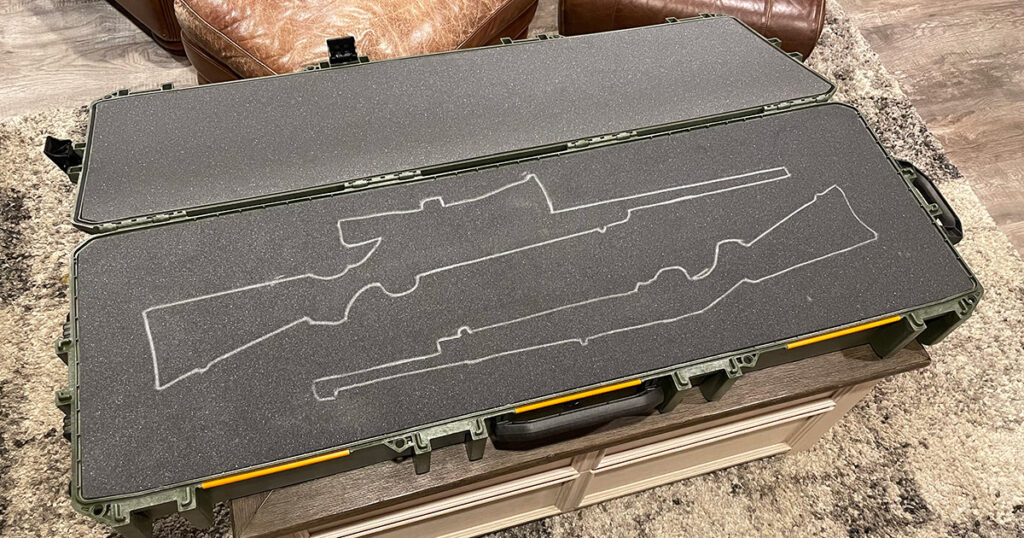
The case ships with pick-and-pluck foam, but a traced and cut layout holds the rifles tighter and looks like it was made for them. It takes an hour.
- Lay out. Set the rifles on the top foam layer where you want them, bolts and scopes clear of each other, at least an inch from every edge and from each other. Put the bolt and a cleaning kit in the gaps if you want cutouts for them too.
- Trace. Draw around each rifle with a chalk marker. Chalk wipes off; a Sharpie does not.
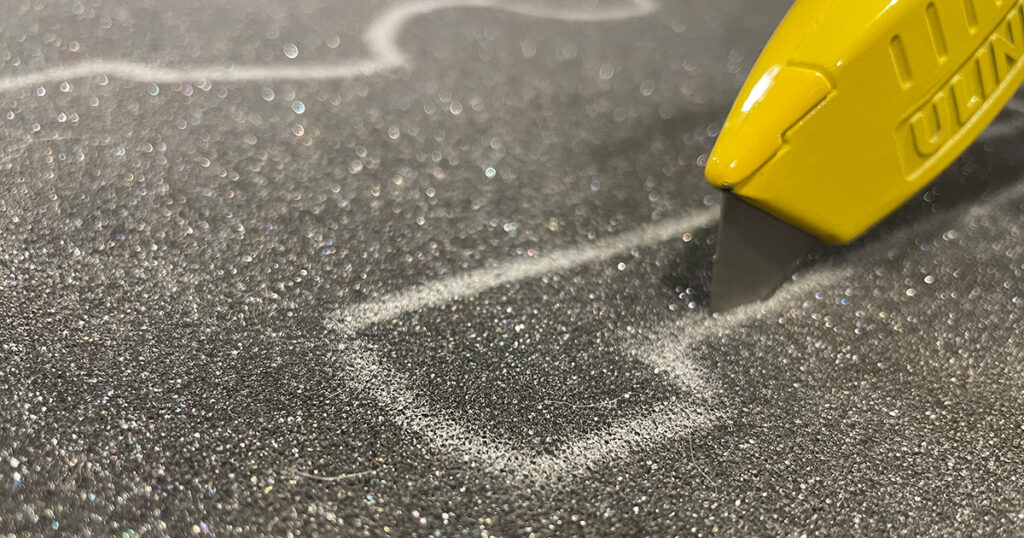
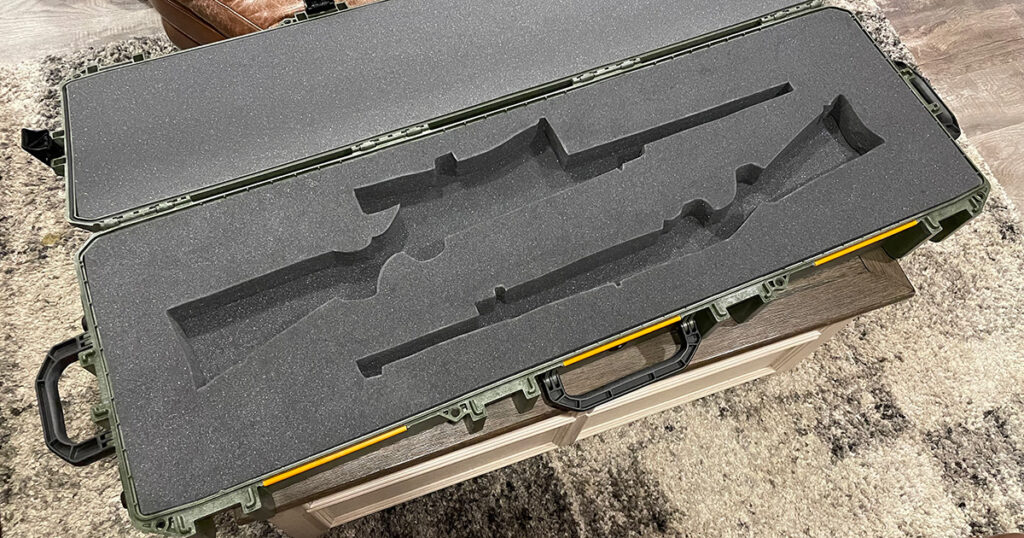
- Cut. A fresh blade in a utility knife, held vertical, in shallow passes along the chalk line. Do not try to cut the full depth in one stroke; the blade wanders and the wall gets ragged. Cut inside the line; a tight cutout is easy to open up and a loose one is ruined.
- Layer by layer. The case has four foam layers. Cut only as many upper layers as the rifle needs to sit flush with the scope clear of the lid, and leave the bottom layer whole so the rifle rides on foam, not on the shell.
- Test the fit. Close the lid on the rifles and shake the case. Nothing should move. Trim any high spot with the same knife.
Storage and kids
A locked case protects children only when the whole routine is in place. Rifles go in unloaded, every time. Ammunition is locked somewhere else, in an ammo can with a padlock or a separate cabinet; the ammo storage guide covers keeping it dry and stable as well as locked. The key or combination lives where a child cannot reach it or guess it. A cable lock through the action inside the case is a second layer that costs ten dollars. A safe is the better long-term answer and the case is what gets used on every trip; I have both, and the case does the work.
Teach every child in the house the same rule: a firearm is never touched without an adult, and if you find one, leave it and tell a grown up. Curiosity is what a locked case is for; the rule is what covers the day the case is open.
Between seasons, wipe the bores and the exterior with a light oil, store the case somewhere dry, and keep the spares and cleaning supplies where you can find them. For where these rifles fit in a larger plan, see home security and defense and the sling guide for carrying in the field.
What it cost
$1,432 in August 2023, everything but ammunition and rings. Prices have moved since; check current ones. Add a set of rings, a box of hunting ammunition for the .308, a brick of .22 for practice, a cleaning kit and a cable lock, and the whole setup is under $1,600 and will serve for decades.
Questions this answers
Tap a question for the short answer.
What rifles should a beginner hunter start with?
Two rifles: a bolt action .308 Winchester for medium and large game, and a .22 Long Rifle for small game, pests and cheap practice. Together they cover nearly every hunting job in North America, both cartridges are sold everywhere, and the .22 lets you learn trigger control and shot placement for pennies a round with almost no recoil. Mine are a Ruger American in .308 and a Ruger 10/22.
What can I hunt with a .308?
Deer, elk, moose, black bear, pronghorn and feral hogs. The .308 has enough energy for all of them at the distances most hunters actually shoot, which is inside 300 yards. It will reach much farther on paper, but an ethical shot on an animal depends on your ability to place it, and for most shooters that limit arrives long before the cartridge's does.
What is the effective range of a .22lr?
For a clean kill on small game, 50 to 75 yards, 100 at most. The bullet drops fast and sheds energy past that. It also has almost no recoil and is quiet enough to use on a predator near the chicken coop without waking the county, which is half of why every homestead owns one.
Do I need a scope on a .22 rifle?
No. Iron sights are fine at the distances a .22 is used. A low power scope helps on squirrels in a tall tree or for target shooting, and it is cheap to add later. The .308 is different: for shots out to 300 yards on big game, a scope is not optional.
What distance should I zero a hunting rifle at?
Zero the .308 at 100 yards; with most hunting loads it is then about 3 to 4 inches low at 200 and 13 to 15 inches low at 300, so hold on hair to 200 and use the reticle's marks beyond that, after you have confirmed them on paper. Zero the .22 at 50 yards. Check both zeros every season and after any knock to the scope.
What is the best case for two scoped rifles?
I use the Pelican V800 Vault double rifle case: a hard polymer shell, six push-button latches, wheels, four layers of foam, and a 53 by 16 by 6 inch interior that takes two scoped rifles. It locks, it is crushproof and it keeps rain out. Cut the foam to your rifles so they cannot move.
How do I cut the foam in a pelican vault case?
Lay the rifles on the foam where you want them, at least an inch from the edges and from each other. Trace them with chalk. Cut straight down along the line with a sharp utility knife, taking small passes rather than one deep one, and cut conservatively; you can always take more off. Leave the bottom layer whole and cut only as many upper layers as the rifle needs to sit flush.
How do I keep kids away from my rifles?
A locked case or safe, with the rifles unloaded, the ammunition locked separately, and the key or combination somewhere a child cannot reach or guess. A cable lock through the action inside the case adds a second layer. A safe is better for the long term; a lockable case is what gets used every trip. Teach every child in the house that a firearm is never touched without an adult.
Keep going
Related to this
Membership · $49.95 per year
There is a lot more behind the lock
Every recipe and resource from the Prepper's Chemical Survival Guide, all six field guides to read here and download, the full audit and logbook, all twelve reference charts, and no ads.
My Manual · included
Build your own field manual
The most useful thing a membership gives you. Save any page on this site, recipes, charts, and whole field guides included. Arrange them in the order you want, name it, and print one manual with a cover and contents, or keep it as a PDF that opens with no signal.
- It works when this site does not
- Only your pages
- Anyone in the house can use it
- One current copy, not a pile of printouts
- The house binder
- A copy for the bug-out bag or truck
- A copy for family
- An offline PDF






Stay Ready
New entries, updates, and useful instruction.
Stay one step ahead on your preparedness journey.