Quick facts
- HayGrasses (timothy, orchard, brome) and legumes (alfalfa, clover), cut green and dried; animal feed
- StrawHollow stems of wheat, oats, barley or rye left after the grain is combined; bedding and mulch
- Tell them apartHay is green to gray-green and smells sweet; straw is gold, shiny and hollow
- Small square baleHay 45 to 70 lb; straw 35 to 50 lb; both roughly 14 x 18 x 36 inches
- Round bale800 to 1,500 lb; needs a tractor or a bale spear
- Before you mulch with itAsk if the field was sprayed with a persistent herbicide (aminopyralid, clopyralid)
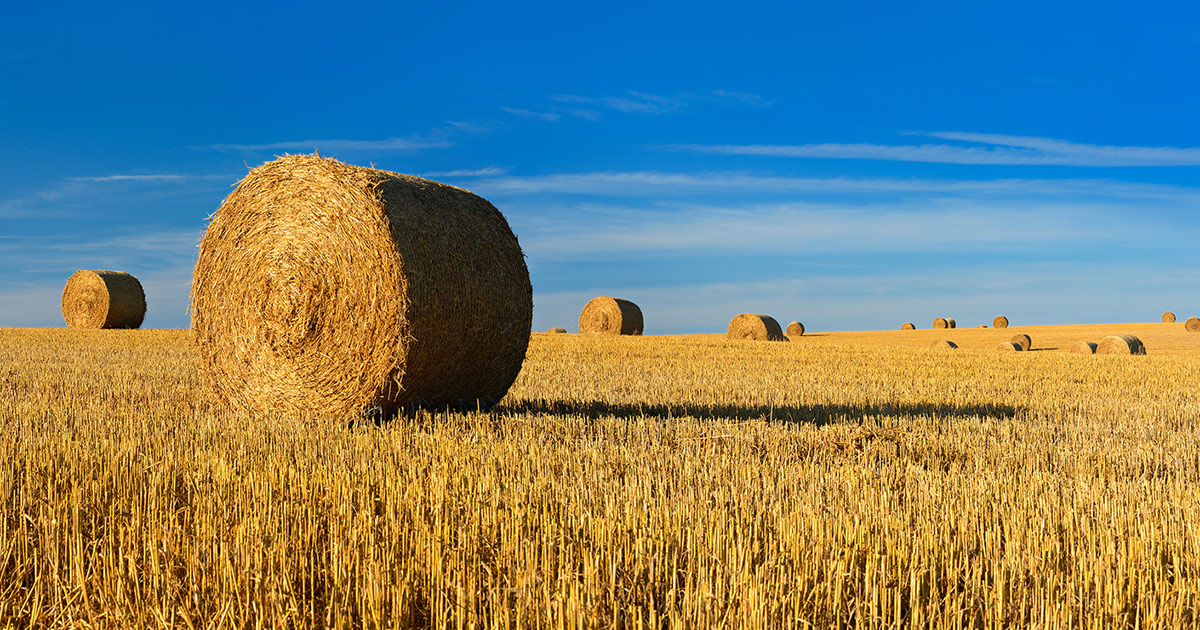
They sit inches apart at the feed store, they are both baled, and both are yellow-ish from ten feet away. One is food and the other is a building material. If you keep animals or a garden you will buy both, and buying the wrong one is an expensive mistake in one direction and a sick animal in the other.
Hay: the feed
Hay is a whole plant, grasses or legumes or a mix, cut while it is still green and growing, left in the field to dry to about 15 percent moisture, then raked and baled. It is cut before the seed heads form because the protein and energy are in the leaves, and both fall off fast once the plant goes to seed. Good hay is green to gray-green, smells sweet, and still has its leaves.
- Break one open. Green inside, sweet smell, leaves on the stems.
- Push a hand into the middle. Warm means it was baled wet and will mold; a hot stack can catch fire.
- Brown, gray, dusty or musty hay was rained on or stored badly. Dust is mold; horses get heaves from it.
- Weeds, sticks, trash and baling twine in the bale mean you are paying hay price for garbage.
Straw: the leftover stem
Straw is what the combine leaves behind. Wheat, oats, barley and rye are grown for their seed heads; once those are threshed off, the hollow stems standing in the field are cut, raked and baled. There is almost no feed value in them, which is exactly why straw is cheap and why it is such a good bedding: it is dry, hollow, springy and slow to rot.
Straw carries a little grain seed. A few wheat sprouts in the garden after mulching are normal; pull them.
Telling them apart in ten seconds
| Hay | Straw | |
|---|---|---|
| Color | Green to gray-green | Gold, shiny |
| Smell | Sweet, grassy | Dry, faint, dusty |
| Stems | Solid, leafy, sometimes with flowers | Hollow tubes, no leaves |
| Weight, small bale | 45 to 70 lb | 35 to 50 lb |
| Price | Two to four times straw | Cheap |
| Job | Feed | Bedding, mulch, insulation |
Hay is for horses. Straw is for stalls. Feed straw to a horse and it goes hungry; bed a horse on alfalfa and it eats its bed and gets fat.
Bales: what you are buying
A bale is a compressed, tied bundle so the stuff can be moved and stacked. The two shapes matter because they decide what equipment you need.
Buy hay by weight when you can. A light, loosely packed bale at the same price is less feed.
What straw does on my place
Some hay and straw fields are sprayed with persistent broadleaf herbicides (aminopyralid, clopyralid, picloram). They pass through animals and survive composting, and mulch or manure carrying them will curl and stunt tomatoes, beans, peas and potatoes for a season or more. Before straw or manure goes on a vegetable bed, ask the grower what was sprayed. If nobody knows, plant a few bean seeds in a pot of the suspect material and watch for twisted leaves before you spread it.
Storing both
- Off the ground, on pallets, under a roof. Ground contact rots the bottom bale and wicks moisture up the stack.
- Hay needs air: stack with gaps, never against a wall, and never stack fresh hay tight in a closed barn. Wet hay heats and can ignite.
- Straw is forgiving; a tarp over a pallet stack outdoors gets it through a season. Keep the tarp off the sides so air moves.
- Mice love both. Cats, traps and a tidy stack.
- Buy hay in summer when it is cut. Winter hay is the same hay at a higher price, and in a hard year there is none to buy.
Questions this answers
Tap a question for the short answer.
What is the difference between straw and hay?
Hay is food: grasses and legumes cut while green, dried in the field and baled for feed. Straw is the hollow stalk left in the field after wheat, oats, barley or rye have been combined for grain; almost no feed value, which is exactly why it is cheap bedding, mulch and insulation. Hay is green and smells sweet. Straw is gold, shiny and hollow.
What is hay made of?
Grasses such as timothy, orchardgrass, brome and bermuda, legumes such as alfalfa and clover, or a mix. It is cut before the plants set seed, because feed value drops as they mature, dried to under about 15 percent moisture and baled. Alfalfa is the high-protein hay for dairy goats and growing stock; grass hay is the maintenance feed for horses and adult animals.
What is straw made of?
The stems left standing after a cereal grain is harvested. The combine takes the seed heads and leaves the straw, which is raked and baled. Wheat straw is the common one; oat straw is softer and the one I want for bedding; barley straw has stiff awns that irritate skin and eyes.
What can I use straw for?
Animal bedding, chicken coop litter, garden mulch, covering new lawn seed, insulating a well head or a stock tank, a windbreak or an archery backstop, growing potatoes and tomatoes in straw bales, and compost once it is soiled. It is not feed, though goats and cattle will pick at it as roughage.
Can I mulch a vegetable garden with straw?
Yes, and it is my favorite mulch: a 4 to 6 inch layer holds moisture, blocks weeds and breaks down into the soil by the next season. Two cautions. Straw that was sprayed with a persistent herbicide (aminopyralid or clopyralid) will stunt and curl tomatoes, beans and potatoes, so ask the grower before you buy. And straw carries some grain seed, so expect a little wheat to sprout and pull it.
Do horses eat hay or straw?
Hay. Straw is bedding. A horse will nibble straw bedding and it does no harm as roughage, but it cannot live on it. The old line, hay is for horses, is the easiest way to keep the two straight.
How much does a bale of hay weigh?
A small two-string square bale of grass hay runs 45 to 60 lb; alfalfa 60 to 70 lb; three-string bales 100 to 125 lb. Straw bales are lighter, 35 to 50 lb, because the stems are hollow. Round bales run 800 to 1,500 lb depending on size and density.
How do I tell if hay is good?
Green color, a sweet smell, leaves still on the stems, and no dust, mold or heat when you break a bale open. Brown, dusty or musty hay was rained on or baled wet. Push your hand into the middle of a bale; if it is warm, it was baled too wet and can mold or even start a fire in the stack.
Keep going
Related to this
Membership · $49.95 per year
There is a lot more behind the lock
Every recipe and resource from the Prepper's Chemical Survival Guide, all six field guides to read here and download, the full audit and logbook, all twelve reference charts, and no ads.
My Manual · included
Build your own field manual
The most useful thing a membership gives you. Save any page on this site, recipes, charts, and whole field guides included. Arrange them in the order you want, name it, and print one manual with a cover and contents, or keep it as a PDF that opens with no signal.
- It works when this site does not
- Only your pages
- Anyone in the house can use it
- One current copy, not a pile of printouts
- The house binder
- A copy for the bug-out bag or truck
- A copy for family
- An offline PDF
Stay Ready
New entries, updates, and useful instruction.
Stay one step ahead on your preparedness journey.