Quick facts
- Purposes
- Scratching
- defence
- foraging
- Cows and heifersNarrower base, grow upwards with a curve at the tip
- BullsThicker base, grow forward with little or no curve
- SteersGrow like a female's, slender with an upwards curve
- Mature spreadAs wide as 3-4 feet tip-to-tip
- Breed registryFirst herd book published in 1885
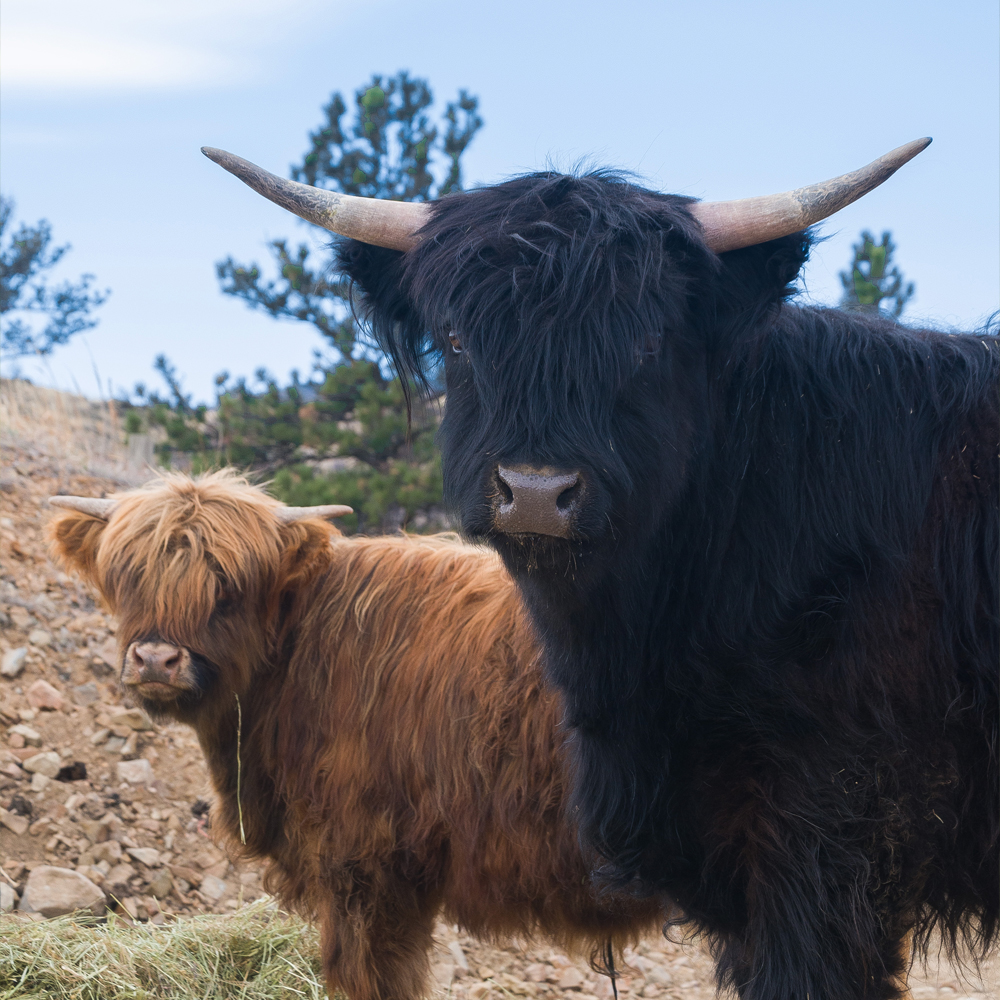
In this article you'll learn all about Highland Cow Horns including: the history of Highlands, the purpose of their horns, how they differ, grow, and more!
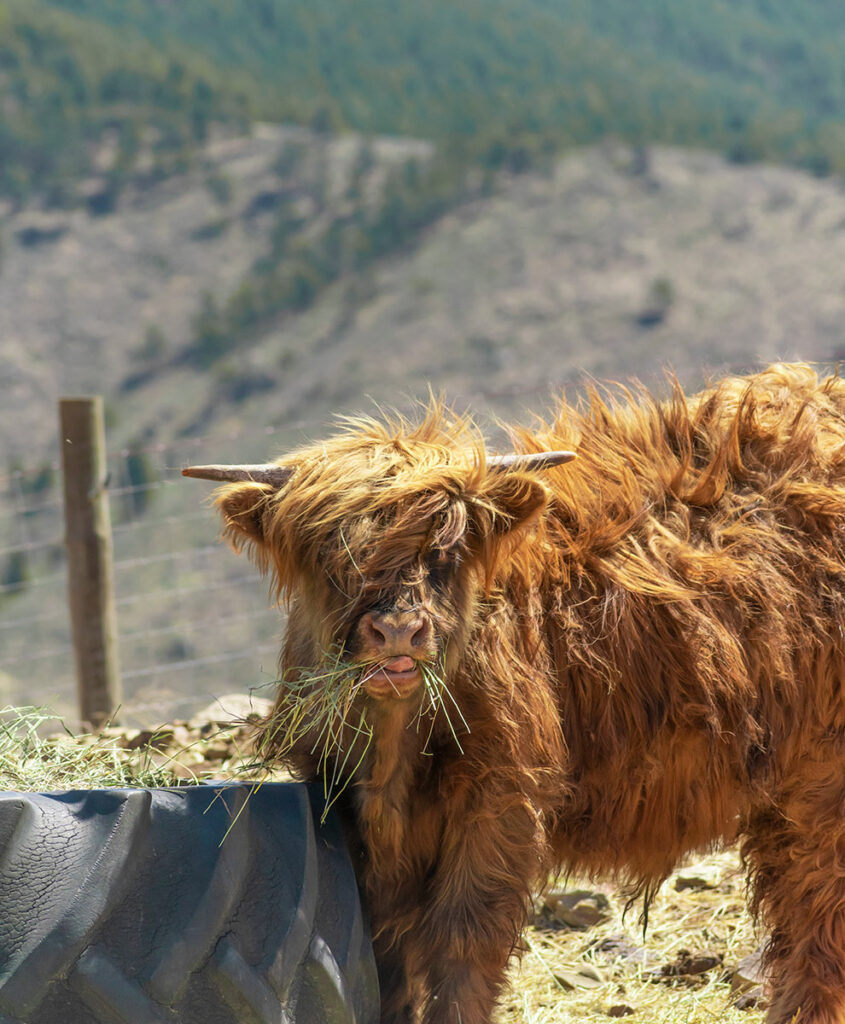
Scottish Highland cows are one of the most unique and beloved breeds of all cattle. They're also one of the oldest registered cattle breeds in the world, with the first herd book published in 1885. In addition to their adorably fluffy faces with eyes covered by long sweeping bangs, their distinctive horns help them stand out from other breeds. So what's the deal with those Highland cow horns anyway? I'm here to answer all your highland cattle horn questions.
What's The Purpose of Highland Cow's horns?
Aside from their obvious good looks, a Highland cow's horns serve a variety of functional purposes.
Help Scratch Itchy Spots
Imagine being covered in hair - both an undercoat and top guard hairs - and dealing with itchy skin, hot weather, flies, and dry grass. Cows aren't exactly known for their flexibility and their hooves and tails can only reach so far to swat flies or scratch their itchy spots. Horns to the rescue! Being able to reach around and have an additional 12" or more to get to the trouble spot is the perfect use for that extra weight up top.
Defence
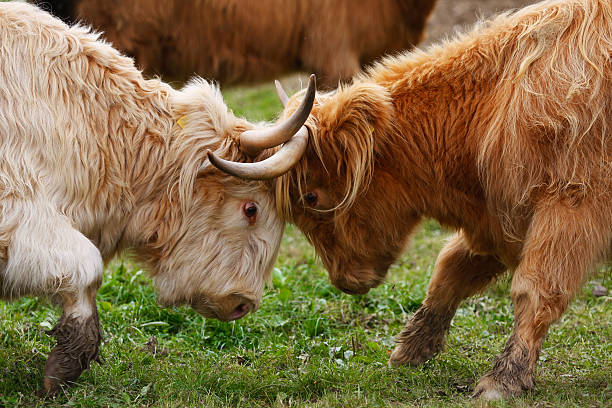
In addition to scratching, Highland Cow Horns work well for defending themselves or fighting with others. Since highlands are generally calm and docile, fighting usually occurs between mature bulls with plenty of testosterone to spare. It's far less common among steers (castrated males) and females. They will usually just play fight, with minor head-butting and pushing.
Foraging
Another impressive use for their horns is foraging. They will use them to root up the ground to make it easier to snack on the grasses and flowers, finding just what they want and leaving behind the vegetation that is of no interest to them. They've got built in shovels right on their heads.
Do Both Males & Females Have Horns?
Both ladies and gents grow horns, though their appearance differs from one another.
Heifers and Cows
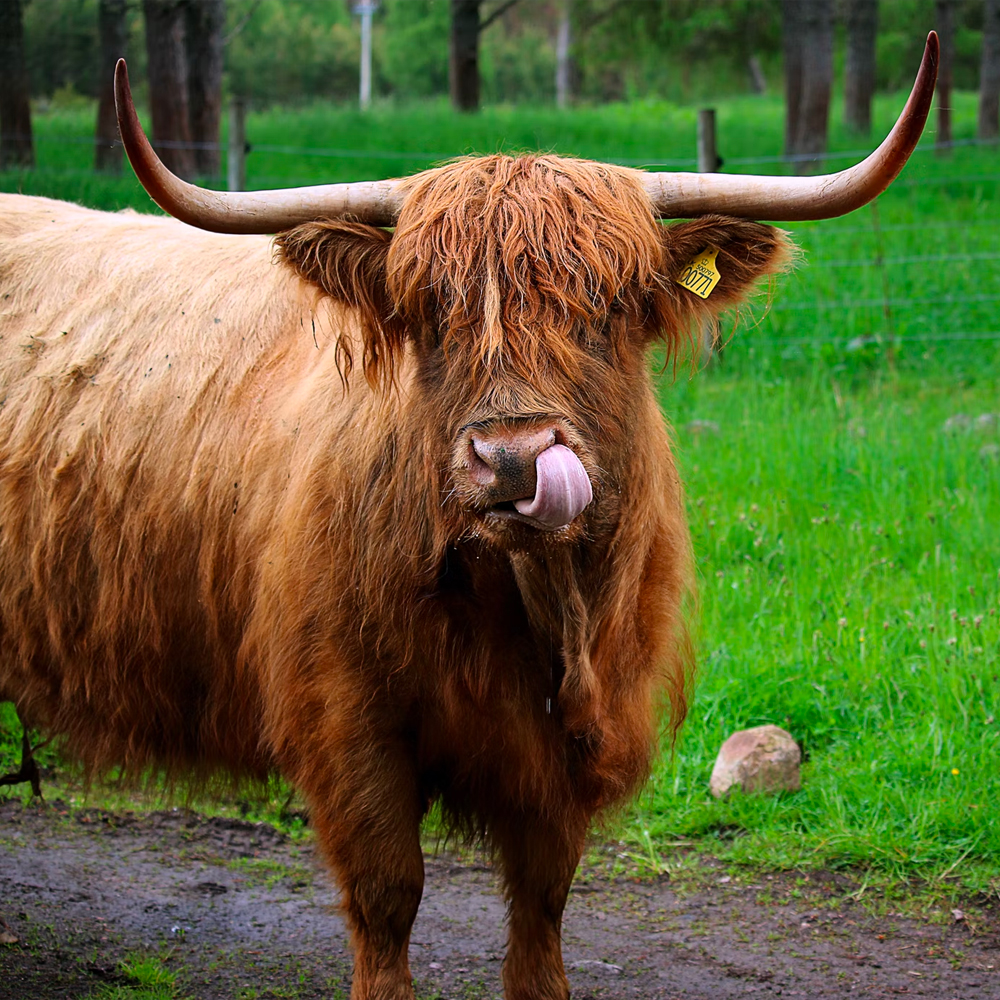
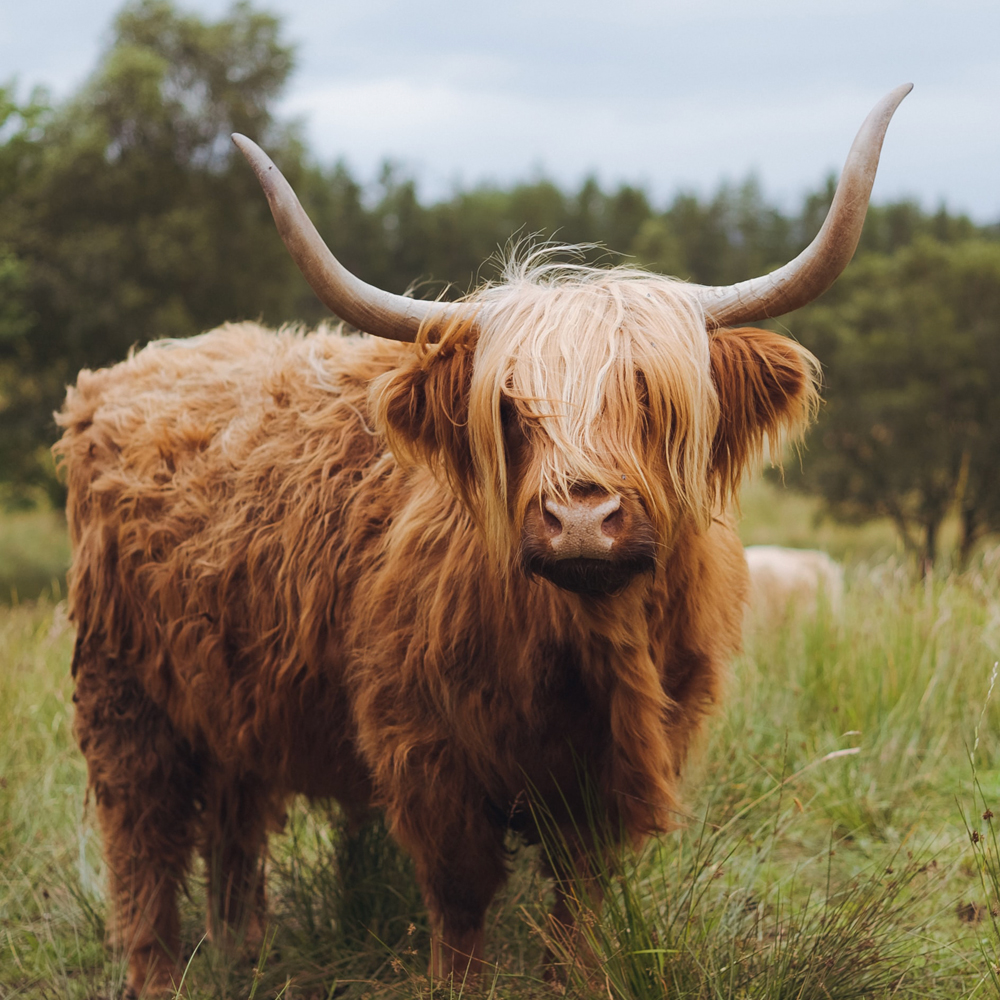
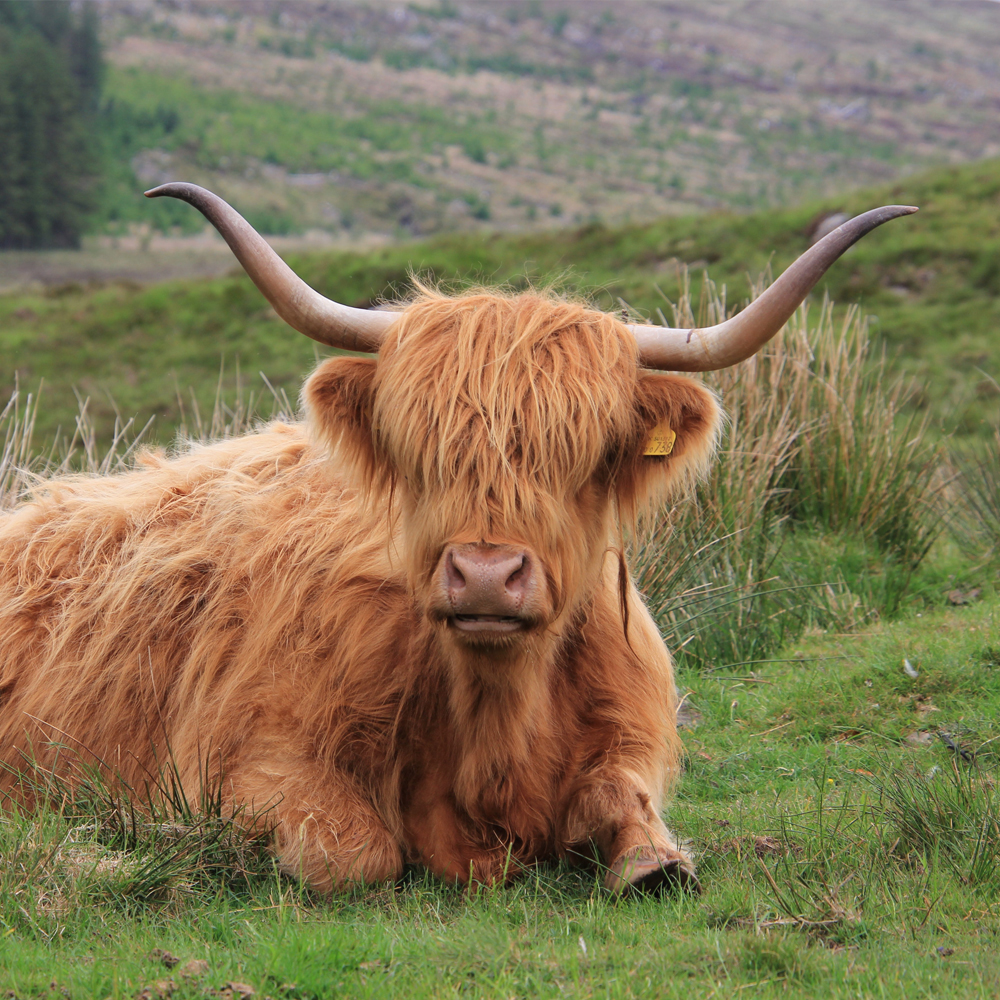
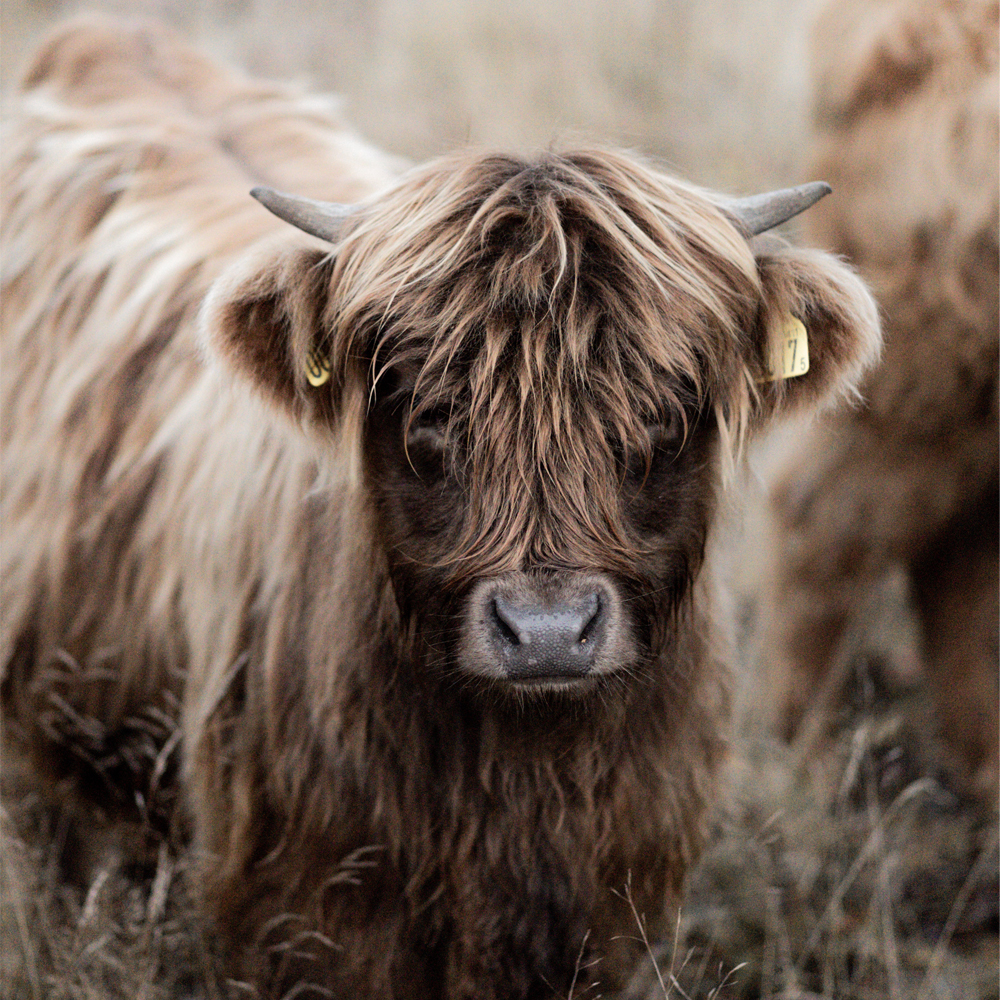
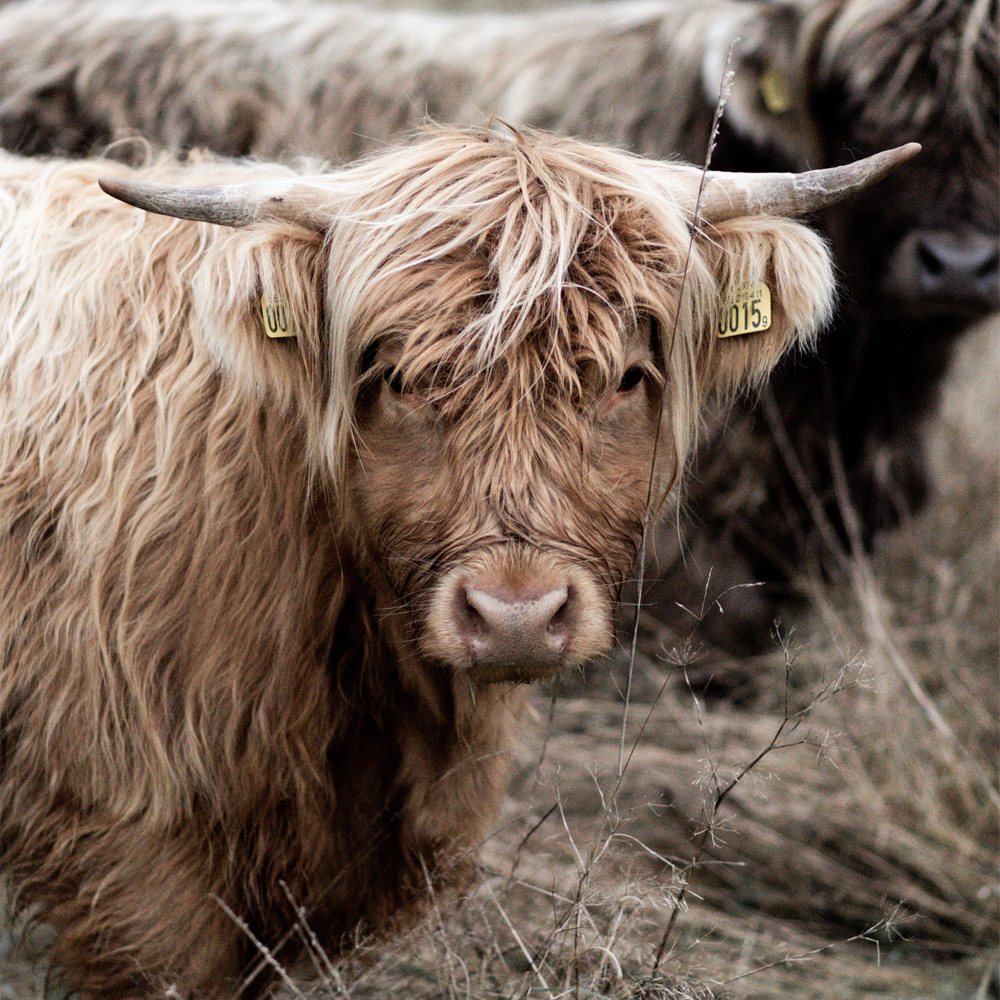
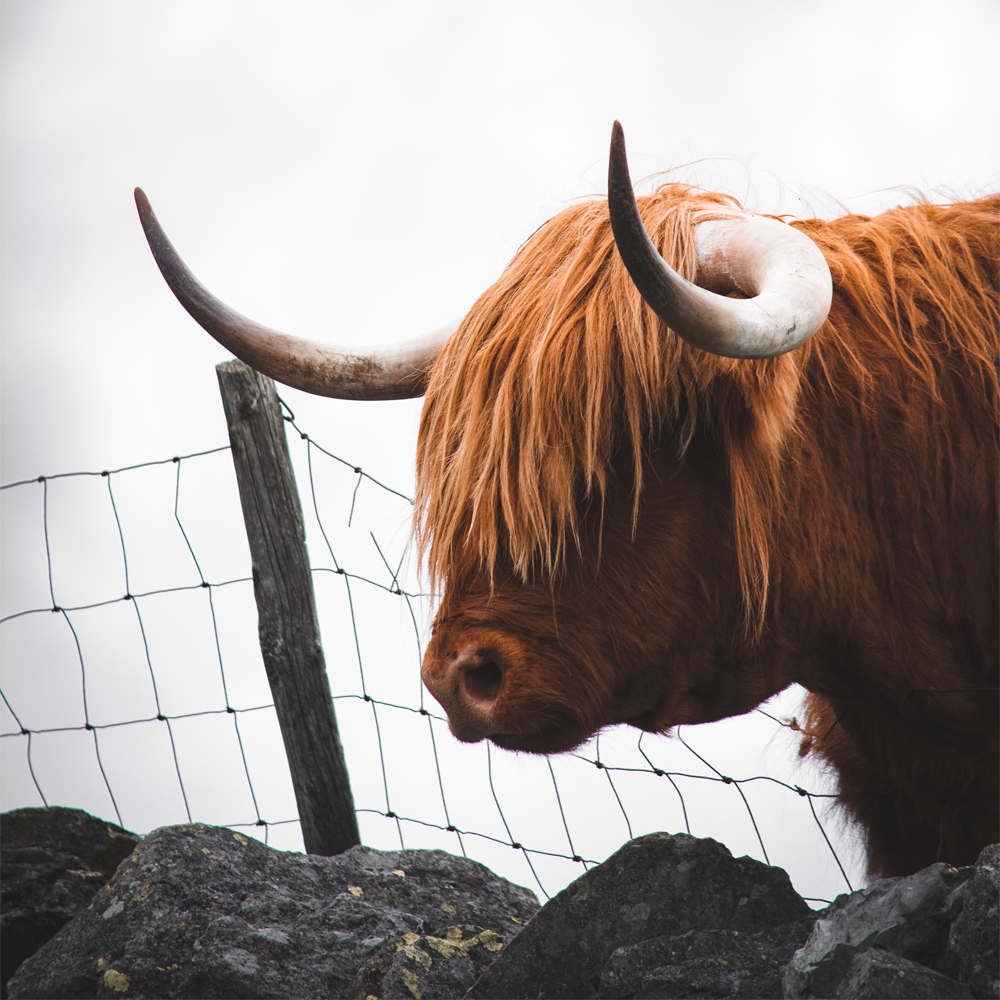
In heifers (young unbred female) and cows (mature female who has calved), Highland Cow Horns are more narrow at the base than a bull's, and grow upwards, often with a curve at the tip. The older a cow is, the more majestic her horns look as they grow even taller with that gentle curve upwards at the tip.
The three photos below illustrate different variations in a female's horns.
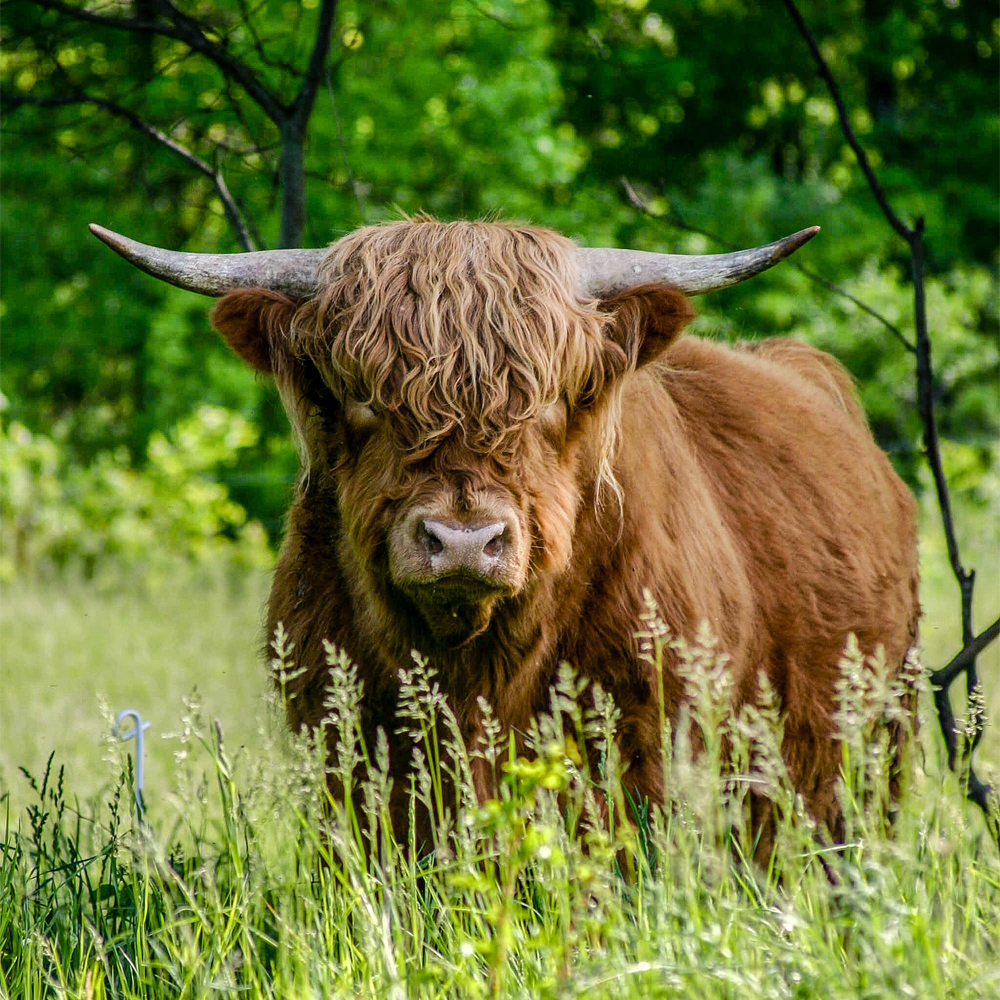
Bulls
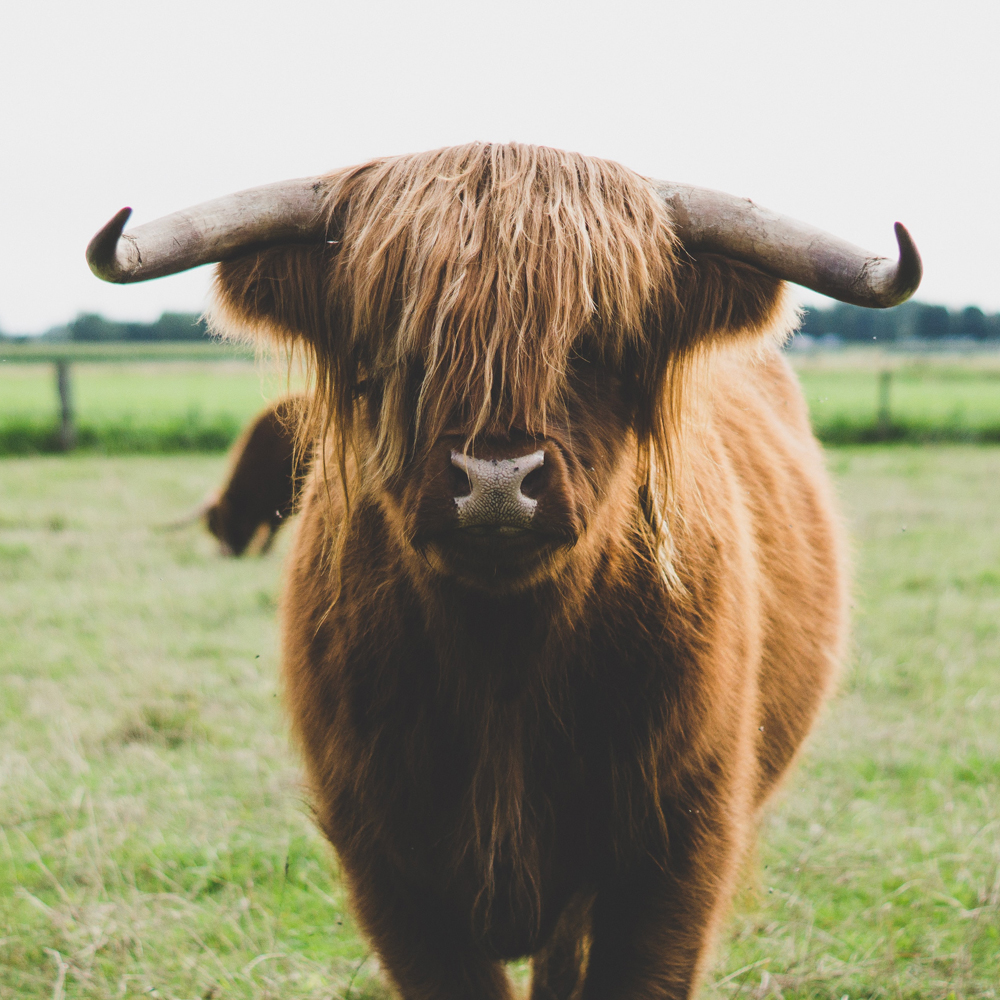
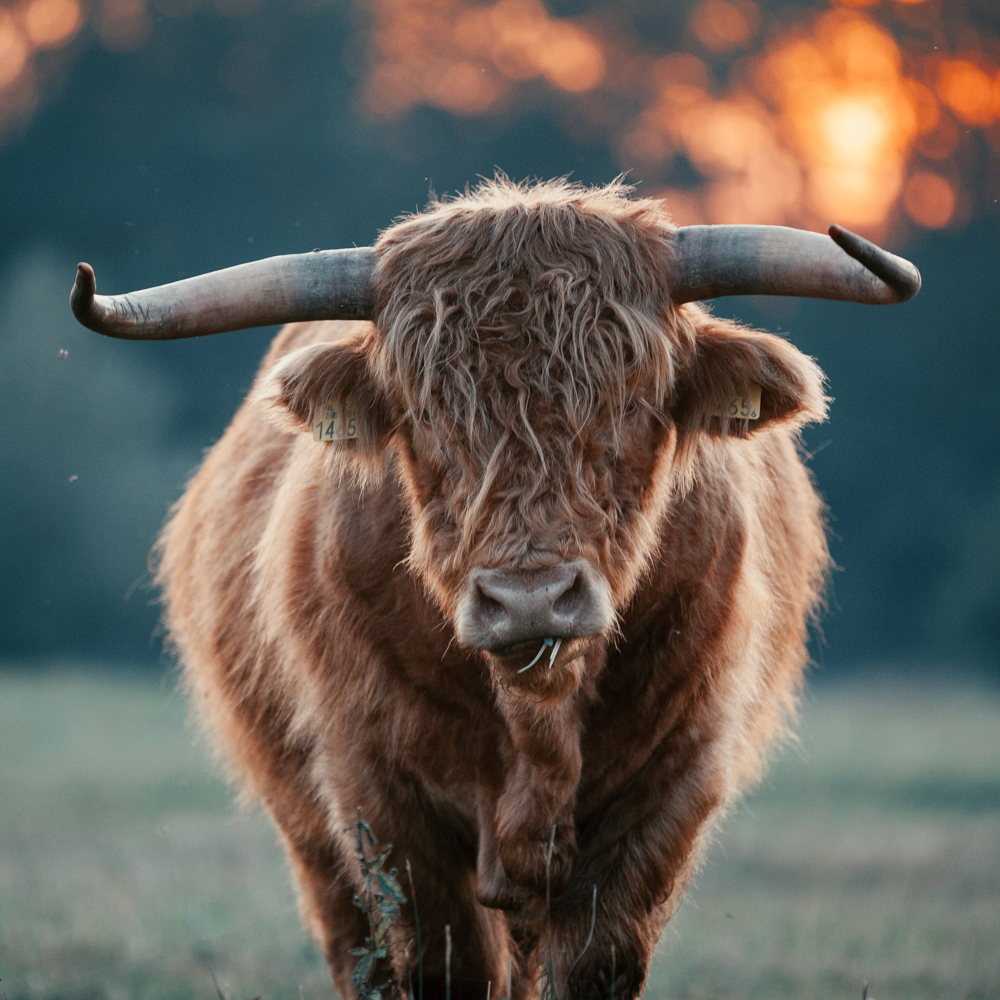
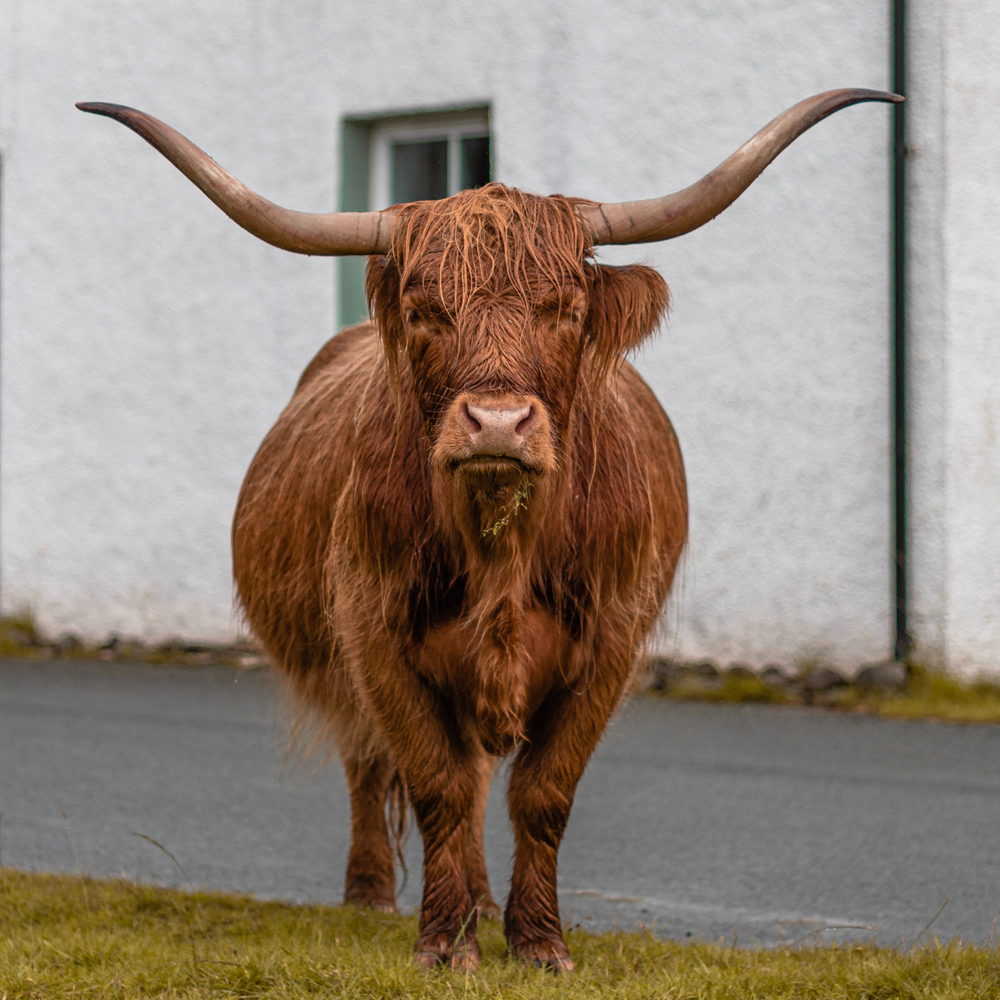
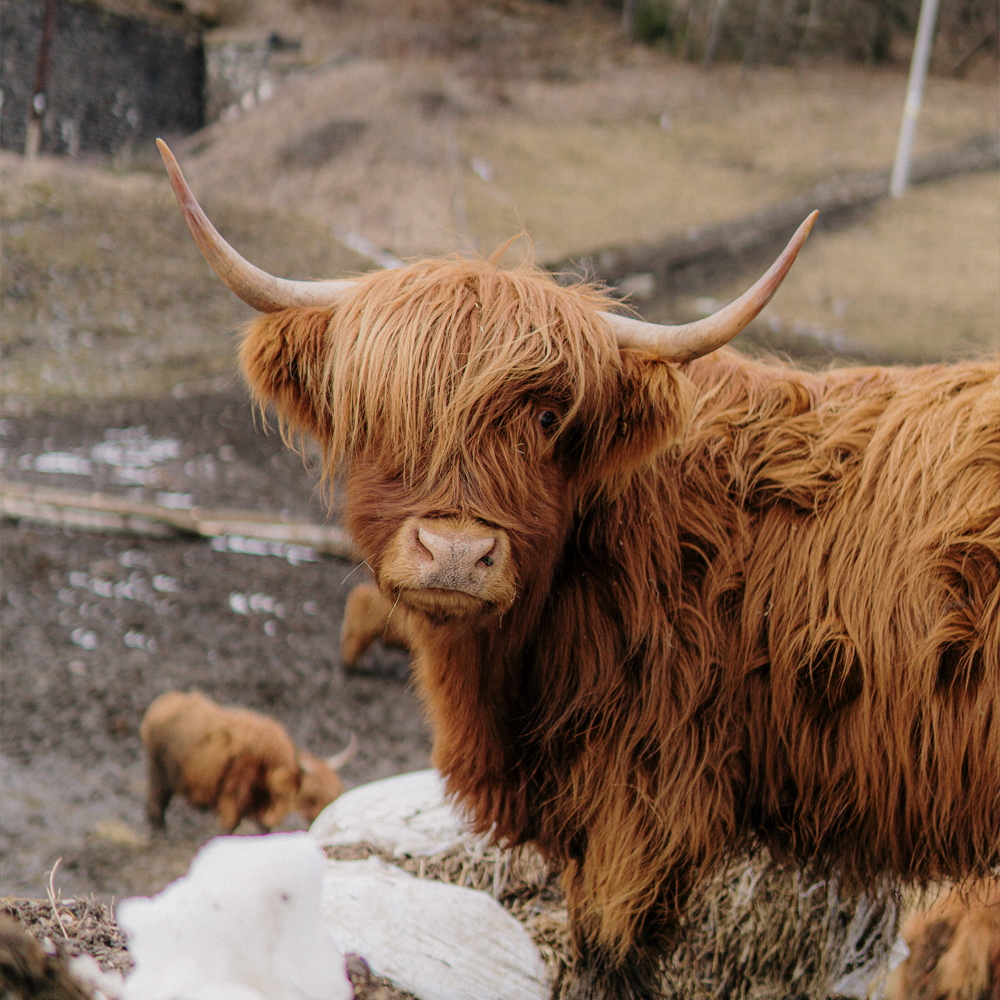
In bulls, the horns are thicker at the base and grow forward, with a minor (if at all) curve at the tip. This gives the bull a more aggressive and dominant appearance, as well as an advantage in fighting.
The three photos below illustrate different variations in a bull's horns.
Is there a Difference Between Bull & Steer Horns?
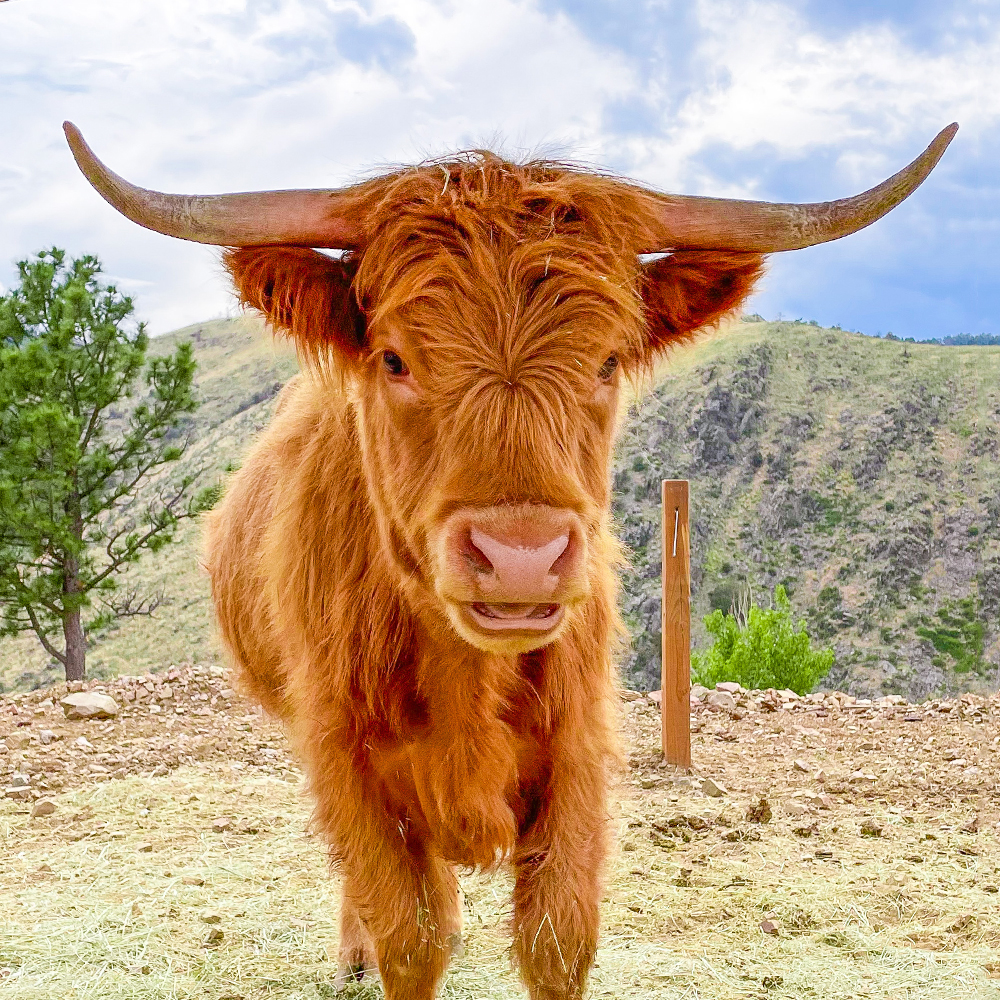
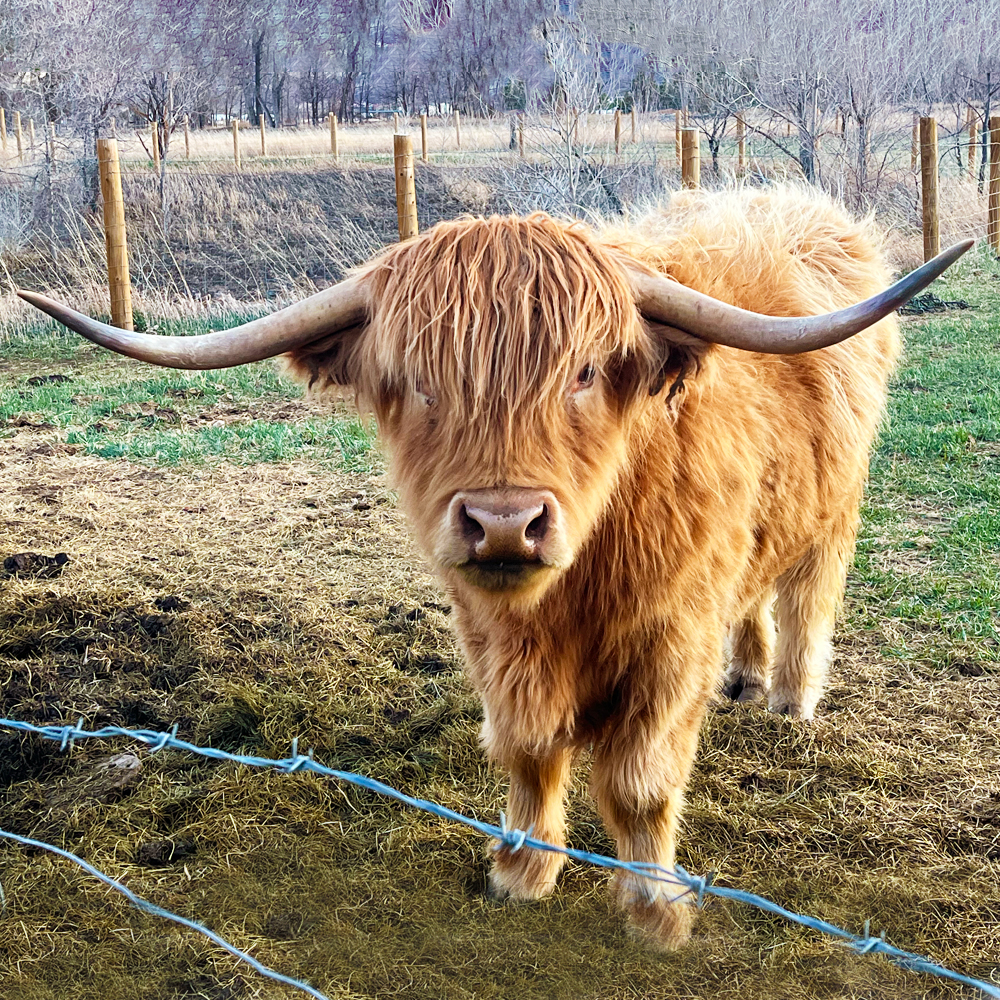
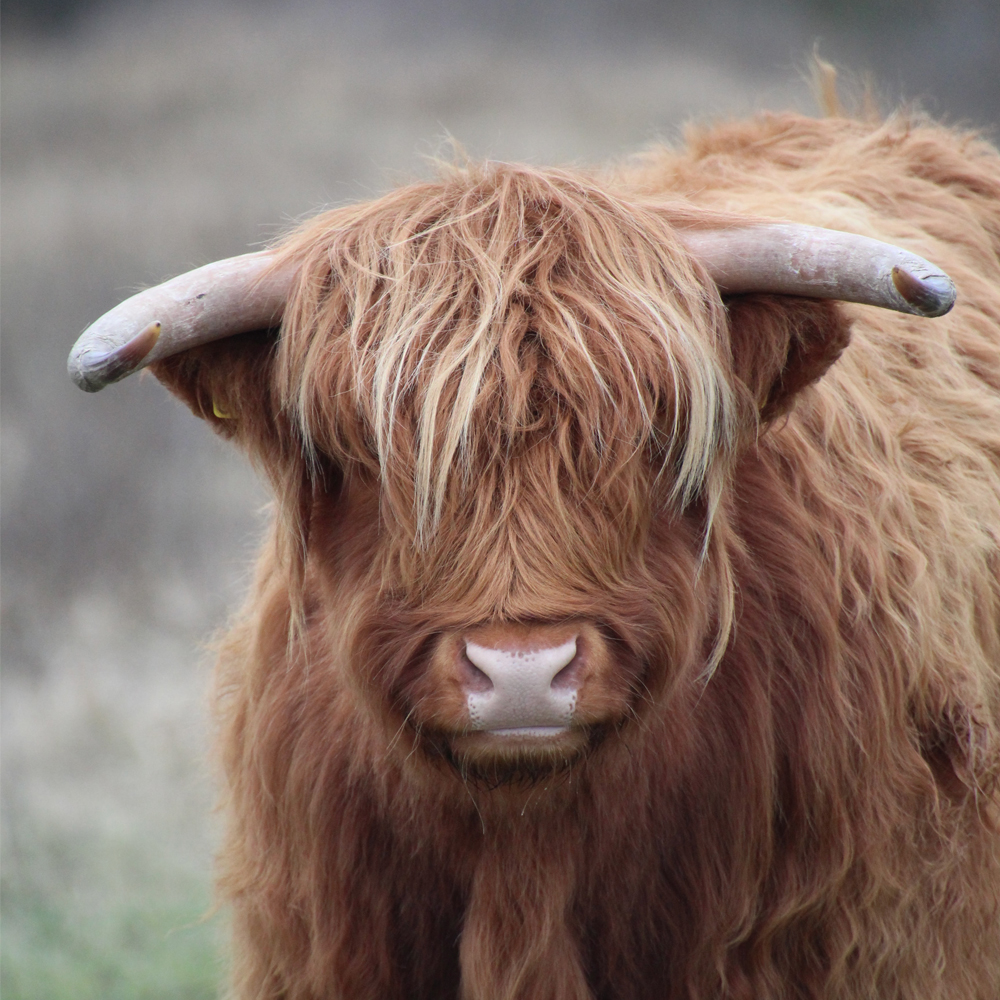
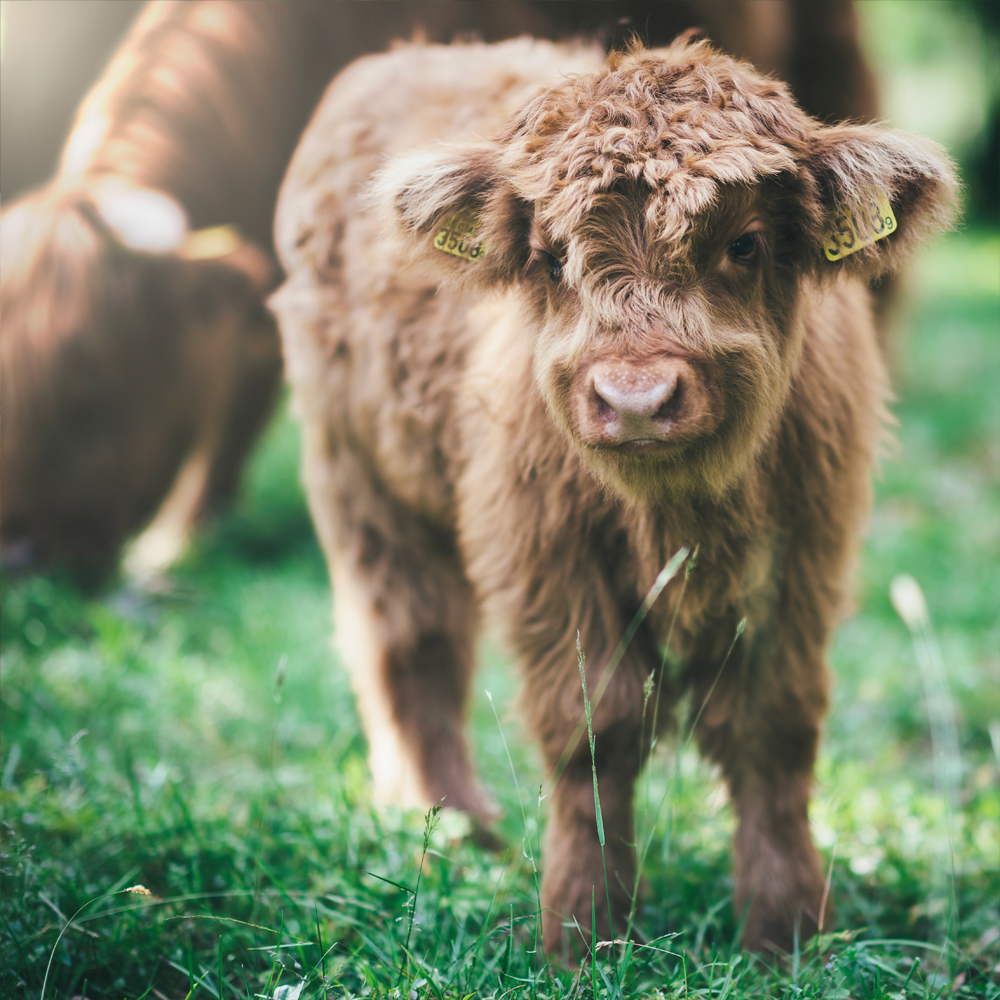
A steer is a male that has been castrated, and therefore does not produce the same level of testosterone as an intact bull. Because of this lack of testosterone in steers, their horns tend to grow in a similar fashion as the females, more slender with an upwards curve, rather than forward-facing like a bull.
The three photos below illustrate the differences and similarities between heifers, steers, and bulls.
How Do Highland Horns Grow?
During the first 3 years of a highland's life, the horns are growing at a relatively quick pace, slowing down after those first 3 years. During the first 12-24 months, many highland owners will notice the horns look rough, scaly, and flaky, almost like they are damaged. This is due to the fast early growth, and the flaking/peeling is normal so long as it's not extreme and the cows are getting sufficient minerals.
How Big Do Highland Horns Get?
All highlands are born with horn buds, and as they age, the horns grow longer. The growth rate between male and female differs, but they often end up with a similar spread at the end of the growth cycle.
A fully mature highland can have a horn spread as wide as 3-4 feet from tip-to-tip. Considering that is accounting for the curves in the horns, they would actually be much longer than that if they grew out more straight like longhorn cattle.
By about 1 year of age, the horns just barely reach the ends of the ears. At about 2 years of age, the horn length is about double that.
Are Highland Horns Dangerous?
You should always exercise caution around any horned animal, highland cattle included. If an animal is treated poorly, not well-socialized, or in a desperate situation, then yes, it could become very dangerous.
That said, highlands will rarely use their horns to attack or purposely harm anyone or anything. Accidents involving horns are usually just that: unintentional. They are often a wrong place/wrong time scenario, or being careless and unaware. It is best to never turn your back on cattle.
Why Not Dehorn Highland Cattle?
There are some who believe that the horns should just be removed to prevent any injuries or problems for the animals and humans that care for or live with the cattle, or when involved in a large beef cattle operation where they don't care about the breeding or show-quality of the animal. I am not in that camp.
A highland's horns are so unique, beautiful, and part of what makes them so sought after. They are photogenic, serve functional purposes, and grow on their heads for a reason.
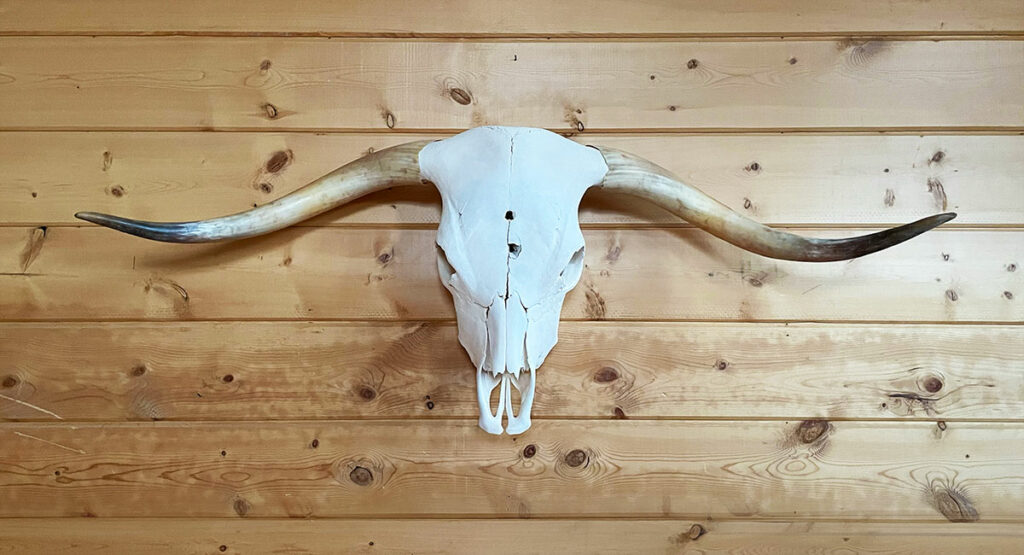
Also, Highland cattle skulls are a very sought-after item. Removing the horns renders the skull fairly useless at the end of the cow's lifecycle. I believe in utilizing every part of the cow, and that includes preserving the skull, with horns intact.
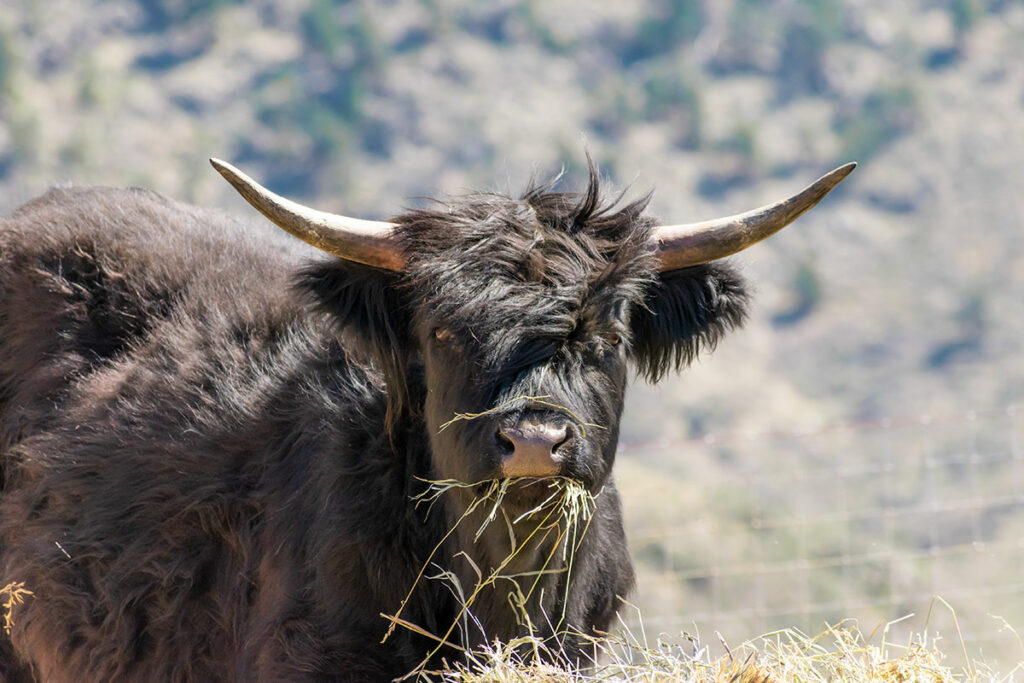
Yes, a large set of horns can make some things more complex, like loading cattle into a trailer or trying to corral them into a narrow alley or chute. But for those infrequent occurrences, it is absolutely not worth removing the horns.
Questions this answers
Tap a question for the short answer.
Do female highland cows have horns?
Yes. Both males and females grow horns. On heifers and cows the horns are narrower at the base than a bull's and grow upward, often with a curve at the tip, getting taller and more majestic as the cow ages.
What are highland cow horns used for?
They do three jobs: scratching itchy spots the hooves and tail cannot reach, defense and fighting, which mostly happens between mature bulls, and foraging, where they root up the ground like built-in shovels to get at the grasses and flowers they want.
How big do highland cattle horns get?
A fully mature Highland can reach a horn spread of 3 to 4 feet tip to tip, and that is measured across the curves. Horns reach about the ends of the ears at 1 year, roughly double that at 2 years, and grow fastest during the first 3 years.
What is the difference between bull and steer horns?
Bull horns are thick at the base and grow forward with little or no curve. A steer is castrated and makes less testosterone, so his horns grow more like a female's: more slender with an upward curve instead of facing forward.
Are highland cow horns dangerous?
Use caution around any horned animal. A Highland that is mistreated, poorly socialized, or desperate can be very dangerous, but they rarely use their horns to attack on purpose. Most horn injuries are accidents from carelessness or being in the wrong place, so never turn your back on cattle.
Why are my young highland's horns flaking?
Rough, scaly, flaky horns are normal during the first 12 to 24 months. Fast early growth causes the peeling, and it is fine as long as it is not extreme and the animal is getting sufficient minerals.
Keep going
Related to this
Membership · $49.95 per year
There is a lot more behind the lock
Every recipe and resource from the Prepper's Chemical Survival Guide, all nine field guides to read here and download, the full audit and logbook, all twelve reference charts, and no ads.
My Manual · included
Build your own field manual
The most useful thing a membership gives you. Save any page on this site, recipes, charts, and whole field guides included. Arrange them in the order you want, name it, and print one manual with a cover and contents, or keep it as a PDF that opens with no signal.
- It works when this site does not
- Only your pages
- Anyone in the house can use it
- One current copy, not a pile of printouts
- The house binder
- A copy for the bug-out bag or truck
- A copy for family
- An offline PDF








Stay Ready
New entries, updates, and useful instruction.
Stay one step ahead on your preparedness journey.