Quick facts
- GermsBacteria, viruses, Giardia, Crypto. From surface water, flooded wells, sewage. Fixed by boiling, chlorine, filter plus disinfection
- ChemicalsFuel, pesticides, nitrates, solvents. Not fixed by boiling or chlorine; carbon or reverse osmosis, or a different source
- MetalsLead and copper from pipes, arsenic and iron from some wells. Reverse osmosis or distillation; boiling concentrates them
- Algae toxinsGreen scum on warm still water. Boiling makes it worse; do not drink from a bloom
- Stored waterDoes not go bad in a clean, sealed, food-grade container; rotate every 6 to 12 months for taste
- Boil notice1 minute rolling boil, 3 minutes above 6,500 feet, for everything that goes in a mouth
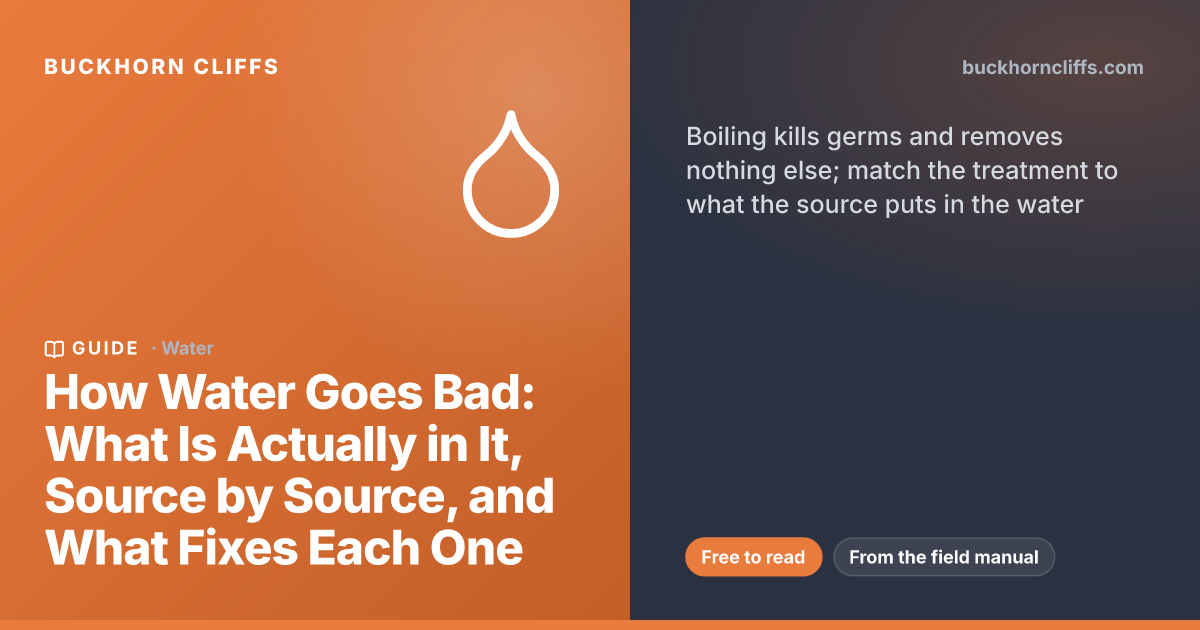
Water does not rot. It picks things up: from the ground it sits in, the pipe it runs through, the container it waits in, and the air and animals above it. Every one of those things has a name, most have a smell or a look, and each has its own fix. Boiling, which everyone reaches for first, handles exactly one of them. The clean water guide is the table of treatments and what each one removes; this page is what you are treating for.
The seven ways water goes wrong
Source by source
| Source | What is likely in it | What to do |
|---|---|---|
| Tap water under a boil notice | Germs from a main break or a treatment failure | 1 minute rolling boil (3 minutes above 6,500 ft) for drinking, cooking, ice, brushing teeth. Or 8 drops of bleach per gallon, 30 minutes. Chemical notices say do not use; boiling does not help those. |
| Your well, normal times | Whatever the ground carries: bacteria if the cap or casing leaks, nitrates near fields and septics, arsenic, iron, uranium in some rock | Test yearly for bacteria and nitrates, once for metals. Shock chlorinate if bacteria show. Treat metals with reverse osmosis at the kitchen tap. |
| Your well after a flood | Sewage, fuel, farm runoff down the casing | Do not drink or pump to the house until floodwater is gone. Shock chlorinate, flush, test for bacteria and nitrates, then drink. |
| Creek, river, lake | Giardia, Crypto, bacteria from every animal upstream; silt; farm and road runoff | Cleanest, fastest-moving, clearest reach you can find. Pre-filter the silt, then boil or filter to 1 micron plus chlorine. Never floodwater. |
| Pond, stock tank, slow water in summer | Everything above plus algae blooms | Green, scummy or smelly means walk away. Otherwise filter and boil. |
| Rain barrel, roof catchment | Bird droppings, roof grit, asphalt shingle leachate, mosquito larvae | First-flush diverter, screened lid, dark barrel. Garden water as is; boil or chlorinate to drink. |
| Floodwater | Sewage, fuel, chemicals, debris, drowned animals | Not a source. Nothing you carry makes it safe. Find stored, bottled or upstream water. |
| Stored drums and jugs | Nothing, if clean going in and sealed since; biofilm or algae if not | Look, smell, check the container. Rotate 6 to 12 months for taste. Disinfect the container and refill if in doubt. |
| Water heater, toilet tank, pipes | Sediment and metals from sitting; clean otherwise | Drain from the heater's bottom valve through a cloth; toilet tank (not bowl) water is fine boiled or chlorinated if no tank cleaner was used. |
Reading a container of stored water
- Look. Cloudy, particles, a film on the walls, any green: treat or dump.
- Smell. Musty, rotten egg, chemical, plastic: the first two are biology and a boil fixes them; the last two mean the container is wrong.
- The container. Cracked, bulging, faded by sun, lid loose, sitting on concrete that sweats or next to fuel and solvents: move the water.
- Flat taste is not contamination. Pour it between two jugs a few times and the air goes back in.
- When in doubt it costs a minute at a boil or 30 minutes with 8 drops of bleach per gallon. Do that instead of guessing.
Storing it so nothing goes wrong
- Food-grade containers only: HDPE (2) or PETE (1) drums, jerry cans and bottles, or glass. No milk jugs, no chemical drums, no trash cans
- Wash with dish soap, rinse, then sanitize with a tablespoon of bleach in a gallon of water swished through and rinsed out
- Fill from a treated tap through a drinking-water-safe hose, not a garden hose
- Municipal tap water needs no added bleach; untreated well water gets 8 drops of plain 5 to 6 percent bleach per gallon before sealing
- Seal tight, label the date, keep it dark and cool, off bare concrete, away from gasoline, solvents and pesticides (plastic breathes and picks up their vapor)
- Rotate every 6 to 12 months; drain onto the garden, rinse, refill, redate
- One gallon per person per day; two weeks is the target
The water storage guide covers drums, pumps, the whole-house plan and how much to keep; the cistern and barrel disinfection formula is the exact chlorine math for a tank that has gone off.
Questions this answers
Tap a question for the short answer.
Can stored water go bad?
Not on its own. Water has no shelf life; what changes is what grows in it or leaches into it. Clean tap water in a clean, sealed, food-grade container in the dark is safe for years. It tastes flat after months because the dissolved air leaves, which a good shake or pouring between two jugs fixes. What actually goes wrong is a dirty container, a lid left off, a drum in the sun growing algae, or a container that was never food-grade to begin with.
How do I know if my stored water is contaminated?
Open it and look, smell and check the container. Cloudiness, floating particles, a slime film on the walls, a green tint, or a musty, rotten-egg or chemical smell means treat it or dump it. A cracked, bulging or sun-faded container is a reason to move the water. Clear and odorless is a good sign but not proof: bacteria and most chemicals are invisible, so water you are unsure of gets boiled or chlorinated before it is drunk, and that costs a few minutes.
How often should I rotate stored water?
Every 6 to 12 months for taste, not safety. Water that was clean going in and sealed since is still clean; it just tastes flat. I drain the drums onto the garden in spring, rinse, refill and date them. Commercially bottled water is fine indefinitely if the seal is intact and it has been kept cool and out of the sun; the two-year date on the bottle is about the bottle, not the water.
What containers are safe for storing water?
Food-grade plastic marked HDPE (recycling 2) or PETE (1), such as new water drums, jerry cans, and washed soda and juice bottles. Glass is inert and heavy. Stainless steel is fine for plain water but not for chlorinated water or bleach solutions, which pit it. Never a container that held anything but food or drink: no milk jugs (protein residue feeds bacteria and the plastic fails in months), no chemical drums, no trash cans, no garden hose to fill them.
How much water should I store per person?
One gallon per person per day, and that is drinking plus a little cooking and washing. Two weeks is the target, three days is the bare minimum, and hot climates, illness, children and nursing mothers push it higher. A family of four for two weeks is 56 gallons: one 55 gallon drum, or a stack of jugs and cases. Pets drink too.
What makes water unsafe to drink?
Something got into it: germs from sewage, animals or surface runoff; chemicals from fuel, farms, industry or a flood; metals from pipes or the ground; toxins from an algae bloom; or radioactive dust after a fallout event. Each has a source you can usually name and a fix that is specific to it. The one universal rule is that boiling handles the germs and nothing else.
Is well water safe after a flood?
Assume not until it is tested. Floodwater carries sewage, fuel and farm runoff straight down the casing and into the aquifer. Do not drink it, and do not run the pump into the house until the water recedes. Then shock chlorinate the well, flush it, and have it tested for bacteria and nitrates before anyone drinks from it. Until then it is bottled or stored water, or water boiled and filtered from the cleanest source you can find.
Does boiling water remove chemicals?
No. Boiling kills bacteria, viruses and parasites and does nothing to fuel, pesticides, solvents, nitrates, metals or algae toxins; because it boils off some of the water, it leaves those slightly more concentrated. Chemical contamination calls for activated carbon, reverse osmosis or distillation depending on the chemical, or a different source. A chemical smell in water is a reason to walk away from it, not to boil it longer.
Keep going
Related to this
Membership · $49.95 per year
There is a lot more behind the lock
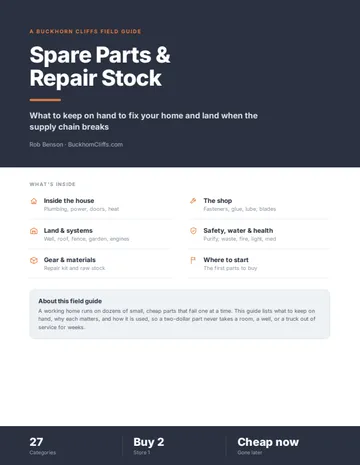
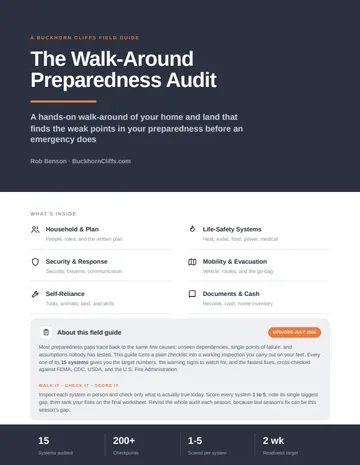
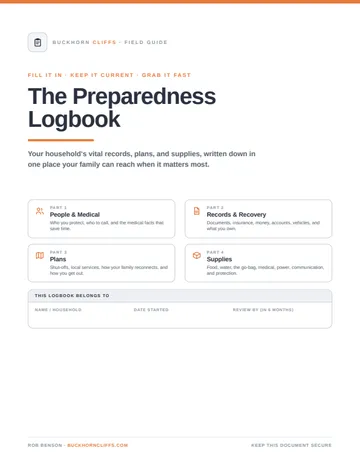
Every recipe and resource from the Prepper's Chemical Survival Guide, all six field guides to read here and download, the full audit and logbook, all twelve reference charts, and no ads.
My Manual · included
Build your own field manual
The most useful thing a membership gives you. Save any page on this site, recipes, charts, and whole field guides included. Arrange them in the order you want, name it, and print one manual with a cover and contents, or keep it as a PDF that opens with no signal.
- It works when this site does not
- Only your pages
- Anyone in the house can use it
- One current copy, not a pile of printouts
- The house binder
- A copy for the bug-out bag or truck
- A copy for family
- An offline PDF
Stay Ready
New entries, updates, and useful instruction.
Stay one step ahead on your preparedness journey.