Quick facts
- Storeone gallon per person per day, at least a two-week supply
- Boilrolling boil for 1 minute, or 3 minutes above 5,000 ft
- Bleachunscented, 8 drops per gallon (6 if 8.25%), wait 30 minutes
- Pool shock1.5 level teaspoons in 1 gallon for stock, then 1 tablespoon of stock per gallon
- Rotatestored water every 6 to 12 months for taste
- Nevermix calcium hypochlorite with acids or ammonia
Storing water
Commercial Bottled
Longest-lastingKeep sealed, cool, and dark; best by about two years.
Food-Grade Jugs
Rotate 6 monthsClean, sanitize, fill with tap water, seal, and date.
Store It Safe
Away from fumesNo heat, sunlight, gasoline, or pesticides nearby.
Spread It Out
Reduce riskKeep water in more than one place, so one loss is not total.
Water is your first priority
Treat water as the base of the whole plan and store it before food. Keep at least a two-week supply, and do not ration drinking water to the point of thirst; drink what you need each day and work to find more, rather than letting yourself get dehydrated.
Water keeps forever, but its container may not
The water itself does not expire. What fails is the bottle: plastic can pick up a stale, plastic taste or absorb odors over time, faster in heat, sunlight, or near gasoline and pesticides, and a broken seal or light exposure can let in bacteria or algae. Store it cool, dark, and sealed away from fumes, and rotate stored water every 6 to 12 months for taste. If it smells or tastes off, aerate it or re-treat it (boil or disinfect) before drinking; discard any that is cloudy, discolored, or from a broken seal.
Making water safe to drink
Boiling
Most reliableBring to a rolling boil for 1 minute, or 3 minutes above 5,000 ft. Kills germs but not chemicals.
Chemical Disinfection
Bleach or pool shockUnscented bleach at 8 drops per gallon (6 if 8.25%), or the pool-shock method below. Wait 30 minutes for a faint chlorine smell.
Filtration
Removes sedimentTakes out protozoa and debris; pair with boiling or disinfection for viruses. Pre-filter cloudy water.
Tablets & UV
Small batchesIodine or chlorine-dioxide tablets and UV pens, used per the label.
Free download
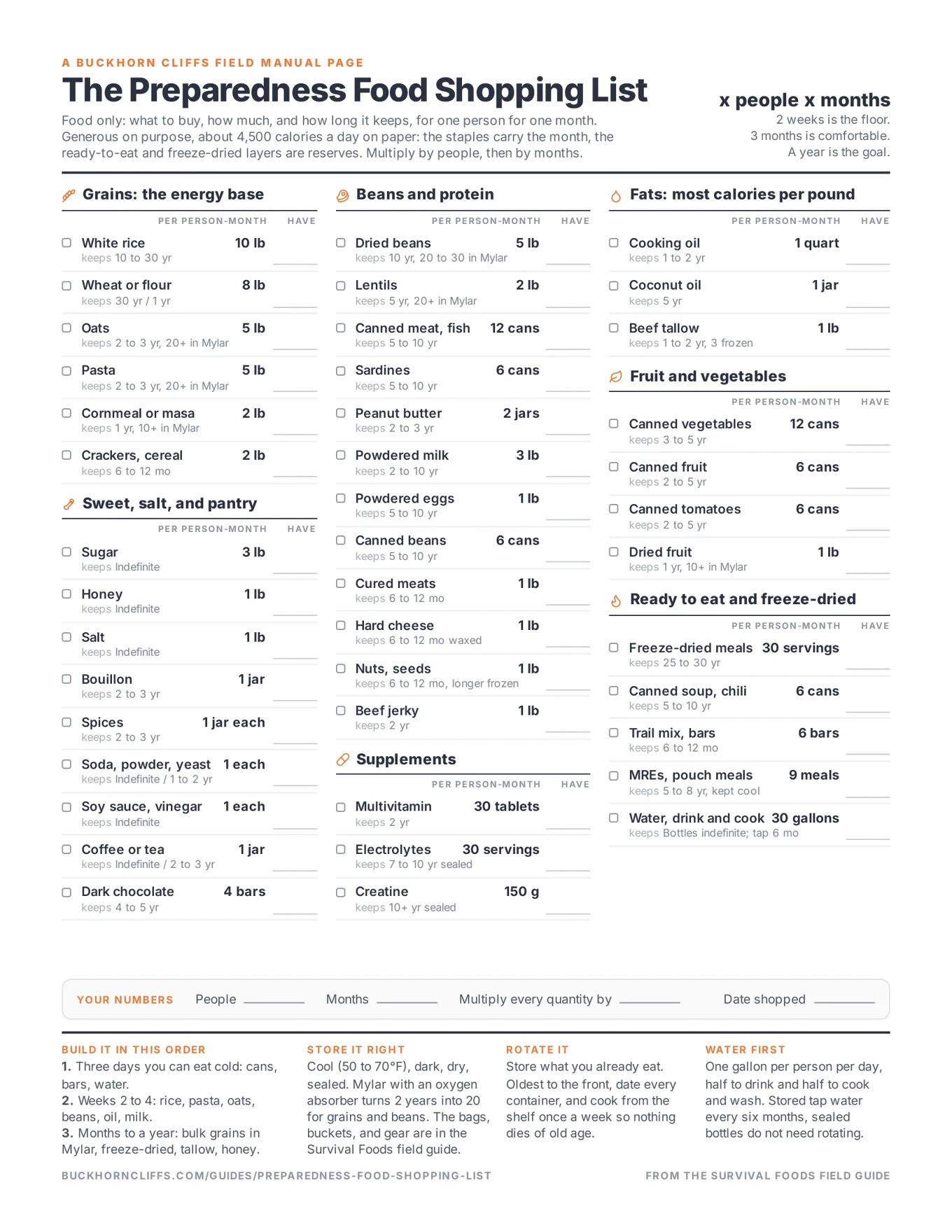
Get the one-page food shopping list
What to store, how much of it for one person for one month, and how long it keeps. One page with checkboxes, built from the Survival Foods field guide. Print it, multiply by your people and months, and take it to the store.
The PDF comes by email, with my newsletter now and then. Already on the list? You still get it. Read the full page.
Calcium Hypochlorite (Pool Shock)
- Make a stock solution. Mix 1.5 level teaspoons (about 5.7 to 6 grams) of calcium hypochlorite granules into 1 gallon of water and stir until dissolved. This stock is about 1,000 ppm, too strong to drink. Use within 24 hours.
- Treat the water. Add 1 tablespoon of stock per gallon, or 2 tablespoons for cloudy or suspect water. Stir well, wait 30 minutes (60 for cloudy), and check for a faint chlorine smell. If there is none, add another tablespoon and wait 30 more minutes.
Use granules with 65 to 70% available chlorine and no additives or algaecides. Always add powder to water, never the reverse, and never mix with acids or ammonia. Store dry and sealed for up to 10 years. To cut the chlorine taste, aerate the water or stir in a pinch of ascorbic acid (vitamin C) per gallon.
Improve the taste, once the water is safe
Aerate It
Flat boiled waterBoiling drives off dissolved air. Pour the water between two clean containers several times to work it back in.
Pinch of Salt
Boiled waterAdd a small pinch of salt per quart to round out a flat, bland taste.
Vitamin C
After chlorineA pinch of ascorbic acid per gallon neutralizes the chlorine taste and smell left by bleach or pool shock.
Baking Soda
Soften itA small pinch eases a flat or slightly sour taste. For flavor only, after the water is already safe.
Better sources
- Sealed bottled or stored water
- Covered rainwater, then treated
- Clear running water, then treated
Avoid or treat with extra care
- Cloudy, colored, or smelly water
- Water near chemicals or sewage
- Salt water and floodwater
Boiling beats every option you have
If you can make heat, you can make water safe from germs. Filter cloudy water through a clean cloth first, then bring it to a rolling boil for one full minute. For chemical pollutants, only distillation or specific filters help. Treat first, then improve the taste second.
Questions this answers
Tap a question for the short answer.
How do I store water long term?
Store 1 gallon per person per day, half for drinking and half for hygiene, with at least a 2 week supply at home. Use sealed commercial bottles or clean, sanitized food-grade jugs filled with tap water and dated. Keep it cool, dark and away from gasoline or pesticides, and split it between more than one location.
How do I purify water in an emergency?
Boiling is most reliable: a rolling boil for 1 minute, or 3 minutes above 5,000 ft. Otherwise add unscented bleach at 8 drops per gallon, or 6 if it is 8.25%, and wait 30 minutes for a faint chlorine smell. Filters remove protozoa and debris but need boiling or disinfection alongside them for viruses.
How often should I rotate stored water?
Rotate water in food-grade jugs every 6 months, and all stored water every 6 to 12 months for taste. Sealed commercial bottled water lasts longest, with a best-by of about two years. The water itself never expires, but the container can pass on stale flavors or let in bacteria or algae.
Keep going
Related to this
Membership · $49.95 per year
There is a lot more behind the lock
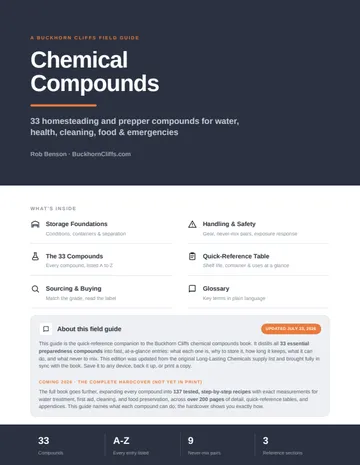
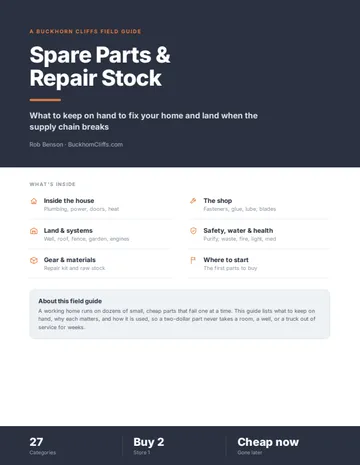
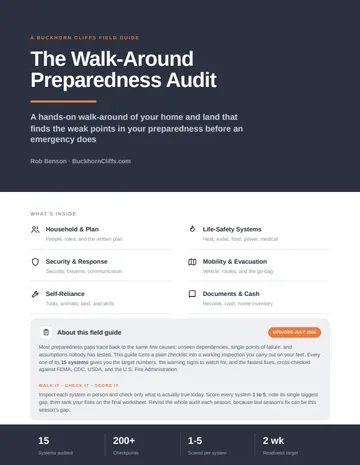
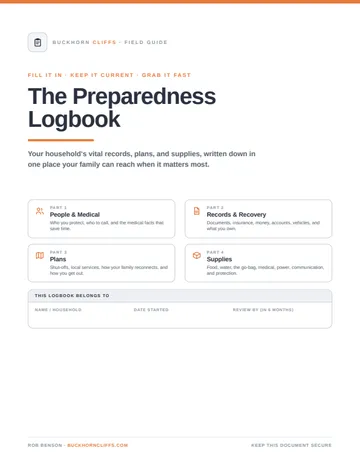
Every recipe and resource from the Prepper's Chemical Survival Guide, all six field guides to read here and download, the full audit and logbook, all twelve reference charts, and no ads.
My Manual · included
Build your own field manual
The most useful thing a membership gives you. Save any page on this site, recipes, charts, and whole field guides included. Arrange them in the order you want, name it, and print one manual with a cover and contents, or keep it as a PDF that opens with no signal.
- It works when this site does not
- Only your pages
- Anyone in the house can use it
- One current copy, not a pile of printouts
- The house binder
- A copy for the bug-out bag or truck
- A copy for family
- An offline PDF
Stay Ready
New entries, updates, and useful instruction.
Stay one step ahead on your preparedness journey.