HazardousWorks without power
How it works
Quick facts
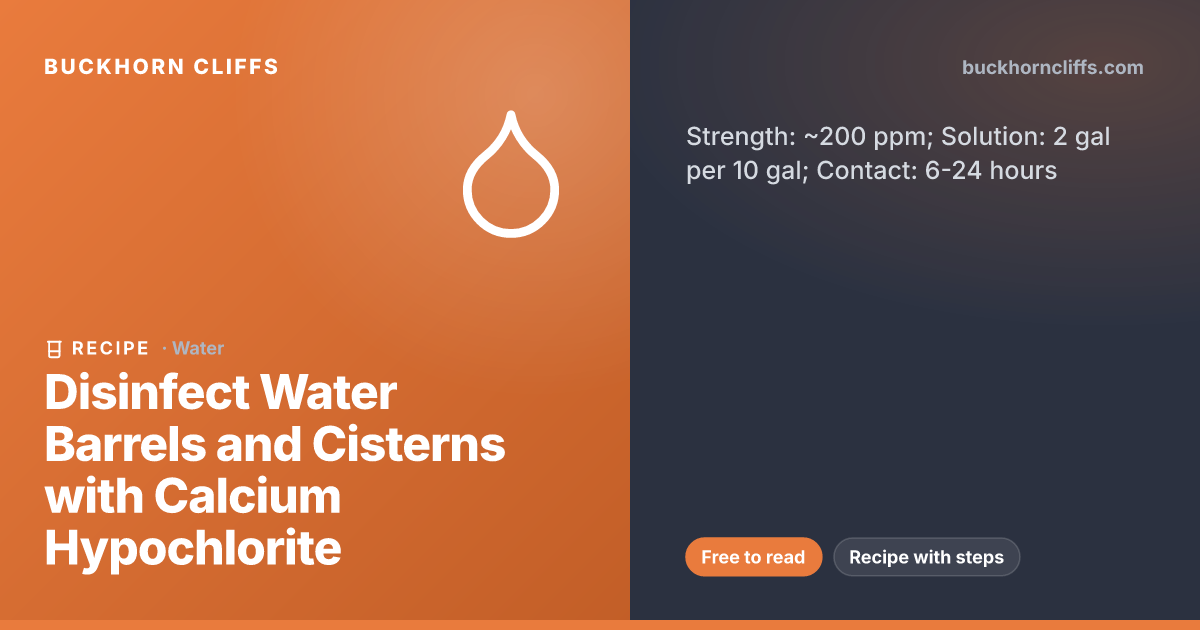
- Strength~200 ppm
- Solution2 gal per 10 gal
- Contact6-24 hours
- Pre-cleanrequired
- Dry shelf lifeup to 10 years
Hazard
Corrosive and burns. Wear neoprene or butyl gloves, goggles, and ventilate. Never mix with acids, ammonia, or organics; rinse metal.
Calcium hypochlorite dissolved in water creates a strong chlorine solution that kills bacteria, viruses, algae, and mold spores on interior surfaces and breaks down biofilm that rinsing alone can't reach. Same granules and measurement framework as Recipes 5.1 and 5.2.
What you'll need
- Calcium hypochlorite (65-70% chlorine, no algaecides)
- Freshwater source for mixing and rinsing
- Potable water for final filling
- Measuring spoons (particularly 1 teaspoon)
- Non-metallic container (glass jar or HDPE jug)
- Non-metallic stirring tool (plastic or wooden)
- Long-handled scrub brush
- Dish soap (for pre-clean of non-water residue)
Steps
- Empty the container. If it previously held anything besides clean water (food, oil, or soap residue), pre-wash the interior with hot water and dish soap and rinse until no suds remain. Then scrub walls, seams, and bottom to break up any remaining buildup, and rinse out the debris. Organic residue consumes chlorine before it can disinfect, so this step is essential for any non-water container.
- Make the disinfecting solution one gallon at a time. Add 1½ level teaspoons (about 5.7 to 6 grams) of calcium hypochlorite to a gallon of water in a non-metallic container. Always add powder to water, never the reverse. Stir until dissolved. You need 2 gallons of solution for every 10 gallons of container capacity (target around 200 ppm), so repeat as needed.
- Pour the solution into the container and fill to capacity with water. If you can't fill it completely, roll or rotate the container every 15-20 minutes so the solution contacts all interior surfaces evenly.
- Let it sit undisturbed: 6 hours minimum for a clean container, 12 to 24 hours for visible biofilm or unknown history. That long soak at 200 ppm is far more than enough to kill bacteria, viruses, and Giardia and to break down biofilm. Cryptosporidium strongly resists chlorine, so for drinking water rely on filtration or UV rather than chlorine alone.
- Drain the chlorinated solution onto bare ground, away from plants, gardens, creeks, ponds, and storm drains, since it harms aquatic life. Then rinse 2-3 times with clean water. The container is ready to fill with safe water, or water that will be treated before drinking.
Warnings
Calcium hypochlorite is corrosive and burns. Wear neoprene or butyl rubber gloves, eye protection, and work with good ventilation. Never mix it with acids, ammonia, or organic material: acids release chlorine gas, ammonia releases chloramine gas, and organics can react or ignite. Don't breathe the dust. If it contacts skin or eyes, rinse with water for 15+ minutes and get medical help. Chlorine corrodes most metals; rinse away all residue before storing water.
Storage and shelf life
Sealed dry powder: up to 10 years if kept cool, dry, and out of direct sunlight. Check yearly for clumping or weak chlorine smell. Heat and moisture speed degradation. Best container: sealed glass jar or HDPE jug. Avoid metal. See the Containers section.
Questions this answers
Tap a question for the short answer.
How do I sanitize a 55 gallon water barrel?
Empty and scrub the barrel, then dissolve 1½ level teaspoons of calcium hypochlorite per gallon of water and use 2 gallons of that solution for every 10 gallons of barrel capacity. Fill to the top with water, let it sit 6 to 24 hours, drain onto bare ground, and rinse 2 to 3 times.
How do I disinfect a cistern with pool shock?
Use calcium hypochlorite that is 65 to 70% chlorine with no algaecides. Scrub the cistern first, mix the solution one gallon at a time in a non-metallic container, pour it in, and fill to capacity for a target around 200 ppm. Let it sit, drain, then rinse 2 to 3 times.
How much calcium hypochlorite do I need to clean a water barrel?
Add 1½ level teaspoons, about 5.7 to 6 grams, to each gallon of water, always powder into water. You need 2 gallons of that solution for every 10 gallons of container capacity, which gives roughly 200 ppm once the container is filled.
How long should chlorine solution sit in a water barrel?
Let it sit undisturbed for at least 6 hours in a clean container, or 12 to 24 hours if there is visible biofilm or the container's history is unknown. If you cannot fill it completely, rotate it every 15 to 20 minutes so the solution touches every surface.
Do I need to rinse a barrel after sanitizing it?
Yes. Drain the chlorinated solution onto bare ground, away from plants, gardens, creeks, ponds, and storm drains, then rinse 2 to 3 times with clean water. Chlorine corrodes most metals, so clear all residue before storing water.
Keep going
Related to this
Membership · $49.95 per year
There is a lot more behind the lock
Every recipe and resource from the Prepper's Chemical Survival Guide, all six field guides to read here and download, the full audit and logbook, all twelve reference charts, and no ads.
My Manual · included
Build your own field manual
The most useful thing a membership gives you. Save any page on this site, recipes, charts, and whole field guides included. Arrange them in the order you want, name it, and print one manual with a cover and contents, or keep it as a PDF that opens with no signal.
- It works when this site does not
- Only your pages
- Anyone in the house can use it
- One current copy, not a pile of printouts
- The house binder
- A copy for the bug-out bag or truck
- A copy for family
- An offline PDF



Stay Ready
New entries, updates, and useful instruction.
Stay one step ahead on your preparedness journey.