Quick facts
- First priorityBlock wind and drafts; insulate from the ground or cold floors
- Aluminum foilShiny side toward body or heat source; reflector, not a sealed wrap
- Stored heat
- Warm water bottles at core
- thighs or feet
- wrapped in cloth or foil
- At homeLive in one room; indoor tents or sheet forts hold heat
- Protect first
- Chest
- neck
- head before limbs
- TimingAct before you feel cold; shivering means significant heat loss
Cold exposure does not only happen in winter. In mild or warm climates, people still lose body heat quickly at night, during storms, or during power outages. The risk is subtle but real when heating, energy, or mobility is limited.
Staying warm in these conditions is about managing heat loss, not generating extreme heat.
Stop Heat Loss First
In nature
Wind is the fastest way to lose body heat. Blocking airflow often matters more than adding layers. Use terrain, vehicles, tarps, brush, packs, or even stacked gear to break wind exposure.
Ground contact drains heat rapidly. Always insulate underneath you before adding layers on top. Cardboard, dry leaves, pine needles, spare clothing, rope coils, or empty packs create separation from the ground and reduce conductive heat loss.
In your home
Drafts cause more heat loss than most people realize. Close doors to unused rooms, block gaps under doors with towels, and cover drafty windows.
Cold floors pull heat from your body. Rugs, blankets, cardboard, or spare bedding under seating or sleeping areas make a noticeable difference during outages or limited heating scenarios.
Using Aluminum Foil as a Heat Tool
In nature
Aluminum foil reflects radiant heat. Use it with the shiny side facing inward toward your body or a heat source. Line the inside of a jacket, place foil behind a small heat source, or wrap a warm water bottle to slow heat loss.
Do not fully wrap your body in foil. Moisture buildup increases heat loss over time. Foil works best as a reflector, not a sealed layer.
In your home
Foil can be used behind radiators or heat sources to reflect warmth back into living spaces. It can also be placed behind window coverings to reduce radiant heat loss through glass.
During outages, foil wrapped around warm containers or bricks helps retain heat longer when used near seating or sleeping areas.
Warm Water as Stored Heat
In nature
Water holds heat exceptionally well. If you can warm water even slightly, store it in bottles and place them near your core, thighs, or feet. Wrapping bottles in cloth or foil extends heat retention.
This method works even when air temperatures are well above freezing.
In your home
Warm water bottles, mason jars, or tightly sealed containers can be placed in beds, couches, or near feet. Wrapping them in towels slows heat loss and provides steady warmth for hours.
This is especially effective during power outages or when conserving fuel.
Manage Moisture and Sweat
In nature
Sweat cools the body long after activity stops. Vent clothing while moving, then seal layers before resting. Avoid sitting still in damp clothing whenever possible.
Dry skin stays warm longer than damp skin.
In your home
Overheating early and then cooling off leads to moisture buildup indoors as well. Change damp clothing promptly and avoid excessive layering before sleep.
If humidity is high, increase ventilation briefly before sealing rooms to reduce dampness.
Protect the Core First
In nature
Keeping your torso warm allows blood to stay warm and supply hands and feet. Prioritize chest, neck, and head insulation before adding layers to limbs.
A warm core stabilizes body temperature more efficiently than bulky extremity layers.
In your home
Use scarves, blankets, or layered clothing around the torso before piling blankets on legs and arms. Head and neck coverage indoors can significantly reduce heat loss, especially during sleep.
Use Small Shelters
In nature
Smaller enclosed spaces trap heat more efficiently than open areas. Sit against walls, inside vehicles with ventilation, under tarps, or in narrow improvised shelters.
Even a simple lean-to reduces heat loss. Foil inside a small shelter increases the effect by reflecting body heat.
In your home
Concentrate living into one room during cold nights or outages. Close doors, cover windows, and reduce air volume that needs to stay warm. If you add heat to that sealed-up room, it is only a heater rated for indoor use with a battery CO alarm beside it. Never a grill, camp stove, oven or generator.
Use tents, sheet forts, or canopies indoors to create microclimates that retain heat using body warmth alone.
Fuel Your Body
In nature
Calories equal heat. Fats and carbohydrates before rest increase heat production for hours. Warm drinks support circulation and reduce cold stress.
Dehydration accelerates heat loss.
In your home
Eating regular meals and warm foods helps maintain body temperature during extended outages. Hot drinks improve comfort and circulation even when heating is limited.
Timing Matters
In nature
Prepare before you feel cold. Block wind, insulate the ground, and seal layers early. Once shivering starts, heat loss is already significant. Confusion, slurred speech, fumbling hands, exhaustion or drowsiness mean hypothermia, which can set in above 40°F when you are wet. That is a medical emergency.In your home
Do not wait until the house feels cold to act. Close off rooms, block drafts, and layer early to conserve residual heat.The Real Goal
In nature
Cold exposure in mild climates is cumulative. Fatigue, dampness, wind, and calorie deficits cause problems long before freezing temperatures appear.In your home
Short-term outages, heating disruptions, or fuel conservation create similar risks indoors. Small actions taken early prevent discomfort and potential health issues.Questions this answers
Tap a question for the short answer.
How do I stay warm without heat during a power outage?
Focus on stopping heat loss. Close doors to unused rooms, block gaps under doors with towels, cover drafty windows, and put rugs, blankets, or cardboard over cold floors. Live in one room, tuck wrapped warm water bottles into beds or near your feet, and eat regular warm meals.
How do I stay warm at night with no sleeping bag?
Block the wind first, then insulate underneath you with cardboard, dry leaves, pine needles, spare clothing, or empty packs before adding layers on top. Use a small shelter, keep your chest, neck, and head covered, place warm water bottles at your core, thighs, or feet, and eat fats and carbohydrates before resting.
Can I use aluminum foil to stay warm?
Yes. Foil reflects radiant heat, so face the shiny side toward your body or a heat source. Line a jacket, set it behind a heat source, or wrap a warm water bottle. Do not wrap your whole body in it, because trapped moisture increases heat loss over time.
How do I keep one room warm when the power is out?
Concentrate living into that one room, close the doors, cover the windows, and block drafts so there is less air to keep warm. Set up a tent, sheet fort, or canopy inside to create a microclimate that holds heat from body warmth alone.
Does eating help you stay warm?
Yes. Calories equal heat. Fats and carbohydrates eaten before rest raise heat production for hours, and warm drinks support circulation. Staying hydrated matters too, since dehydration speeds heat loss.
Why am I cold at night in a warm climate?
Body heat drains quickly at night even in mild climates, mostly from wind, ground contact, damp clothing, fatigue, and low calories. The effect is cumulative, so trouble shows up long before freezing temperatures. Block wind, insulate under you, and stay dry before you feel cold.
Keep going
Related to this
Membership · $49.95 per year
There is a lot more behind the lock
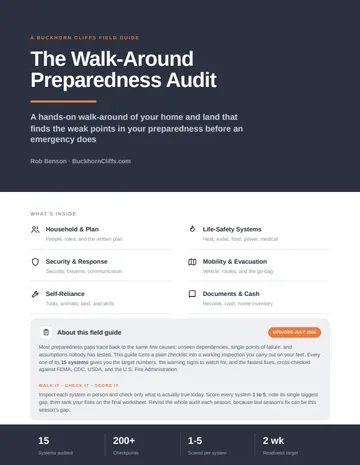
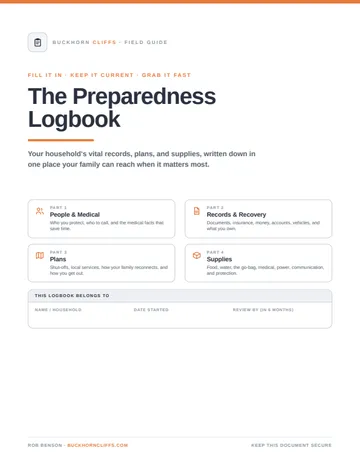
Every recipe and resource from the Prepper's Chemical Survival Guide, all six field guides to read here and download, the full audit and logbook, all twelve reference charts, and no ads.
My Manual · included
Build your own field manual
The most useful thing a membership gives you. Save any page on this site, recipes, charts, and whole field guides included. Arrange them in the order you want, name it, and print one manual with a cover and contents, or keep it as a PDF that opens with no signal.
- It works when this site does not
- Only your pages
- Anyone in the house can use it
- One current copy, not a pile of printouts
- The house binder
- A copy for the bug-out bag or truck
- A copy for family
- An offline PDF

Stay Ready
New entries, updates, and useful instruction.
Stay one step ahead on your preparedness journey.