Quick facts
- HeightTypically no taller than about 20ft
- HabitatPlains to canyons and slope bottoms, forms large thickets
- Leaf
- 1 to 5 inches long
- smooth
- sharply pointed tip
- Flower
- White
- fragrant
- about 1 inch across
- blooms in spring
- FruitRed, yellow, orange, or purple; sour skin, sweet flesh when ripe
- Toxic parts
- Pits
- leaves
- stems
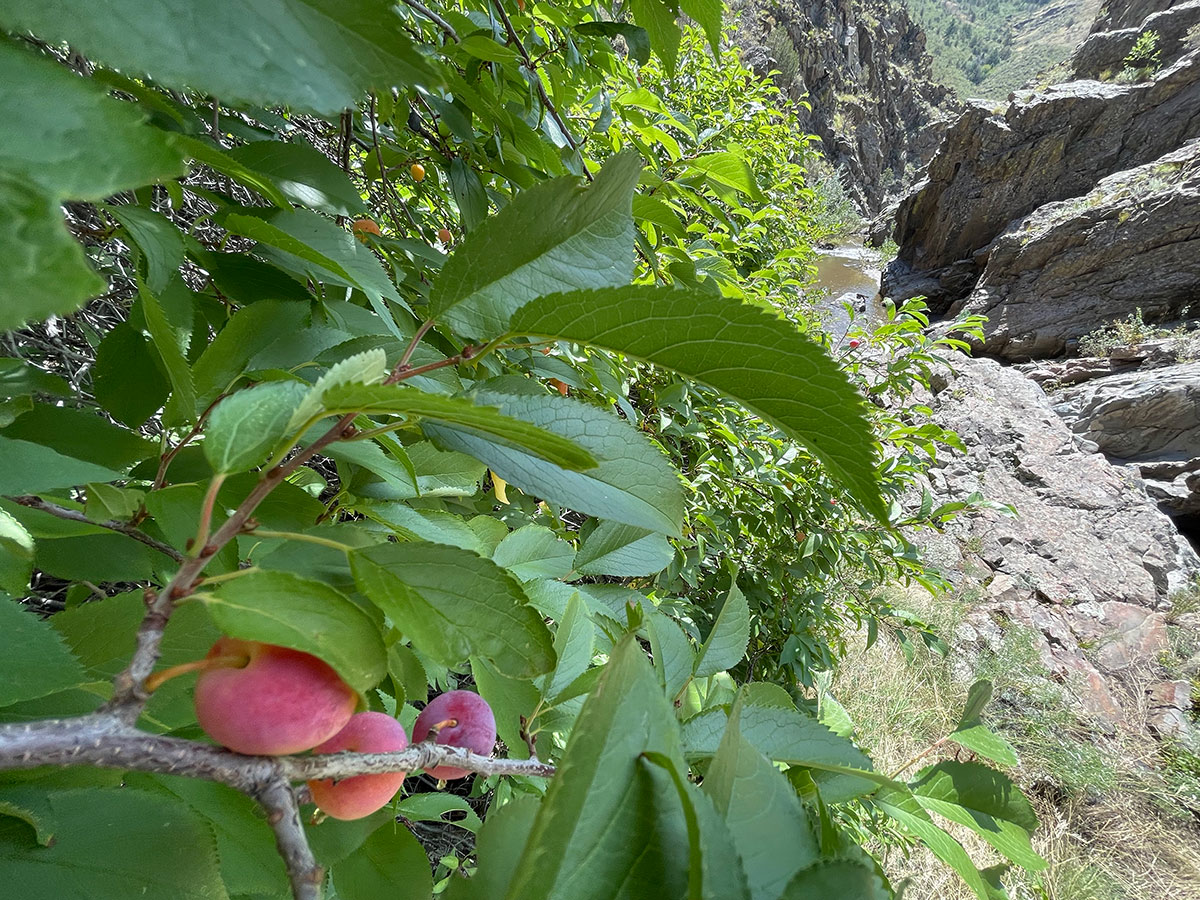
Live in Colorado and come across what looks like a plum? Not sure if you should eat plums off of a Wild Plum Tree? The Colorado wild plum (also known correctly by the name: American wild plum) is edible and here's everything you need to know about it.
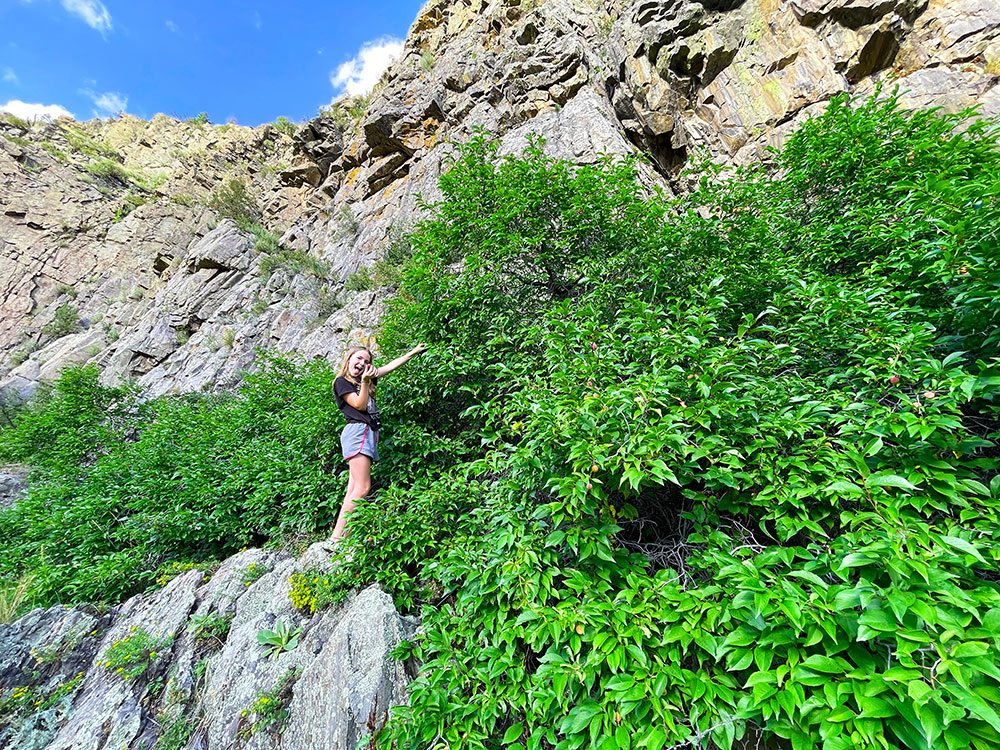
This is picture taken down by my creek at Buckhorn Cliffs in northern Colorado on August 22nd. Just look at how big that plum thicket is!
Habitat of the Colorado Wild Plum Tree
If you're exploring in Colorado you may come across these wild plums anywhere from the plains to canyons and slope bottoms. The wild plum tree is typically no taller than about 20ft. They also have a tendency to form large thickets (like you see above).
While I call it a Colorado Wild Plum, it's actually known more broadly as the American Wild Plum and it can be found all over. Here is how to identify if you've found an edible wild plum tree or thicket.
Leaf of the American Wild Plum
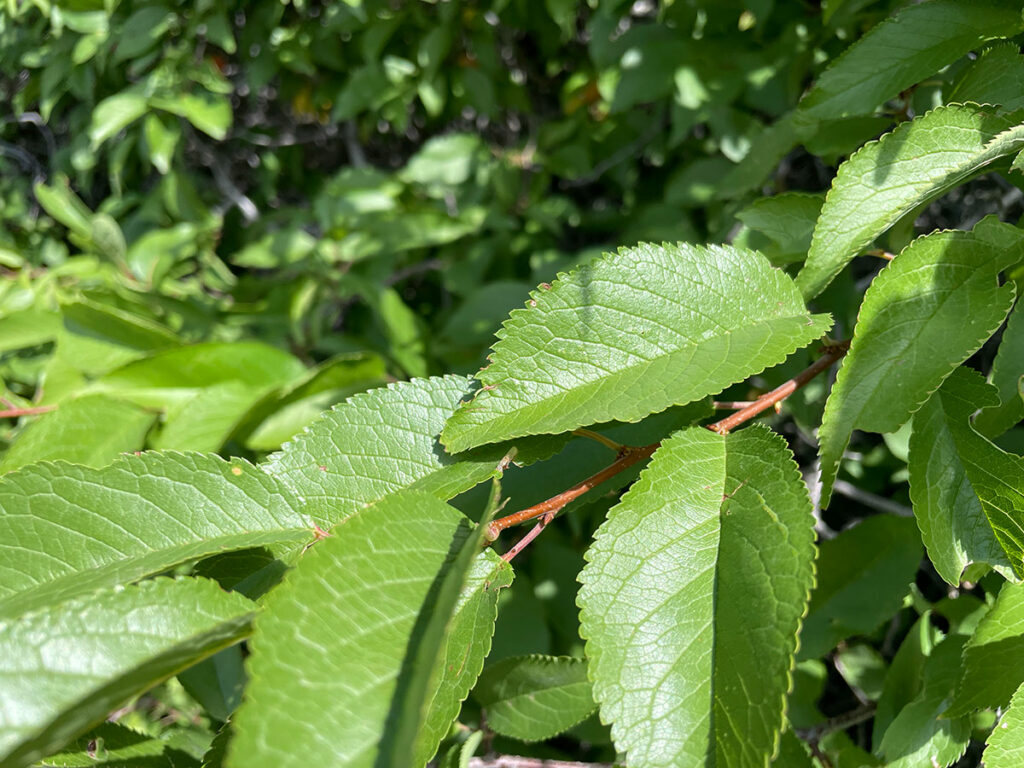
The leaf of a wild plum tree typically reaches from 1 to 5 inches long, it's pretty much hairless which means it's basically smooth. The plum leaf is sharply pointed at the tip. The broadest section of leaf is found at or above middle.
Are wild plums part of the Rose family?
Fun fact: not only are plums part of the rose family, so are: apples, peaches, apricots, and cherries. The rose family includes trees, herbs, and shrubs. Most species are deciduous, but some are evergreen. The rose family includes 4,828 known species!
Do wild plum trees flower?
Wild plum trees do flower, with clusters of white, fragrant blossoms about 1 inch across. These trees typically bloom right when leaves are appearing in the spring.
What does a wild plum taste like?
The fruit on a wild Colorado Plum tree will typically be red, yellow, orange, or purple and the skin has a dry or sour flavor when you pop one in your mouth. However, when ripe, the flesh is sweet.
Don't Eat the Pits in the Plums
The pits, leaves, and stems of the wild plum contain cyanogenic glycosides, compounds that release hydrogen cyanide when they are chewed or crushed. The flesh and skin of the fruit are safe. Cyanide, as you probably know is a poison that could kill you. If you accidentally swallow some of the plum pits, don't worry as you're not likely to die.
But if you were to take those pits and ground them up, you can create a lethal compound if enough is ingested.
Questions this answers
Tap a question for the short answer.
Can I eat wild plums in colorado?
Yes, the Colorado wild plum, properly called the American wild plum, is edible. Eat only the flesh and skin of the fruit. The pits, leaves, and stems contain cyanogenic glycosides, compounds that release hydrogen cyanide when chewed or crushed.
How do I identify an american wild plum tree?
Look for a tree no taller than about 20ft that tends to form large thickets. The leaves are smooth, 1 to 5 inches long, sharply pointed, and broadest at or above the middle. Clusters of white, fragrant blossoms about 1 inch across open in spring, and the fruit ripens red, yellow, orange or purple.
What does a wild plum taste like?
The skin has a dry or sour flavor when you first pop one in your mouth, but the flesh is sweet once the fruit is ripe. The plums are typically red, yellow, orange or purple.
Are wild plum pits poisonous?
Yes, the pits contain cyanogenic glycosides, compounds that release hydrogen cyanide when chewed or crushed, as do the leaves and stems. The fruit's flesh and skin are safe. Accidentally swallowing a few pits is not likely to kill you, but pits ground up and eaten in enough quantity can be lethal.
Where do wild plums grow in colorado?
Wild plums turn up anywhere from the plains to canyons and slope bottoms, often in large thickets. My own thicket grows down by the creek at Buckhorn Cliffs in northern Colorado. The species ranges well beyond the state as the American wild plum.
Keep going
Related to this
Membership · $49.95 per year
There is a lot more behind the lock
Every recipe and resource from the Prepper's Chemical Survival Guide, all six field guides to read here and download, the full audit and logbook, all twelve reference charts, and no ads.
My Manual · included
Build your own field manual
The most useful thing a membership gives you. Save any page on this site, recipes, charts, and whole field guides included. Arrange them in the order you want, name it, and print one manual with a cover and contents, or keep it as a PDF that opens with no signal.
- It works when this site does not
- Only your pages
- Anyone in the house can use it
- One current copy, not a pile of printouts
- The house binder
- A copy for the bug-out bag or truck
- A copy for family
- An offline PDF






Stay Ready
New entries, updates, and useful instruction.
Stay one step ahead on your preparedness journey.