US Army · ATP 4-02.11 · March 2026
The Army's current first aid manual for people who are not medics: 254 pages on bleeding, breathing, shock, burns, fractures, bites, heat and cold.
The Army PDF is free and in the public domain. The field guide comes with membership, or it's $10 as a PDF. All 9 manuals
- 254pages
- 20chapters
- 3parts
- 2appendixes
- 5life threats, in order
- 2026edition
Searches all 254 pages of the Army PDF and opens it at the page you pick.
Two versions of this manual
The official Army PDF
ATP 4-02.11 exactly as the US Army published it. It's a work of the US government, so it's in the public domain, and it's marked "Approved for public release; distribution is unlimited."
- All 254 pages: 20 chapters in three parts, plus two appendixes
- Written for every service member, not only medics
- The Army's file, unedited
The Buckhorn Cliffs field guide
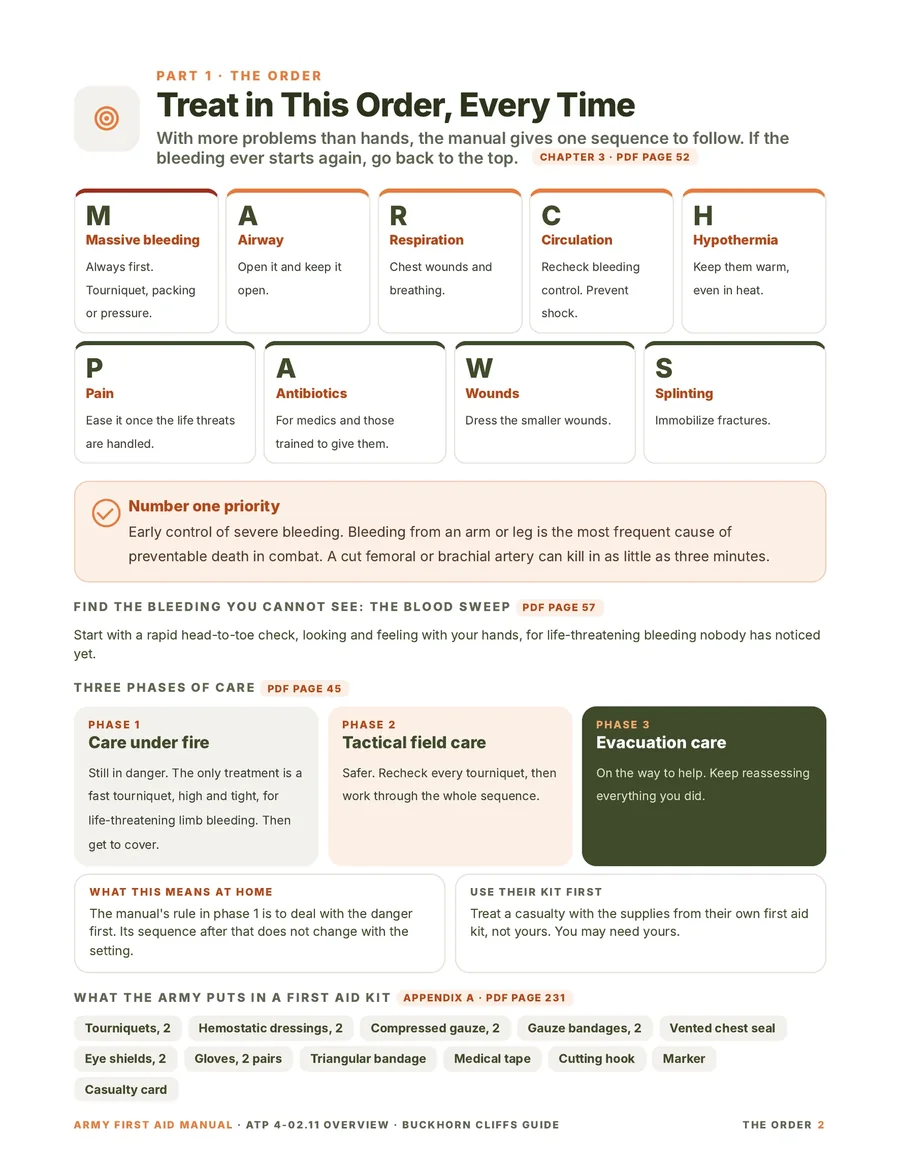
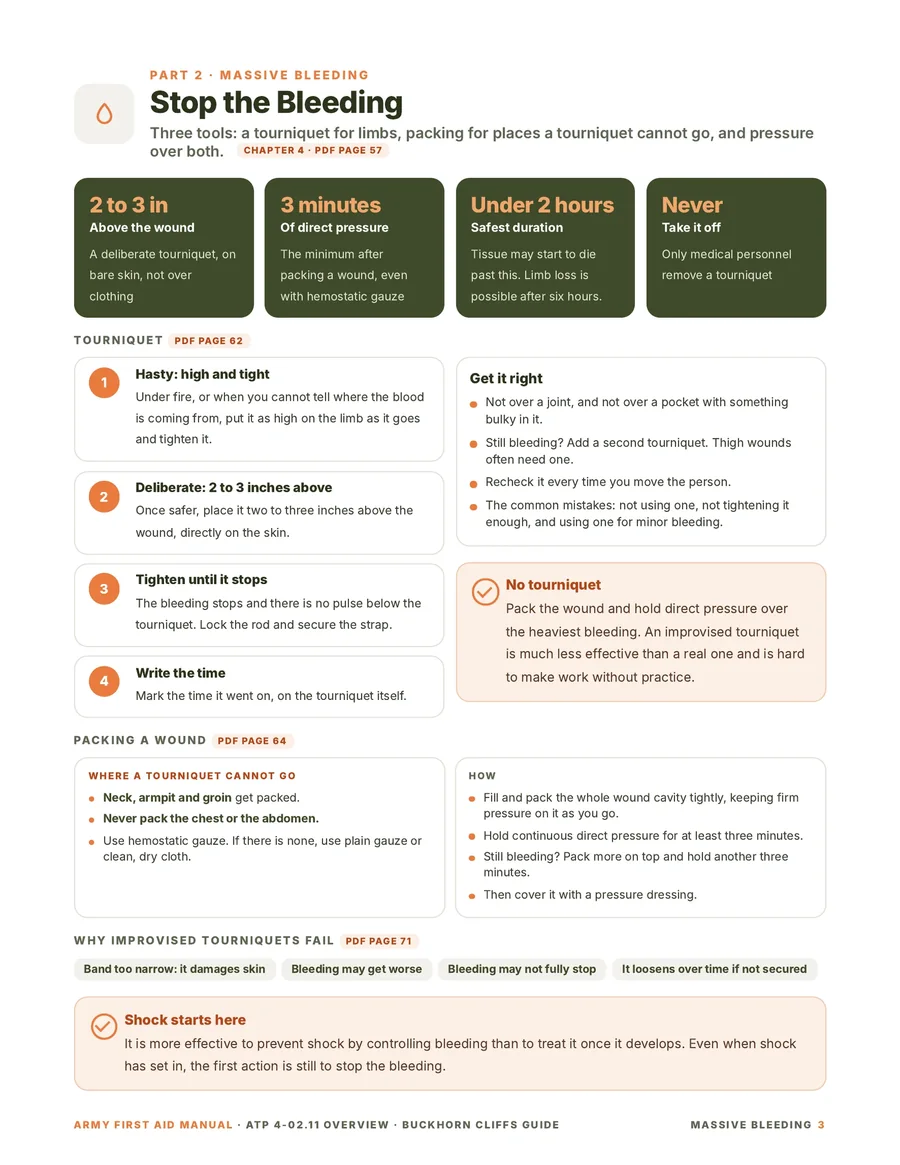
My 8-page overview of the same manual: the order to treat in, massive bleeding, airway and breathing, shock and hypothermia, burns and fractures, bites, heat and cold. It's written from the Army's text and is not an Army publication.
- 8 pages in place of 254
- Tourniquet and wound packing rules on one page
- Leaves out the drugs, needle procedures and chemical chapters
- Boxes, charts, steps and checklists you can use at a glance
- Every section gives the page in the Army PDF
- Downloads as a PDF and saves to My Manual
Only want this one? Buy the field guide PDF for $10. This page is the free breakdown of the Army PDF. The field guide is the short version to print and keep.
- It gives one sequence to follow when there are more problems than hands.
- Bleeding control gets a full chapter with drawings.
- The environmental chapters cover snakebite, heat and cold in plain steps.
- It assumes military kit: issued tourniquets, hemostatic gauze and chest seals.
- Several chapters cover drugs, needle procedures and chemical casualties that need training.
- A manual is not a class. Skills like tourniquet use need hands-on practice.
- You keep a trauma kit and want to know the order to use it in.
- You live far from an ambulance.
- You want the current edition. This one is dated March 2026.
How the 254 pages break down
The book has three parts: casualty response, tactical combat casualty care, and first aid for everything else. Fractures and splinting is the longest single chapter. Each bar opens the PDF at that part.
Part by part
Casualty Response
22 pages, starts on PDF page 15
Who does what when someone is hurt, from the person standing nearest up to the medic. Sets out the levels of responder.
Casualty Extraction and Movement
4 pages, starts on PDF page 37
Getting a casualty out of danger and moving them.
Fundamentals of Tactical Combat Casualty Care
16 pages, starts on PDF page 41
The three phases of care and the treatment sequence the rest of the book follows.
Massive Bleeding Control
16 pages, starts on PDF page 57
Finding and stopping life-threatening bleeding: the blood sweep, tourniquets, wound packing, pressure dressings and what to do without a tourniquet.
Airway Control
14 pages, starts on PDF page 73
Opening and keeping an airway: positioning, the head-tilt and jaw thrust, and choking.
Respiration and Breathing Control
10 pages, starts on PDF page 87
Chest injuries and breathing: chest seals, rescue breathing and CPR.
Circulation Control
6 pages, starts on PDF page 97
Rechecking bleeding control and preventing shock.
Hypothermia Control
4 pages, starts on PDF page 103
Why an injured person gets cold in any weather, the stages of hypothermia and how to stop heat loss.
Secondary Assessment
4 pages, starts on PDF page 107
The second half of the sequence: pain, antibiotics, wounds and splinting.
Eye Trauma
10 pages, starts on PDF page 111
Protecting an injured eye.
Head Injury
8 pages, starts on PDF page 121
Recognizing and monitoring a head injury.
Burns
6 pages, starts on PDF page 129
Burns by cause and by depth, and first aid for each kind.
Fractures and Splinting
20 pages, starts on PDF page 135
The longest chapter: signs of a fracture and how to splint each part of the body.
Other Secondary Injuries
10 pages, starts on PDF page 155
Expedient techniques for injuries that are not immediately life-threatening.
Monitoring and Evacuation Preparation
8 pages, starts on PDF page 165
Watching a casualty and getting them ready to move.
Bites and Stings
14 pages, starts on PDF page 173
Human and animal bites, snakebite, spiders, scorpions and stinging insects.
Climatic and Environmental Injuries
12 pages, starts on PDF page 187
Heat cramps, heat exhaustion and heat stroke, then frostbite and other cold injuries.
Sickle Cell Trait
4 pages, starts on PDF page 199
Exercise collapse associated with sickle cell trait.
First Aid in a Chemical, Biological, Radiological and Nuclear Environment
20 pages, starts on PDF page 203
First aid when the hazard is chemical, biological, radiological or nuclear.
Combat and Operational Stress Control
8 pages, starts on PDF page 223
Recognizing a serious stress reaction and what to do for it.
First Aid Kits
6 pages, starts on PDF page 231
What the Army puts in its individual first aid kits.
Rescue Equipment
4 pages, starts on PDF page 237
Equipment for moving casualties.
Numbers worth knowing
These are the manual's own figures. Each tile opens the page it comes from.
The order to treat in
Chapter 3 gives one sequence for every casualty. Deal with the first letter before moving to the next, and go back to the top if bleeding starts again.
| Letter | Stands for | Where it is covered |
|---|---|---|
| M | Massive bleeding | Chapter 4 |
| A | Airway | Chapter 5 |
| R | Respiration | Chapter 6 |
| C | Circulation | Chapter 7 |
| H | Hypothermia | Chapter 8 |
| P | Pain | Chapter 9 |
| A | Antibiotics | Chapter 9 |
| W | Wounds | Chapter 9 |
| S | Splinting | Chapters 9 and 13 |
Open chapter 3, PDF page 41 · Medical Preparedness on this site
What the Army puts in a first aid kit
Appendix A lists the contents of the issued kits. The individual kit includes:
Edition and history
ATP 4-02.11, Casualty Response, Tactical Combat Casualty Care, and First Aid, is dated March 2026. It replaced TC 4-02.1, First Aid, dated 21 January 2016.
As of November 10, 2026 the Army lists it as the current edition.
ATP 4-02.11 is a US Army publication, in the public domain as a work of the US government and marked "Approved for public release; distribution is unlimited." The Buckhorn Cliffs field guide is my own summary of it and is not an Army publication. BuckhornCliffs.com is not affiliated with or endorsed by the US Army or the Department of Defense.
Questions this answers
Tap a question for the short answer.
What is the current us army first aid manual
ATP 4-02.11, Casualty Response, Tactical Combat Casualty Care, and First Aid, dated March 2026. It is 254 pages and approved for public release.
What does march paws stand for
Massive bleeding, airway, respiration, circulation, hypothermia, then pain, antibiotics, wounds and splinting. It is the treatment order the manual teaches.
Where does the army say to put a tourniquet
A hasty tourniquet goes high and tight on the limb. A deliberate one goes two to three inches above the wound, on the skin, never over a joint.
Is the army first aid manual free
Yes. ATP 4-02.11 is a work of the US government, in the public domain and approved for public release.
Keep going
Related to this
Membership · $49.95 per year
Everything on this site, open, printable, and yours on paper
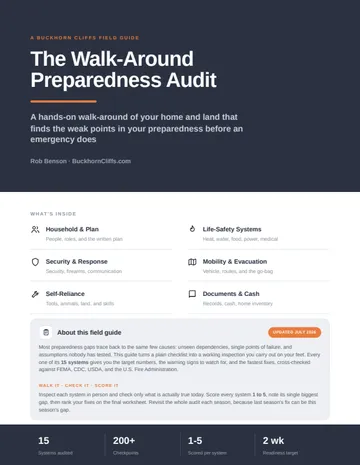
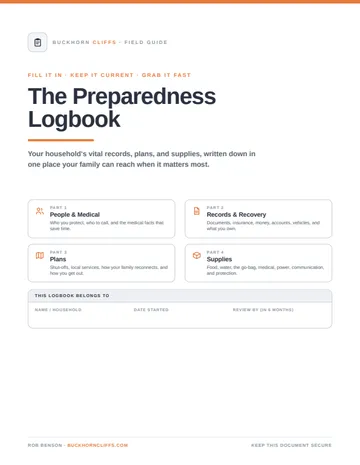
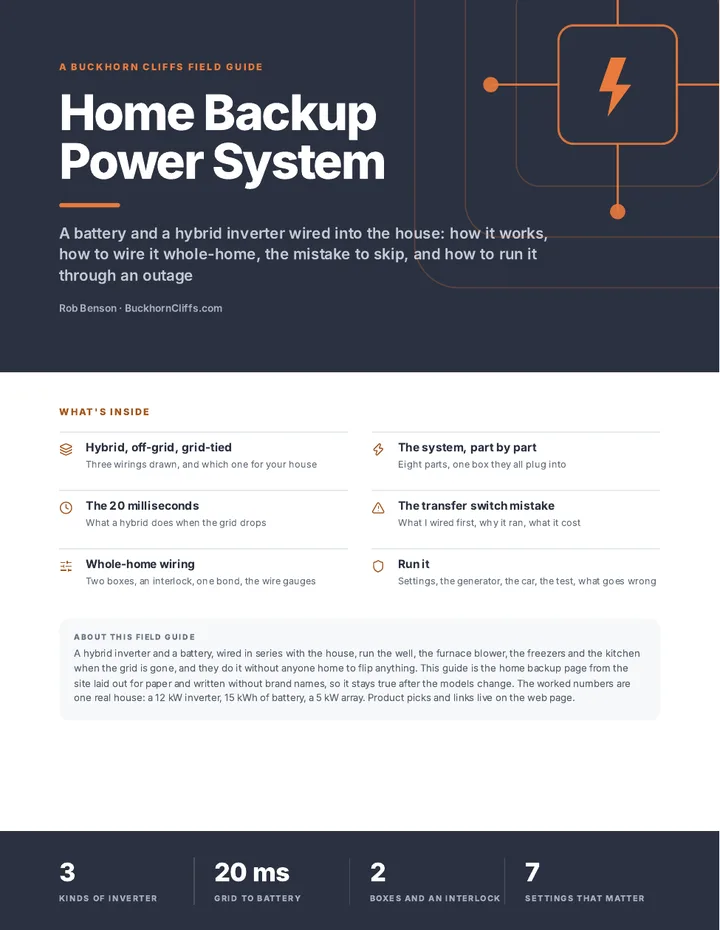
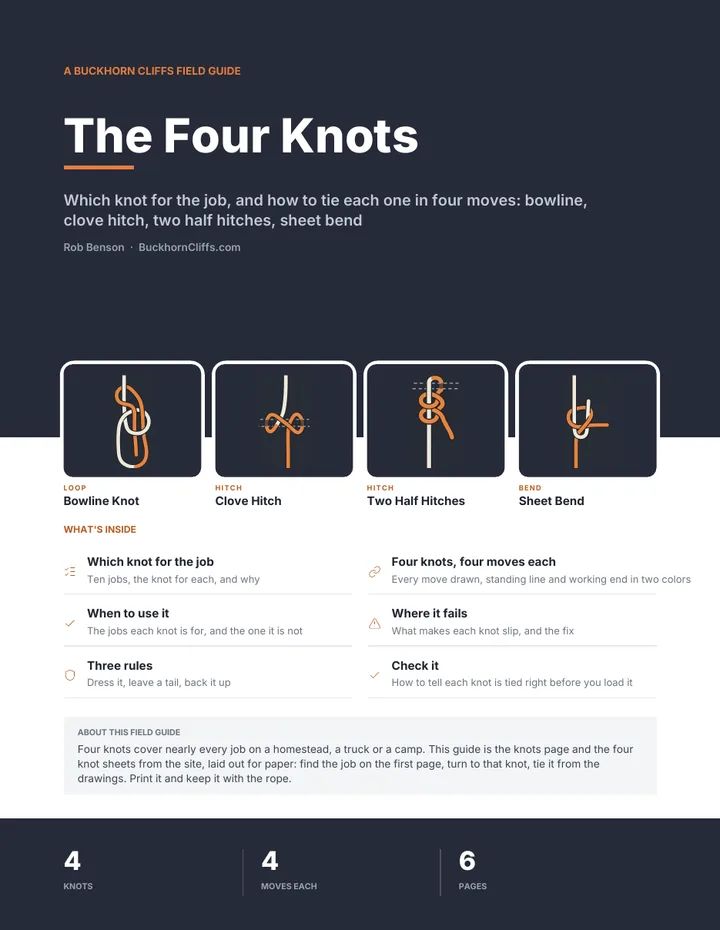
When the grid goes down, this site goes with it. Paper does not. Membership opens every member page and every recipe from the book, hands over all thirteen field guides as PDFs, and builds a binder from the pages your household uses.
- 158member pagesopen in full, every amount and every step
- 138compound recipesfrom the hardcover book, exact amounts. Pick any and add them to your manual
- 13field guides304 pages of PDFs, $130 bought one at a time
- 9military field guidesUS Army manuals cut to 66 pages and laid out to use
- 1manual of your ownbuilt from any page here, printed with your cover
- Every member page in full. the exact amounts, every step, every parts list
- Every recipe and resource from the book. all 138 from the Prepper's Chemical Survival Guide, searchable here
- All 13 field guides. read them here or download the PDFs, 304 pages
- A field guide for each of 9 Army manuals. the survival, first aid and other US Army manuals, each cut to 10 pages or fewer
- My Manual. save any page, recipe or whole guide, order it, print one binder with your own cover
- The audit and the logbook, saved. your scores and checklists on every device
- Print and Save as PDF on every page. and no ads
- One payment, $49.95 per year. Cancel any time and keep access to the end of the year you paid for.
- Sign in by email. No password, and the sign-in renews itself on every visit.
- Most of the site stays free. Membership is for the depth, the PDFs and the paper.





Stay Ready
New entries, updates, and useful instruction.
Stay one step ahead on your preparedness journey.