Quick facts
- Build firstBleeding control: tourniquet, hemostatic gauze, pressure dressing, chest seals, gloves
- Wound cleaningFlush with clean water or saline. Iodine, peroxide, and alcohol go on the skin around the wound, never in it
- Burns20 minutes of cool running water, never ice, then a loose non-adherent dressing
- Heart attackCall 911 first, then chew 162 to 324 mg of plain aspirin
- Poison Control1-800-222-1222, called before charcoal or anything else is given
- PrescriptionsNever under 7 to 14 days on hand; work toward a 90 day supply
Most medical emergencies at home come down to a short list: bleeding, breathing, infection, fluid loss, and a handful of conditions where the first ten minutes decide the outcome. This page is the full reference: three kits with every supply I recommend, what to do first in 15 emergencies, how to store medicines, and links to every deeper medical page on the site. Print it, put it in the kit, and train with what you buy.
Build orderThe three kits15 emergenciesMedicines and storageRecipesSkillsPaperworkMistakes
Build in this order
- Severe bleedingA major bleed can be fatal in under 5 minutes, faster than any ambulance arrives. Buy a real windlass tourniquet, hemostatic gauze, a pressure dressing, gloves, and trauma shears before anything else, then take a Stop the Bleed class. Limb bleeding gets a tourniquet 2 to 3 inches above the wound, tightened until the bleeding stops. Groin, armpit, and neck wounds get packed with gauze and held under hard pressure.
- Airway and breathingLearn hands-only CPR and the choking response, and know where the nearest AED is. Stock a CPR face shield, chest seals for a penetrating chest wound, and the rescue drugs your household needs: an epinephrine auto-injector for anyone with a severe allergy, a rescue inhaler for asthma, and naloxone nasal spray if opioids are in the house.
- Wounds and infectionMost injuries are ordinary cuts, scrapes, and burns, and infection is what turns them dangerous when care is far away. Stock irrigation supplies, gauze, non-adherent pads, tape, closure strips, and antibiotic ointment. The rule is simple: flush the wound with clean water or saline, clean the skin around it with soap or antiseptic, cover it, and check it every day for spreading redness, warmth, pus, red streaks, or fever.
- Illness, fluids, and everyday medicinesFever, pain, allergies, diarrhea, and vomiting are the everyday problems. Keep ibuprofen, acetaminophen, an antihistamine, hydrocortisone, loperamide, aspirin, electrolytes, and true oral rehydration salts, plus a thermometer and a pulse oximeter so you can measure before you treat. Rotate these by date once a year.
- Prescriptions and backup medicationsAnyone on daily medication needs a buffer: 7 to 14 days is the floor, and a 90 day supply is the goal. Refrigerated drugs like insulin need an outage plan. Emergency antibiotics and a parasite kit come through a physician-reviewed online order, which I cover on the medications page recapped below. Store all of it cool, dark, and dry.
- Documentation, references, and trainingWrite down every person's allergies, medications, conditions, blood type, and providers in the logbook, and keep a printed copy in the go-bag. Put at least one printed medical reference on the shelf. Then train: Stop the Bleed, CPR, and a wilderness first aid course. The audit flags trauma gear that nobody in the house can use as a red flag, and it is the most common one.
The three kits
One kit does not do three jobs. The house kit is the deep stock, the mobile kit goes where you go, and the vehicle kit covers the road. Linked items are the ones I buy.
House kit
78 itemsThe deep stock. It covers a serious injury, a week of illness, and the resupply for the smaller kits. Keep it in one labeled, grab-ready box that every adult can find in the dark, date it, and go through it once a year.
Bleeding control
- Single-Handed Spinning TourniquetStops a limb bleed in seconds; buy two and keep one for practice only
- QuikClot GauzeHemostatic gauze to pack a deep wound, then hold hard pressure for at least 3 minutes
- Pressure dressingHolds firm pressure over packed gauze so your hands are free
- Chest Seal Adhesive DressingCovers a penetrating chest wound, front and back; vented is preferred, and a non-vented seal needs watching
- Medical Gauze (Individually Wrapped)Wound packing, direct pressure, and everyday dressings; stock more than you think
- BleedStop Clotting PowderFor nosebleeds and shallow bleeding cuts; it is not a substitute for packing a deep wound
- Nitrile-Vinyl Blend Exam GlovesClean, not sterile; they protect you from blood and keep your hands out of the wound
- EMT and Trauma ShearsCuts clothing, boots, and belts away to find the wound
Wound cleaning and closing
- Saline Wound IrrigationFlushing with volume is the single most useful step for a dirty wound
- Antiseptic Towelettes WipesFor your hands and the skin around the wound, not for scrubbing inside it
- Lugol's Solution of IodineDiluted, on the skin around a wound or on a minor cut; never poured into a deep wound
- Isopropyl alcoholDisinfects intact skin, tweezers, shears, and thermometers; keep it out of wounds
- Hydrogen peroxideWipes the skin around a cut and cleans surfaces; it kills healing tissue inside a wound
- Butterfly ClosuresPull the edges of a clean, shallow cut together without stitches
- Emergency Laceration ClosuresAdhesive closure devices for a longer clean cut when a clinic is out of reach
- Senvok Emergency Wound Closure DeviceRatcheting closure that holds better than strips on skin that moves
- Zip Sutures Butterfly BandaidsA third closure option; keep several sizes
- Single use Super GlueOnly over the closed edges of a small, clean, shallow cut; never in the wound, and never on bites, punctures, or dirty wounds
- Triple Antibiotic OintmentA thin layer keeps a minor wound moist and lowers infection risk
- HoneyA real dressing for small shallow wounds and minor burns, spread on the gauze; never on a child under one year
- Stainless Steel TweezersSplinters, stingers, ticks, and debris; wipe with alcohol before and after
Dressings, tape, and wraps
- BandagesAssorted adhesive bandages for the everyday cuts and blisters that make up most of what you treat
- non-adherent padsWill not tear new tissue off when the dressing is changed
- Sterile DressingsLarge pads to cover burns and bigger wounds
- Leukotape P (Medical Tape)Very strong adhesive that holds a dressing on sweaty or moving skin, and covers blister hot spots
- Adhesive TapeGentler hypoallergenic tape for fragile skin and frequent dressing changes
- Elastic Bandage WrapsCompression for sprains and a way to hold dressings, cold packs, and splints
- Medical tapes and bandages from the dollar storeCheap depth for the consumables you burn through fastest
Sprains and broken bones
- First Aid SplintMoldable splint that immobilizes the joint above and below a break
- Triangular BandagesSlings, swathes, and ties to hold a splint
- Elastic BandagesSecond set of wraps dedicated to splinting and compression
- Duct TapeSecures splints, waterproofs the outside of a dressing, covers boot hot spots, repairs gear; it does not go on a wound or a burn
Burns, heat, and cold
- Burn GelPain relief for a minor burn after it has been cooled under water for 20 minutes
- Non-Adherent DressingsLoose cover for a burn that will not stick to it
- Foil Mylar Thermal BlanketBlocks wind and wet around a cold or injured person; it needs real insulation under and over it
- Hand WarmersHeat for the armpits, chest, and groin of a hypothermic person, placed over a layer of cloth
- Cooling TowelsEvaporative cooling for heat exhaustion; heat stroke needs cold water or ice as well
Over-the-counter medicines
- Individually Wrapped IbuprofenPain, fever, and inflammation; skip it with kidney disease, stomach ulcers, blood thinners, or dehydration
- Pain RelieversAcetaminophen for pain and fever in anyone who cannot take ibuprofen; count the acetaminophen hidden in cold medicines
- Fever ReducersA second bottle for the sick room so the trauma kit stays complete
- AspirinPlain, non-coated aspirin to chew during a suspected heart attack after calling 911
- Cetirizine (Antihistamine)24 hour relief for hives, itching, and hay fever with less drowsiness than diphenhydramine
- AntihistaminesA second antihistamine option; none of them treats anaphylaxis, which needs epinephrine
- Anti-Itch Cream (Hydrocortisone)Bites, stings, and plant rashes on unbroken skin
- Calamine LotionDries and cools a weeping poison ivy or oak rash
- Anti-diarrheal MedicationLoperamide for watery diarrhea; not for bloody stool or high fever
- Anti-nausea MedicationControlling vomiting is what lets oral fluids stay down
- Cough SuppressantsFor a dry cough that blocks sleep; leave a wet, productive cough alone
- Essential ElectrolytesZero sugar mix that replaces sweat losses from heat and labor
- Oral rehydration salts (ORS packets)Diarrhea and vomiting need the glucose in a true ORS to pull salt and water across the gut
- Glucose TabletsMeasured fast sugar for low blood sugar: 15 grams, recheck in 15 minutes
- Activated charcoal for poison ingestion or digestive illnessBinds some swallowed poisons, only when Poison Control directs it and the person is fully alert
Prescription and rescue medicines
- Personal Prescription Medication SuppliesFive antibiotics prescribed after an online intake; details on the medications page
- The ten medications to stock firstPharmacies close in disasters; fill to the longest supply your plan allows
- Epinephrine auto-injectorThe only thing that reverses anaphylaxis; prescribed for anyone with a severe allergy
- Rescue inhaler and spacerOpens the airway in an asthma attack; prescribed
- Naloxone nasal sprayReverses an opioid overdose within minutes
- Parasite kit (ivermectin and mebendazole)Ivermectin and mebendazole for when sanitation breaks down
- Potassium iodide (KI) tablets for nuclear emergenciesBlocks the thyroid from radioactive iodine, taken only when officials call for it
Assessment, eyes, teeth, and reference
- Thermometer, pulse oximeter, blood pressure cuffMeasure and write it down before you treat; spare batteries with them
- CPR Mouth BarrierOne-way valve shield for rescue breaths during CPR
- Sterile Eye WashFlushes dust, debris, and chemicals; the only thing besides clean water that belongs in an eye
- Eye PadsLight cover for a scratched or irritated eye; never pressed onto an eye with something stuck in it
- Dental Repair KitTemporary filling material and wax for a lost filling, crown, or broken tooth
- Boric acidShelf-stable fallback for a mild irritation eye rinse; never for an injured eye
- Spare eyeglassesThe audit asks about them for a reason: a broken pair can disable an adult
- 3 medical books for homesteaders and preppersThree books that work with the power out
- Spare parts: Medical & First-Aid ConsumablesThe ten consumables that get used up first, with a yearly refresh
Herbal and supportive
- Tincture herbs: a grouped quick reference23 herbs grouped by use with parts, strengths, and cautions
- Mullein for lung supportTraditional support for coughs and congestion as a tea, tincture, or steam
- IodineOne amber bottle covers skin antisepsis and backup water treatment
- Cayenne PepperBase for warming salves and liniments for sore joints
- Baking soda for body careAntacid, itch paste, and sunburn soak from one cheap box
- ElectrolytesWhy plain water is not enough during heavy sweat loss
- CreatineSupports strength and mental sharpness under hard labor and lost sleep
- Winter immune supplementsVitamin D3 with K2, vitamin C, zinc, and magnesium, with timing
- Parasite treatment optionsPrescription kit, herbal cleanse, and clay as three layers
- Function Health lab testingKnow your numbers while labs are still open
Mobile kit
29 itemsThe personal kit that goes in a pack, a go-bag, or on a belt. It is built to stop bleeding, handle a wound, and carry one person through a day of heat, cold, allergy, or low blood sugar. Everything fits one hard case or one waterproof pouch.
Case and organization
- Pelican Vault Case (for Med Kit)Crushproof, dustproof, and water resistant for a truck, boat, or shop
- Waterproof Molle Pouch840D nylon with sealed zippers; straps to a pack, belt, or seat back
- Nitrile-Vinyl Blend Exam GlovesTwo pairs on top where you reach them first
- View the Med Kit Shopping ListEvery item in this kit on one list
Bleeding control
- Single-Handed Spinning TourniquetCarried where either hand can reach it, out of the wrapper and staged
- QuikClot GauzePack the wound, then hold pressure for at least 3 minutes
- Chest Seal Adhesive DressingTwo seals, because a chest wound can have an exit
- BleedStop Clotting PowderSingle-use packets for nosebleeds and shallow cuts
- Medical Gauze (Individually Wrapped)Pressure, packing, and dressings
Tools
- EMT and Trauma ShearsBlunt tip cuts clothing without cutting the patient
- Stainless Steel TweezersSplinters, thorns, glass, stingers, and ticks
- Multi-ToolPliers, blade, and drivers for everything that is not medical
- First Aid SplintRolls flat and shapes to a wrist, forearm, or ankle
- Duct TapeSplints, boot hot spots, and gear repair
Wound care
- Antiseptic Towelettes WipesClean your hands and the skin around the wound when there is no soap
- Antibiotic OintmentThin layer under the dressing on a minor wound
- Single use Super GlueSmall clean cuts only, over edges that already meet
- Leukotape PHolds a dressing through sweat and miles of walking
- Sterile Non-Adherent PadsA few flat pads take almost no room
- Elastic Bandage WrapsCompression, support, and a pressure wrap over gauze
Medicines
- Cetirizine (Antihistamine)Bites, stings, hives, and hay fever
- Individually Wrapped IbuprofenPain, fever, and swelling in sealed single doses
- Anti-Itch Cream (Hydrocortisone)Itch from bites and plants on unbroken skin
- Triple Antibiotic OintmentBackup tube for the pouch
- Personal prescriptions and rescue drugsYour own epinephrine, inhaler, or nitroglycerin, plus a 3 day supply of daily medication
Energy, hydration, and warmth
- Essential ElectrolytesReplaces the sodium, potassium, and magnesium lost in sweat
- Glucose Gel PacksAbout 15 grams of fast sugar for a low; only for someone awake and able to swallow
- Grade A Honey PacketsFast sugar that never spoils; a wound dressing only as a last fallback
- Foil Mylar Thermal BlanketWind and rain shell, signal panel, and a vapor barrier over insulation
Vehicle kit
18 itemsBuilt for a crash, a breakdown in bad weather, or coming up on someone else's wreck. Trauma gear and weather protection come first. A closed car passes 120°F in summer, so keep medicines here to a minimum and swap them every season.
Trauma
- Single-Handed Spinning TourniquetCrash injuries are limb bleeds; keep it within reach of the driver's seat
- QuikClot GauzeFor wounds a tourniquet cannot reach: groin, armpit, shoulder
- Chest Seal Adhesive DressingPenetrating chest injury from glass or metal
- Medical Gauze (Individually Wrapped)Bulk pressure and packing material
- Non-Adherent DressingsRoad rash and burns
- Nitrile-Vinyl Blend Exam GlovesSeveral pairs; you may be treating a stranger
- EMT and Trauma ShearsSeat belts, boots, and jackets
- CPR Mouth BarrierFlat, cheap, and heat proof
- First Aid SplintStabilize a limb before moving someone out of the cold
Weather, water, and tools
- Foil Mylar Thermal BlanketOne per seat; an injured person loses heat fast even in mild weather
- Hand WarmersWinter stranding and rewarming a cold patient
- Cooling TowelsSummer breakdowns
- ElectrolytesPackets ride better than bottles
- Water Purification TabletsMakes found water safe to drink when the bottles run out; this is water supply, not a treatment for heat illness
- Multi-ToolCutting, prying, and repair
- Pelican Vault Case (for Med Kit)Keeps the kit dry and uncrushed under a seat or in a truck bed
- Waterproof Molle PouchStraps to a headrest so the kit is visible and reachable
- Car survival kitThe rest of what rides in the vehicle
15 emergencies: What to do first
Cuts, Scrapes, and LacerationsBroken Bones and SprainsBurnsHypothermia and FrostbiteHeat Exhaustion, Heat Stroke, DehydrationInsect Bites and StingsPoisonous Plant ExposuresInfections and SepsisGastrointestinal Issues (Diarrhea, Vomiting)Respiratory Issues (Asthma, Pneumonia)Cardiac Issues (Heart Attack)Eye InjuriesDental EmergenciesAllergic ReactionsHypoglycemia or Diabetic Emergencies
Cuts, Scrapes, and Lacerations
Signs: Anything from a graze to a deep gash. Blood that spurts, pools, or soaks through a dressing is life-threatening and is treated before anything else. A wound that gapes, shows fat or muscle, or sits over a joint needs closing by a clinician.
Do first
- Life-threatening limb bleeding: tourniquet 2 to 3 inches above the wound, never over a joint, tightened until the bleeding stops. Write down the time and do not loosen it.
- Bleeding from the groin, armpit, or neck: pack gauze into the wound and hold hard pressure, at least 3 minutes with hemostatic gauze and 10 with plain gauze.
- Ordinary bleeding: firm direct pressure with gauze for a full 10 minutes without lifting to look.
- Flush the wound with a steady stream of clean drinking water or saline until it runs clear. Do not scrub. Keep soap, peroxide, alcohol, and iodine out of the wound itself.
- Wash the skin around it with soap, or wipe it with an antiseptic wipe or dilute iodine, working away from the wound.
- Close only a clean, shallow cut with closure strips. Leave bites, punctures, and dirty wounds open. Add a thin layer of antibiotic ointment, cover with a non-adherent pad, and check it daily.
Reach for: Bandages, Leukotape P, Antiseptic Wipes, Gauze, Adhesive Tape, Butterfly Closures, Antibiotic Ointment, How to treat a deep cut
Get help: Call 911 for bleeding that needed a tourniquet or packing. Get to an ER or clinic for bleeding that will not stop after 10 to 15 minutes of firm pressure, a deep, gaping, or puncture wound, an animal or human bite, debris you cannot flush out, numbness or loss of movement, or a dirty wound when the last tetanus shot was more than 5 years ago. Stitches work best within about 6 to 8 hours.
Broken Bones and Sprains
Signs: Pain, swelling, and bruising after a fall or twist. Suspect a break with deformity, a grinding feeling, inability to bear weight or use the limb, or pain directly over the bone. Treat it as broken when unsure.
Do first
- Stop any bleeding first. Cover an open fracture with a sterile dressing and do not push bone back in.
- Check color, warmth, feeling, and movement in the fingers or toes beyond the injury.
- Splint it in the position found, padded, immobilizing the joint above and the joint below. Use a sling and swathe for an arm, shoulder, or collarbone.
- Recheck circulation after splinting and loosen the wrap if the fingers or toes turn pale, blue, cold, or numb.
- Sprains: rest, a snug elastic wrap, elevation, and cold packs through a cloth for 20 minutes at a time. Ibuprofen or acetaminophen for pain.
Reach for: Splints, Elastic Bandages, Triangular Bandages, Pain Relievers, Duct Tape
Get help: Call 911 for a suspected neck, back, hip, pelvis, or thigh fracture, bone through the skin, or a limb that is cold, blue, or numb. Do not move someone with a possible spine injury unless they are in danger. Every other suspected break needs an X-ray within a day.
Burns
Signs: Red and painful skin is superficial. Blisters mean a partial-thickness burn. White, leathery, charred, or painless skin is a full-thickness burn. Chemical and electrical burns are deeper than they look.
Do first
- Stop the burning. Remove rings, watches, and clothing that is not stuck to the skin.
- Cool the burn under cool running water for a full 20 minutes. Never ice, butter, or oil. Cooling still helps up to 3 hours after the burn.
- Chemical burn: brush off dry powder, then flood with running water for at least 15 minutes. Do not try to neutralize it.
- After cooling, burn gel can ease a minor burn. Leave blisters intact.
- Cover loosely with a non-adherent dressing or clean plastic wrap, and keep the person warm.
Reach for: Burn Gel, Sterile Dressings, Non-Adherent Dressings, Sunburn relief with baking soda
Get help: Call 911 or go to an ER for any burn larger than the person's hand, any deep burn, burns to the face, hands, feet, genitals, or across a joint, burns that circle a limb, chemical or electrical burns, and anyone who breathed smoke or hot gas. Children and older adults need care sooner.
Hypothermia and Frostbite
Signs: Hypothermia: shivering, fumbling hands, slurred speech, confusion, drowsiness. Shivering that stops while the person gets worse is an emergency. Frostbite: skin that is white or gray-yellow, waxy, hard, and numb, usually fingers, toes, nose, or ears.
Do first
- Get out of wind and wet. Replace wet clothing with dry layers and insulate the person from the ground.
- Wrap in blankets or a sleeping bag with a Mylar blanket around the outside as the wind and vapor barrier. Mylar alone does not insulate.
- Put hand warmers or warm water bottles at the armpits, chest, and groin, over a layer of cloth. Give warm sweet drinks only if fully alert.
- Handle a very cold person gently and keep them lying flat. Rough movement can stop a cold heart.
- Frostbite: rewarm only when there is no chance of refreezing, in warm water of about 100 to 104°F for 20 to 30 minutes. No rubbing, no fire, no hand warmers directly on numb skin, and no walking on thawed feet.
Reach for: Thermal Blankets, Hand Warmers
Get help: Call 911 for confusion, drowsiness, slurred speech, shivering that has stopped, or a body temperature under 95°F. Frostbite with blisters, skin that stays numb or hard after rewarming, or any frostbite with hypothermia needs an ER.
Heat Exhaustion, Heat Stroke, Dehydration
Signs: Heat exhaustion: heavy sweating, cool clammy skin, headache, nausea, cramps, weakness. Heat stroke: confusion, slurred speech, collapse, or seizure with a body temperature of 104°F or more, skin hot and either dry or sweaty. Dehydration: dark urine, dry mouth, dizziness on standing.
Do first
- Heat stroke: call 911, then cool immediately. Cold water immersion is best. Otherwise soak the person with cold water and fan hard, with ice packs at the neck, armpits, and groin. Cool first, transport second.
- Nothing by mouth for anyone confused or vomiting.
- Heat exhaustion: move to shade or air conditioning, loosen clothing, apply wet cooling towels, and fan.
- If alert, sip an electrolyte drink, 1 to 2 ounces every 5 to 10 minutes. Slow sipping prevents nausea.
- Rest for the remainder of the day. A second bout comes easier than the first.
Reach for: Electrolytes, Electrolytes on Amazon, Cooling Towels, Water Purification Tablets, Electrolyte rehydration recipe
Get help: Heat stroke is always 911. Get medical care for heat exhaustion that is no better after 1 hour of cooling, for repeated vomiting, and for dehydration with confusion, a rapid weak pulse, fainting, or no urine in 8 hours.
Insect Bites and Stings
Signs: Local pain, swelling, redness, and itch are normal. Hives away from the sting, swelling of the lips, tongue, or throat, wheezing, vomiting, or faintness within minutes to 2 hours means anaphylaxis.
Do first
- Anaphylaxis: inject epinephrine into the outer thigh right away, call 911, and lay the person flat with legs raised, or sitting up if breathing is hard. A second dose can go in after 5 to 15 minutes if there is no improvement.
- Remove a stinger fast by scraping or pulling it. Speed matters more than method.
- Wash with soap and water and apply a cold pack through a cloth.
- Oral antihistamine for itching and swelling, hydrocortisone cream on unbroken skin.
- Ticks: grip at the head with fine tweezers, close to the skin, and pull straight out with steady pressure. Nothing smeared on the tick makes it back out. Watch the site for about a month.
Reach for: Cetirizine (Antihistamine), Antihistamines, Hydrocortisone Cream, Stainless Steel Tweezers, Epinephrine auto-injector (prescription), Tick Removal and Bite Care, Drawing poultice for bites, stings, and boils
Get help: Call 911 for any sign of anaphylaxis, even if epinephrine worked, because symptoms can return. Get care for stings inside the mouth or throat, dozens of stings at once, a bite with spreading redness or a dark center, and any rash, fever, or aches in the weeks after a tick bite.
Poisonous Plant Exposures
Signs: Poison ivy, oak, and sumac leave an oil called urushiol on the skin. An itchy red rash with streaks and blisters appears 12 to 72 hours later. The blister fluid does not spread it. Oil left on clothes, tools, and pets does.
Do first
- Wash the skin with soap and cool or lukewarm water as fast as possible, 2 or 3 times over. Within 10 minutes is ideal. After about 30 minutes the oil has bonded.
- Scrub under the fingernails and wash the clothing, tools, gloves, and pets that touched the plant.
- Calamine lotion and cool compresses for weeping, itchy rash. Hydrocortisone cream on unbroken skin.
- Oral antihistamines do little for this itch. A sedating one at night can help with sleep.
- Keep blisters intact and covered loosely if they break.
Reach for: Calamine Lotion, Hydrocortisone Cream, Antihistamines, Poison Ivy & Oak Wash, Baking soda paste, compress and soak for itching
Get help: Call 911 for trouble breathing or throat tightness, especially after breathing smoke from burning plants. See a clinician for a rash on the face, eyes, or genitals, a rash over a large part of the body, or blisters with pus and fever.
Infections and Sepsis
Signs: Local infection: redness that spreads, warmth, swelling, increasing pain, pus, red streaks running toward the body, fever. MRSA often starts as a painful red bump mistaken for a spider bite. Sepsis: fever or an abnormally low temperature with a fast heart rate, fast breathing, confusion, extreme pain, or clammy skin.
Do first
- Draw a pen line around the edge of the redness and write the time. Spread past the line within hours means it is getting worse.
- Take and record temperature, pulse, and breathing rate.
- Clean the wound again by flushing with clean water or saline and apply a fresh sterile dressing. Change it at least daily.
- Warm compresses help a small boil drain on its own. Do not squeeze or cut it.
- Antibiotics are taken only as prescribed for that infection, at the full dose and for the duration on the label.
Reach for: Emergency antibiotics (Jase Medical), Antiseptic Wipes, Sterile Dressings, Natural remedies vs antibiotics
Get help: Sepsis is a 911 emergency and cannot be treated at home. Go to an ER for red streaks, redness that spreads quickly, fever with a wound, an infected bite, infection on the face or hand, or any infection in someone with diabetes or a weak immune system.
Gastrointestinal Issues (Diarrhea, Vomiting)
Signs: The illness usually passes. The fluid loss is what does harm. Watch for thirst, dark or no urine, dry mouth, dizziness on standing, sunken eyes, and in children no tears and unusual sleepiness.
Do first
- Start oral rehydration solution early in small, frequent sips, a spoonful every few minutes after vomiting.
- Use a true ORS with glucose. With no packets on hand, stir 6 level teaspoons of sugar and half a level teaspoon of salt into 1 liter of clean water. A zero sugar electrolyte mix does not do this job.
- Loperamide can slow watery diarrhea in adults. Do not use it with blood in the stool or a high fever.
- Anti-nausea medication helps fluids stay down.
- Return to bland food as appetite comes back, and wash hands with soap after every bathroom trip so it does not go through the house.
Reach for: Anti-diarrheal Medication, Oral Rehydration Salts (packets), Anti-nausea Medication, Activated charcoal for poison ingestion or digestive illness, Clay Binder for Digestive Upset
Get help: Go to an ER for blood in the stool or vomit, black stool, severe belly pain, confusion, fainting, no urine in 8 hours, or fluids that will not stay down for 24 hours. Infants, older adults, and pregnant women need care much sooner. For a suspected poisoning call Poison Control at 1-800-222-1222.
Respiratory Issues (Asthma, Pneumonia)
Signs: Asthma attack: wheezing, tight chest, coughing, short sentences. Pneumonia: fever, cough with colored phlegm, fast breathing, chest pain on breathing in, and a pulse oximeter reading that drifts down.
Do first
- Asthma: sit the person upright and give their own rescue inhaler, through a spacer if they have one, as their action plan directs.
- Call 911 if the inhaler brings no relief within minutes, or if they cannot finish a sentence or their lips turn blue.
- Pneumonia: rest, fluids, and a fever reducer for comfort. Record temperature, breathing rate, and oxygen reading twice a day.
- Do not suppress a wet, productive cough, because it clears the lungs. A spoonful of honey quiets a cough in anyone over one year old.
- Pneumonia is treated with a clinician's diagnosis and the right antibiotic. It is not a wait and see illness in older adults.
Reach for: Rescue inhaler and spacer (prescription), Cough Suppressants, Fever Reducers, Pulse oximeter and thermometer, Mullein for lung support
Get help: Call 911 for severe trouble breathing, blue lips, confusion, or an asthma attack the inhaler does not break. Get same-day care for fever with shortness of breath, chest pain, coughing blood, or an oxygen reading that stays under 92 percent.
Cardiac Issues (Heart Attack)
Signs: Chest pressure, squeezing, or pain lasting more than a few minutes, which may spread to the arm, jaw, neck, or back, with shortness of breath, cold sweat, nausea, or lightheadedness. Women, older adults, and diabetics often have little chest pain and more fatigue, nausea, and breathlessness.
Do first
- Call 911 first. Do not drive yourself.
- Chew 162 to 324 mg of plain, non-coated aspirin (2 to 4 low dose tablets, or 1 regular), unless the person is allergic, is bleeding, or has been told never to take it.
- Sit them down, loosen clothing, and keep them calm and still.
- Nitroglycerin only if it is their own prescription, taken as prescribed, and never within 24 to 48 hours of an erectile dysfunction drug.
- If they collapse, stop responding, and are not breathing normally, that is cardiac arrest: start CPR, pushing hard and fast in the center of the chest at 100 to 120 per minute and at least 2 inches deep, and send someone for an AED.
Reach for: Aspirin, Nitroglycerin (the patient's own prescription), CPR Mouth Barrier
Get help: Every suspected heart attack is a 911 call, including symptoms that fade. Minutes of delay cost heart muscle.
Eye Injuries
Signs: Grit or dust, a scratch that feels like sand and waters constantly, a chemical splash, a blow to the eye, or an object stuck in the eye.
Do first
- Chemical splash: flush immediately with clean running water or sterile eye wash for at least 15 minutes, holding the lids open, then call Poison Control at 1-800-222-1222 or head to an ER while still flushing if you can.
- Dust or loose debris: do not rub. Blink, then rinse with sterile eye wash.
- Object stuck in the eye or a cut to the eyeball: do not remove it, rinse it, or press on it. Tape a paper cup or rigid shield over the eye so nothing touches it, and go.
- A light eye pad is for comfort on a scratched eye only. Never put pressure on an injured eye.
- Homemade saline and boric acid rinses stay out of any eye that is scratched, punctured, or chemically burned.
Reach for: Sterile Eye Wash, Eye Pads, Adhesive Tape, Boric acid (mild irritation only), Boric Acid Eye Wash for Mild Irritation
Get help: Go to an ER for any chemical splash, embedded object, cut to the eye or lid, blood inside the eye, sudden loss of vision, or severe pain. See an eye doctor within a day for a scratch that is not clearly better.
Dental Emergencies
Signs: Severe toothache, a lost filling or crown, a broken tooth, a knocked-out tooth, or bleeding after an injury or extraction.
Do first
- Knocked-out adult tooth: pick it up by the crown, rinse it briefly without scrubbing, and push it back into the socket, or carry it in milk or the person's own saliva. A dentist within 30 to 60 minutes gives it the best chance. Do not replant a baby tooth.
- Bleeding: bite down on folded gauze with steady pressure for 15 to 20 minutes.
- Lost filling or crown: cover the tooth with temporary filling material from a dental repair kit, and use dental wax over a sharp edge.
- Pain: ibuprofen and acetaminophen can be alternated within their label limits. Do not hold aspirin against the gum.
- Rinse with warm salt water. It cleans and soothes, and it does not cure an infection.
Reach for: Dental Repair Kit, Pain Relievers, Gauze, Sore Throat Gargle and Mouth Rinse
Get help: Go to an ER immediately for swelling of the face, jaw, or neck, swelling under the tongue, fever, or trouble swallowing or breathing. An abscess is trapped pus that no rinse reaches, and it needs drainage and usually an antibiotic.
Allergic Reactions
Signs: Mild: localized hives, itching, sneezing, watery eyes. Severe (anaphylaxis): widespread hives with swelling of the lips, tongue, or throat, hoarse voice, wheezing, repeated vomiting, faintness, or a sense of doom after food, a sting, or a medication.
Do first
- Anaphylaxis: epinephrine into the outer thigh at the first sign. Do not wait to see if it gets worse, and do not reach for an antihistamine first.
- Call 911 every time epinephrine is used.
- Lay the person flat with legs raised. Let them sit up if breathing is hard. Do not let them stand or walk.
- Give a second dose after 5 to 15 minutes if symptoms have not improved.
- Mild reactions: remove the trigger, take an oral antihistamine, use hydrocortisone cream on itchy unbroken skin, and watch closely for 2 hours.
Reach for: Epinephrine auto-injector (prescription), Cetirizine (Antihistamine), Antihistamines, Hydrocortisone Cream
Get help: Anaphylaxis is always 911, even after the epinephrine works, because a second wave can follow hours later. See a clinician for hives that last days or any reaction to a medication.
Hypoglycemia or Diabetic Emergencies
Signs: Low blood sugar, under 70 mg/dL: shakiness, sweating, hunger, irritability, confusion, slurred speech that can pass for drunkenness, then seizure or unconsciousness. High blood sugar crisis: extreme thirst, frequent urination, vomiting, deep fast breathing, fruity breath.
Do first
- If you cannot test and cannot tell high from low, treat it as low. Sugar will not meaningfully harm a high, and it saves a low.
- Awake and able to swallow: 15 grams of fast sugar. That is 3 to 4 glucose tablets, 1 gel pack, half a cup of juice or regular soda, or 1 tablespoon of honey.
- Recheck in 15 minutes and repeat if still low. Follow with a snack that has protein and starch.
- Not able to swallow safely or unresponsive: nothing by mouth, no gel under the tongue. Give prescribed glucagon if available, roll them onto their side, and call 911.
- Never give insulin as first aid. Insulin keeps 28 days unrefrigerated at 59 to 86°F and is ruined by freezing, so plan cold storage for outages.
Reach for: Glucose Tablets, Glucose Gel Packs, Grade A Honey Packets, Glucagon and insulin (the patient's own prescriptions)
Get help: Call 911 for unconsciousness, seizure, a low that does not respond to two rounds of sugar, or the signs of a high blood sugar crisis: vomiting, deep fast breathing, fruity breath, and drowsiness.
Medicines, storage, and the deeper pages
Each of these has its own full page. Here is the short version of each, and the link when you need the rest.
Personal prescription medication supplies
Prescription medicines are the part of the kit you cannot buy off a shelf. Jase Medical handles it online: you pick a kit, fill out a short medical form, a doctor reviews it, and the medications ship to your door with follow-up included. The Jase Case covers infections, pain, nausea, and allergic reactions, and Jase Daily fills a 12 month backup of the prescriptions you already take.
- The Jase Case: five antibiotics plus pain, nausea, steroid, and diarrhea medications
- Add-ons you can choose, from an epinephrine injector to altitude and malaria medication
- A kids case, a dental kit, and the parasite kit
The ten medications to stock first
My ten: five antibiotics, three over-the-counter staples, and two add-ons. The antibiotics are ciprofloxacin, doxycycline, amoxicillin-clavulanate, metronidazole, and azithromycin, which come standard in the Jase Case after an online medical intake reviewed by a physician. Ibuprofen 200 mg, acetaminophen 500 mg, and diphenhydramine 25 mg cover pain, fever, and allergy, and the add-ons are naloxone 4 mg nasal spray and ivermectin 3 mg. The full page maps each drug to the conditions it is used for.
- Azithromycin is the choice for anyone allergic to penicillin
- Doxycycline covers tick-borne illness, many skin infections, and some MRSA
- Amoxicillin-clavulanate is the one for bite wounds and dental infections
- Metronidazole handles anaerobic and protozoal gut infections, including C. diff and amoebas
- Each kit ships with cards that list uses, dosing, and precautions
Shelf life of medications past the expiration date
An expiration date is the last day the manufacturer guarantees full potency, not the day the drug stops working. Military Shelf Life Extension Program testing of more than 100 drugs found about 90 percent still good to use long past the date, some as much as 15 years. Solid tablets and capsules hold up best. Heat, humidity, and light are what destroy medication, so storage matters more than the printed date.
- Do not trust these past their date: nitroglycerin, insulin, liquid antibiotics, and epinephrine
- Tablets and capsules outlast liquids, suspensions, and anything that was mixed at the pharmacy
- Store cool, dark, and dry, never in a bathroom or a vehicle
- Discard anything that has changed color, smell, or texture
Vacuum-sealing medications for long-term storage
I vacuum seal backup medications in their original bottles, caps tight and seals intact, using a chamber sealer on a moderate setting so the bottle is not crushed. Each clear bag gets the drug name, strength, and expiration date written at the top. Storage is room temperature, 68 to 77°F, and never frozen. The whole medical stock rides in a Milwaukee Packout box with the devices, printed instructions, and spare batteries.
- Chamber sealers pull more air and allow gentler settings than external sealers
- A desiccant packet is optional and worth adding in a humid climate
- Bag ointments separately so a leak cannot reach the pills
- Inspect every 6 to 12 months for dates, labels, and seal failures
- Packout contents: sealed medications, pulse oximeter, blood pressure cuff, nebulizer, stethoscope, thermometer, alcohol wipes
How to treat a deep cut
The sequence is: stop the bleeding, flush, clean the surrounding skin, dry, protect, close, and cover. Flush the wound itself with plenty of clean drinking water or store-bought sterile saline. Iodine, diluted, goes on the skin around the wound and is never poured into a deep cut, and the same goes for soap, peroxide, and alcohol. Then a thin layer of triple antibiotic ointment, closure strips or a closure device to bring clean edges together, and a non-adherent pad held with Leukotape P.
- Direct pressure for a full 10 minutes comes before any cleaning
- Homemade saline is for surface wounds; a deep wound gets drinkable water or sterile saline, never forced in under pressure
- Closure options: butterfly strips, zip-style closures, a ratcheting closure device, or skin adhesive over edges that already meet
- Never close bites, punctures, or wounds you could not get clean
- Gaping, deep, or still-bleeding wounds go to a clinician, ideally within 6 to 8 hours
Medical tapes and bandages from the dollar store
Six dollar store items add cheap depth to any kit: athletic tape, gentle tape, rolled gauze, flexible fabric bandages, elastic bandages, and waterproof foam tape. Athletic tape supports joints and secures splints. Gentle tape is for fragile or hairy skin and for pets. Rolled gauze wraps joints and odd shapes that flat bandages cannot cover, and foam tape keeps a dressing on in wet conditions.
- Elastic bandages give compression, make a sling, and hold a splint
- An elastic bandage is a pressure wrap, not a tourniquet; improvised tourniquets fail, so buy a real one
- Fabric bandages over boot hot spots prevent blisters
- Clean gauze doubles as a water pre-filter, and dry gauze as tinder
Natural remedies vs antibiotics for skin infections
Natural remedies have a place on minor skin problems and no place against a serious infection. Honey is the one with real evidence: medical-grade or Manuka, spread on the gauze rather than the wound, on small shallow wounds only, changed about once a day, and never on a child under one year. Diluted tea tree oil suits minor surface problems. MRSA starts as a red, swollen, painful, warm bump with pus that looks like a spider bite, and it needs a real antibiotic.
- Fever, chills, fast spread, or red streaks mean the infection has left the skin: get care
- Doxycycline treats some MRSA and is one reason emergency antibiotics are worth stocking
- The page walks through ordering a Jase Case: online questionnaire, physician review, shipped from a licensed pharmacy
- Give honey about a week; if the wound is not clearly better, stop and get it seen
3 medical books for homesteaders and preppers
Three printed references cover the range. Field Guide to Wilderness Medicine (Auerbach, 5th Edition) has the most clinical depth and a signs, symptoms, and treatment format sized for a pack. Where There Is No Doctor (Werner, Thuman, Maxwell) teaches examination and diagnosis in plain language with drawings on nearly every page. The Survival Medicine Handbook (Alton, 4th Edition) runs about 700 pages and over 300 topics, and it is the only one that plans for long-term care and chronic disease with no hospital.
- Buy print copies; a dead phone teaches nothing
- Read them before you need them and tab the sections that fit your household
- Books support training, they do not replace it: wilderness first aid, Stop the Bleed, CPR
Parasite kit (ivermectin and mebendazole) for home medical supplies
Parasites follow failed sanitation and contaminated food, water, and soil. I keep the Jase Medical Parasite Kit, which holds compounded ivermectin and compounded mebendazole, prescribed after a short telehealth consultation and shipped to the door. Ivermectin targets lice, scabies, and strongyloides. Mebendazole targets roundworms, hookworms, pinworms, and whipworms.
- These are human prescriptions in adult doses, not livestock products
- Label dating is 1 to 2 years; store under 75°F, dark and dry, and vacuum seal for the long haul
- Signs that call for it: sudden digestive trouble, unexplained fatigue, weight loss, visible worms
- Use in children or pregnancy is a question for the prescribing physician
Potassium iodide (KI) tablets for nuclear emergencies
KI fills the thyroid with stable iodine so it cannot take up radioactive iodine from a reactor accident or fallout. It protects the thyroid only, not the rest of the body and not against any other isotope. It works best taken 1 to 2 hours before exposure or within a few hours after, one dose covers about 24 hours, and the adult dose is 130 mg. Take it when emergency officials call for thyroid blocking.
- Highest priority: children, teens, pregnant or breastfeeding women, and adults under 40
- Adults over 40 take it only if officials specifically direct it
- Labeled shelf life runs 6 to 7 years on the FDA-approved brands, and tablets kept cool and dry stay stable far longer
- Lugol's iodine is the fallback only when KI tablets are unavailable, and the dose depends on the bottle strength
- My pick is MIRA Safety Potassium Iodide (KI) Tablets
Winter immune supplements: vitamin D3/K2, vitamin C, zinc, magnesium
Four supplements cover the winter gap: vitamin D3 with K2, vitamin C, zinc, and magnesium malate. Timing drives absorption. D3 and K2 go with the largest meal because they are fat soluble, vitamin C is split between breakfast and dinner, zinc goes on an empty stomach and away from dairy, and magnesium is split into two or three portions. Magnesium is also what activates vitamin D, so the two work as a pair.
- Take zinc and magnesium at separate times because they compete for absorption
- My D3 pick is a strong 10,000 IU softgel with 200 mcg of K2; get a blood level before staying on a dose that high
- Food sources: fatty fish and egg yolks, citrus and red bell peppers, oysters and red meat, leafy greens and avocado
- A missed dose is not made up by doubling the next one
Recipes from the compound shelf
Salt, honey, iodine, charcoal, clay, and soap cover a lot of first aid when the store is closed. Each recipe has its own page with the method. Most are member recipes with exact amounts.
Wounds and skin
- Saline Wound IrrigationBody-strength salt water for flushing scrapes and shallow cuts without the sting
- Castile Soap Wound WashWater in the wound, soap on your hands and the skin around it
- Cleaning Around a WoundWhere hydrogen peroxide belongs, which is around a cut and never in it
- Skin Prep and Wound Border DisinfectionAlcohol for the intact skin at the wound edge before dressing
- Lugol's iodine antiseptic for cuts and skin infectionsDilute iodine for minor cuts and the skin around a wound when commercial products run out
- Petroleum jelly skin barrierLocks in moisture and blocks irritants under a clean bandage
- Warm Soak for Splinter RemovalSoftens tough skin so the tweezers can reach a shallow splinter
- Tick Removal and Bite CareTweezers remove the tick; alcohol is for the bite and for saving the tick afterward
- Antiseptic Skin & Foot Soak (Condy's)Traditional soak that dries weeping, blistered, or infected skin
- Sulfur Ointment for Skin Conditions (Scabies, Fungal Infections)Old and still effective ointment for scabies mites and fungal skin problems
- Skin protectant and moisturizer (glycerin salve)Heals cracked hands, heels, and knuckles before they become entry points for infection
- Beeswax Lip Balm and Skin SalveCold and wind protection for lips and exposed skin
Bites, rashes, and sunburn
- Poison Ivy & Oak WashGets urushiol oil off skin, tools, and clothes before the rash sets
- Baking soda paste, compress and soak for itching, rashes and bitesKitchen substitute when the anti-itch cream runs out
- Drawing poultice for bites, stings, and boils (charcoal and clay)Soothes minor bites, stings, and small surface irritations
- Sunburn relief with baking soda (compress or soak)Cool compress and bath for mild to moderate sunburn
Stomach, poisoning, and hydration
- Activated charcoal for poison ingestion or digestive illnessBinds some swallowed toxins; Poison Control is called first, every time
- Electrolyte Rehydration and Physical Labor RecoveryReplacing sweat losses from heat and hard work, with slow sipping for dehydration
- Baking soda for heartburn and stomach acidityFast-acting antacid from the pantry
- Clay Binder for Digestive UpsetOccasional binder for a sour stomach or loose stool
- Emergency Laxative for Constipation ReliefEpsom salt by mouth, a real medicine with a label dose
- Baking soda drink for urinary burning (temporary relief)Short-term comfort only; it does not treat an infection
Pain, muscles, and joints
- Castor oil and cayenne pepper salve for joint and muscle painWarming two-ingredient salve for sore joints and cold hands or feet
- Camphor muscle balm for sorenessRub-on balm that masks a deep ache and brings blood to the area
- Herbal Liniment for Muscle and Joint PainQuick-drying alcohol extract of arnica, cayenne, comfrey, or ginger
- Baking soda drink for muscle recovery and enduranceBuffers lactic acid around hard exertion, with daily limits
- Baking soda drink for inflammation and joint painDosing, limits, and who should avoid it
Eyes, mouth, and throat
- Boric Acid Eye Wash for Mild IrritationFallback rinse for dust, pollen, or smoke; never for a scratched or injured eye
- Sore Throat Gargle and Mouth RinseSalt gargle that eases a raw throat and a sore mouth
Radiation
- Thyroid blocking with Lugol's iodine (radiation exposure)The fallback when KI tablets are unavailable, dosed by age and bottle strength
Strength, stress, and nutrition
- Daily Strength and Recovery SupplementCreatine for repeated heavy work and faster recovery
- Cognitive Support During Sleep Deprivation and High StressHolding decision-making together when sleep is gone
- Citric acid for mineral absorptionGetting more minerals out of a diet heavy in grains, beans, and stored food
Making your own medicine
- Make an herbal tincture with alcoholExtracts and preserves plant compounds for years
- Glycerin tincture (glycerite) from fresh or dried herbsAlcohol-free herbal extract that keeps 1 to 2 years
Skills to practice
- Apply a tourniquet to your own arm and leg, one-handed, against a timer, and pack a wound with gauze on a training block. A Stop the Bleed class teaches both in about an hour.
- Hands-only CPR at 100 to 120 compressions a minute, using an AED, and the choking response for adults, children, and infants.
- Irrigate, dress, and close a wound on a practice surface: flush with volume, clean outward from the edge, apply closure strips so the edges meet without overlapping.
- Splint a wrist and an ankle, tie a sling and swathe, and check circulation before and after.
- Take and write down vital signs: temperature, pulse, breathing rate, oxygen saturation, and blood pressure, on a healthy person first so you know normal.
- Practice with an epinephrine trainer and a naloxone demo device so every adult and older child in the house can use them without reading the label.
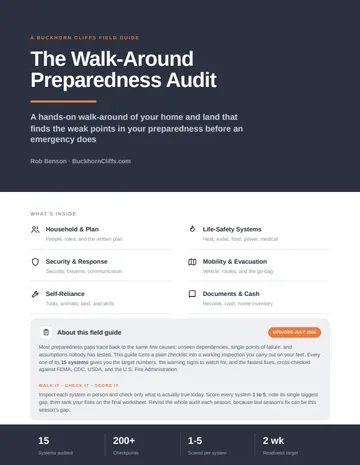
The walk-around audit scores this whole system: Medical and hygiene in the audit. The step by step for one common injury: how to treat a deep cut.
Put it on paper
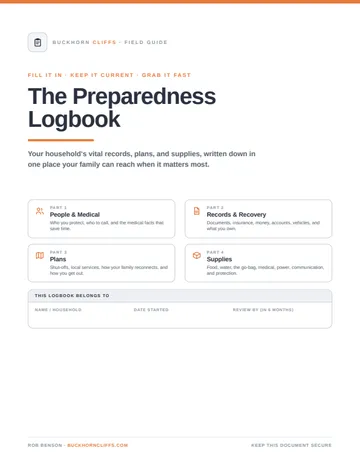
The logbook has four medical sections. Medical Information lists each person's allergies, conditions, and every medication with its purpose, and Household Medical Snapshot puts the essentials for everyone under the roof on one page a responder can act on. Care Providers & Health Coverage records who treats you and how the coverage works, and Medical & Sanitation Supplies is the checklist of what to store and where it is kept. Print a copy for the go-bag and put an ICE card in every wallet, because the person who needs these facts may not be able to speak.
Open the preparedness logbook, or see the printable field guide.
What goes wrong
Questions this answers
Tap a question for the short answer.
What should be in a home first aid kit
Start with bleeding control: a tourniquet, hemostatic gauze, a pressure dressing, gloves, and shears. Add wound cleaning and closure supplies, non-adherent pads and tape, a splint, burn gel, pain and allergy medicines, loperamide, aspirin, oral rehydration salts, a thermometer, a pulse oximeter, and a printed medical reference.
How do you clean a wound without hydrogen peroxide
Flush it with a steady stream of clean drinking water or saline until it runs clear. Volume does the work. Wash the skin around the wound with mild soap, wiping away from the cut, pat dry, and cover. Peroxide and alcohol damage healing tissue and stay out of the wound.
Can you put iodine on an open wound
Not into a deep or open wound. Dilute iodine, Lugol's or povidone, goes on the skin around the wound or on a minor cut or scrape. The wound itself is flushed with clean water or saline. Avoid iodine with an iodine allergy, thyroid disease, or pregnancy.
When should you use a tourniquet
Use one for life-threatening bleeding from an arm or leg: blood that spurts, pools, or soaks through. Place it 2 to 3 inches above the wound, never over a joint, tighten until the bleeding stops, note the time, and leave it on for the medics to remove.
Should a chest seal be vented or non-vented
Vented is preferred because it lets trapped air escape and lowers the chance of pressure building in the chest. A non-vented seal still works, but watch the person closely, and if breathing worsens, lift one edge to release air and press it back down.
How much aspirin do you take for a heart attack
Call 911 first. Then chew 162 to 324 mg of plain, non-coated aspirin, which is 2 to 4 low dose tablets or 1 regular tablet. Skip it with an aspirin allergy, active bleeding, or if a doctor has told the person never to take it.
How long should you run cool water on a burn
A full 20 minutes under cool running water, started as soon as possible and still useful up to 3 hours after the burn. Never use ice, butter, or oil. Afterward cover the burn loosely with a non-adherent dressing and leave blisters intact.
Can you use honey on a wound
Yes, on small, shallow wounds and minor burns that have been cleaned first. Sterile medical-grade honey is best, Manuka second, raw honey a last fallback. Spread it on the gauze, not the wound, change it about daily, and never use it on a child under one year.
How many days of prescription medication should you keep on hand
Seven to 14 days is the minimum, and fewer than 7 is a red flag. Fill to the longest supply your plan allows and work toward 90 days. Keep a written medication list for every person, and plan cold storage for insulin and other refrigerated drugs.
Do medications still work after the expiration date
Most do. Military shelf life testing of more than 100 drugs found about 90 percent still good years past the date when stored cool, dark, and dry. Tablets and capsules last longest. The exceptions are nitroglycerin, insulin, liquid antibiotics, and epinephrine.
Keep going
Related to this
Membership · $49.95 per year
There is a lot more behind the lock
Every recipe and resource from the Prepper's Chemical Survival Guide, all six field guides to read here and download, the full audit and logbook, all twelve reference charts, and no ads.
My Manual · included
Build your own field manual
The most useful thing a membership gives you. Save any page on this site, recipes, charts, and whole field guides included. Arrange them in the order you want, name it, and print one manual with a cover and contents, or keep it as a PDF that opens with no signal.
- It works when this site does not
- Only your pages
- Anyone in the house can use it
- One current copy, not a pile of printouts
- The house binder
- A copy for the bug-out bag or truck
- A copy for family
- An offline PDF


Stay Ready
New entries, updates, and useful instruction.
Stay one step ahead on your preparedness journey.