Quick facts
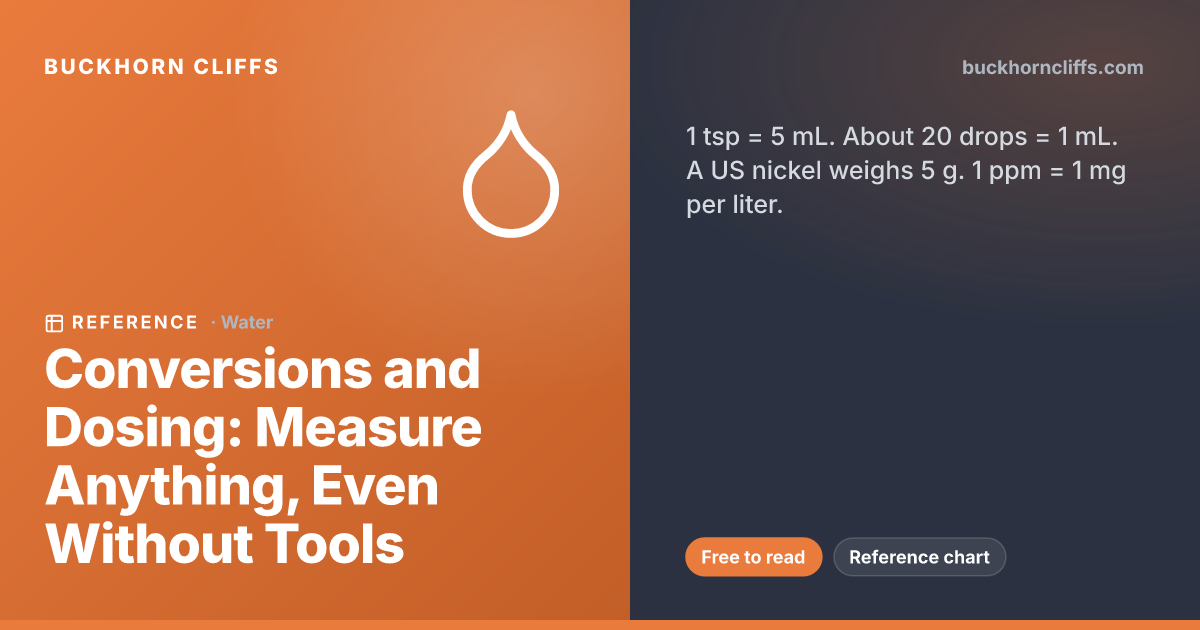
- 1 tsp5 mL
- 1 tbsp15 mL
- ~20 drops1 mL
- US nickel5 g
- 1 ppm1 mg/L
Conversions for volume, weight, and temperature, plus dose-by-eye tricks for when you have no scale.
Volume, weight and temperature
Volume
| 1 teaspoon | 5 mL |
| 1 tablespoon | 15 mL |
| 1 fluid ounce | 30 mL |
| 1 cup | 237 mL |
| 1 pint | 473 mL |
| 1 quart | 946 mL |
| 1 gallon | 3.79 L |
Weight
| 1 ounce | 28 g |
| 1 pound | 454 g |
| 1 pound | 16 oz |
| 1 kilogram | 1,000 g |
| 1 kilogram | 2.2 lb |
| 1 gram | 1,000 mg |
| 1 gram | 0.035 oz |
Temperature
| Freezing | 32°F = 0°C |
| Cool storage | 50°F = 10°C |
| Room / storage | 70°F = 21°C |
| Warm | 110°F = 43°C |
| Drying | 140°F = 60°C |
| Boiling | 212°F = 100°C |
°C = (°F − 32) × 5/9 · °F = °C × 9/5 + 32. Boiling is at sea level; water boils about 1°F lower per 500 ft of elevation.
Weigh and dose by eye
Field weights, no scale needed
Counting drops
Handy for iodine and other drop-dosed water treatments.
Mixing and solution strength
Match a target strength to a real amount, then dilute into water. Always add the powder or acid to the water, never the reverse, since doing it backward can splash, boil, or release heat.
Strength, ppm and grams
| 1% | 10 g/L · 10,000 ppm |
| 0.1% | 1 g/L · 1,000 ppm |
| 0.01% | 0.1 g/L · 100 ppm |
| 1 ppm | 1 mg per liter |
| Per gallon | liter amount × 3.79 |
Dilutions, per gallon of water
| 1:10 | 12.8 fl oz |
| 1:50 | 5 tbsp |
| 1:100 | 2.5 tbsp |
| 1:200 | 4 tsp |
| 1:1000 | 3/4 tsp |
Water treatment quick reference
Parts per million (ppm)
Parts per million measures a tiny concentration: one ppm is one part of a compound for every million parts of water, or about 1 milligram per liter, roughly one drop in 13 gallons. For chlorine, the number tells you how much disinfecting power is left in the water: too low and germs survive, too high and it tastes like a swimming pool.
Questions this answers
Tap a question for the short answer.
How many drops are in a teaspoon?
About 100 drops make 1 teaspoon, since roughly 20 drops equal 1 mL and a teaspoon is 5 mL. For small doses, 5 drops is about ¼ mL, which is handy for iodine and other drop-dosed water treatments.
How do I measure grams without a scale?
Use coins and spoons as known weights. A dime weighs 2.3 g, a penny 2.5 g, a nickel 5 g, and a quarter 5.7 g. A teaspoon of salt is 6 g, a teaspoon of baking soda 4.6 g, a tablespoon of sugar 12.5 g, and a cup of water 237 g.
What does ppm mean?
Parts per million: one part of a compound for every million parts of water, about 1 milligram per liter, or roughly one drop in 13 gallons. For chlorine it shows how much disinfecting power is left, with 2 to 4 ppm the range for drinking water.
How much is 1:100 dilution per gallon?
A 1:100 dilution is 2.5 tablespoons per gallon of water. For comparison, 1:50 is 5 tbsp, 1:200 is 4 tsp, and 1:1000 is 3/4 tsp per gallon.
Keep going
Related to this
Membership · $49.95 per year
There is a lot more behind the lock
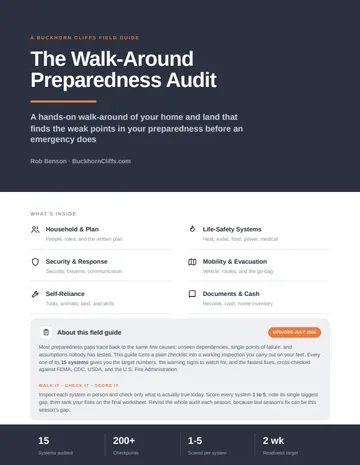
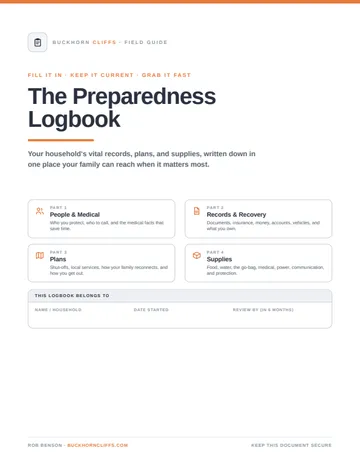
Every recipe and resource from the Prepper's Chemical Survival Guide, all six field guides to read here and download, the full audit and logbook, all twelve reference charts, and no ads.
My Manual · included
Build your own field manual
The most useful thing a membership gives you. Save any page on this site, recipes, charts, and whole field guides included. Arrange them in the order you want, name it, and print one manual with a cover and contents, or keep it as a PDF that opens with no signal.
- It works when this site does not
- Only your pages
- Anyone in the house can use it
- One current copy, not a pile of printouts
- The house binder
- A copy for the bug-out bag or truck
- A copy for family
- An offline PDF

Stay Ready
New entries, updates, and useful instruction.
Stay one step ahead on your preparedness journey.