Quick facts
- Steps
- Clean
- disinfect
- dry
- apply antibiotic
- seal
- protect
- Clean withClean water or saline in the wound; soap only on the skin around it
- Disinfect withDilute iodine on the skin around the wound, not in it
- Closure options
- Wound closure device
- zip sutures
- butterfly bandages
- Dermabond
- Dressing pickNon-adherent pads plus Leukotape P
When you get a deep cut, following a proper wound care protocol is essential to prevent infection and promote healing. Here’s a simple guide with steps and a list of items to have on hand.
First, here are the items I recommend purchasing:
1.) Clean the Wound
Flush the wound with plenty of clean drinking water or saline until it runs clear. Soap goes on your hands and the skin around the cut, never in the wound.
Cleaning the wound helps remove dirt and bacteria, reducing the risk of infection.
2.) Disinfect
Dilute the iodine first (the amounts are in the Lugol's antiseptic recipe), then wipe it on the skin around the wound, working outward. Do not pour iodine into a deep open cut.
Iodine is an effective antiseptic that kills bacteria and helps prevent infection.
3.) Dry
Gently pat the area dry using a clean cloth or sterile gauze.
Drying the wound prepares it for further treatment and helps prevent additional contamination.
4.) Apply Antibiotic
Smear a thin layer of plain petroleum jelly on the wound to keep it moist. Triple antibiotic ointment also works, but neomycin and bacitracin are common causes of allergic skin reactions.
A wound kept moist under a clean bandage heals faster, and plain petroleum jelly does that without the allergy risk.
5.) Seal
Use wound closure devices to close the edges of a clean cut. A gaping, dirty, puncture, or bite wound, or bleeding that will not stop after 10 to 15 minutes of firm pressure, needs medical care, not home closure. First, ensure the wound edges are aligned. Apply Steri-Strips, butterfly bandages, or wound closure strips across the wound to hold the edges together.
Closing a clean cut helps it heal with less scarring. Closing a dirty one traps bacteria inside. Do not close punctures, bites, or wounds with debris you cannot flush out. Those get covered and seen by a professional, along with anything gaping, over a joint, on the face, or showing fat, tendon or bone.
Options:
6.) Protect
Cover the wound with a sterile bandage to keep it clean.
A sterile bandage keeps dirt and bacteria out. Change it daily and watch for spreading redness, warmth, swelling, pus or fever. A deep or dirty wound also calls for a tetanus shot if the last one was more than five years ago.
Non Adherent Pads and Leukotape P
Questions this answers
Tap a question for the short answer.
How do I treat a deep cut at home?
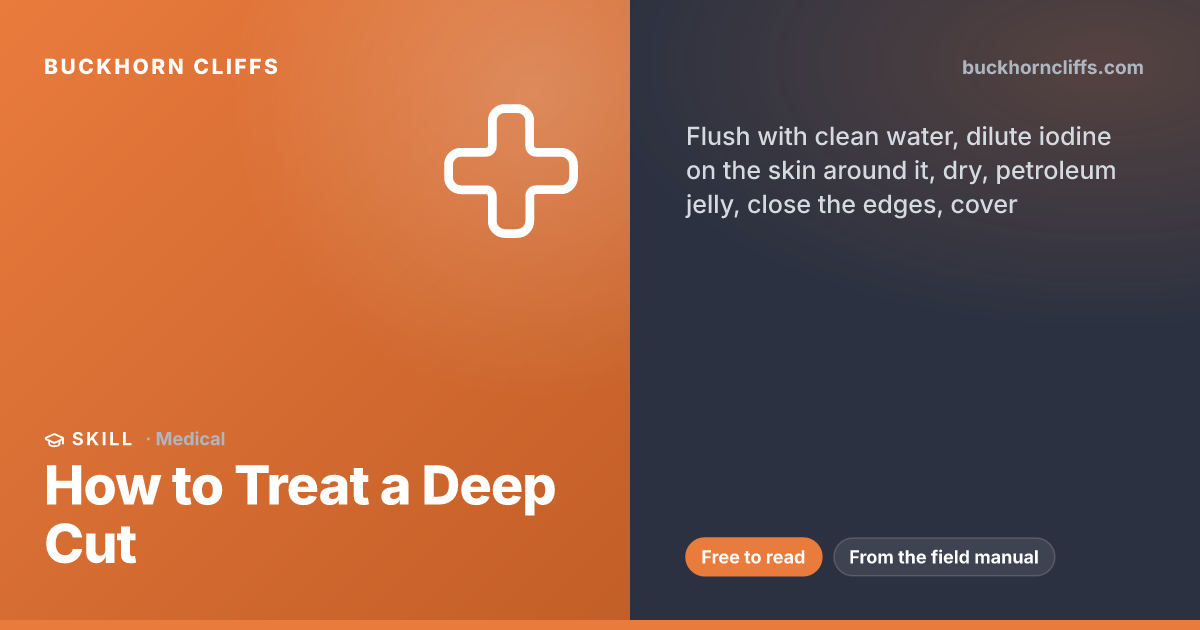
Follow six steps in order. Flush the wound with clean drinking water or saline until it runs clear, wipe diluted iodine on the skin around it, pat it dry, smear on a thin layer of plain petroleum jelly, close the aligned edges of a clean cut with closure strips or a device, and cover it with a sterile bandage.
How do I close a wound without stitches?
Line up the wound edges first, then apply Steri-Strips, butterfly bandages, or wound closure strips across the cut to hold them together. Other options are an emergency laceration closure device such as the Senvok or zip sutures, or a skin adhesive like Dermabond or medical-grade super glue.
What should I use to disinfect a cut?
Flush the cut itself with plenty of clean drinking water or saline, and keep soap on your hands and the surrounding skin, never in the wound. Then dilute iodine, such as Lugol's Solution of Iodine, and wipe it on the skin around the wound, working outward. Do not pour iodine into a deep open cut.
What supplies do I need for wound care?
Keep an iodine solution, always diluted, for the skin around the wound, a clean cloth or sterile gauze for drying, plain petroleum jelly or triple antibiotic ointment, a closure option such as a wound closure device, zip sutures, butterfly bandages, or Dermabond, and sterile bandages to cover the wound.
What is the best bandage for a deep cut?
My best bet is sterile non-adherent pads held in place with Leukotape P. Covering the closed wound with a sterile dressing keeps out dirt and bacteria and maintains a clean healing environment.
Keep going
Related to this
Membership · $49.95 per year
There is a lot more behind the lock
Every recipe and resource from the Prepper's Chemical Survival Guide, all six field guides to read here and download, the full audit and logbook, all twelve reference charts, and no ads.
My Manual · included
Build your own field manual
The most useful thing a membership gives you. Save any page on this site, recipes, charts, and whole field guides included. Arrange them in the order you want, name it, and print one manual with a cover and contents, or keep it as a PDF that opens with no signal.
- It works when this site does not
- Only your pages
- Anyone in the house can use it
- One current copy, not a pile of printouts
- The house binder
- A copy for the bug-out bag or truck
- A copy for family
- An offline PDF



Stay Ready
New entries, updates, and useful instruction.
Stay one step ahead on your preparedness journey.