INDEFINITEMULTI-USEHazardousWorks without power
Quick facts
- PropertyWaterproof barrier
- FormSoft jelly
- Hazard classLow; flammable melted
- Shelf lifeIndefinite
- StorageAny sealed container
- What to avoidHigh heat, open flame
See everything petroleum jelly must never touch
What it's good for
Skin barrier
Protects and seals skin
Rust prevention
Coats metal
Fire starters
Cotton-ball starters
Lubrication
Light seal and grease
Inert and waterproof, so it neither reacts nor lets water through, which is why it guards skin and blocks rust.
Good to know
It seals, it does not heal. Petroleum jelly works by occlusion, sealing a surface so the water already in skin cannot evaporate, and that trapped moisture is what lets a wound stay supple and mend. The same seal keeps air and water off metal so rust never starts. Inert on the shelf, it becomes a flammable oil when melted, which is exactly why a jelly-soaked cotton ball lights so readily.
Handling and safety
It seals, not heals
It locks in moisture and blocks irritants but does not itself heal wounds.
A top fire starter
Worked into a cotton ball it lights easily and burns for minutes.
Protects metal
A thin film keeps air and water off tools to prevent rust.
Flammable when melted
Heat it gently and keep it away from open flame.
Free download
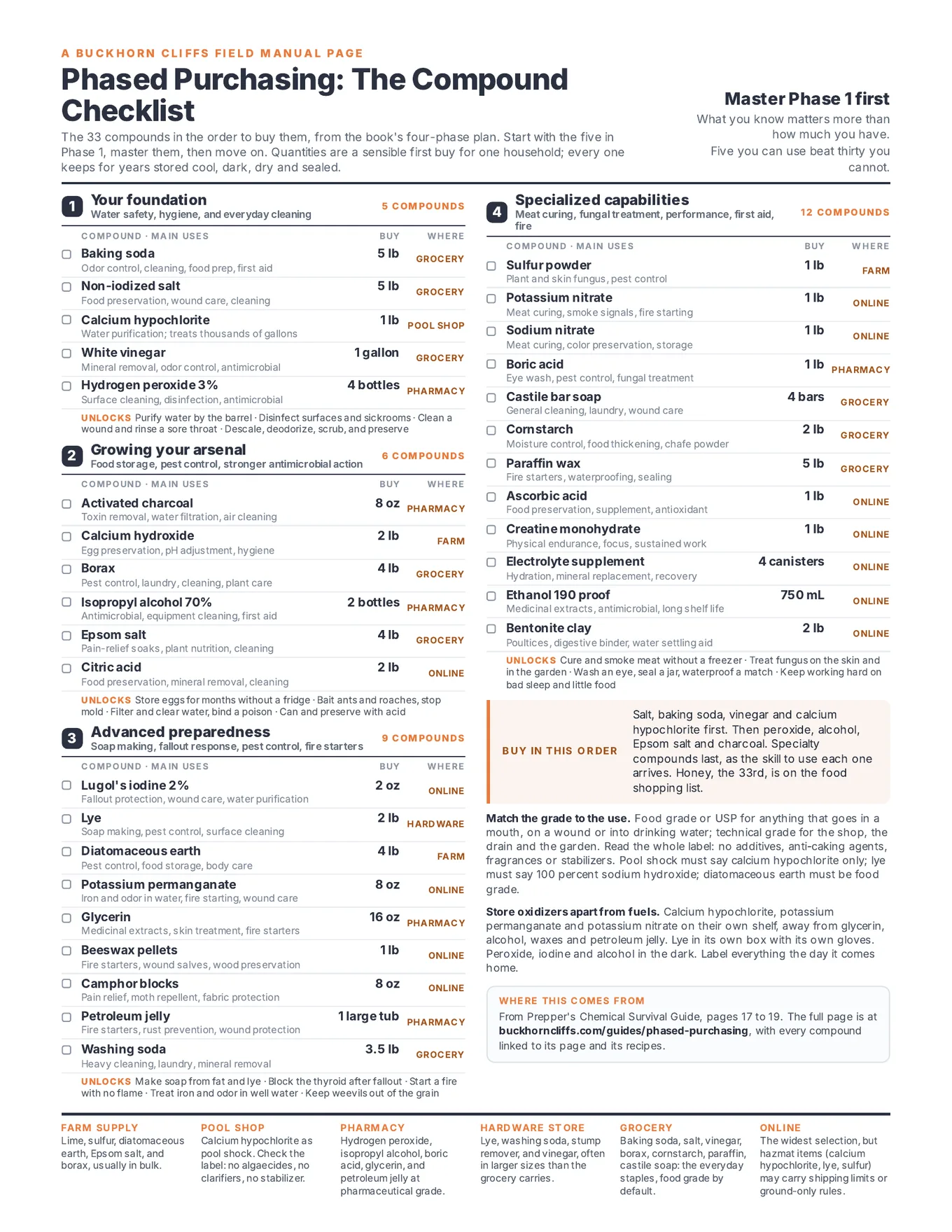
Get the one-page compound checklist
All four phases on one printed page: every compound with how much to buy and what it is for, checkboxes to tick off, and where to buy each one. Built from the book's phased purchasing plan. Print it and take it to the store.
The PDF comes by email, with my newsletter now and then. Already on the list? You still get it. Read the full page.
Eight jobs it does
- Wound and burn moisture barrier
- Fire starter in cotton balls
- Lip balm and skin protectant
- Lube for tools and firearms
- Anti-chafe for feet and straps
- Rust prevention on bare metal
- Squeaky hinge and lock lube
- Light lube on nitrile O-rings (it swells natural rubber and EPDM, so use silicone grease on those)
If it goes bad Does not spoil. May thin in heat. Stir back together.
Recipes for petroleum jelly
Questions this answers
Tap a question for the short answer.
What is petroleum jelly used for?
Petroleum jelly is an inert, waterproof barrier. It protects and seals skin, coats bare metal to prevent rust, makes cotton-ball fire starters, and works as a light lube for tools, firearms, hinges, and locks. It also prevents chafing and seals gaskets and O-rings.
How long does petroleum jelly last in storage?
Petroleum jelly keeps indefinitely and does not spoil. It may thin in heat, and if that happens you can stir it back together.
How do I store petroleum jelly?
Any sealed container works. Keep it away from high heat and open flame, because it becomes a flammable oil when melted. If it thins in heat, stir it back together.
Keep going
Related to this
Membership · $49.95 per year
Everything on this site, open, printable, and yours on paper
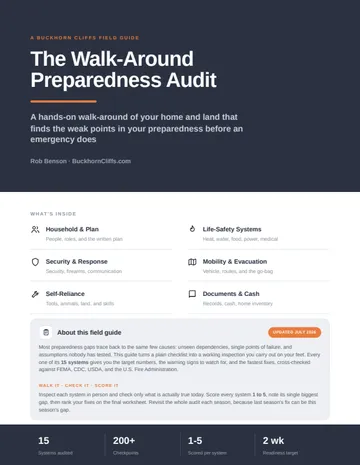
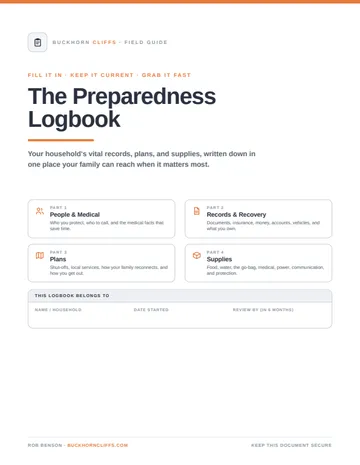
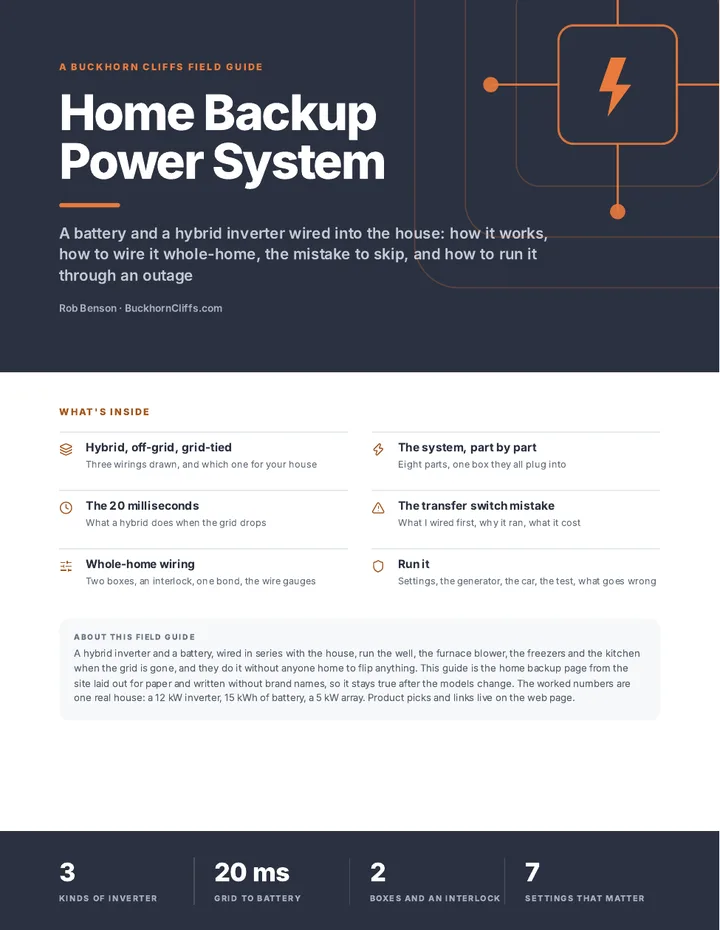
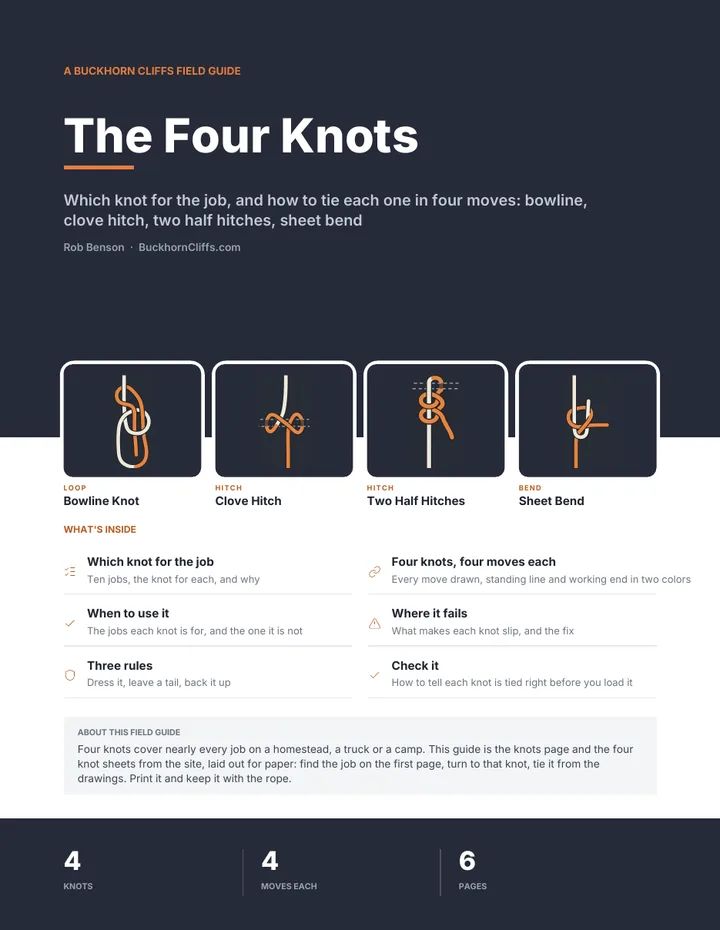
When the grid goes down, this site goes with it. Paper does not. Membership opens every member page and every recipe from the book, hands over all thirteen field guides as PDFs, and builds a binder from the pages your household uses.
- 158member pagesopen in full, every amount and every step
- 138compound recipesfrom the hardcover book, exact amounts. Pick any and add them to your manual
- 13field guides304 pages of PDFs, $130 bought one at a time
- 9military field guidesUS Army manuals cut to 66 pages and laid out to use
- 1manual of your ownbuilt from any page here, printed with your cover
- Every member page in full. the exact amounts, every step, every parts list
- Every recipe and resource from the book. all 138 from the Prepper's Chemical Survival Guide, searchable here
- All 13 field guides. read them here or download the PDFs, 304 pages
- A field guide for each of 9 Army manuals. the survival, first aid and other US Army manuals, each cut to 10 pages or fewer
- My Manual. save any page, recipe or whole guide, order it, print one binder with your own cover
- The audit and the logbook, saved. your scores and checklists on every device
- Print and Save as PDF on every page. and no ads
- One payment, $49.95 per year. Cancel any time and keep access to the end of the year you paid for.
- Sign in by email. No password, and the sign-in renews itself on every visit.
- Most of the site stays free. Membership is for the depth, the PDFs and the paper.





Stay Ready
New entries, updates, and useful instruction.
Stay one step ahead on your preparedness journey.