Handle with care
How it works
Quick facts
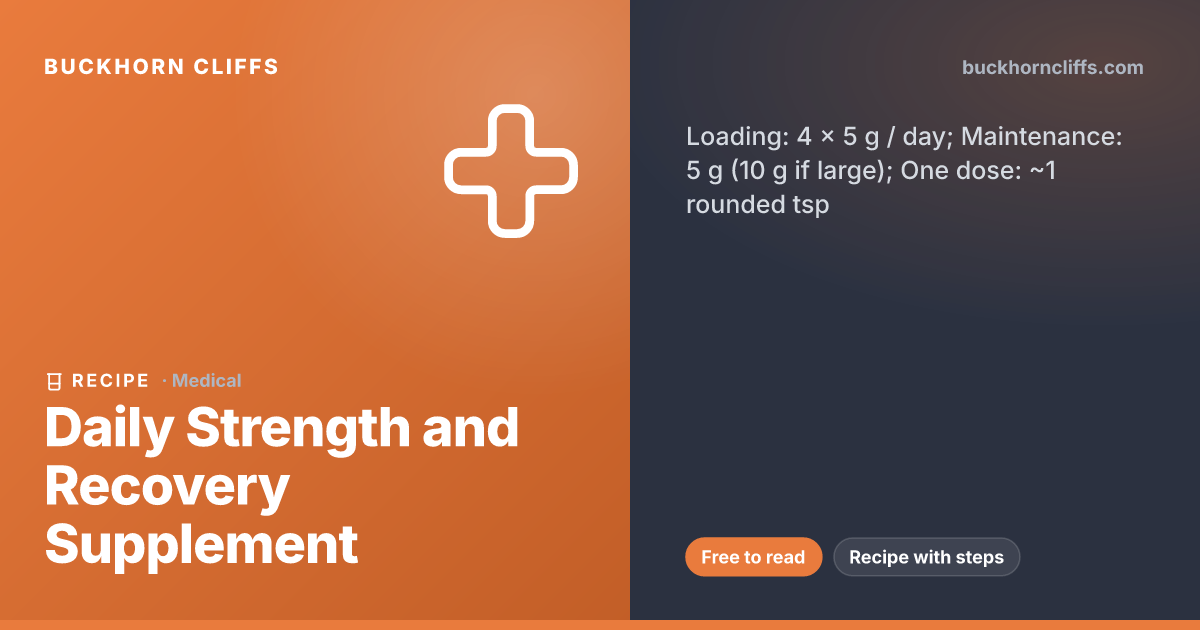
- Loading4 × 5 g / day
- Maintenance5 g (10 g if large)
- One dose~1 rounded tsp
- Witha meal
- Water2-3 L / day
Hazard
Drinking 2 to 3 liters of water a day is good practice while supplementing. Some people experience mild bloating during the loading phase; reduce the dose if it is uncomfortable.
It works by topping up phosphocreatine, the compound your cells use to regenerate energy during short, hard efforts, which raises how much work you can do in a day and speeds recovery between bouts. Paired with regular physical work or training, it also helps you build and hold lean muscle, which can matter when food is short. It pairs well with electrolytes, which replace the salts you sweat out, so together they cover hydration and work capacity during heavy labor (see Recipe 16.1). It is one of the most studied supplements there is, with decades of research showing it is safe for long-term daily use.
What you'll need
- Creatine monohydrate powder (micronized or standard)
- Water or non-acidic beverage
Steps
- For a loading phase (optional, saturates muscles faster), take four 5-gram doses spread across the day with meals for 5 to 7 days. Mix each dose in 8 oz of warm water or juice. Take with food containing carbohydrates or protein to improve absorption. Drink extra water during loading because creatine draws water into muscle cells
- For daily maintenance, take 5 grams once per day with a meal. A rounded teaspoon is about 5 grams, while a level one is closer to 3, so heap it or weigh it if you can. Larger or heavily muscled people can take 5 to 10 grams a day to fill and hold a bigger muscle store. Without the loading phase, it takes 3 to 4 weeks of daily use to fully saturate your muscles; take it every day, with no need to cycle on and off.
Warnings
Mild bloating or a temporary 1 to 3 pound gain from water held in muscle is normal, especially during loading; ease the dose to 3 grams if bloating bothers you. Drinking 2 to 3 liters of water a day is good practice. Any creatine beyond what your muscles can hold is simply excreted. Do not use with kidney disease or impaired kidney function without medical guidance.
Storage and shelf life
Store in a tightly sealed container in cool, dry conditions. Shelf life is 10 or more years when kept sealed and dry. Clumped creatine is still effective. Break up clumps before measuring. When creatine degrades it converts to creatinine, a non-toxic waste product your body already produces and excretes naturally. Old creatine loses potency but does not become dangerous. Discard only if it develops an unusual color, strong odor, or off taste, which indicates moisture contamination. Best container: sealed glass jar with desiccant. See the Containers section.
Keep going
Related to this
Membership · $49.95 per year
There is a lot more behind the lock
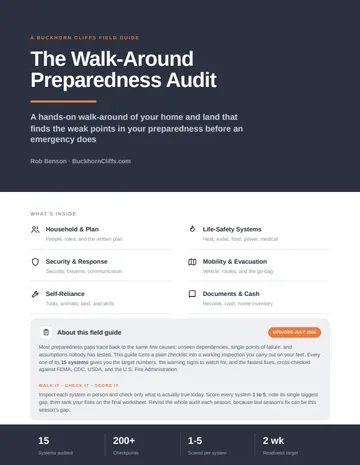
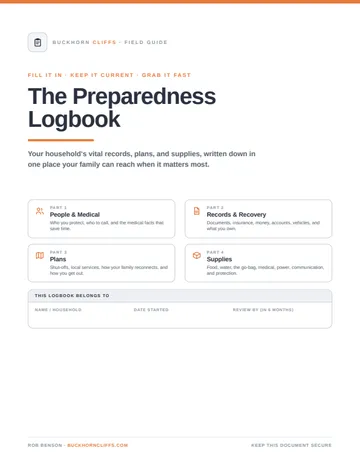
Every recipe and resource from the Prepper's Chemical Survival Guide, all six field guides to read here and download, the full audit and logbook, all twelve reference charts, and no ads.
My Manual · included
Build your own field manual
The most useful thing a membership gives you. Save any page on this site, recipes, charts, and whole field guides included. Arrange them in the order you want, name it, and print one manual with a cover and contents, or keep it as a PDF that opens with no signal.
- It works when this site does not
- Only your pages
- Anyone in the house can use it
- One current copy, not a pile of printouts
- The house binder
- A copy for the bug-out bag or truck
- A copy for family
- An offline PDF

Stay Ready
New entries, updates, and useful instruction.
Stay one step ahead on your preparedness journey.