Handle with careWorks without power
How it works
Quick facts
- Roomsopen container
- Itemssmall pouch
- Fabricthin layer
- Dwellhours to overnight
- Thenvacuum / shake out
Hazard
Test a small area on delicate or dark fabrics first; prolonged contact can leave white marks that are hard to remove. Vacuum or shake out fully after use.
Unlike air fresheners that cover smells with fragrance, baking soda neutralizes acidic odor compounds, turning them into salts with no smell. The catch is surface area: a closed box or narrow jar exposes only a thin top layer and does little, so spread it in a wide, shallow dish, or better yet sprinkle it straight onto what smells. It works best in small, enclosed spaces like a cooler, toolbox, or closet; for a whole room or tent it offers only modest help, so also air the space out and remove the source.
What you'll need
- Baking soda (sodium bicarbonate)
- Optional: dried herbs (lavender, rosemary, or thyme)
Steps
- For rooms, tents, or storage areas, set out baking soda where air moves, using a wide, shallow dish or a fabric pouch rather than a deep jar, so as much surface as possible meets the air. Expect modest help in a large space, and keep airing it out. Replace the baking soda every 1 to 3 months, or every 4 to 6 weeks in hot, humid, or poorly ventilated spaces, since moisture wears it out faster.
- For individual items like bags, toolboxes, coolers, or sealed containers, place a small pouch or open dish of baking soda inside, close the container, and leave it overnight or up to 24 hours. In that confined air the baking soda works best, absorbing and neutralizing the trapped odors.
- For fabric and bedding, sprinkle a thin, even layer of baking soda across the surface. Let it sit for 45 to 90 minutes, then brush it off outdoors with a stiff brush or broom, or shake and beat the item. A damp cloth wipes away residue on upholstered items. Repeat as needed, especially during humid weather or extended use.
Warnings
Do not apply directly to delicate or dark fabrics without testing a small area first, because prolonged contact can leave white marks that are hard to remove. Do not apply to items that are already wet or visibly moldy; fix the moisture source first and address mold with the appropriate cleaner (see Recipe 13.3 or 15.3). Keep containers out of reach of animals in outdoor or wilderness settings. If you add dried herbs, keep the blend away from cats, which can react badly to some herbal compounds even in dried form.
Storage and shelf life
Store baking soda in a sealed, dry container away from strong odors with indefinite shelf life. Once placed out for deodorizing, replace every 1 to 3 months as odor load dictates. Best container: sealed HDPE container or glass jar, keep moisture-free. Avoid metal in humid conditions (promotes corrosion). See the Containers section.
Questions this answers
Tap a question for the short answer.
How do I get musty smells out of a cabin or basement?
Set baking soda out where air moves in a wide, shallow dish or fabric pouch, not a deep jar. In a large space expect only modest help, so air it out and remove the source too. Replace it every 1 to 3 months, or every 4 to 6 weeks in humid spaces, and fix any moisture or mold first.
How long does baking soda last in the fridge before replacing?
Baking soda set out for deodorizing needs replacing every 1 to 3 months, depending on odor load. In hot, humid, or poorly ventilated spaces, swap it every 4 to 6 weeks, since moisture wears it out faster.
Can I deodorize a mattress or sleeping pad with baking soda?
Yes. Sprinkle a thin, even layer across the surface, let it sit for 45 to 90 minutes, then brush it off outdoors or shake and beat the item. Test dark or delicate fabrics first, since long contact can leave white marks, and never apply it to anything wet or visibly moldy.
Keep going
Related to this
Membership · $49.95 per year
There is a lot more behind the lock
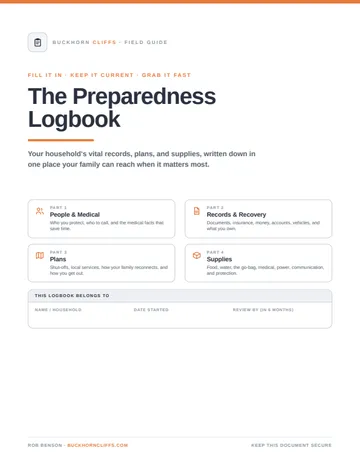
Every recipe and resource from the Prepper's Chemical Survival Guide, all nine field guides to read here and download, the full audit and logbook, all twelve reference charts, and no ads.
My Manual · included
Build your own field manual
The most useful thing a membership gives you. Save any page on this site, recipes, charts, and whole field guides included. Arrange them in the order you want, name it, and print one manual with a cover and contents, or keep it as a PDF that opens with no signal.
- It works when this site does not
- Only your pages
- Anyone in the house can use it
- One current copy, not a pile of printouts
- The house binder
- A copy for the bug-out bag or truck
- A copy for family
- An offline PDF




Stay Ready
New entries, updates, and useful instruction.
Stay one step ahead on your preparedness journey.