Handle with careWorks without power
How it works
Quick facts
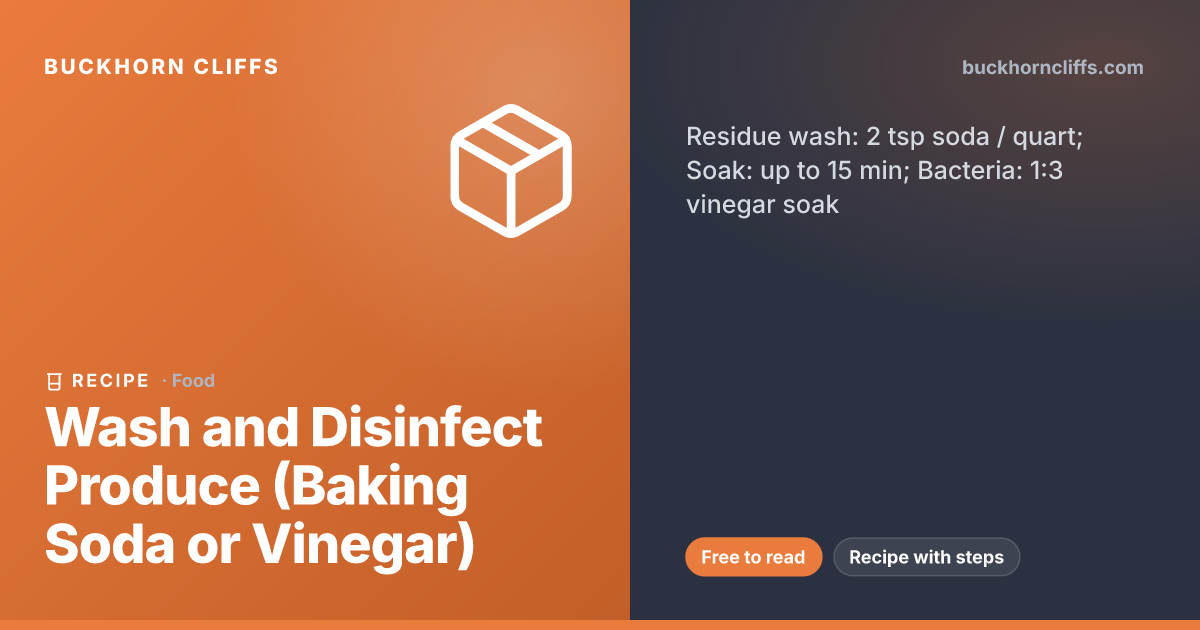
- Residue wash2 tsp soda / quart
- Soakup to 15 min
- Bacteria1:3 vinegar soak
- Afterrinse with clean water
- Don'tmix soda + vinegar
The food shopping list: what to buy, how much, shelf life
Hazard
Always rinse produce thoroughly with clean, safe water afterward. Use these methods only when your rinse water is clean or properly disinfected. Do not mix the soda and vinegar together.
A 2017 peer-reviewed study from the University of Massachusetts Amherst found that soaking pesticide-coated apples in a 1 percent baking soda solution for 12 to 15 minutes removed all of the residue left on the surface, far more than plain water or a commercial bleach rinse. Measured against the total applied, it cleared about 80 percent of the fungicide thiabendazole and 96 percent of the insecticide phosmet; the rest had absorbed into the peel and cannot be washed off, since the soak reaches only surface residue. Thiabendazole penetrates deeper than phosmet, which is why more of it stays behind.
What you'll need
- Baking soda (sodium bicarbonate)
- White vinegar (5% acidity)
- Clean water
Free download
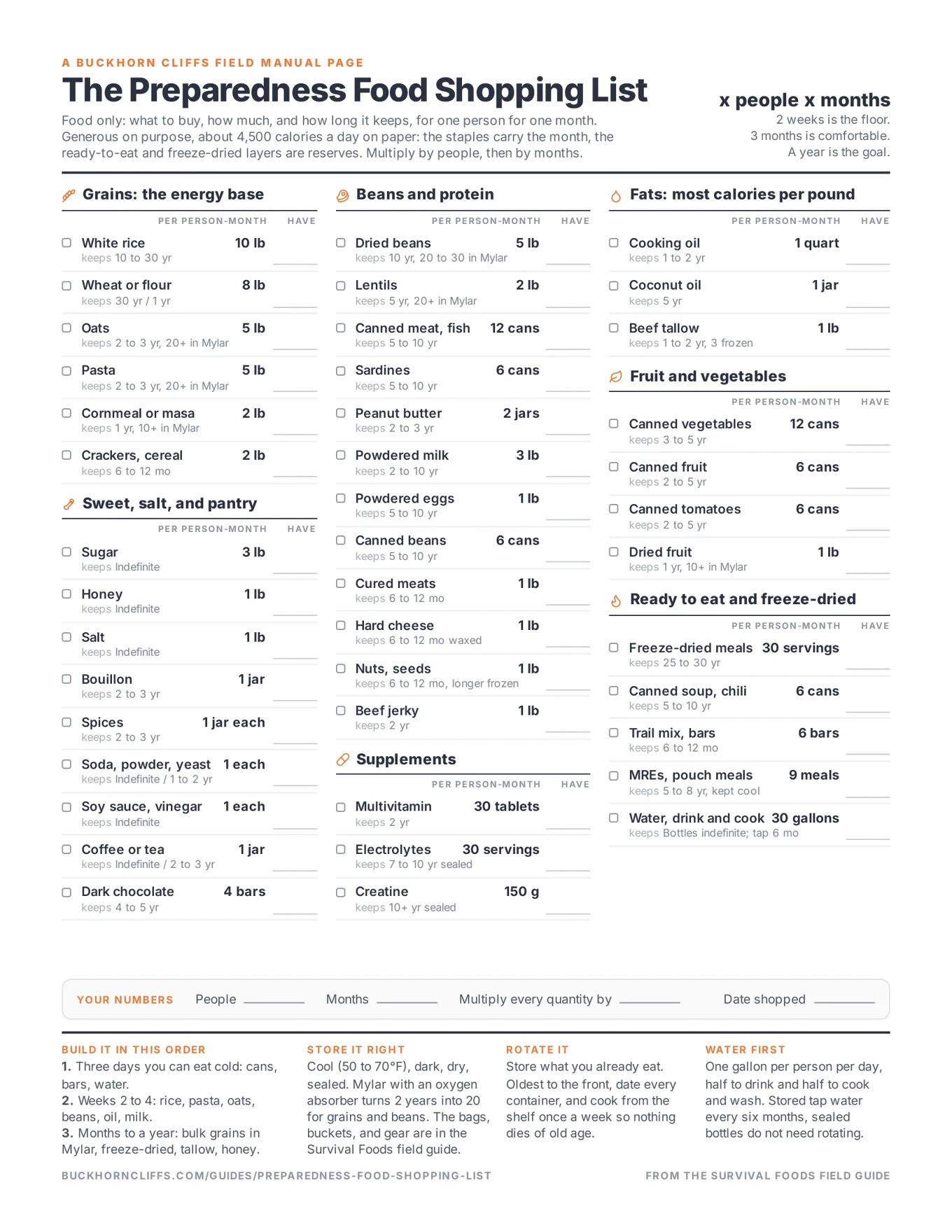
Get the one-page food shopping list
What to store, how much of it for one person for one month, and how long it keeps. One page with checkboxes, built from the Survival Foods field guide. Print it, multiply by your people and months, and take it to the store.
The PDF comes by email, with my newsletter now and then. Already on the list? You still get it. Read the full page.
Steps
- For removing surface pesticide residue, wax, and grit, mix 2 teaspoons baking soda into 1 quart of clean water (roughly 10 grams per liter, the concentration used in the published study). Submerge produce for 12 to 15 minutes, then drain and rinse thoroughly with clean water before eating. This removes surface contaminants but does not kill bacteria or remove pesticides that have absorbed into the fruit.
- For reducing surface bacteria (particularly Salmonella and E. coli), mix 1 part white vinegar with 3 parts clean water. Submerge produce for 10 to 15 minutes, then rinse thoroughly with clean water. This method is safe for most produce including tender leafy greens, though it may slightly soften the texture of delicate berries.
- Do not mix baking soda and vinegar together for this purpose; they neutralize each other and the result is less effective than either one alone. Use one method or the other depending on your main concern (baking soda for chemical residue, vinegar for bacterial load), and treat firm produce like apples, cucumbers, and peppers differently from delicate items like berries, mushrooms, or leafy greens, which should not be soaked for more than a few minutes because they absorb water and degrade quickly.
Garden use
See Appendix J, Garden Uses, for the symptom chart, key rates, and cross-recipe cautions.
Warnings
Always rinse produce thoroughly with clean, safe water after any treatment. Use these methods only when your rinse water supply is clean or properly disinfected. Neither method sterilizes produce completely, and neither removes pesticides that have been absorbed into the fruit's flesh rather than left on the surface. For produce with heavy pesticide use (commonly called the "Dirty Dozen"), peeling when possible removes both surface and subsurface residue more effectively than any wash.
Storage and shelf life
Both baking soda and vinegar last indefinitely in sealed containers with proper storage. Keep them with your food preparation supplies for quick access during meal prep. Best container: sealed HDPE container or glass jar, keep moisture-free. Avoid metal in humid conditions (promotes corrosion). See the Containers section.
Questions this answers
Tap a question for the short answer.
How do I wash produce without a commercial produce wash?
Use baking soda or white vinegar, one or the other. For pesticide residue, wax and grit, soak in 2 teaspoons of baking soda per quart of water for 12 to 15 minutes. For surface bacteria, soak in 1 part vinegar to 3 parts water for 10 to 15 minutes. Rinse well with clean water after either.
What's the recipe for a vinegar produce wash?
Mix 1 part white vinegar (5% acidity) with 3 parts clean water. Submerge the produce for 10 to 15 minutes, then rinse thoroughly with clean water. It reduces surface bacteria such as Salmonella and E. coli and is safe for most produce, though it may slightly soften delicate berries.
Does baking soda disinfect fruits and vegetables?
No, a baking soda soak strips surface pesticide residue, wax and grit but does not kill bacteria. For bacterial load, use the vinegar soak of 1 part white vinegar to 3 parts water instead. Do not combine the two, since they neutralize each other, and neither method fully sterilizes produce.
How long do I soak vegetables in vinegar water?
Soak firm produce for 10 to 15 minutes in the vinegar and water mix, then rinse thoroughly with clean water. Delicate items like berries, mushrooms and leafy greens should get no more than a few minutes, because they absorb water and break down quickly.
How do I remove pesticide residue from produce?
Soak produce for 12 to 15 minutes in 2 teaspoons of baking soda per quart of clean water, then drain and rinse. A 2017 study found this removed all surface residue from apples, but it cannot reach pesticide absorbed into the peel. For heavily sprayed produce, peeling removes more than any wash.
Keep going
Related to this
Membership · $49.95 per year
There is a lot more behind the lock
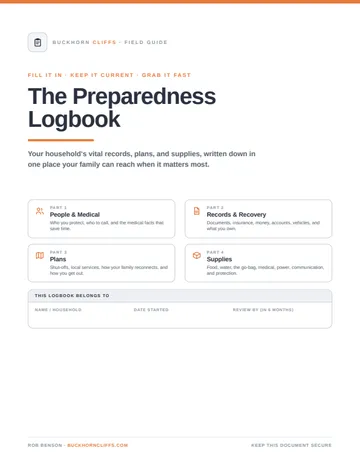
Every recipe and resource from the Prepper's Chemical Survival Guide, all six field guides to read here and download, the full audit and logbook, all twelve reference charts, and no ads.
My Manual · included
Build your own field manual
The most useful thing a membership gives you. Save any page on this site, recipes, charts, and whole field guides included. Arrange them in the order you want, name it, and print one manual with a cover and contents, or keep it as a PDF that opens with no signal.
- It works when this site does not
- Only your pages
- Anyone in the house can use it
- One current copy, not a pile of printouts
- The house binder
- A copy for the bug-out bag or truck
- A copy for family
- An offline PDF



Stay Ready
New entries, updates, and useful instruction.
Stay one step ahead on your preparedness journey.