FREE PDFPER PERSON-MONTHSHELF LIFE
Quick facts
- Per person, per month
- About 48 lb dry goods
- 45 cans
- 1 qt oil
- 30 gal water
- Calories2,000 per person per day
- Floor / comfortable / goal2 weeks / 3 months / 1 year
- Longest keepersRice, wheat, honey, sugar, salt: decades
- Shortest keepersOil, nuts, crackers, cereal: 6 to 24 months
- The downloadOne-page PDF with checkboxes, free for subscribers
This is the list I hand people who ask what food to buy first. It is built from the Survival Foods field guide and the sixty-odd food pages on this site, boiled down to one question per item: what to buy, how much for one person for one month, how long it keeps, and why it earned the space. Multiply by your people, then by the months you want covered, and you have a shopping list instead of a vague worry.
The numbers assume about 2,000 calories and one gallon of water per person per day, and 40 to 45 pounds of dry staples per person per month, which is what the field guide plans around. The totals are the guide's; the split across items is mine, from what I keep on the shelf. This list is generous on purpose, about 4,500 calories a day on paper. The staples alone carry the month; the ready-to-eat and freeze-dried layers are reserves. Food only: the bags, buckets, absorbers, and openers to store and use it are in the Survival Foods field guide. Two weeks is the floor. Three months is comfortable. A year is the goal, and it is reachable one grocery run at a time.
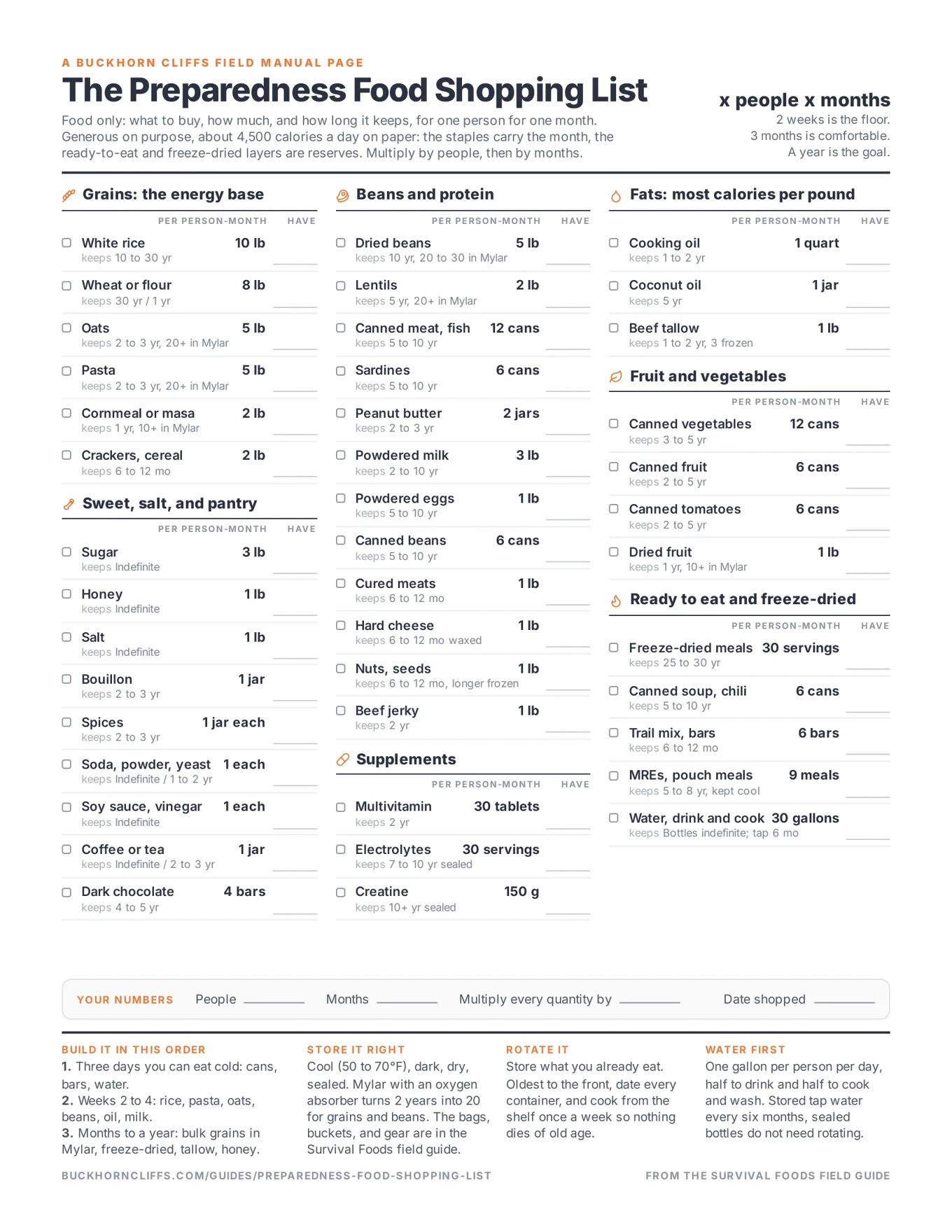
Free download
Get the one-page food shopping list
What to store, how much of it for one person for one month, and how long it keeps. One page with checkboxes, built from the Survival Foods field guide. Print it, multiply by your people and months, and take it to the store.
The PDF comes by email, with my newsletter now and then. Already on the list? You still get it. Read the full page.
How much food to store: The numbers
| Cover | Water | Food energy | Dry staples, about |
|---|---|---|---|
| 3 days | 3 gallons | 6,000 calories | 4 to 5 lb |
| 2 weeks | 14 gallons | 28,000 calories | 18 to 22 lb |
| 1 month | 30 gallons | 60,000 calories | 40 to 45 lb |
| 3 months | 90 gallons | 180,000 calories | 120 to 135 lb |
| 1 year | 365 gallons | 730,000 calories | 450 to 550 lb |
Per person, per month, the list below comes to roughly 48 pounds of dry goods, 45 cans, a quart of oil, 30 servings of freeze-dried food, and 30 gallons of water. A family of four for three months is that times twelve. It sounds like a lot until you see it stacked: about six 5-gallon buckets of grain and beans, four cases of cans, and a corner of the garage for water.
Balance the plate the way the field guide does: carbohydrates for the energy base (rice, pasta, oats, beans), protein for repair and satiety (canned meat and fish, beans, milk powder, peanut butter), fats for calories (oil, tallow, nut butter), and canned or dried fruit and vegetables plus a multivitamin so nobody develops a deficiency in month two.
Grains: The energy base
Cheap calories that keep for decades when sealed right. This is the bulk of the weight.
| Item | Per person, per month | Keeps | Why it is on the list |
|---|---|---|---|
| White rice | 10 lb | 10 to 30 years | The cheapest calories that keep; brown rice goes rancid in a year |
| Wheat berries or flour | 8 lb | 30 years / 1 year | Whole berries keep for decades and grind to fresh flour; bagged flour is a 1 year food |
| Oats | 5 lb | 2 to 3 years, 20+ in Mylar | Breakfast with no skill required, and they cook on any heat |
| Pasta | 5 lb | 2 to 3 years, 20+ in Mylar | Fast, filling, and everyone eats it |
| Cornmeal or masa | 2 lb | 1 year, 10+ in Mylar | Bread and porridge without wheat or a grain mill |
| Crackers or cereal | 2 lb | 6 to 12 months | No-cook calories for the first days; rotate through the pantry |
Beans and protein
Protein repairs the body and keeps you full. Dried beans are the cheapest; canned meat needs no cooking.
| Item | Per person, per month | Keeps | Why it is on the list |
|---|---|---|---|
| Dried beans | 5 lb | 10 years, 20 to 30 in Mylar | Protein and fiber for pennies; old beans take longer to soften, so rotate |
| Lentils | 2 lb | 5 years, 20+ in Mylar | Cook in 20 minutes with no soak, the fastest dried protein there is |
| Canned meat and fish | 12 cans | 5 to 10 years | Eat cold straight from the can; chicken, beef, tuna, salmon |
| Sardines | 6 cans | 5 to 10 years | Fat, protein, calcium, and omega-3 in one small can |
| Peanut butter | 2 jars | 2 to 3 years | The densest no-cook calories on the list |
| Powdered milk | 3 lb | 2 to 10 years | Nonfat keeps longest; cooking, baking, and the kids |
| Powdered eggs | 1 lb | 5 to 10 years | Baking and breakfast without a coop |
| Canned beans | 6 cans | 5 to 10 years | No-cook protein for the first days; dried beans need water, fuel, and hours |
| Cured meats | 1 lb | 6 to 12 months | Salami and hard sausage: shelf-stable protein that is not a can |
| Hard cheese | 1 lb | 6 to 12 months waxed | Fat and protein; wax it or vacuum-seal it and keep it cool |
| Nuts and seeds | 1 lb | 6 to 12 months, longer frozen | Dense calories and fat; rotate them or freeze them |
| Beef jerky | 1 lb | 2 years | Protein that goes in a pocket |
Fats: The most calories per pound
Fat is where the calories are, and it is what a stockpile of rice and beans is missing. It is also what goes rancid first, so buy the stable ones.
| Item | Per person, per month | Keeps | Why it is on the list |
|---|---|---|---|
| Cooking oil | 1 quart | 1 to 2 years | Frying, baking, and calories; rotate it, it does not keep |
| Coconut oil | 1 jar | 5 years | The most stable plant fat; solid at room temperature |
| Beef tallow | 1 lb | 1 to 2 years, 3 frozen | Rendered fat that fries, bakes, makes candles, and keeps |
Fruit and vegetables
Vitamins, fiber, and the reason a month of rice does not wear you down.
| Item | Per person, per month | Keeps | Why it is on the list |
|---|---|---|---|
| Canned vegetables | 12 cans | 3 to 5 years | Green beans, corn, carrots, peas; the water in the can counts too |
| Canned fruit | 6 cans | 2 to 5 years | Sugar, vitamin C, and morale |
| Canned tomatoes or sauce | 6 cans | 2 to 5 years | Turns rice, pasta, and beans into a meal |
| Dried fruit | 1 lb | 1 year, 10+ in Mylar | Raisins, apricots, apples; light, sweet, no cooking |
Sweet, salt, and pantry
Salt and sugar never spoil, flavor is what keeps people eating when the menu repeats, and a few baking basics turn flour into bread.
| Item | Per person, per month | Keeps | Why it is on the list |
|---|---|---|---|
| Sugar | 3 lb | Indefinite | Calories, preserving, baking; never with an oxygen absorber |
| Honey | 1 lb | Indefinite | Sweetener that never spoils and dresses a minor burn |
| Salt | 1 lb, more for preserving | Indefinite | The body needs it and every preserving method runs on it |
| Bouillon | 1 jar | 2 to 3 years | What turns a pot of rice or beans into a meal; cubes or paste |
| Spices | 1 jar each | 2 to 3 years | Pepper, garlic, chili, cinnamon; buy what you already cook with |
| Baking soda, baking powder, yeast | 1 each | Indefinite / 1 to 2 years | Flour without leavening is a limited food; yeast keeps years frozen |
| Soy sauce and vinegar | 1 each | Indefinite | Salt, umami, acid; vinegar also cleans and pickles |
| Instant coffee or tea | 1 jar | Indefinite / 2 to 3 years | Morning routine is worth a lot in a bad week |
| Dark chocolate | 4 bars | 4 to 5 years | Dense calories and the best barter item on the list |
Ready to eat and freeze-dried: No cooking, or just hot water
The first days of an outage or evacuation are eaten cold, in the dark, with no time, and the long haul is easiest with meals that need only hot water. Neither layer needs a real kitchen.
| Item | Per person, per month | Keeps | Why it is on the list |
|---|---|---|---|
| Freeze-dried meals or ingredients | 30 servings | 25 to 30 years | The long-term layer: a meal a day for a month that needs only hot water, and the longest shelf life on the list |
| Canned soups, chili, stew | 6 cans | 5 to 10 years | A hot meal with one pan, or a cold one with a spoon |
| Trail mix and granola bars | 6 bars | 6 to 12 months | Grab-and-go calories; rotate them through lunches |
| MREs or pouch meals | 9 meals | 5 to 8 years, kept cool | Three days of the evacuation layer; heat drains their shelf life fast |
| Water, to drink and cook | 30 gallons | Sealed bottles indefinite; stored tap 6 months | One gallon per person per day; keep 3 gallons of it in sealed bottles, ready to carry |
Supplements: The small jar that carries the month
A stored diet is heavy on starch and light on everything else. Three small containers cover the gaps, and two of them earn their place under hard physical work.
| Item | Per person, per month | Keeps | Why it is on the list |
|---|---|---|---|
| Multivitamin | 30 tablets | 2 years | Covers the vitamins a stored diet leaves out; one a day |
| Electrolytes | 30 servings | 7 to 10 years sealed | Sodium, potassium, and magnesium for sweat, heat, and hard work; water alone is not enough |
| Creatine monohydrate | 150 g (about 1/3 lb) | 10+ years sealed | 5 g a day for strength under heavy work; the cheapest supplement that does something |
Build it in three phases
Nobody buys a year of food in one trip, and nobody should. The field guide's phased plan is the order that keeps you covered at every step.
- Phase 1: the first three daysEat cold or heat quickly. Canned soups and chili, canned fruit and vegetables, peanut butter and crackers, trail mix and jerky, a few pouch meals, three gallons of bottled water per person, and comfort snacks. This is also the evacuation box.
- Phase 2: weeks two to fourPantry staples you cook. Rice, pasta, and oats; dried and canned beans; canned vegetables, fruit, and tomatoes; canned meat and fish; cooking oil; powdered milk; cereal and crackers; salt, sugar, spices, and bouillon. Buy double of what you already eat and rotate.
- Phase 3: months to a yearLong-term bulk storage. Rice, wheat, and oats sealed in Mylar with oxygen absorbers; freeze-dried meals; canned meat and sardines by the case; beef tallow in the freezer; dried legumes; honey and sugar; powdered eggs and milk; electrolytes; creatine; multivitamins; and the bags, absorbers, and buckets to seal it all.
Each phase is a shopping trip or three, not a project. Finish one before starting the next, and the household is never sitting on half a plan.
Store it so it lasts
Shelf life on the list assumes the four conditions from the field guide: cool (50 to 70°F), dark, dry, and sealed. Every ten degrees of heat roughly halves the life of canned and packaged food, which is why a hot garage is the worst pantry in the house and a basement or interior closet is the best.
- Mylar with oxygen absorbers turns two years into twenty for rice, wheat, oats, pasta, beans, and lentils. Seal in 1 to 5 gallon bags, then bucket them against rodents and punctures. The Mylar ranking shows which foods gain the most.
- Never an absorber with sugar, salt, or brown sugar. They set into a brick. Seal those without one, or vacuum-seal them.
- Fats do not keep like grains. Oil, nuts, peanut butter, and brown rice go rancid on the shelf no matter how well they are sealed. Buy them in quantities you rotate, and keep tallow and nuts in the freezer.
- Cans want dry air. Rust is the enemy, not time. Wipe them, keep them off concrete, and pull any can that swells, leaks, or has a deep dent on a seam.
- Write the date on everything. Purchase date on the lid with a marker, oldest to the front. A rotation log is on the last page of the field guide.
The storage conditions page covers containers and moisture control, and the shelf life table has every staple on this site in one place.
Rotate it: Store what you eat, eat what you store
The stockpile that works is the one that is part of the kitchen. Buy the foods you already cook, buy more of them, and cook from the shelf once a week so the oldest cans and bags move through before they die of old age. A pantry that is only for emergencies is where food goes to expire.
Two habits do most of the work. Shop from the back: when you buy rice, the new bag goes behind the old one. And keep a running list on the pantry door of what you used, so the next grocery run replaces it. That is the entire system, and it costs nothing.
When something is past its date, it is usually still fine. Printed dates are conservative. Spotting spoilage is the look, smell, and package check that tells you what to keep, and the spoilage cheat sheet is the fast throw-it-out list.
What people get wrong
Where this fits in the rest of the plan
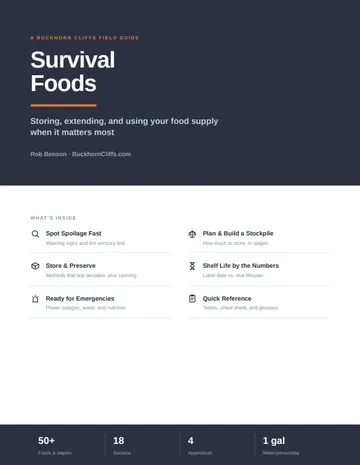
This page is the shopping list. The Survival Foods field guide is the full 35-page manual behind it: how much to store, how to store it, preserving your own, checking every staple item by item, eating well in a crisis, and the rotation log. Members get the PDF with membership; everyone can start with this list.
Around it: the what-to-stock master list covers everything that is not food, the water page covers the 30 gallons a month, when the power goes out covers the fridge and freezer, and the start here page puts food in the order of everything else.
Sources: the Survival Foods field guide (how much to store, building your stockpile, shelf life by the numbers) and the supply pages linked in each table. Quantities are per person for one month at about 2,000 calories a day; adjust for children, heavy work, and cold weather.
Questions this answers
Tap a question for the short answer.
What food should I buy for emergencies
Start with three days you can eat cold: canned soup and chili, canned meat and fish, peanut butter, crackers, bars, and three gallons of bottled water per person. Then the staples you cook: rice, pasta, oats, dried and canned beans, canned vegetables and fruit, cooking oil, powdered milk, salt, sugar, spices, and bouillon. The tables on this page have every item with the amount for one person for one month, and the free PDF is the same list with checkboxes.
What food should I stock up on
The foods that keep and that your household already eats: white rice, wheat or flour, oats, pasta, dried beans and lentils, canned meat and fish, peanut butter, powdered milk and eggs, cooking oil and coconut oil, canned vegetables, fruit, and tomatoes, sugar, honey, salt, and spices. Add freeze-dried meals for the long haul and a few ready-to-eat cans for the first days. Buy double of what you cook with and rotate it.
How much food should I store per person
Plan on 2,000 calories and one gallon of water per person per day. Per person per month that is about 40 to 45 pounds of dry staples, roughly 45 cans, a quart of oil, and 30 gallons of water. Two weeks is the floor, three months is comfortable, a year is the goal.
How much food do I need for a month
For one person: about 48 pounds of dry goods (rice, wheat, oats, pasta, cornmeal, beans, lentils, milk powder, sugar), around 45 cans, a quart of oil, two jars of peanut butter, 30 servings of freeze-dried food, and 30 gallons of water. Multiply by the number of people. The list on this page is deliberately generous, about 4,500 calories a day on paper, because the ready-to-eat and freeze-dried layers are reserves.
How much food for a year
Twelve times the month figure: roughly 450 to 550 pounds of dry staples per person, about 730,000 calories, and 365 gallons of water. Build it in phases rather than one trip: three days of no-cook food first, then a month of pantry staples, then bulk grains and beans sealed in Mylar.
What is the best food to store long term
White rice, wheat berries, and dried beans sealed in Mylar with an oxygen absorber keep 20 to 30 years and cost the least per calorie. Honey, sugar, and salt never spoil. Freeze-dried meals keep 25 to 30 years. Canned meat and fish keep 5 to 10. Fats are the exception: oil, nuts, and peanut butter go rancid in one to three years, so rotate those.
What foods have the longest shelf life
Honey, sugar, salt, soy sauce, vinegar, and instant coffee keep indefinitely. White rice and wheat berries keep 10 to 30 years, dried beans 10 years and 20 to 30 in Mylar, freeze-dried food 25 to 30 years, canned meat and fish 5 to 10 years, and dark chocolate 4 to 5. The short keepers are oil, nuts, crackers, and cereal at 6 months to 2 years.
What should be in a prepper pantry
Seven groups: grains for energy (rice, wheat, oats, pasta, cornmeal), beans and protein (dried and canned beans, lentils, canned meat and fish, peanut butter, powdered milk and eggs, cured meat, cheese, nuts, jerky), fats (oil, coconut oil, tallow), fruit and vegetables (canned and dried), sweet, salt, and pantry (sugar, honey, salt, bouillon, spices, baking basics, soy sauce, vinegar, coffee, chocolate), ready-to-eat and freeze-dried, and a few supplements. The tables on this page give amounts for each.
What food to store for a power outage
Food you can eat cold or heat in one pan: canned soup, chili, and stew, canned meat and fish, canned fruit, peanut butter and crackers, trail mix and bars, and pouch meals. Keep three gallons of bottled water per person with it. Eat from the fridge first, the freezer second, and the shelf last.
Is there a printable emergency food list
Yes. The Preparedness Food Shopping List is a one-page PDF with a checkbox for every item, the amount per person per month, and how long it keeps. Fill in the form on this page and it comes by email; members can print it straight from this page or add it to My Manual.
How much water should I store per person
One gallon per person per day, half to drink and half to cook and wash. That is 30 gallons per person for a month. Keep three gallons of it in sealed bottles ready to carry, and rotate stored tap water every six months. The water page covers containers and purification.
What food to buy first for prepping
Three days you can eat cold: canned soup and chili, canned meat and fish, peanut butter, crackers, bars, and bottled water. That is one grocery trip. The second trip is a month of staples you cook: rice, pasta, oats, beans, canned vegetables and fruit, oil, milk powder, salt, sugar, spices, bouillon. Bulk grains in Mylar and freeze-dried meals come after that.
Keep going
Related to this
Membership · $49.95 per year
There is a lot more behind the lock
Every recipe and resource from the Prepper's Chemical Survival Guide, all ten field guides to read here and download, the full audit and logbook, all twelve reference charts, and no ads.
My Manual · included
Build your own field manual
The most useful thing a membership gives you. Save any page on this site, recipes, charts, and whole field guides included. Arrange them in the order you want, name it, and print one manual with a cover and contents, or keep it as a PDF that opens with no signal.
- It works when this site does not
- Only your pages
- Anyone in the house can use it
- One current copy, not a pile of printouts
- The house binder
- A copy for the bug-out bag or truck
- A copy for family
- An offline PDF



Stay Ready
New entries, updates, and useful instruction.
Stay one step ahead on your preparedness journey.