Quick facts
- Vitamin D3 with K21,000 to 4,000 IU D3 with your largest meal; upper limit 4,000 IU a day without a blood test
- Vitamin C500 mg twice a day, breakfast and dinner; shortens colds a little, does not prevent them
- Zinc15 to 30 mg on an empty stomach, away from dairy and calcium; lozenges in the first 24 hours of a cold; limit 40 mg a day
- Magnesium200 to 350 mg glycinate or malate, split; limit 350 mg from supplements
- Do not combineZinc and magnesium compete; take them at different times. Zinc and iron likewise
- From foodFatty fish, egg yolks and liver for D; citrus, peppers and kraut for C; beef, oysters and pumpkin seeds for zinc; nuts, beans and greens for magnesium
Winter is when a cold turns into ten days on the couch, and ten days on the couch in a hard month is a problem. There is no pill that prevents that. There are four cheap supplements with real evidence behind them for filling the gaps a northern winter opens up, and the difference between them working and not is mostly when you take them. This is what I take from October through March, why, and how.
Research before dosing yourself. If you take prescription medication, especially blood thinners (vitamin K interacts with warfarin), thyroid or heart medication, ask a pharmacist how these fit.
The four, and what the evidence says
When to take what
| Supplement | When | Why |
|---|---|---|
| Vitamin D3 + K2 | Once, with the largest meal (dinner) | Fat-soluble; absorbs about a third better with a fatty meal |
| Vitamin C | Half with breakfast, half with dinner | Water-soluble and gone in hours; splitting keeps levels steady and spares the gut |
| Zinc | Morning, empty stomach, 30 minutes before food; no dairy, calcium or iron within 2 hours | Calcium, iron and the phytates in grains block it. With a bite of non-dairy food if it turns your stomach |
| Magnesium | Evening, with or after dinner; split if over 200 mg | Kept apart from zinc, which competes with it, and it helps sleep |
- Fat-soluble (D, K) with fat. Water-soluble (C) split through the day.
- Zinc alone. Not with magnesium, not with iron, not with milk.
What I take
Vitamin D3 10,000 IU with K2 MK-7 200 mcg
Twice a week, or daily only with a blood testA high-dose softgel in MCT oil so it absorbs. 10,000 IU is two and a half times the daily upper limit, so this is not an every-day pill: I take it twice a week through winter, which averages under 3,000 IU a day, and daily only when a blood test says I am low. A 2,000 to 4,000 IU softgel is the simpler daily pick.
Liposomal vitamin C 500 mg
One with breakfast, one with dinnerVitamin C wrapped in fat so more of it gets through the gut before the kidneys dump it, and easier on the stomach than plain ascorbic acid at the same dose. The ascorbic acid page is the powder for the pantry and the reason it is there.
Zinc glycinate
Morning, empty stomachGlycinate is the form that absorbs well and does not sour the stomach the way zinc sulfate does. 15 to 30 mg. Keep it away from the magnesium and the milk.
Cardnl Essential Electrolytes for the magnesium
240 mg magnesium malate per serving, with sodium and potassiumMy electrolyte carries the magnesium I want in a form that absorbs, so the evening glass covers it. Zero sugar, Redmond salt, magnesium malate. This is the one I make, and it is why there is no separate magnesium pill on this list.
From food, which comes first
Sleep, cold air and daylight, and enough protein do more for winter immunity than any of the bottles above. The bottles cover what a northern winter takes away.
Questions people ask
Questions this answers
Tap a question for the short answer.
What supplements should I take in winter for immunity?
Four cover it: vitamin D3 with K2, because most people north of Atlanta are low from November to March and low D tracks with more respiratory infections; vitamin C, which modestly shortens colds; zinc, which shortens a cold if it starts in the first day and which many diets run short on; and magnesium, which most people are low in and which the body needs to use vitamin D at all. Sleep, sun when there is any, and real food do more than all four; the supplements fill the winter gap.
When is the best time to take vitamin d3 and k2?
With the biggest meal of the day, usually dinner, because both are fat-soluble and absorb far better with dietary fat; a D3 dose taken with a fatty meal absorbs about a third better than one taken on an empty stomach. Once a day is fine; D is stored, so the timing within the day matters less than taking it with fat. K2 (MK-7) rides along in the same softgel and handles the calcium D helps you absorb.
Should I take zinc on an empty stomach?
For absorption, yes: 30 minutes before or 2 hours after a meal, and away from dairy, calcium and iron, which block it. If it makes you queasy, and it does for a lot of people, take it with a small amount of food that is not dairy. Zinc lozenges for a cold are different: those are sucked slowly every few hours in the first 24 hours of symptoms, and the point is contact with the throat, not the stomach.
Can I take zinc and magnesium together?
Better not. They compete for the same absorption pathway, and a large zinc dose cuts magnesium uptake. Zinc in the morning on an empty stomach, magnesium in the evening with or after dinner, which also happens to be when magnesium helps sleep. Zinc and iron have the same problem, so keep those apart too. D3, K2 and C can go with anything.
Why do I need magnesium with vitamin d?
Every step that turns vitamin D into its active form runs on magnesium-dependent enzymes. Someone who is low on magnesium, which is most people on a modern diet, gets less out of the D they take, and a big D dose on top of low magnesium can pull magnesium down further and cause cramps and poor sleep. 200 to 350 mg of a well-absorbed form, glycinate or malate, split through the day, is the fix.
What foods are high in zinc and vitamin d?
Zinc: oysters by a mile, then beef, lamb, crab, pumpkin seeds, cashews, chickpeas and lentils, with meat zinc absorbing far better than plant zinc. Vitamin D: fatty fish (salmon, mackerel, sardines, herring), cod liver oil, egg yolks from pasture-raised hens, liver, and fortified milk. Almost nobody gets enough D from food in winter, which is why it is the one supplement on this list I consider non-negotiable from November to March.
How much vitamin d is too much?
The adult upper limit is 4,000 IU a day taken long term without testing, and toxicity is real: it shows up as high blood calcium, nausea, kidney stones and worse, usually from months of 10,000 IU or more. Most people do well on 1,000 to 4,000 IU a day in winter. The way to take more is a blood test showing you are low and a doctor's number. A 10,000 IU softgel is a twice-a-week dose, not a daily one, unless a test says otherwise.
Does vitamin c prevent colds?
Not for most people. Regular vitamin C did not reduce how many colds people caught in the big reviews, but it shortened them by about 8 percent in adults and 14 percent in children, and it did cut the number of colds in people under heavy physical stress, such as soldiers and marathoners. Starting it after a cold begins does little. So 500 mg twice a day through winter is a small, cheap benefit, and the upper limit is 2,000 mg a day, above which it just causes loose stools.
Keep going
Related to this
Membership · $49.95 per year
There is a lot more behind the lock
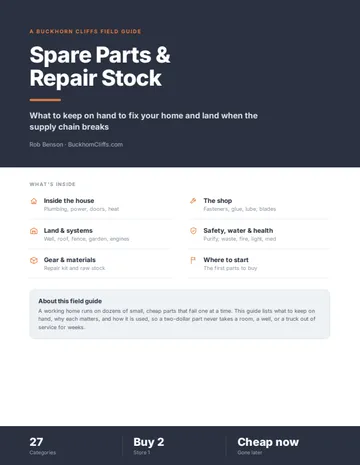
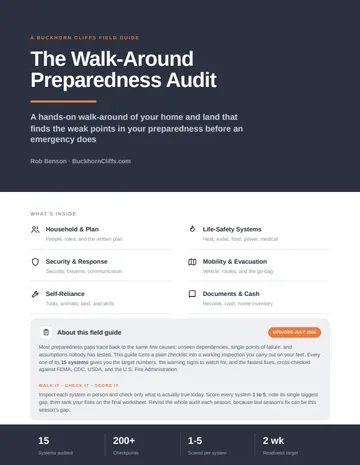
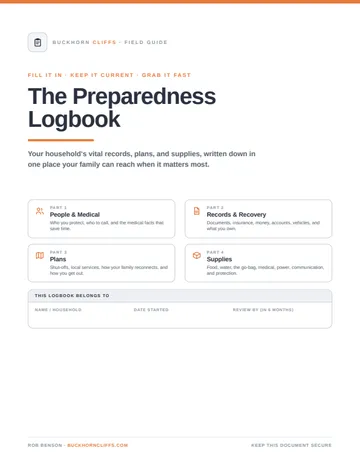
Every recipe and resource from the Prepper's Chemical Survival Guide, all six field guides to read here and download, the full audit and logbook, all twelve reference charts, and no ads.
My Manual · included
Build your own field manual
The most useful thing a membership gives you. Save any page on this site, recipes, charts, and whole field guides included. Arrange them in the order you want, name it, and print one manual with a cover and contents, or keep it as a PDF that opens with no signal.
- It works when this site does not
- Only your pages
- Anyone in the house can use it
- One current copy, not a pile of printouts
- The house binder
- A copy for the bug-out bag or truck
- A copy for family
- An offline PDF
Stay Ready
New entries, updates, and useful instruction.
Stay one step ahead on your preparedness journey.