BUCKHORN CLIFFS

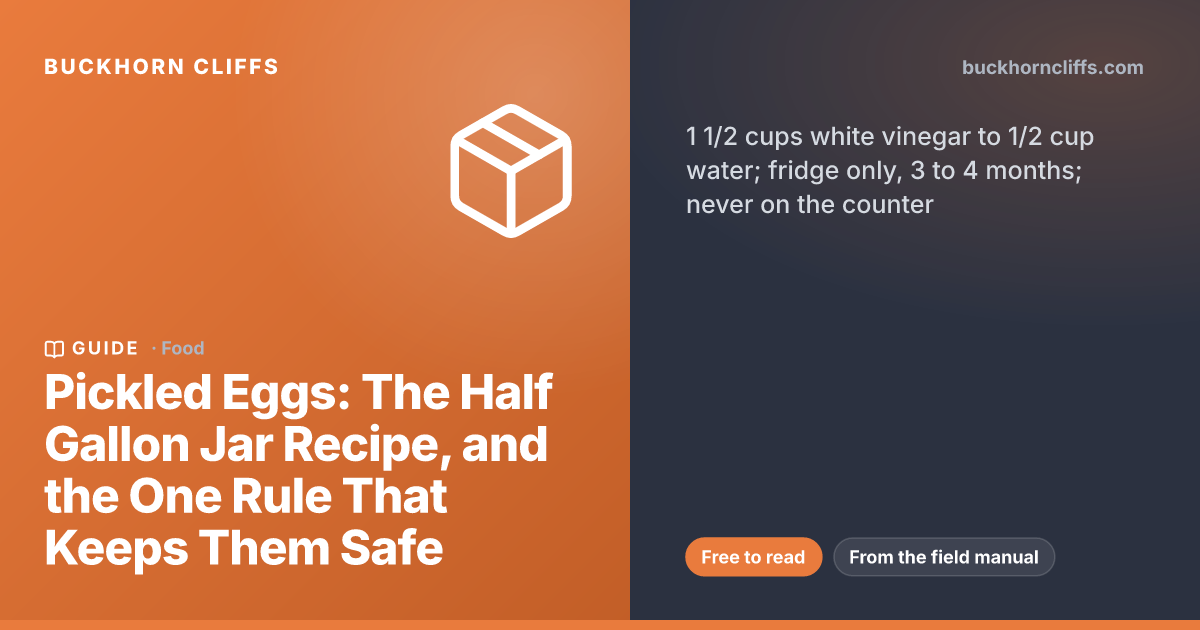
Food · Guide

Pickled eggs (refrigerator recipe)

Recipe for up to 24 pickled eggs in a half gallon jar, with the vinegar brine, fridge storage times, how pickling works and common questions.

Quick facts

Brine
1 1/2 cups distilled white vinegar, 1/2 cup water, 2 Tbsp sugar, 2 tsp salt
Makes
Up to 24 eggs in a half gallon canning jar
Hard boil
Simmer 10 minutes, then ice water
Ready to eat
After 24 hours; 2 to 4 weeks to season through
Shelf life
Fridge 3 to 4 months, never at room temperature
Spoilage signs
  • Off smell
  • odd color
  • cloudy solution

In the realm of age-old preservation techniques, pickling stands out as a method that not only extends the shelf life of foods but also enhances their flavor. Pickled eggs, with their tangy taste and firm texture, are a testament to this culinary tradition. Below, I cover the process of pickling eggs and answer some common questions about this time honored preservation method.

Items Needed to Pickle Eggs

How-to Pickle Eggs

  1. Hard Boil the Eggs:
    • Best method: Easy Peel Hard Boiled Eggs (Instant Pot Method)
    • or:
    • Place the eggs in a single layer at the bottom of a saucepan or pot.
    • Add enough water to the pot to cover the eggs by at least an inch.
    • Bring the water to a boil over high heat.
    • Once boiling, reduce the heat to low and let simmer for 10 minutes.
    • After 10 minutes, remove the eggs from the heat and immediately place them in a bowl of ice water to cool. This will also make peeling them easier.
  2. Prepare the Pickling Solution:
    • In a separate saucepan, combine the vinegar, water, sugar, and salt.
    • Bring the mixture to a simmer and heat just long enough to dissolve the sugar and salt.
  3. Peel the Hard-Boiled Eggs:
    • Once the eggs have cooled, crack the shells and peel them. Ensure all shell fragments are removed.
  4. Layer the Eggs in the Jar:
    • Sterilize the half-gallon jar first (boil it for 10 minutes), then start by layering 5-6 peeled eggs. Leave the eggs whole and do not prick them, since holes can carry bacteria into the yolk.
    • Add some thinly sliced onions and pickling spices.
    • Continue layering until the jar is almost full.
  5. Add the Bay Leaves:
    • Place the bay leaves in the jar.
  6. Pour the Vinegar Mixture:
    • Pour the prepared vinegar mixture over the contents in the jar, ensuring everything is submerged.
    • If there's not enough vinegar mixture, just top it off with straight white vinegar.
  7. Seal the Jar:
    • Seal the jar lid tightly.
  8. Store:
    • Keep the jar in the fridge at all times and use the eggs within 3 to 4 months. These are refrigerator pickles, not a shelf-stable food. Pickled eggs left at room temperature have caused botulism, so they come out only to serve, 2 hours at most. The eggs are edible after 24 hours, but medium and large eggs take 2 to 4 weeks to season all the way through.

Chemical Process of Pickling an Egg

When you pickle an egg, several chemical and physical processes are taking place:

1AcidificationThe primary ingredient in most pickling solutions is vinegar, which is acidic. When eggs are submerged in this acidic solution, the pH of the egg's exterior begins to decrease. This acidified environment is inhospitable to many bacteria and microorganisms that cause food to spoil, thus preserving the egg.
2OsmosisThe salt in the pickling solution draws out some of the water from the egg through osmosis. This further creates an environment that is less favorable for bacterial growth.
3Flavor InfusionThe vinegar, along with any other ingredients like sugar, spices, and herbs, penetrates the egg and infuses the egg white and yolk with flavor. Over time, the egg absorbs these flavors, leading to the characteristic tangy taste of pickled eggs.
4Texture ChangeThe acidic pickling solution can cause the proteins in the egg whites to denature, leading to a firmer texture. The longer the eggs remain in the pickling solution, the firmer their texture becomes.
5Color ChangeDepending on the ingredients used in the pickling solution, the color of the egg white might change. For example, if beets or beet juice is used, the pickled eggs can take on a pink or reddish hue. Similarly, turmeric can give them a yellowish tint.

Questions and Answers about Pickled Eggs

How does pickling change the taste of the eggs?

Pickling infuses the eggs with the tangy flavor of the vinegar and the aromatic spices, giving them a distinct taste different from fresh eggs. The combination of vinegar, salt, and spices creates a unique flavor profile that many find irresistible.

What is the ideal duration for pickling eggs to achieve the best flavor?

While you can eat the eggs after 24 hours of pickling, allowing them to pickle for a week will result in a more robust and well-developed flavor. The longer the eggs sit in the pickling solution, the deeper the flavors penetrate, offering a more intense taste experience.

Can I use other types of vinegar for pickling?

While distilled white vinegar is commonly used for its neutral flavor, you can experiment with apple cider vinegar or malt vinegar for a different taste profile. Whatever vinegar you use has to be 5 percent acidity, which is printed on the label. Homemade vinegar and anything weaker are out. Each type imparts its own flavor, so it's worth trying a few.

How long can pickled eggs be safely stored in the refrigerator?

Pickled eggs keep 3 to 4 months in the refrigerator, fully submerged in the brine. They are never stored at room temperature.

Is there a difference in texture between freshly pickled eggs and those pickled for longer durations?

Yes, over time, the egg whites may become firmer due to the acidic nature of the pickling solution. The yolk might also become slightly denser, but the overall texture remains pleasant and enjoyable.

Can I add other ingredients or spices to the pickling solution for a unique flavor?

Absolutely! Many people customize their pickling solutions by adding ingredients like garlic cloves, chili peppers, or fresh dill. Experimenting with different spices and herbs can lead to a wide variety of flavor profiles, making each batch of pickled eggs a new culinary adventure.

How can I tell if my pickled eggs have gone bad?

A telltale sign is an unpleasant or off-putting smell when you open the jar. If the eggs have an odd color or if the pickling solution appears cloudy, it's best to discard them. Always trust your senses; if something seems off, it's better to be safe than sorry.

Are pickled eggs suitable for individuals on specific diets, like keto or paleo?

Pickled eggs can be a great addition to many diets, including keto, due to their low carbohydrate content. However, it's essential to check the ingredients and ensure that no added sugars or non-compliant ingredients are used in the pickling process.

Can pickled eggs be used in various recipes, or are they best eaten on their own?

While pickled eggs are delicious on their own, they can also be chopped and added to salads, used as a garnish for sandwiches, or even incorporated into dishes like potato salad for an added tangy kick.

Is the pickling process different for quail eggs or duck eggs compared to chicken eggs?

The basic pickling process remains the same, but the pickling time might vary. Quail eggs, being smaller, might require less time to pickle thoroughly, while duck eggs, which are larger, might need a bit longer. Adjusting the pickling time based on the egg's size ensures optimal flavor and texture.

In Conclusion

Pickling eggs is a delightful way to preserve and enhance the natural flavor of eggs. Whether you're looking for a tangy snack or a unique addition to your salad, pickled eggs are sure to impress. Drawing inspiration from traditional preservation methods, like the water glassing technique, pickling is another piece of old kitchen wisdom that still works. So, the next time you have some extra eggs on hand, why not try pickling them? They're a treat that's both delicious and steeped in history.

Questions this answers

Tap a question for the short answer.

How do I make pickled eggs?

Hard boil and peel up to 24 eggs, then layer them in a half gallon canning jar with sliced yellow onion, pickling spices and 2 bay leaves. Pour in a heated brine of vinegar, water, sugar and salt until everything is covered, seal tightly and refrigerate.

What's the recipe for pickled egg brine?

Combine 1 1/2 cups distilled white vinegar, 1/2 cup water, 2 Tbsp white sugar and 2 tsp salt, and simmer just until the sugar and salt dissolve. If the brine does not cover the eggs, top the jar off with straight white vinegar.

How long do pickled eggs last in the fridge?

They keep 3 to 4 months in the refrigerator, fully submerged in the brine. These are refrigerator pickles, not a shelf-stable food, so they are never stored at room temperature and come out only to serve, 2 hours at most.

How long should eggs pickle before eating?

They are edible after 24 hours in the brine, but medium and large eggs take 2 to 4 weeks to season all the way through. The longer they sit, the deeper the flavor goes and the firmer the whites become.

Can I use apple cider vinegar to pickle eggs?

Yes. Distilled white vinegar is the usual choice for its neutral flavor, but apple cider or malt vinegar works if you want a different taste. Whatever vinegar you use has to be 5 percent acidity, which is printed on the label.

How can I tell if pickled eggs have gone bad?

An unpleasant smell when you open the jar is the main warning. Odd colored eggs or a cloudy brine are also reasons to throw the batch out. Trust your senses and discard anything that seems off.

Keep going

Read nextWater glassing eggs with hydrated lime (long-term egg storage)Before refrigeration existed, water glassing was how families kept eggs edible for over a year.Food · Formula

Related to this

Membership · $49.95 per year

There is a lot more behind the lock

158member pages in full
125recipes with exact amounts
6field guide PDFs, 206 pages
1manual of your own, built from any page

Every recipe and resource from the Prepper's Chemical Survival Guide, all six field guides to read here and download, the full audit and logbook, all twelve reference charts, and no ads.

My Manual · included

Build your own field manual

The most useful thing a membership gives you. Save any page on this site, recipes, charts, and whole field guides included. Put them in your order, name it, and print one manual with a cover and contents, or keep it as a PDF that opens with no signal.

  • It works when this site does not
  • Only your pages
  • Anyone in the house can use it
  • One current copy, not a pile of printouts
  • The house binder
  • A copy for the bug-out bag or truck
  • A copy for family
  • An offline PDF

Join for $49.95 per year

Food · GuideLast reviewed 2023-10-18

Membership

Save to My Manual is a member tool

Members build their own manual from the pages that fit their household, then print it or keep it as a PDF.

Why it matters

When the grid goes down, this site goes with it. Paper does not. Membership is how you get the whole manual off the screen and onto the shelf: every page in full, every field guide, and a binder built for your own household.

The field guide library

All six field guides. 206 pages. Included.

The complete Buckhorn Cliffs PDF set, yours to download, print, and keep from the day you join.

$60if bought one at a time

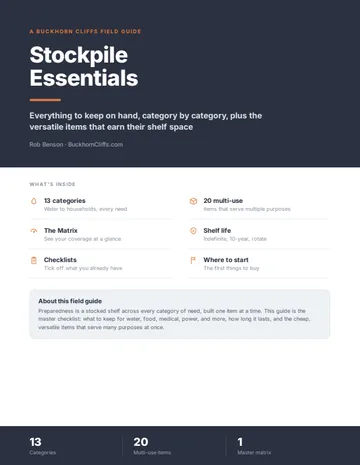
  • Cover of Stockpile Essentials Field GuideStockpile Essentials39 pagesEverything to keep on hand, category by category, plus the 20 multi-use items.
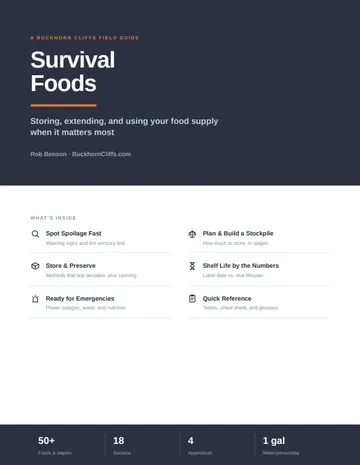
  • Cover of Survival Foods Field GuideSurvival Foods35 pagesStoring, extending, and using the food supply. Real shelf life by the numbers.
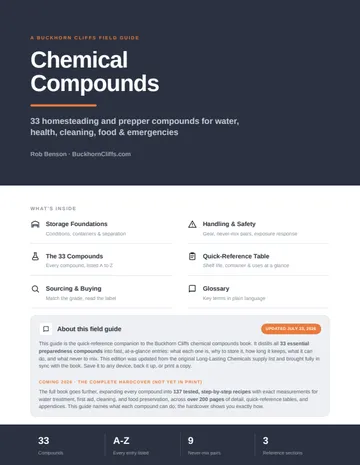
  • Cover of Chemical Compounds Field GuideChemical Compounds29 pagesThe 33 compounds: storage, top uses, hazards, and the never-mix chart.
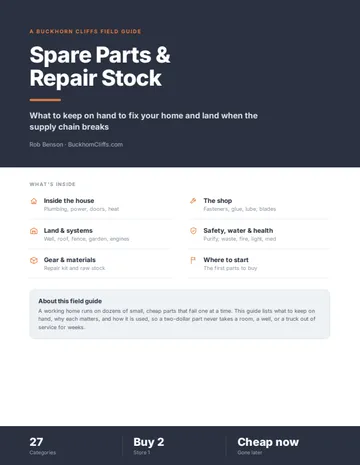
  • Cover of Spare Parts and Repair Stock Field GuideSpare Parts and Repair Stock40 pagesWhat to keep on hand to fix the home and land when the supply chain breaks.
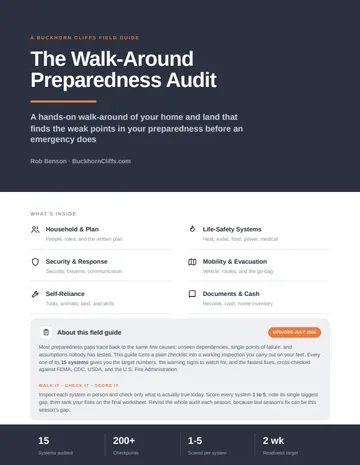
  • Cover of Walk-Around Preparedness AuditWalk-Around Preparedness Audit33 pagesFifteen systems scored 1 to 5, with the printable scorecard.
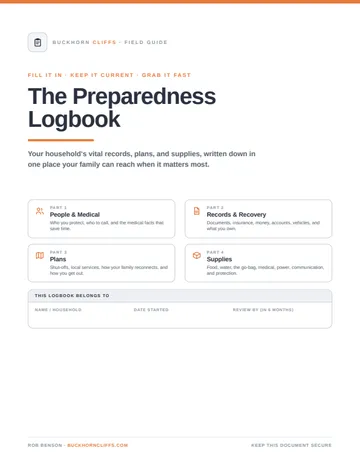
  • Cover of The Preparedness LogbookPreparedness Logbook30 pagesThe household information that needs to be on paper.

My Manual · included

Build your own field manual

The most useful thing a membership gives you. No book fits your household exactly. My Manual does. Save any page on this site, recipes, charts, and whole field guides included, put them in your order, and print one manual with your name on the cover. It holds only what is relevant to you, and nothing you would skip.

Why it matters

  • It works when this site does notNo power and no signal means no website. A printed manual and an offline PDF still open, which is the whole point of writing any of this down.
  • Only your pagesThis site covers every household. Yours needs a fraction of it. Your manual holds the pages that match your water source, your climate, and your gear, so nobody digs through the rest under stress.
  • Anyone in the house can use itThe person who reads this site may not be the one home when it counts. A binder on the shelf, in your order, with a contents page, is something a spouse or a teenager can follow.
  • One current copy, not a pile of printoutsEvery page prints in the same field guide layout with a cover, a contents page, and the print date. Change a page, print again, and the old copy is easy to spot.

What to build with it

  • The house binderYour water source, your climate, your gear. Only the pages you would reach for.
  • A copy for the bug-out bag or truckA short version that travels: water, first aid, comms, and the recipes you rely on.
  • A copy for familyHand a parent or a grown kid a manual built for their house and their supplies.
  • The shop and the barnParts lists, repair skills, and the never-mix chart, kept where the work happens.
  • A recipe book of your ownThe cleaners, fuels, and remedies you make, with exact amounts, in one place.
  • An offline PDFSaved to a phone, a tablet, or a drive in the Faraday bag. It opens with no signal.

How it works

  1. 1Save what fitsPress "Save to My Manual" on any page: a recipe, a chart, a guide, a parts list, or a whole field guide.
  2. 2Put it in your orderOn My Account, drag the pages into the order you want. Name the manual and add your household name.
  3. 3Print it or save a PDFOpen the preview, then print it or save a PDF. It is sized for 8.5 x 11 inch paper, with a cover and a contents page. Field guides go in exactly as the PDFs are laid out. No ads, no photos.
  4. 4Keep it currentAdd a page, pull one out, print again. The cover carries the date, so you always know which copy is the latest.

Also included

  • The entire site, unlockedAll 158 member pages open in full: exact amounts, every step, every warning, every parts list. Nothing held back.
  • Every recipe and resource in the bookAll 138 recipes and 33 compounds from Prepper's Chemical Survival Guide, with exact amounts, every step, every warning, and the reference charts.
  • A clean PDF of any entryOne press turns any page into a field guide sheet for the binder, the truck, or the shop wall.
  • Checklists and audit scores that follow youSaved to the account, so the phone, the laptop, and the shop computer always match.
  • No adsMembers read the whole site without a single ad.
$49.95per year. About 14 cents a day. Cancel any time and keep the year you paid for.