Handle with careWorks without power
How it works
Quick facts
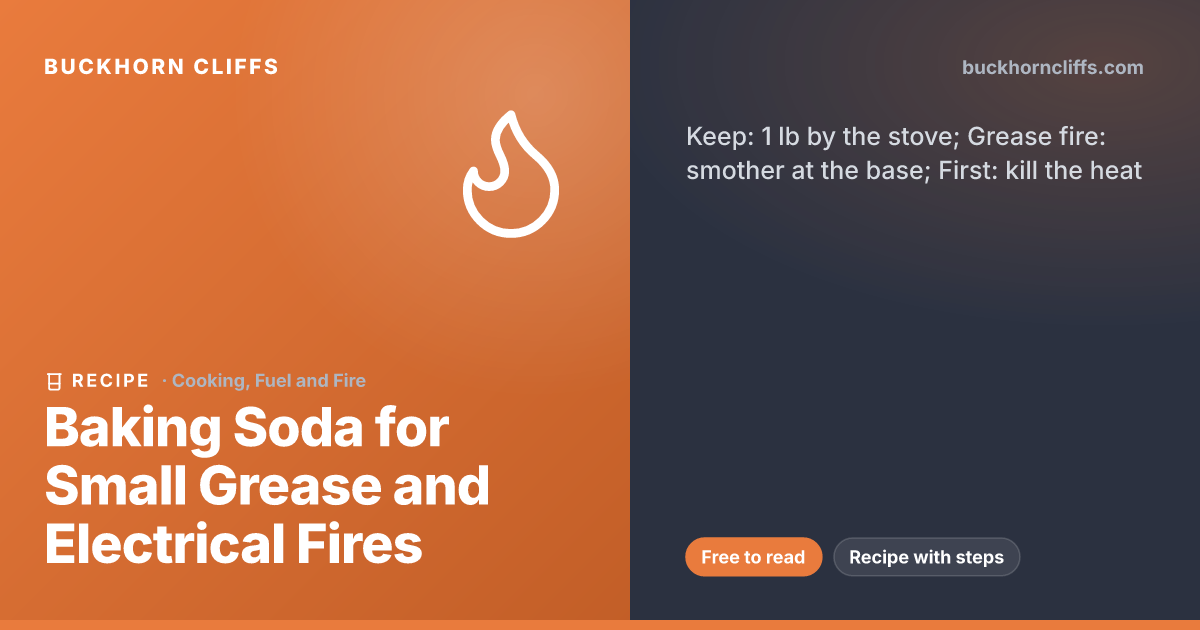
- Keep1 lb by the stove
- Grease firesmother at the base
- Firstkill the heat
- Electricalcut power first
- Not forlarge/chemical fires
Hazard
Not effective on large, chemical, deep-fryer, wood, or fabric fires. A purpose-built Class K extinguisher is the right tool for serious kitchen fires. If it grows, evacuate and call for help.
As the fire's heat breaks baking soda down, it releases carbon dioxide that blankets the flames and cuts off their oxygen, while the breakdown itself soaks up heat and cools the fire. It only works on an incipient flare-up still contained in a single pan, though. For anything larger than a brief flash in the pan, reach instead for a metal pan lid, a Class K wet-chemical extinguisher made for cooking-oil fires, or a standard ABC or BC dry-chemical extinguisher.
What you'll need
- Baking soda (sodium bicarbonate), at least 1 pound in a dedicated labeled container
Steps
- Keep a dedicated container of at least 1 pound of baking soda within arm's reach of your cooking area at all times. Label it clearly as baking soda, both so no one uses it up for cooking or cleaning and so no one grabs baking powder or flour by mistake in an emergency, since those can flare up and make a grease fire worse. Choose a wide-mouth container that can be grabbed and opened in a single motion.
- If a small grease fire starts, turn off the heat first if you can do so safely. The single most effective move is to slide a metal pan lid over the pan, metal rather than glass, which can shatter, smothering the fire without spreading burning grease. If no lid is on hand, dump generous handfuls of baking soda over the fire from directly above, not from the side, since pouring from the side can flick burning grease and flame outward and spread the fire.
- For small electrical fires such as outlet sparks or an appliance flare-up, kill power at the breaker or unplug the device first if safely possible, then apply baking soda to the base of the flames. Never use water on electrical fires.
- If the fire does not go out within a few seconds or continues to grow, stop trying, evacuate immediately, and close doors behind you to slow the fire's spread. Call emergency services if available. Baking soda suppresses only small, contained flare-ups and cannot control an established fire.
Warnings
Not effective on large fires, chemical fires, deep fat fryers, or wood and fabric fires. A purpose-built Class K extinguisher (wet chemical, designed for kitchen oil fires) is the proper tool for serious cooking fires. Use this recipe only as a stopgap when no Class K extinguisher is available.
Storage and shelf life
Store in a clearly labeled, sealed, dry container near cooking areas or heating appliances with indefinite shelf life when kept dry. Check periodically to confirm the container is still full, accessible, and sealed against humidity. Best container: sealed HDPE container or glass jar, keep moisture-free. Avoid metal in humid conditions (promotes corrosion). See the Containers section.
Questions this answers
Tap a question for the short answer.
Can I put out a grease fire with baking soda?
Yes, but only a small flare-up still contained in a single pan. Turn off the heat if it is safe, then dump generous handfuls of baking soda from directly above. A metal pan lid is the better first choice, and if the fire is not out within a few seconds, evacuate.
How do I put out a small kitchen fire without an extinguisher?
Turn off the heat first if you safely can, then slide a metal pan lid over the pan to smother it. With no lid on hand, pour generous handfuls of baking soda straight down onto the fire. Keep at least 1 pound in a labeled wide-mouth container within arm's reach of the stove.
Why should I not use water on a grease fire?
Water spreads a grease fire, and it conducts electricity, so it is dangerous for both kitchen and electrical fires. Smother a small grease fire with a metal pan lid or baking soda instead, and never put water on an electrical fire.
Can I use flour to put out a grease fire?
No, flour and baking powder can flare up and make a grease fire worse. That is why the baking soda container by the stove should be clearly labeled, so nobody grabs the wrong powder in an emergency.
How does baking soda put out a fire?
Heat from the fire breaks baking soda down, releasing carbon dioxide that blankets the flames and cuts off their oxygen. The breakdown also absorbs heat, which cools the fire. It only handles a brief flash in one pan, not an established fire.
Keep going
Related to this
Membership · $49.95 per year
There is a lot more behind the lock
Every recipe and resource from the Prepper's Chemical Survival Guide, all six field guides to read here and download, the full audit and logbook, all twelve reference charts, and no ads.
My Manual · included
Build your own field manual
The most useful thing a membership gives you. Save any page on this site, recipes, charts, and whole field guides included. Arrange them in the order you want, name it, and print one manual with a cover and contents, or keep it as a PDF that opens with no signal.
- It works when this site does not
- Only your pages
- Anyone in the house can use it
- One current copy, not a pile of printouts
- The house binder
- A copy for the bug-out bag or truck
- A copy for family
- An offline PDF




Stay Ready
New entries, updates, and useful instruction.
Stay one step ahead on your preparedness journey.