HazardousWorks without power
How it works
Quick facts
- Burn time4-8 min / ball
- Fuelpetroleum jelly
- Fibercotton / lint
- Storesealed tin
- Rolesupplementary
Hazard
Supplementary fuel only; don't rely on it as your sole fire-starting method. Avoid over-saturating the fibers; excess jelly smothers the flame instead of feeding it.
Petroleum jelly is a soft hydrocarbon, essentially a slow-burning fuel, and the cotton fibers act like a candle wick: once lit, they draw the melting jelly up and feed it to the flame for a long, steady burn instead of the half-minute flare a bare cotton ball gives. The starters are waterproof because the jelly repels water, they weigh almost nothing, and a batch costs pennies from materials most people already have.
What you'll need
- Petroleum jelly
- Absorbent fibers (cotton balls, dryer lint, cloth scraps, twine, or fine wood particles)
- Small container or metal tin
- Spoon for mixing
- Fire source for ignition
Steps
- Make the starters. Pull each cotton ball, piece of dryer lint, or cloth scrap apart slightly so the fibers are loose and airy, then work petroleum jelly into them with your fingers or a spoon until saturated, leaving a little dry fiber exposed at the surface. Pack the finished starters into a small sealed tin, where they keep indefinitely.
- Light one. When you need a fire, fluff out the bit of dry fiber at the surface and catch it with a spark from a ferro rod or an open flame. The exposed fiber lights instantly, and the petroleum jelly then burns slow and steady for about 4 to 8 minutes, long enough to dry out and ignite damp kindling.
- Build the fire. Set the burning starter under your prepared kindling and let the petroleum jelly burn through before adding larger fuel. Treat these as a supplement to your fire kit, not your only fire-starting method.
Warnings
This starter is supplementary fuel only; don't rely on it as your sole fire-starting method. Avoid over-saturating fibers; excessive jelly smothers flame. Prepare materials away from open flame.
Storage and shelf life
Store in sealed containers in cool, dry conditions indefinitely. Best container: original jar or any sealed container. Avoid polystyrene (petroleum jelly dissolves it). See the Containers section.
Questions this answers
Tap a question for the short answer.
How do I make fire starters with vaseline and cotton balls?
Pull each cotton ball apart slightly so the fibers are loose, then work petroleum jelly in with your fingers or a spoon until saturated, leaving a little dry fiber at the surface. Pack them in a small sealed tin. Too much jelly smothers the flame.
What is a good fire starter for wet conditions?
A cotton ball saturated with petroleum jelly works well. The jelly repels water, so the starter is waterproof, and it burns steadily for about 4 to 8 minutes, long enough to dry out and ignite damp kindling. Treat it as a supplement to your fire kit, not your only method.
How long do petroleum jelly fire starters last in storage?
They keep indefinitely in a sealed container stored cool and dry. A small sealed tin or the original jar works. Avoid polystyrene containers, because petroleum jelly dissolves that plastic.
Can I use dryer lint as a fire starter?
Yes. Dryer lint works the same way as cotton balls: loosen the fibers, work petroleum jelly in until saturated, and leave a bit of dry fiber exposed to catch a spark. Cloth scraps, twine, and fine wood particles also work as the fiber.
What fire starter should I keep in a bug out bag?
Petroleum jelly cotton balls in a small sealed tin suit a pack well. They weigh almost nothing, are waterproof, cost pennies, light from a ferro rod spark, and burn about 4 to 8 minutes each. Carry them as a supplement, not as your sole fire-starting method.
Keep going
Related to this
Membership · $49.95 per year
There is a lot more behind the lock
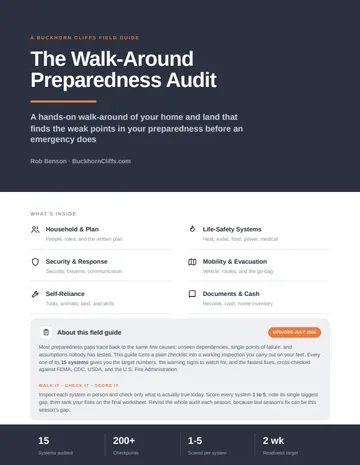
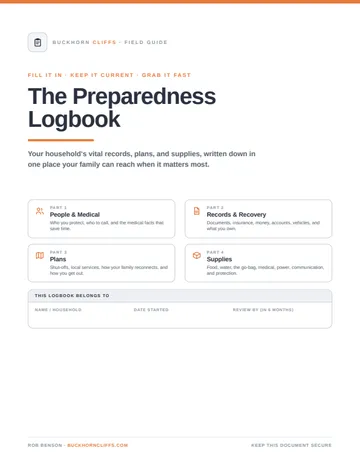
Every recipe and resource from the Prepper's Chemical Survival Guide, all six field guides to read here and download, the full audit and logbook, all twelve reference charts, and no ads.
My Manual · included
Build your own field manual
The most useful thing a membership gives you. Save any page on this site, recipes, charts, and whole field guides included. Arrange them in the order you want, name it, and print one manual with a cover and contents, or keep it as a PDF that opens with no signal.
- It works when this site does not
- Only your pages
- Anyone in the house can use it
- One current copy, not a pile of printouts
- The house binder
- A copy for the bug-out bag or truck
- A copy for family
- An offline PDF

Stay Ready
New entries, updates, and useful instruction.
Stay one step ahead on your preparedness journey.