HazardousWorks without power
How it works
Quick facts
- Ratio1 oz lime / quart
- Per gallon4 oz (≈28-32 eggs)
- Submerge2 in on top
- Checkmonthly
- Keepsup to 2 years
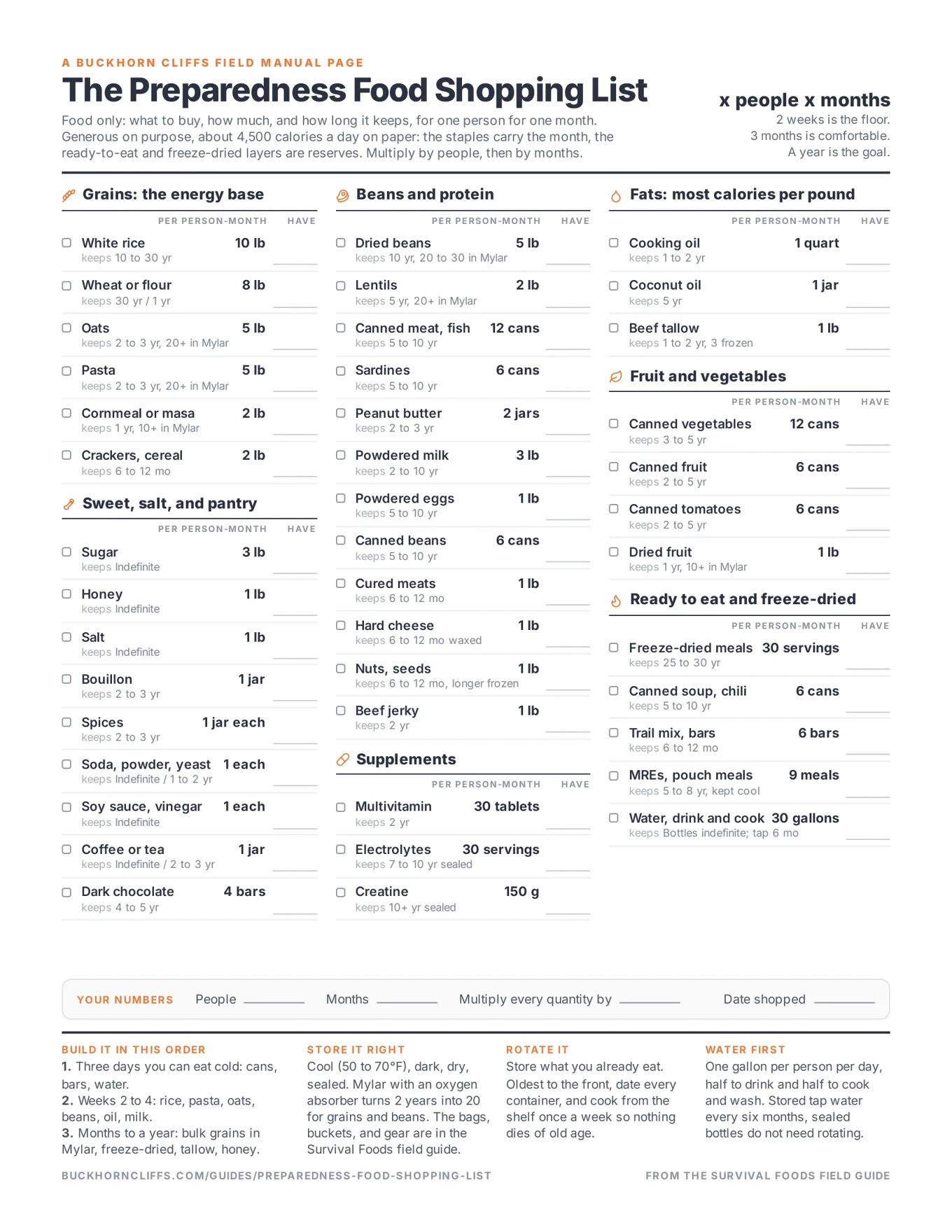
The food shopping list: what to buy, how much, shelf life
Hazard
Food-grade calcium hydroxide only. Use chlorine-free water; never wash eggs first. Handle glassed eggs as raw; discard any that smell off or show cracks.
The lime solution helps shield eggshell pores from air and bacteria, keeping properly glassed eggs usable for months; long storage can produce subtle changes in odor or flavor. In a long-term preparedness situation, fresh eggs are one of the most valuable protein sources you can stockpile without electricity. A single bag of food-grade lime and a bucket can preserve hundreds of eggs for a year or longer.
What you'll need
- Calcium Hydroxide, food-grade pickling lime only (not construction-grade hydrated lime)
- Clean, chlorine-free water (well water, filtered, or distilled; or tap water left uncovered for 24 to 48 hours so the chlorine off-gasses)
- Fresh, unwashed eggs (never previously washed or scrubbed; store-bought washed eggs will not work)
- Food-grade container with tight seal (glass crock, ceramic, or food-safe plastic bucket)
- Measuring scale or spoon
Free download
Get the one-page food shopping list
What to store, how much of it for one person for one month, and how long it keeps. One page with checkboxes, built from the Survival Foods field guide. Print it, multiply by your people and months, and take it to the store.
The PDF comes by email, with my newsletter now and then. Already on the list? You still get it. Read the full page.
Steps
- Gently wipe each egg with a dry cloth or soft brush to remove any dirt or debris. Do not wash; the bloom must stay intact for water glassing to work. Check each egg for hairline cracks first: lower it into plain water and watch for a stream of fine bubbles, or hold it up to a bright light to candle it for fractures. Set aside any cracked egg, since even a fine crack lets bacteria into the whole batch.
- Choose the right ratio for your batch size: 1 oz lime per quart of water (about 8 eggs), 2 oz per half gallon (14-16 eggs), or 4 oz per gallon (about 28 to 32 eggs). Do not overpack; the eggs all need to stay fully submerged.
- Mix calcium hydroxide into chlorine-free water and stir until uniformly cloudy. This cloudiness is normal and means the lime is properly suspended.
- Place eggs pointed-end down in the container. The natural bloom on the shell is a protective coating that the lime solution reinforces, so handle gently.
- Pour limewater over the eggs until they are fully submerged, with at least 2 inches of liquid above the top layer. Seal the container tightly.
- Store in a cool, dark place (pantry, basement, or root cellar). Check monthly to ensure eggs remain submerged; top off with more limewater if the level drops.
- Lift out the eggs you need and rinse them well under cold running water to wash off the pickling lime. Before using one, run a float test: set the egg in a bowl of plain water, where a good one lies flat on the bottom, an older but still usable one tips upward, and one that floats has built up gas inside and should be discarded, as should any egg with a sulfur smell. Crack each into a bowl to check before cooking. Glassed eggs are best fried, scrambled, or baked; if hard-boiling, prick the shell first, since glassed shells can crack.
Warnings
Use only food-grade calcium hydroxide. Do not use chlorinated water (it reacts with lime). Never wash eggs first; the bloom must stay intact. Handle water-glassed eggs as you would raw eggs. Discard any egg that smells off, has visible cracks, or shows discoloration when cracked into a bowl.
Storage and shelf life
Store in cool (50-70°F), dark, dry conditions. Kept properly submerged, the eggs last up to 2 years, with the best quality in the first 12 to 18 months. Before use, inspect for cracks, odors, or discoloration. Best container: sealed glass or HDPE container. Avoid metal (corrodes when moisture is present). See the Containers section.
Questions this answers
Tap a question for the short answer.
How do I water glass eggs?
Dry-wipe fresh, unwashed eggs and set aside any with cracks. Stir 1 oz of food-grade pickling lime into each quart of chlorine-free water until cloudy, stand the eggs pointed-end down in a food-grade container, and cover them with at least 2 inches of limewater. Seal it, store cool and dark, and check monthly.
How much pickling lime do I use per quart of water?
Use 1 oz of food-grade pickling lime per quart of water, which covers about 8 eggs. Scale it to 2 oz per half gallon for 14 to 16 eggs, or 4 oz per gallon for about 28 to 32 eggs.
How long do water glassed eggs last?
Kept fully submerged in cool, dark conditions of 50 to 70°F, water glassed eggs last up to 2 years, with the best quality in the first 12 to 18 months. Long storage can bring subtle changes in odor or flavor, so float test each egg and crack it into a bowl before cooking.
Can I water glass washed or store bought eggs?
No, store-bought washed eggs will not work. The natural bloom on the shell must stay intact because the lime solution reinforces that coating. Use only fresh eggs that have never been washed or scrubbed, and clean them with a dry cloth or soft brush instead.
Can I use tap water for water glassing eggs?
Only after the chlorine is gone, since chlorinated water reacts with the lime. Leave tap water uncovered for 24 to 48 hours so the chlorine off-gasses, or use well, filtered or distilled water instead.
How do I store eggs without refrigeration?
Water glassing keeps fresh, unwashed eggs without electricity by submerging them in a solution of food-grade pickling lime and chlorine-free water, which shields the shell pores from air and bacteria. Stored sealed in a cool, dark pantry, basement or root cellar, the eggs last up to 2 years.
Keep going
Related to this
Membership · $49.95 per year
There is a lot more behind the lock
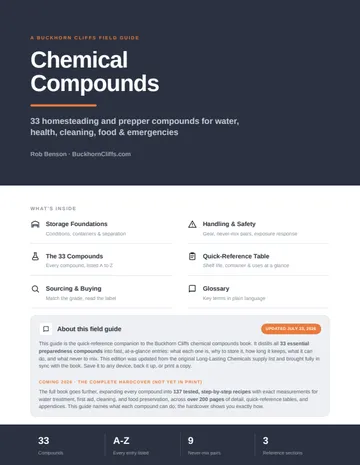
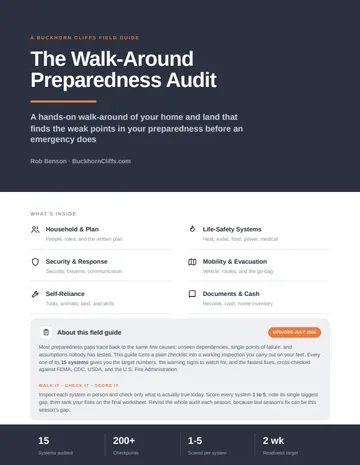
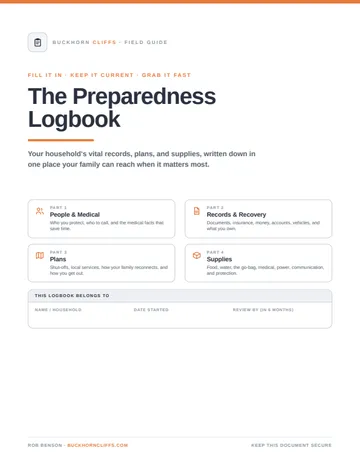
Every recipe and resource from the Prepper's Chemical Survival Guide, all six field guides to read here and download, the full audit and logbook, all twelve reference charts, and no ads.
My Manual · included
Build your own field manual
The most useful thing a membership gives you. Save any page on this site, recipes, charts, and whole field guides included. Arrange them in the order you want, name it, and print one manual with a cover and contents, or keep it as a PDF that opens with no signal.
- It works when this site does not
- Only your pages
- Anyone in the house can use it
- One current copy, not a pile of printouts
- The house binder
- A copy for the bug-out bag or truck
- A copy for family
- An offline PDF

Stay Ready
New entries, updates, and useful instruction.
Stay one step ahead on your preparedness journey.