Quick facts
- CarryA ferro rod and striker, a lighter, waterproof matches, and tinder that works wet: three ways, every kit
- Ferro rod3,000°F sparks in any weather; scrape slowly with the spine of a knife, rod held still, striker pulled back
- Flint and steelCooler sparks that need char cloth or true tinder fungus to catch; the historical method
- LensAny magnifier, eyeglasses, a water-filled bag; full sun only, dark tinder, a fixed focal point
- Battery and steel wool9 V battery on 0000 steel wool ignites instantly; keep them apart in the pack
- FrictionBow drill: dry softwood, a good notch, hours of practice before it works once
A fire is a small hot spot and the tinder to catch it and the wood to feed it, and the second and third parts are where every method here succeeds or fails. The lighter is the best fire starter ever made, and a lighter is wet, empty or in the other jacket exactly when it matters, which is why every kit I own carries a ferro rod, waterproof matches and tinder as well. These are the six ways to make the hot spot without a match, in the order I would reach for them.
Tinder first, always
- Tinder: a fist of something dry, fine and fluffy. Cotton balls with petroleum jelly (the recipe, and the best there is), fatwood shavings, birch bark shredded fine, cedar inner bark rubbed to fiber, dry grass, cattail fluff, the lint from a pocket.
- Kindling: an armful of pencil-thin dead twigs snapped from standing branches, then thumb-thick, then wrist-thick, stacked within reach.
- A dry base: bark, split wood or flat stones so the fire is not sitting in wet ground.
- Wind block: your body, a log, a rock.
The order of failure is the same for beginners every time: a spark or a coal, no tinder ready, gone. Build the nest and the wood pile first, then make the spark.
The six methods
From spark to fire
- The spark or coal goes into the center of the tinder nest. Fold the nest loosely around it.
- Blow long, steady and gentle from below, not hard puffs. The glow spreads, smokes thick, and flames.
- Set the burning nest on the base and lay the pencil twigs over it in a loose teepee, a few at a time. Do not drop a handful on and smother it.
- Thumb-thick wood once the twigs are going, wrist-thick once those are, and only then something you would call a log.
- In rain: split dead branches for the dry center, build under cover, and start small.
The cooking, fuel and fire guide is what the fire is for and the fuels that feed it; the wilderness survival page is where fire sits in the order of a bad day.
Safety, briefly
- Clear the ground to dirt in a circle, and keep the fire small; a big fire is not a warmer fire, it is a fire you cannot control.
- Steel wool and batteries: apart in the pack, and the wool held by a corner or set down before the battery touches it.
- Permanganate and glycerin: never together until the moment of use, on a non-flammable surface, face back, in warm conditions.
- Fatwood, petroleum jelly and every solvent on this site are fire starters, not fuels for a lamp. Nothing gets poured toward a burning fire.
- Out means cold to the touch: water, stir, water, feel.
What I carry
- A lighter in a pocket and a second in the kit
- A ferro rod with a striker, on a lanyard, a strip of fatwood taped to it
- Waterproof matches in a sealed case, or the wax-dipped matches
- A film canister of cotton balls with petroleum jelly, and a few fatwood sticks
- A Fresnel lens card in the wallet
- A 9 volt battery and a pad of 0000 steel wool, in separate bags, in the vehicle kit
- A tin of char cloth if I am carrying flint and steel for the fun of it
Three ways to make flame and tinder that works wet, in every kit, every time. The bow drill is a skill for the backyard, so that it is there if the day ever comes when the kit is not.
Questions this answers
Tap a question for the short answer.
How do I start a fire without matches?
With the ferro rod that should already be in your pocket: a fluffed cotton ball smeared with petroleum jelly, or a pile of birch bark or fatwood shavings, on the ground with a wall of dry twigs ready beside it; hold the rod tip against the tinder and pull the striker back along it slowly so the sparks land where you want them. It lights in rain and wind. Without a rod, the order is a lens in full sun, a battery on fine steel wool, flint and steel with char cloth, and only then friction. Every method on this page is a way to make a small hot spot; tinder and the wood stacked ready are what turn it into a fire.
How do I start a fire with a battery and steel wool?
Pull a wad of very fine (0000) steel wool loose so air can get through it, set it in the tinder bundle, and touch both terminals of a 9 volt battery to it at once; the fine strands short the battery, glow red and spread like a fuse. Blow gently, feed the tinder onto it, and build up. Two AA batteries in series or a phone battery's contacts work in a pinch. It happens fast, so the tinder and kindling are ready before the battery comes out.
Is it safe to start a fire with a 9v battery and steel wool?
Reasonably, with three rules. The steel wool ignites instantly and burns hot, so hold it by a corner or set it down first and touch the battery to it, not the other way around. Never store the battery and the steel wool in the same pocket or pouch; a 9 volt rolling against steel wool in a pack has started more than one fire. And a shorted battery gets hot fast, so touch and release; do not hold it on. The current is too low to shock you.
How does a bow drill work?
A spindle of dry, soft, dead wood (cottonwood, cedar, willow, yucca) spins in a notch in a flat hearth board of the same wood, driven by the string of a bow sawed back and forth, with a socket of hard wood or stone pressing down from the top. Friction grinds hot wood dust into the notch, the dust piles up on a leaf or a chip beneath it, and when it smokes on its own it has become a coal, which is transferred into a tinder bundle and blown into flame. The materials, the notch, the pressure and the speed all have to be right at once, which is why it takes hours of practice at home before it works once and why it is the last method on this page, not the first.
Where can I buy potassium permanganate?
Pool and water supply stores, farm and hardware stores that stock well water treatment, aquarium suppliers, and online, sold as a water treatment oxidizer or a pond treatment. The compound page on this site covers grades and storage. It is an oxidizer: stored dry, sealed, away from glycerin, fuels and anything organic, in its own container in the compounds cabinet.
Where can I buy glycerin?
Any pharmacy, in the skin care or laxative aisle as pure vegetable glycerin, and in the soap-making and baking sections of craft and grocery stores. It has a dozen other jobs on this site, from soap to skin care, so a bottle is on the shelf anyway. It is not stored with the potassium permanganate; the two are kept in separate containers in separate places until the moment they are combined.
How do I use a ferro rod?
Tinder first: a fluffed cotton ball with petroleum jelly, a nest of birch bark or fine fatwood shavings, dry grass rubbed fine, all on a dry base with the twigs stacked and ready. Kneel, hold the tip of the rod on or just above the tinder, and put the striker (the spine of a knife, or the scraper that came with it) against the rod near the tip. Then pull the rod back toward you with the rod hand while the striker stays put, so the sparks fall exactly on the tinder instead of scattering. Slow, firm strokes shave off burning metal; fast, light ones make pretty sparks that land nowhere. When the tinder catches, feed it, and do not smother it.
What is the best tinder for a spark?
Cotton balls worked with petroleum jelly, pulled apart so the fibers are fluffed: they take a single spark and burn for five minutes, wet or dry, and they weigh nothing. After that: fatwood shavings, birch bark shredded fine, cedar bark rubbed to fiber, dry grass, cattail fluff, and char cloth for flint and steel. Whatever it is, it has to be dry, fine and fluffy with air through it, and the twigs to feed it have to be within reach before the first spark. The petroleum jelly fire starter page is the recipe.
Keep going
Related to this
Membership · $49.95 per year
There is a lot more behind the lock
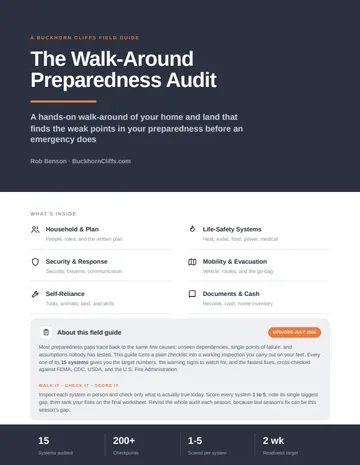
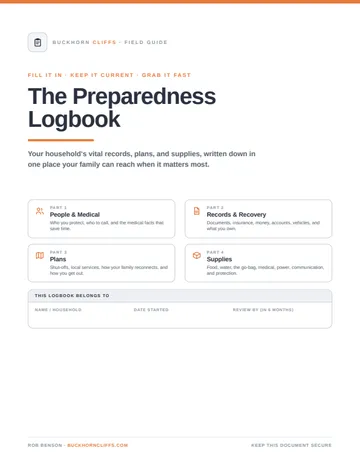
Every recipe and resource from the Prepper's Chemical Survival Guide, all six field guides to read here and download, the full audit and logbook, all twelve reference charts, and no ads.
My Manual · included
Build your own field manual
The most useful thing a membership gives you. Save any page on this site, recipes, charts, and whole field guides included. Arrange them in the order you want, name it, and print one manual with a cover and contents, or keep it as a PDF that opens with no signal.
- It works when this site does not
- Only your pages
- Anyone in the house can use it
- One current copy, not a pile of printouts
- The house binder
- A copy for the bug-out bag or truck
- A copy for family
- An offline PDF

Stay Ready
New entries, updates, and useful instruction.
Stay one step ahead on your preparedness journey.