BUCKHORN CLIFFS

Tools and Repair · Guide

Hatchet vs. axe

Compares hatchets and axes by size, head shape, and use, with a short history and a part-by-part anatomy of an axe.

Quick facts

Length
An axe is double the length of a hatchet
Hatchet
One hand, smaller head with significant taper
Axe
Two hands, larger head with very slight taper
Axe jobs
  • Splitting firewood
  • cutting down a tree
  • hewing lumber
Hatchet jobs
  • Small firewood
  • saplings
  • small branches
  • camping
Axe parts
  • Head
  • eye
  • toe
  • bit
  • heel
  • poll
  • cheek

Cutting wood, need the right tool, don't want to sound silly? A full comparison of the hatchet vs. axe, differences and similarities, when you should use them, and recommendations on what to buy.


What's different between an axe and a hatchet?

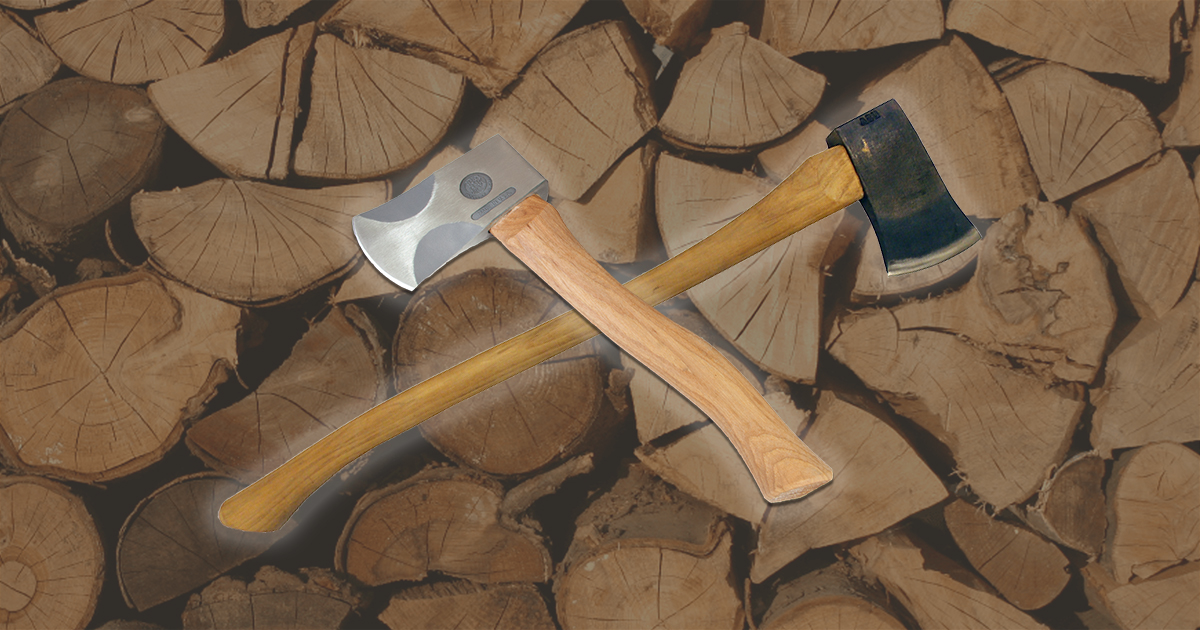
An axe is double the length of a hatchet. And you're going to notice the head shape between hatchets and axes vary. The head of a hatchet is also smaller and has a significant taper. The head of an axe is larger and has a very slight taper (if any at all).

Hatchet
HATCHET
Axe
AXE

A hatchet can effectively be used with one hand, typically meant for chopping smaller pieces of firewood or small branches.

An axe is large enough for use with two hands (for maximum striking power). Axes are used for chopping larger wood.


When should I use an Axe vs. Hatchet?

When to use an Axe

  • Splitting firewood
  • Cutting down a tree
  • Hewing lumber

What is hewing lumber?

Hewing is a centuries-old process of converting a round log into square lumber for use as building material.

When to use a Hatchet

  • Split small pieces of firewood
  • Cut down saplings & very small trees
  • Chop small branches off a tree or bush
  • Useful when camping

What are the similarities of an axe and a hatchet?

An axe and a hatchet look very similar (other than the size difference) and it's not hard to confuse the two.

With both an axe and a hatchet, the purpose is typically to cut wood. The difference between the two is in the scale and ability of each.

Both the axe and the hatchet have a steel head with a sharp edge called a bit. Both also have a handle that can be made out of either wood or a strong composite material.


What's the history of the axe?

Early Axe

Archaeologists have deduced that they were usually attached to a handle to form a tool much like a hatchet. Such implements are often associated with the development of agriculture but ancient examples from Australia vastly pre-date agriculture anywhere in the world...

BBC News

The axe is thought to be one of the oldest tools ever used by man. It predates any written record. The earliest known axes are called "hand axes".

The hand axe was a pear-shaped piece of chipped stone worked to a point and a cutting edge. It had no handle. It was held directly in the hand, which is where the name comes from. Early man most likely used the hand axe to butcher animals or dig up roots.


Parts of an Axe

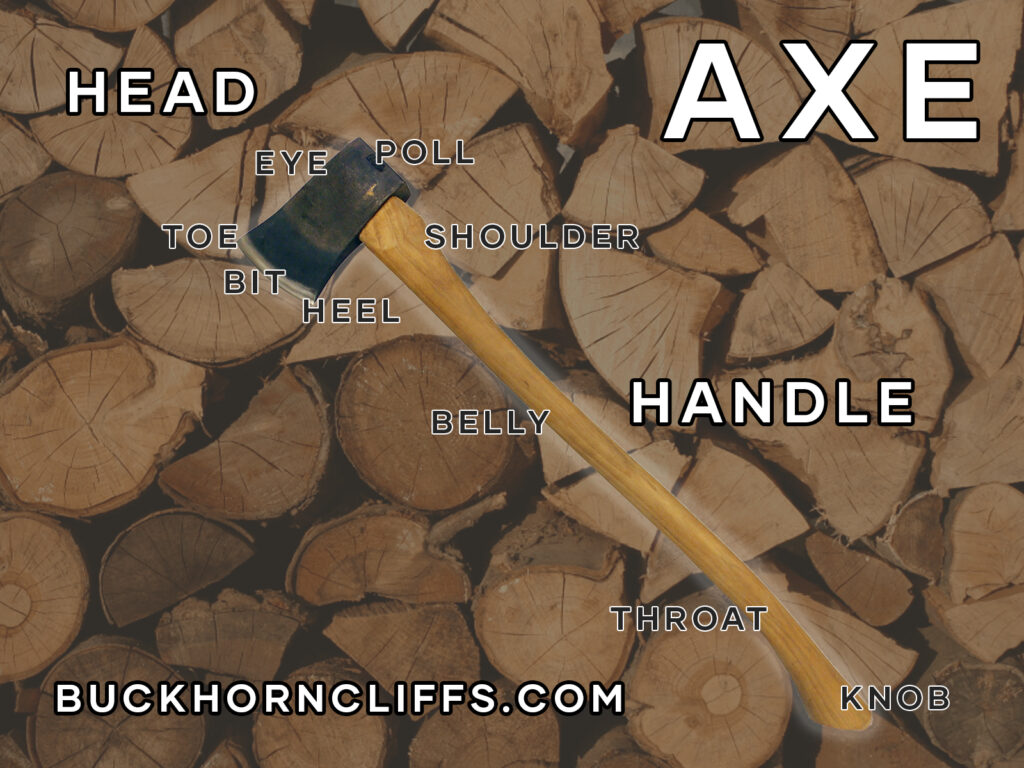
Think of this as the anatomy of the axe. Each and every section of an axe has a name, these are the parts of an axe.

Parts of an Axe

Head of an Axe

The head of an axe is the part of the tool that is used for cutting or chopping. It is typically made of metal and is attached to the handle, or haft, of the axe. The head typically consists of a blade and a poll, with the blade being the sharp, cutting edge and the poll being the opposite end of the head that is used for striking or pounding. The shape and size of the head can vary depending on the type of axe and its intended use. For example, a felling axe may have a longer and wider head with a more pronounced blade, while a hatchet may have a smaller and more compact head with a shorter blade.

Eye

The eye is the hole through the axe head that the handle fits into. The handle is driven into the eye and locked in place with a wedge. It is called the "eye" because it is typically shaped like an eye, with a round or oval opening at the end of the handle. The head of the axe is inserted into the eye and secured in place with a wedge, which helps to keep the head from coming loose during use.

The size and shape of the eye can vary depending on the type of axe and the size of the head. In general, the eye should be slightly larger than the head of the axe to allow for easy insertion and secure attachment. The head of the axe should also be properly aligned with the handle to ensure that it is balanced and easy to use.

The handle of the axe should be long enough to allow the user to hold it with both hands, with the eye being located near the end of the handle where it can be easily gripped.

Toe

The toe of an axe refers to the very tip of the blade on the cutting edge of the head. It is the part of the axe that makes contact with the material being cut or chopped, and it is often the thinnest and most pointed part of the blade. The shape and size of the toe can vary depending on the type of axe and its intended use. For example, an axe used for felling trees may have a wider and more blunt toe, while an axe used for carving or splitting wood may have a thinner and more pointed toe.

The toe is an important part of the axe because it determines the overall cutting performance of the tool. A sharp and well-maintained toe will make it easier to cut through wood or other materials, while a dull or damaged toe will make the axe less effective and may require more effort to use. It is important to keep the toe of the axe sharp and in good condition to ensure that it is able to perform its intended function effectively.

Bit

The bit of an axe is the cutting edge of the head, which is typically located on one side of the head and extends from the toe to the heel. The bit is the part of the axe that does the actual cutting or chopping, and it is often the sharpest and most durable part of the head. The shape and size of the bit can vary depending on the type of axe and its intended use. For example, an axe used for felling trees may have a wider and more curved bit, while an axe used for carving or splitting wood may have a thinner and more straight bit.

The bit of an axe is an important part of the tool because it determines the overall cutting performance of the axe. A sharp and well-maintained bit will make it easier to cut through wood or other materials, while a dull or damaged bit will make the axe less effective and may require more effort to use. It is important to keep the bit of the axe sharp and in good condition to ensure that it is able to perform its intended function effectively.

Heel

The heel of an axe is the part of the blade on the cutting edge of the head that is closest to the poll, or opposite end of the head. The heel is the bottom corner of the bit, the end of the cutting edge nearest the handle. The toe is the top corner. The shape and size of the heel can vary depending on the type of axe and its intended use. For example, an axe used for felling trees may have a wider and more blunt heel, while an axe used for carving or splitting wood may have a thinner and more pointed heel.

The heel of an axe is not typically used for cutting or chopping, but it can be used to help guide the axe when making a cut. For example, when splitting wood with a splitting axe, the heel can be used to guide the axe as it is struck into the wood, helping to ensure that the cut is straight and accurate.

Poll

The poll of an axe is the flat, blunt end of the head that is opposite the blade. It is typically located at the end of the head that is furthest from the handle, or haft, of the axe. The poll is not typically used for cutting or chopping, but it can be used for striking or pounding. On most axes the poll is a counterweight, not a hammer. Never pound steel wedges with it or hit it with a steel hammer: the poll is not tempered for that and can deform, crack the eye or throw steel chips. Wooden or plastic wedges only, unless the maker rates the poll for striking, as on a splitting maul.

The shape and size of the poll can vary depending on the type of axe and its intended use. For example, a felling axe may have a wider and more rounded poll, while a hatchet may have a smaller and more pointed poll. The poll of the axe is typically made of the same material as the blade and is designed to be strong and durable to withstand the force of impact. It is important to maintain the poll of the axe to ensure that it is in good condition and able to perform its intended function effectively.

Cheek

The cheek of an axe refers to the sides of the head that extend from the blade to the poll. The cheeks are typically located on either side of the head and are perpendicular to the blade. The shape and size of the cheeks can vary depending on the type of axe and its intended use. For example, an axe used for felling trees may have wider and more rounded cheeks, while an axe used for carving or splitting wood may have thinner and more angular cheeks.

The cheeks of the axe are an important part of the tool because they provide structural support for the head and help to distribute the force of impact when the axe is used. The cheeks also help to balance the head of the axe and make it easier to control when using the tool. It is important to maintain the cheeks of the axe to ensure that they are in good condition and able to perform their intended function effectively.

Handle of an Axe

The handle, or haft, of an axe is the part of the tool that is held by the user when using the axe. It is typically made of wood, plastic, or other materials and is attached to the head of the axe at the eye. The handle of the axe provides a grip point for the user and helps to balance the tool when it is being used.

The length and shape of the handle can vary depending on the type of axe and its intended use. In general, the handle should be long enough to allow the user to hold it with both hands, and it should be comfortable and easy to grip. The handle should also be sturdy and strong enough to withstand the force of impact when the axe is used. It is important to maintain the handle of the axe to ensure that it is in good condition and able to perform its intended function effectively.

Shoulder

The shoulder is part of the handle, not the blade. It is the top of the handle just below the head, where the wood swells to meet the eye. The shoulder is the transition point between the blade and the handle, and it is typically wider and more rounded than the rest of the blade. The shape and size of the shoulder can vary depending on the type of axe and its intended use.

The shoulder of the axe serves a number of important functions. It helps to distribute the force of impact when the axe is used, and it also helps to balance the head of the axe and make it easier to control. The shoulder is also an important part of the blade because it helps to protect the eye of the handle from damage when the axe is used. It is important to maintain the shoulder of the axe to ensure that it is in good condition and able to perform its intended function effectively.

Belly

Front of the handle.

Knob

End of the handle.

Throat

This is what you grip.

Parts of a Hatchet

Parts of a Hatchet

The anatomy/terminology of a hatchet is identical to that of an Axe.


Here are a few axe and hatchet recommendations. I own many axes and hatchets and these have made it to the top of the my list:

Axe Recommendations

Fiskars: The handle is considered stronger-than-steel, it's a FiberComp handle with an inseparable insert-molded head. They’re virtually impossible to break. And yeah, I get it... it doesn't look old-timey but I've used these a lot and everything about them is superior.

For a classic wood handled axe, this 1844 Helko is pretty great. (Replace the product links below.)

Hatchet Recommendations

Similar to the axe recommend above, these Fiskars hatchets have an incredible blade, strong handle, and a solid weight distribution.

And for a compact camping hatchet, Gerber makes amazing products, highly recommended!

Questions this answers

Tap a question for the short answer.

What is the difference between a hatchet and an axe?

An axe is about double the length of a hatchet and is swung with two hands for maximum striking power on larger wood. A hatchet works with one hand, has a smaller head with a significant taper, and suits small firewood and branches. An axe head is larger with very little taper.

When should I use an axe vs a hatchet?

Reach for an axe when splitting firewood, cutting down a tree, or hewing lumber. Pick a hatchet for splitting small pieces of firewood, cutting saplings and very small trees, chopping small branches off a tree or bush, and general camping chores.

Can I split firewood with a hatchet?

Yes, as long as the pieces are small. A hatchet is a one-hand tool meant for splitting small firewood and chopping small branches. For larger wood, a two-handed axe gives you the striking power the job needs.

What are the parts of an axe called?

The head includes the eye, toe, bit, heel, poll, and cheeks, and it mounts on the handle, also called the haft. The bit is the cutting edge running from toe to heel, the poll is the flat blunt end opposite the blade, and the cheeks are the sides of the head.

What is hewing lumber?

Hewing is a centuries-old process of turning a round log into square lumber that can be used as building material. It is one of the jobs an axe is suited for, along with splitting firewood and cutting down a tree.

Keep going

Read nextFix-all repair kit: tapes, fasteners, plumbing and electrical bitsA checklist of tapes, fasteners and small plumbing and electrical items for a fix-all kit, with typical and improvised uses for each item.Tools and Repair · Guide

Related to this

Membership · $49.95 per year

There is a lot more behind the lock

158member pages in full
125recipes with exact amounts
6field guide PDFs, 206 pages
1manual of your own, built from any page

Every recipe and resource from the Prepper's Chemical Survival Guide, all six field guides to read here and download, the full audit and logbook, all twelve reference charts, and no ads.

My Manual · included

Build your own field manual

The most useful thing a membership gives you. Save any page on this site, recipes, charts, and whole field guides included. Put them in your order, name it, and print one manual with a cover and contents, or keep it as a PDF that opens with no signal.

  • It works when this site does not
  • Only your pages
  • Anyone in the house can use it
  • One current copy, not a pile of printouts
  • The house binder
  • A copy for the bug-out bag or truck
  • A copy for family
  • An offline PDF

Join for $49.95 per year

Tools and Repair · GuideLast reviewed 2023-09-02

Membership

Save to My Manual is a member tool

Members build their own manual from the pages that fit their household, then print it or keep it as a PDF.

Why it matters

When the grid goes down, this site goes with it. Paper does not. Membership is how you get the whole manual off the screen and onto the shelf: every page in full, every field guide, and a binder built for your own household.

The field guide library

All six field guides. 206 pages. Included.

The complete Buckhorn Cliffs PDF set, yours to download, print, and keep from the day you join.

$60if bought one at a time

  • Cover of Stockpile Essentials Field GuideStockpile Essentials39 pagesEverything to keep on hand, category by category, plus the 20 multi-use items.
  • Cover of Survival Foods Field GuideSurvival Foods35 pagesStoring, extending, and using the food supply. Real shelf life by the numbers.
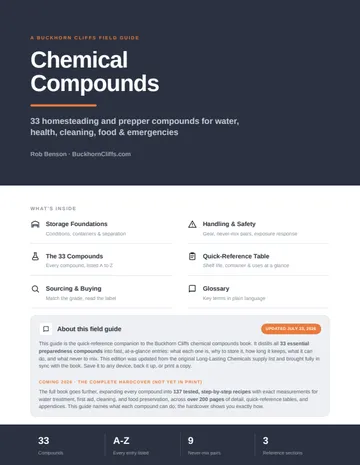
  • Cover of Chemical Compounds Field GuideChemical Compounds29 pagesThe 33 compounds: storage, top uses, hazards, and the never-mix chart.
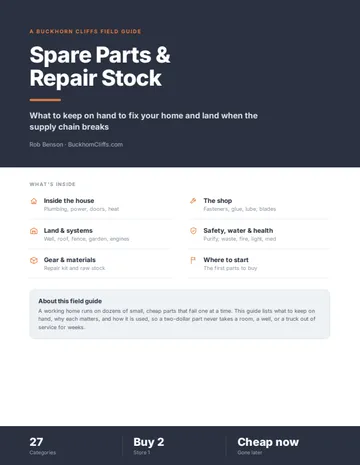
  • Cover of Spare Parts and Repair Stock Field GuideSpare Parts and Repair Stock40 pagesWhat to keep on hand to fix the home and land when the supply chain breaks.
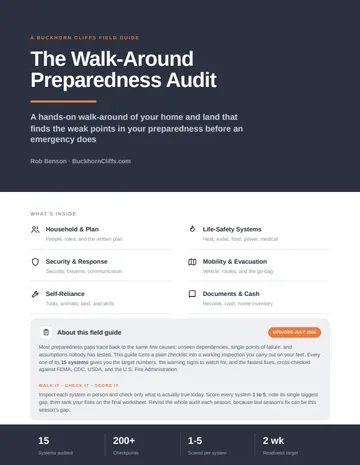
  • Cover of Walk-Around Preparedness AuditWalk-Around Preparedness Audit33 pagesFifteen systems scored 1 to 5, with the printable scorecard.
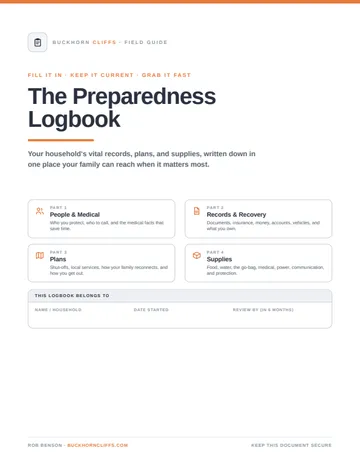
  • Cover of The Preparedness LogbookPreparedness Logbook30 pagesThe household information that needs to be on paper.

My Manual · included

Build your own field manual

The most useful thing a membership gives you. No book fits your household exactly. My Manual does. Save any page on this site, recipes, charts, and whole field guides included, put them in your order, and print one manual with your name on the cover. It holds only what is relevant to you, and nothing you would skip.

Why it matters

  • It works when this site does notNo power and no signal means no website. A printed manual and an offline PDF still open, which is the whole point of writing any of this down.
  • Only your pagesThis site covers every household. Yours needs a fraction of it. Your manual holds the pages that match your water source, your climate, and your gear, so nobody digs through the rest under stress.
  • Anyone in the house can use itThe person who reads this site may not be the one home when it counts. A binder on the shelf, in your order, with a contents page, is something a spouse or a teenager can follow.
  • One current copy, not a pile of printoutsEvery page prints in the same field guide layout with a cover, a contents page, and the print date. Change a page, print again, and the old copy is easy to spot.

What to build with it

  • The house binderYour water source, your climate, your gear. Only the pages you would reach for.
  • A copy for the bug-out bag or truckA short version that travels: water, first aid, comms, and the recipes you rely on.
  • A copy for familyHand a parent or a grown kid a manual built for their house and their supplies.
  • The shop and the barnParts lists, repair skills, and the never-mix chart, kept where the work happens.
  • A recipe book of your ownThe cleaners, fuels, and remedies you make, with exact amounts, in one place.
  • An offline PDFSaved to a phone, a tablet, or a drive in the Faraday bag. It opens with no signal.

How it works

  1. 1Save what fitsPress "Save to My Manual" on any page: a recipe, a chart, a guide, a parts list, or a whole field guide.
  2. 2Put it in your orderOn My Account, drag the pages into the order you want. Name the manual and add your household name.
  3. 3Print it or save a PDFOpen the preview, then print it or save a PDF. It is sized for 8.5 x 11 inch paper, with a cover and a contents page. Field guides go in exactly as the PDFs are laid out. No ads, no photos.
  4. 4Keep it currentAdd a page, pull one out, print again. The cover carries the date, so you always know which copy is the latest.

Also included

  • The entire site, unlockedAll 158 member pages open in full: exact amounts, every step, every warning, every parts list. Nothing held back.
  • Every recipe and resource in the bookAll 138 recipes and 33 compounds from Prepper's Chemical Survival Guide, with exact amounts, every step, every warning, and the reference charts.
  • A clean PDF of any entryOne press turns any page into a field guide sheet for the binder, the truck, or the shop wall.
  • Checklists and audit scores that follow youSaved to the account, so the phone, the laptop, and the shop computer always match.
  • No adsMembers read the whole site without a single ad.
$49.95per year. About 14 cents a day. Cancel any time and keep the year you paid for.