BUCKHORN CLIFFSA preparedness field manual

Hygiene and Sanitation · Guide

Laundry Without a Machine: Washing Clothes When the Power and Water Are Off

How to wash clothes in two buckets with a plunger washer and a washboard, what a load really costs in water (6 to 9 gallons against 40 for a machine), how to wring and dry indoors without starting a fire, what to wash and what to air when water is rationed, and the sick person's load.

Quick facts

  • One bucket load3 gallons of water, 4 to 6 small items, 1 to 2 tablespoons of powder
  • A load, washed and rinsed twice9 gallons fresh; 6 with the rinse water reused as the next wash
  • Soak firstOvernight in cold water halves the plunging and the soap
  • VinegarA quarter cup in the last rinse only; never in the wash
  • Drying insideRack 3 feet from the stove or heater, never on it; crack a window if walls sweat
  • RationedSmalls daily, base layers every 2 to 3 days, outer layers aired; wool a week
  • Sick person's loadOwn bucket, hottest water, full dose, sun-dried; water not reused
  • Four people, a weekAbout 30 gallons of laundry water with reuse, 40 without

A washing machine is a motor, a pump and 40 gallons of water. Take those away and laundry goes back to what it was for most of history: a bucket, hot water if you can make it, soap, and a line. It works, it's slow, and it eats water, which is the one thing this page is really about. The method below washes a load in 6 to 9 gallons, and the rationing rules under it keep a household in clean socks for a month on less than that.

3 gallonsone bucket loadA 5-gallon bucket filled to about 3 gallons leaves room to plunge. It washes 4 to 6 small items, or two shirts and a pair of pants.
1 to 2 tbsppowder per bucketThe laundry powder recipe's hand-wash dose. More soap means more rinse water, so measure it.
6 to 9 gallonsa load, wash and two rinses9 with fresh water each time; 6 once the rinse water becomes the next wash. An old top-loader uses about 40.
Smalls dailywhen water is shortUnderwear and socks every day, base layers every few days, outer layers brushed and aired. Wool goes a week.

The water mathWash a loadWring and dryWhen water is rationedA sick person's laundryWhat to ownWhat goes wrong

The water math

Every gallon that goes into a bucket of clothes is a gallon that is not drinking, cooking or flushing. The hygiene guide sets the ration at a gallon a person a day for everything; laundry has to fit inside that or come out of stored water you set aside for it. The table is what a load really costs, so you can decide what gets washed before the bucket is full.

LoadWhat fitsWashRinse 1Rinse 2Fresh waterWith reuse
SmallsUnderwear and socks for two people for two days2 gal2 gal2 gal6 gal4 gal
Bucket load4 to 6 light items, or two shirts and a pair of pants3 gal3 gal3 gal9 gal6 gal
Jeans or work clothesTwo pairs, or a heavy jacket3 gal3 gal3 gal9 gal6 gal
SheetsOne set, washed in a tub or a big basin5 gal5 gal5 gal15 gal10 gal
Sick person's beddingSheets and pillowcases, washed alone5 gal, hot5 gal5 gal15 gal15 gal: this water is not reused
Reuse runs backwardThe second rinse is nearly clean water: it becomes the next load's first rinse, and the first rinse becomes the next wash. Fresh water only goes into the last rinse. Run three loads this way and the whole afternoon costs about 15 gallons instead of 27.
Where the water goes afterSoap-only wash water can go on the garden or into the flush bucket. Water with chlorine bleach in it goes down the drain or into a pit away from anything growing, and never into the bucket toilet.
Heat only the washWarm wash water cleans better and dissolves the powder; the rinses are cold. If fuel is short, cold water and an overnight soak do most of the work heat would have done.

Wash a load in two buckets

Two 5-gallon buckets, a plunger washer, a washboard for the collars, and gloves. The plunger washer is a perforated cone on a stick; pushing it down forces water through the cloth the way an agitator does, without the splashing of a stick or a bare plunger. Overnight soaking is the trick that saves the most effort and the most soap.

Sort, and soak overnightLights and darks, smalls and heavy things, and anything from a sick person in its own bucket. Cover the load with cold water and leave it overnight; dirt and sweat loosen on their own, and the wash takes half the plunging.
Treat the stains dryWet the spot, rub a pinch of the dry laundry powder in, and leave it 15 to 30 minutes before the wash. Collars, cuffs and knees get the washboard: a few strokes on the board with a laundry bar, not a scrub.
WashPour off the soak water. About 3 gallons of warm water, 1 to 2 tablespoons of powder dissolved in it first, then the clothes. Plunge for 2 to 3 minutes, steady, not hard. Leave it 10 minutes and plunge again for one.
Wring, then the first rinseWring each piece over the wash bucket so the soapy water stays with the soap. Into the second bucket of clean cold water, plunge for a minute, wring again.
Second rinseFresh cold water, plunge for a minute. A quarter cup of white vinegar in this rinse cuts the soap film and the smell in hard water. Vinegar goes here and nowhere else: in the wash it cancels the cleaners.
Wring hardA hand wringer gets more water out than two people twisting, and every ounce it removes is an hour off the line. No wringer: twist with a partner, then roll each piece in a dry towel and press.
Hang itShake each piece out, hang it by the seams, give it space. Outside in sun and wind if you can; inside on a rack near heat if you cannot. The drying rules are below.
Move the water down the lineThe second rinse becomes the next load's first rinse, the first rinse becomes its wash, the wash water goes to the garden or the flush bucket. Rinse the buckets and turn them over to dry.

Wool and silk are a separate wash

The laundry powder is alkaline and damages both. Wool gets cold water, a little castile or a wool wash, no plunging and no wringing: press the water out, roll in a towel, dry flat. It needs washing far less than anything else; most days airing it overnight is enough. The wool page has the care.

Wring and dry

Drying is where a wet week goes wrong. Outside, sun and wind do the work and the sun does some sanitizing too; a clear cold day works, and clothes left out below freezing dry anyway, slowly, as the ice leaves them. Inside, the enemy is a damp house: a load of wet laundry puts a gallon or more of water into the air of a sealed-up room.

OutsideThe line, the fence, a cord between two trees.
  • Morning hang, afternoon pick-up; a windy day beats a hot still one
  • Shirts by the tail, pants by the waistband, socks in pairs by the toe
  • Turn dark things inside out so the sun fades the inside
  • Below freezing: hang it anyway. Stiff by noon, dry by the next day in dry cold air
Inside, by the stoveA folding rack 3 feet from the stove or heater, never on it or over it.
  • Nothing draped on a stove, a pipe, a heater or a lantern: that is a house fire, and the first thing to catch is the cloth
  • Rack in the warm room where the air moves; crack a window an inch on the far side if the walls start to sweat
  • Rotate the rack so the back dries too
  • Wool and knits flat on a towel, not on a line
The wet weekWhen nothing will dry.
  • Wash less and wash small: smalls dry overnight on a rack; jeans take two days
  • Wring harder; the towel roll is worth the effort
  • Hang in the warm room at night, outside by day
  • Do not put damp clothes away. Mildew in a sealed bin ruins the whole load

When water is rationed

Clean clothes are hygiene, not comfort, and the line is skin. What touches skin gets washed; what does not gets brushed, aired and worn again. This is how one bucket a day keeps a family of four in clean smalls for a month.

  1. Underwear and socks, every dayOne small bucket for the household's smalls, 2 gallons, washed in the evening and dry by morning. This is the load that prevents rashes, athlete's foot and the smell that makes a crowded house miserable.
  2. Anything with body fluids, the same daySweat-soaked base layers, a child's accident, anything from a sick person. Its own bucket, washed hot when you can, dried in the sun.
  3. Base layers, every two or three daysT-shirts and long underwear. Wool base layers go a week between washes; a merino shirt stays fresh for days where cotton smells by night.
  4. Towels and dish cloths, twice a weekHang them to dry fully between uses and they go longer. A damp towel in a pile grows mildew in two days.
  5. Outer layers, when they are dirty, not when they are wornPants, sweaters, jackets, overalls. Brush off the dry dirt, hang them outside overnight to air, spot-wash the knees and cuffs on the washboard. A pair of jeans goes weeks.
  6. Sheets, every two weeks, or air themStrip the bed and hang the sheets in the sun for an afternoon between washes. Pillowcases are smalls: weekly.

What this costs in water

Smalls daily at 2 gallons, base layers twice a week at 3, towels twice a week at 3, and one bucket load of outer things a week: about 30 gallons a week for four people, 40 without reuse. Set it aside as laundry water from the start, and use the water you cannot drink for it: rain off the roof, the creek, the tub you filled in the first hour.

A sick person's laundry

Laundry from a sick person is how a stomach bug or a flu goes through the rest of the house. It gets its own bucket, its own water and the hottest wash you can make.

Gloves on, bag it at the bedStrip the bed into a bag or straight into the bucket; no shaking, no carrying it through the kitchen against your chest.
Hot water and soap, aloneAs hot as you can heat and handle, the full dose of powder, and nothing else in the bucket. Soak 30 minutes, plunge, wring over the bucket.
Two rinses, then the sunRinse as usual. Dry outside in direct sun whenever the weather allows; sunlight and complete drying finish what the hot water started.
Dump the water, wash your handsThis water is not reused and does not go on the garden. Down a drain or into a pit away from anything that grows. Then soap and water on your hands, 20 seconds, before you touch anything else.

If you disinfect the bucket with the pool shock solution or bleach afterward, rinse it before the next wash and keep the vinegar rinse well away from it: chlorine and vinegar together make chlorine gas. The hygiene guide has the disinfectant doses and the never-mix list.

What to own

None of this is expensive, and all of it stores forever. Buy it before the week it matters; a plunger washer is the one piece people do not improvise well.

Two 5-gallon buckets with lidsWash and rinse, and the lids make them water storage the rest of the year.
  • Food-grade is not required for laundry
  • A third bucket is the overnight soak
  • A snap-on lid with a hole cut for the plunger handle keeps the splash in
Plunger washerA perforated cone on a handle. Two to three minutes of pushing does what a machine does in a cycle.
  • Pushes water through the cloth instead of beating it
  • Works in a bucket, a tub or a stock pot
  • A clean toilet plunger with holes drilled in it is the improvised version
Washboard and a laundry barFor collars, cuffs, knees and the stains that soaking did not lift.
  • Metal or glass board, hung on the wall between washes
  • Fels-Naptha or Zote for grease; a castile bar for anything that touches sensitive skin
  • Rubber gloves: the powder dries hands fast
Hand wringerThe upgrade that halves drying time. Clamps to the bucket rim or a table.
  • Two rubber rollers and a crank; feed the cloth in flat, buttons and zippers folded inside
  • No wringer: twist with a partner, then roll in a towel
  • Hand-crank spin dryers exist too, and need no power
Line, pins and a rackFifty feet of line, two dozen pins, and a folding rack for the room with the stove.
  • Paracord works; a dedicated line sags less
  • Wooden pins outlast plastic in the sun
  • The rack folds flat and lives behind a door
Soap that keepsThe laundry powder recipe stores indefinitely sealed; the bars keep for years.
  • Shelf-stable laundry powder: 1 to 2 tablespoons a bucket
  • A gallon of white vinegar for the rinse
  • Oxygen bleach for whites; chlorine bleach stays out of the bucket

What goes wrong

Too much soapThe powder is concentrated. A heaped scoop takes two extra rinses to get out, and soap left in cloth itches and stiffens. Measure the tablespoon.
Vinegar in the washAcid cancels the alkaline cleaners before they work and curdles castile into a greasy film. The quarter cup goes in the last rinse only.
Chlorine bleach in the bucketIt is hard to rinse out by hand, ruins the vinegar rinse, and the water cannot go on the garden or into the toilet bucket. Sun does the whitening; oxygen bleach does the rest.
Clothes on the stoveA shirt draped on a wood stove or over a heater is the most common way a blackout becomes a fire. Three feet, on a rack.
Wool and silk in the powderWashing soda and borax break down both fibers. Cold water, castile, no wringing, dry flat.
Putting it away dampMildew in a sealed bin takes two days and does not come out. Dry to the touch, then another hour.
Washing everythingA household that washes outer layers as if the machine still ran is out of water in a week. Skin-contact only; the rest gets brushed and aired.
No glovesBorax and washing soda dry and crack hands, and cracked hands in a house with no doctor are a door for infection. Rubber gloves, every wash.

Questions this answers

Tap a question for the short answer.

How do I wash clothes without a washing machine

Two 5-gallon buckets and a plunger washer. Soak the load overnight in cold water, pour it off, then wash in about 3 gallons of warm water with 1 to 2 tablespoons of laundry powder dissolved first: plunge 2 to 3 minutes, rest 10, plunge one more. Wring over the bucket, rinse in clean cold water, wring, rinse again with a quarter cup of vinegar in the water, wring hard, and hang by the seams. Collars, cuffs and stains get a laundry bar and a few strokes on a washboard before the wash.

How much water does it take to hand wash a load of laundry

A bucket load of 4 to 6 small items takes about 3 gallons to wash and 3 for each of two rinses: 9 gallons with fresh water, or 6 once the second rinse becomes the next load's first rinse and the first rinse becomes its wash. A set of sheets takes about 15. An old top-loading machine uses about 40 gallons a load.

How do I dry clothes indoors without power

On a folding rack in the warm room, 3 feet from the stove or heater and never on it or over it; cloth draped on a stove is how a blackout becomes a house fire. Wring hard first, or roll each piece in a dry towel and press, because every ounce out is an hour off the rack. Crack a window an inch on the far side if the walls start to sweat, rotate the rack, and wash small loads so they dry overnight.

What should I wash first when water is rationed

What touches skin. Underwear and socks every day in a small 2-gallon bucket; anything with sweat or body fluids the same day; base layers every two or three days, or a week for wool; towels twice a week. Outer layers get brushed, hung outside overnight to air, and spot-washed at the knees and cuffs, not washed. Sheets air in the sun between washes.

Can I reuse laundry rinse water

Yes, and it is the main water saving. The second rinse is nearly clean, so it becomes the next load's first rinse, and that first rinse becomes the next wash. Only the last rinse gets fresh water. Soap-only wash water can then go on the garden or into the flush bucket. Water from a sick person's load, or anything with chlorine bleach in it, is not reused and goes down a drain or into a pit away from anything growing.

How do I wash a sick person's bedding without a machine

In its own bucket, with gloves on, bagged at the bed. The hottest water you can heat and handle, the full dose of powder, a 30-minute soak, then plunge and wring over the bucket. Two rinses, then dry in direct sun whenever the weather allows. That water is not reused. Wash your hands with soap for 20 seconds after, and if you disinfect the bucket with chlorine, rinse it and keep the vinegar rinse away from it.

What do I need to do laundry off grid

Two or three 5-gallon buckets with lids, a plunger washer, a washboard and a laundry bar, rubber gloves, a hand wringer if you can get one, fifty feet of line with pins and a folding rack, a sealed tub of the shelf-stable laundry powder, a gallon of white vinegar, and oxygen bleach for whites. Everything on the list stores indefinitely.

Can I hang laundry outside in freezing weather

Yes. Wet clothes freeze stiff and then dry anyway as the ice leaves them, slowly: stiff by noon, dry by the next day in dry cold air, longer in damp cold. Wring hard first so there is less to freeze, and bring pieces in to finish on the rack by the stove if they have to be worn tomorrow.

Keep going

Read nextHygiene and Sanitation When the Water Is OffWhat to do when the water goes off: bucket toilet, hand washing, waste, body, teeth, laundry, dishes, disinfecting, and pests, with the shelf item and recipe page for every job.Hygiene and Sanitation · Guide

Related to this

Membership · $49.95 per year

There is a lot more behind the lock

158member pages in full
125recipes with exact amounts
11field guide PDFs, 278 pages
1manual of your own, built from any page

Every recipe and resource from the Prepper's Chemical Survival Guide, all eleven field guides to read here and download, the full audit and logbook, all twelve reference charts, and no ads.

My Manual · included

Build your own field manual

The most useful thing a membership gives you. Save any page on this site, recipes, charts, and whole field guides included. Arrange them in the order you want, name it, and print one manual with a cover and contents, or keep it as a PDF that opens with no signal.

  • It works when this site does not
  • Only your pages
  • Anyone in the house can use it
  • One current copy, not a pile of printouts
  • The house binder
  • A copy for the bug-out bag or truck
  • A copy for family
  • An offline PDF

Join for $49.95 per year

Hygiene and Sanitation · GuideLast reviewed 2026-11-02

Membership

Save to My Manual is a member tool

Members build their own manual from the pages that fit their household, then print it or keep it as a PDF.

Why it matters

When the grid goes down, this site goes with it. Paper does not. Membership is how you get the whole manual off the screen and onto the shelf: every page in full, every field guide, and a binder built for your own household.

The field guide library

All eleven field guides. 278 pages. Included.

The complete Buckhorn Cliffs PDF set, yours to download, print, and keep from the day you join.

$100if bought one at a time

  • Cover of Stockpile Essentials Field GuideStockpile Essentials39 pagesEverything to keep on hand, category by category, plus the 20 multi-use items.
  • Cover of Survival Foods Field GuideSurvival Foods35 pagesStoring, extending, and using the food supply. Real shelf life by the numbers.
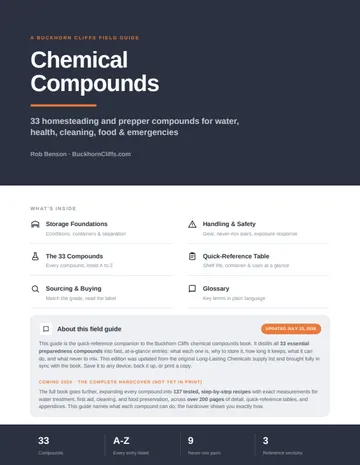
  • Cover of Chemical Compounds Field GuideChemical Compounds29 pagesThe 33 compounds: storage, top uses, hazards, and the never-mix chart.
  • Cover of Spare Parts and Repair Stock Field GuideSpare Parts and Repair Stock40 pagesWhat to keep on hand to fix the home and land when the supply chain breaks.
  • Cover of Walk-Around Preparedness AuditWalk-Around Preparedness Audit33 pagesFifteen systems scored 1 to 5, with the printable scorecard.
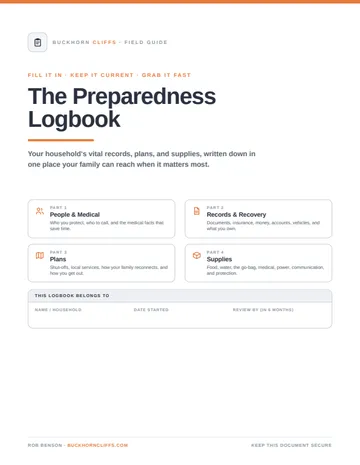
  • Cover of The Preparedness LogbookPreparedness Logbook30 pagesThe household information that needs to be on paper.
  • Cover of Off-Grid Portable Solar Power Field GuideOff-Grid Portable Solar Power16 pagesSize a power station and a folding panel, pair them, wire them, keep them alive.
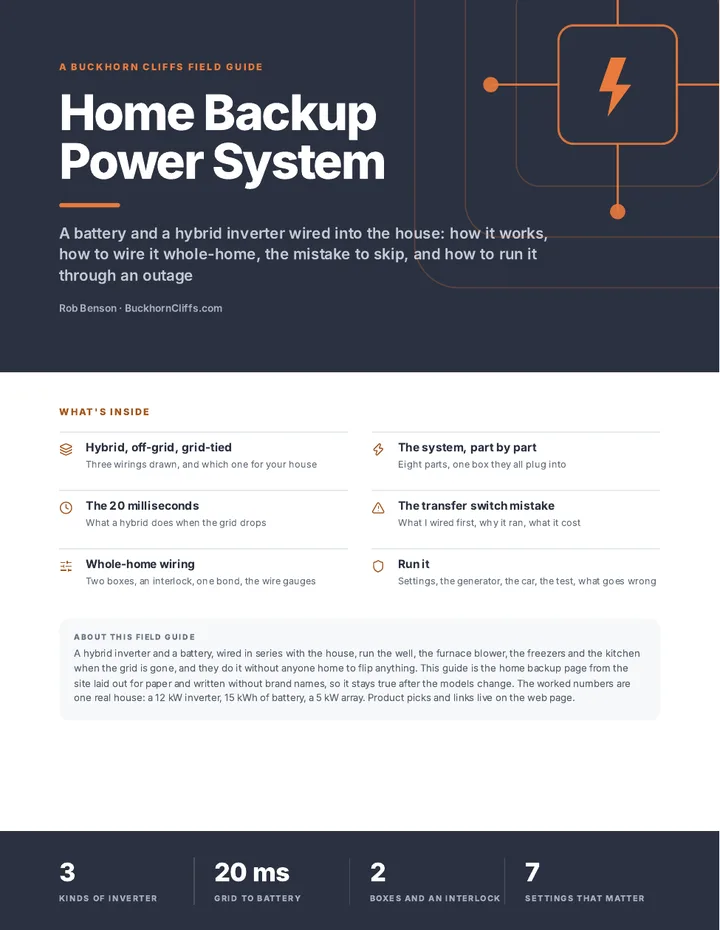
  • Cover of Home Backup Power System Field GuideHome Backup Power System20 pagesA battery and a hybrid inverter wired into the house: hybrid against off-grid, the wiring, the mistake to skip.
  • Cover of The Four KnotsFour Knots6 pagesWhich knot for the job, and how to tie each one in four moves.
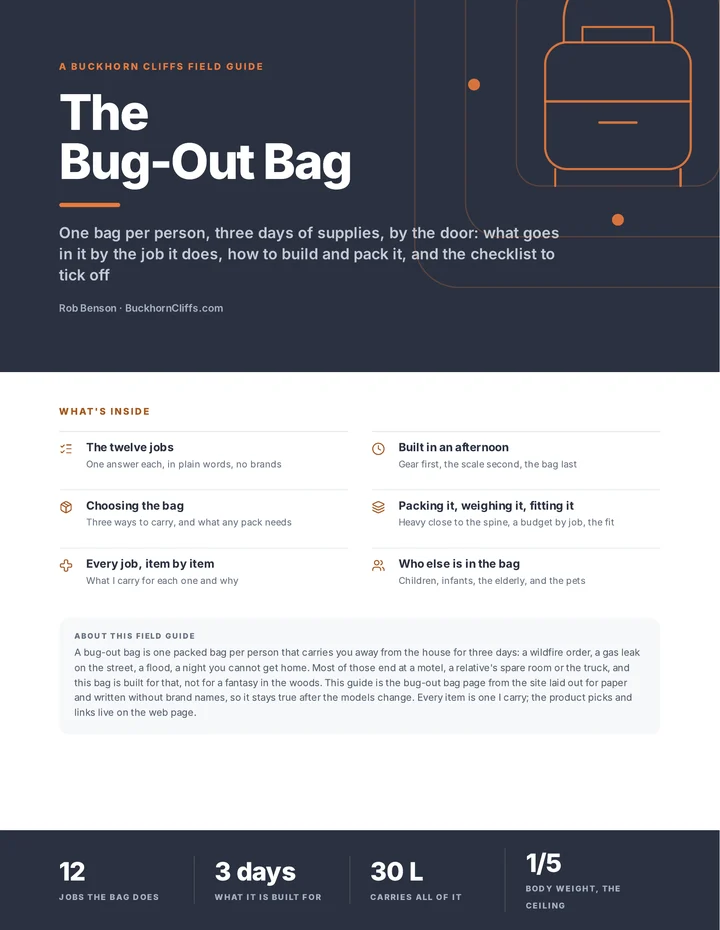
  • Cover of The Bug-Out Bag Field GuideBug-Out Bag18 pagesOne bag per person for three days: the twelve jobs, the afternoon build, the packing plan, every item by job, and the checklist.
  • Cover of Home Security and Defense Field GuideHome Security and Defense12 pagesThe four layers from the property edge to the people inside, what to build first, the night something feels wrong, and the plan with or without a weapon.

My Manual · included

Build your own field manual

The most useful thing a membership gives you. No book fits your household exactly. My Manual does. Save any page on this site, recipes, charts, and whole field guides included, arrange them in the order you want, and print one manual with your name on the cover. It holds only what is relevant to you, and nothing you would skip.

Why it matters

  • It works when this site does notNo power and no signal means no website. A printed manual and an offline PDF still open, which is the whole point of writing any of this down.
  • Only your pagesThis site covers every household. Yours needs a fraction of it. Your manual holds the pages that match your water source, your climate, and your gear, so nobody digs through the rest under stress.
  • Anyone in the house can use itThe person who reads this site may not be the one home when it counts. A binder on the shelf, in the order you chose, is something a spouse or a teenager can follow.
  • One current copy, not a pile of printoutsEvery page prints in the same field guide layout with a cover and the print date. Change a page, print again, and the old copy is easy to spot.

What to build with it

  • The house binderYour water source, your climate, your gear. Only the pages you would reach for.
  • A copy for the bug-out bag or truckA short version that travels: water, first aid, comms, and the recipes you rely on.
  • A copy for familyHand a parent or a grown kid a manual built for their house and their supplies.
  • The shop and the barnParts lists, repair skills, and the never-mix chart, kept where the work happens.
  • A recipe book of your ownThe cleaners, fuels, and remedies you make, with exact amounts, in one place.
  • An offline PDFSaved to a phone, a tablet, or a drive in the Faraday bag. It opens with no signal.

How it works

  1. 1Save what fitsPress "Save to My Manual" on any page: a recipe, a chart, a guide, a parts list, or a whole field guide.
  2. 2Arrange it your wayOn My Account, drag the pages into the order you want. Name the manual and add your household name.
  3. 3Print it or save a PDFOne button makes a real PDF file, laid out for 8.5 x 11 inch paper with a cover. Print it from any device or keep the file. Field guides go in exactly as the PDFs are laid out. No ads, no photos.
  4. 4Keep it currentAdd a page, pull one out, print again. The cover carries the date, so you always know which copy is the latest.

Also included

  • The entire site, unlockedAll 158 member pages open in full: exact amounts, every step, every warning, every parts list. Nothing held back.
  • Every recipe and resource in the bookAll 138 recipes and 33 compounds from Prepper's Chemical Survival Guide, with exact amounts, every step, every warning, and the reference charts.
  • A clean PDF of any entryOne press turns any page into a field guide sheet for the binder, the truck, or the shop wall.
  • Checklists and audit scores that follow youSaved to the account, so the phone, the laptop, and the shop computer always match.
  • No adsMembers read the whole site without a single ad.
$49.95per year. About 14 cents a day. Cancel any time and keep the year you paid for.