Handle with care
Quick facts
- What it isAn inverter that plugs into an EV's charge port and turns the pack into AC power; no fuel, no exhaust, no wiring for plug-in loads
- OutputTwo 120 V outlets, up to 2,400 W each, 3,500 W combined; or 240 V at 7,500 W, 32 A, on a NEMA 14-50. One side at a time
- My car100 kWh Tesla pack, about 80 kWh usable; my home battery bank is 15 kWh
- RuntimeA house on the essentials (800 W average) about three and a half days; fridge and freezer alone, about 11 days
- The house240 V single phase, no neutral: a transfer switch or interlock and possibly an autotransformer, installed by an electrician. Never a wall outlet
- WhereRoamEnergy, free U.S. shipping, 30-day returns, 1-year warranty
This box has access to more than 80 kilowatt-hours of power. For reference, the battery bank wired into my house, the one on my home backup power page, is 15 kWh. The 80 is sitting in the driveway: a 100 kWh Tesla pack, call it 80 usable in the real world, and until now there was no way to get that power out of the car and into a fridge, a jackhammer or a camper. The RoamEnergy PowerBridge Pro is the missing piece. It plugs into the charge port and turns the biggest battery on the property into a generator that needs no fuel or engine and makes no exhaust. I have had mine a little over a month, and it may be the best purchase I've made. The solar panels replaced going to the gas station, and I still have my truck. This page is what it is, what it puts out, what it runs and for how long, and what to know before you buy.
See the PowerBridge ProFree U.S. shipping, 30-day returns, 1-year warranty
What it is, and what comes out of it
An electric car is a battery with wheels, and a big one. A portable power station is a battery with an inverter, the part that turns DC into the AC your appliances use. The car has the battery but not the outlets. The PowerBridge is the inverter: it talks to the car through the charge port the way a charger does, pulls DC from the pack, and puts out pure sine wave AC on the front and 240 V on the back. Portable use needs no fuel, makes no exhaust and needs no wiring. Charge the car, plug in the box, then plug in the load.
Specs are RoamEnergy's published figures for the Pro Gen 2. The front outlets, the 240 V output, the one-side-at-a-time rule and the app are what I use; the house connection is covered below and is not something I have done yet.
Which cars, and how I plug in
Some newer EVs are starting to ship with this ability built in, which is the right direction. Mine is not one of them, and neither are most of the EVs on the road. The box brings the feature to the older Teslas and to the long list of other brands that have a big pack and no outlet. RoamEnergy has tested it with Tesla and more than 30 EV brands, over 70 models, and publishes a compatibility list; if your car is not on it, they run a volunteer testing program. Check the list before you order, and note the one Tesla wrinkle my home backup page mentions: older Teslas may need the CCS retrofit before the port will talk to it.
Check the EV compatibility list at RoamEnergyTested with Tesla and 30-plus EV brands, 70-plus models; older Teslas may need the CCS retrofit
What I use it for
The reason this earns its place is that the biggest battery you own goes everywhere you go. Four jobs it does for me, and the loads they ask for.
How long 80 kWh lasts
Runtime is the same math as any battery: watt-hours divided by the watts you are drawing. The car gives me about 80 kWh usable; knock off roughly ten percent for the conversion, and call it 70 kWh at the outlets. These are the hours at a steady draw, so an outage where the fridge cycles and the lights are off half the day lands at the low-watt end, and the job site with the hammer running is a few hours of hard use that barely dents the pack.
| What is running | Draw | From 70 kWh at the outlets |
|---|---|---|
| Phones, lights, the router, a radio charger | 100 W | About 700 hours, which is to say weeks |
| Fridge and chest freezer, cycling | 250 W average | About 280 hours, 11 to 12 days |
| A house running the essentials: fridge, freezer, furnace blower, lights, Starlink | 800 W average | About 88 hours, 3 and a half days |
| The front outlets flat out | 3,500 W | About 20 hours |
| A camper with the air conditioner going | 2,000 W average | About 35 hours |
| The 240 V output flat out | 7,500 W | About 9 hours |
Hours = usable watt-hours ÷ watts. Your fridge is not typical; a plug-in meter on it for a day beats this table, and my solar power basics page shows the arithmetic. The cold shortens every number on a car just as it does on a power station. Compare: the DELTA 3 Classic I carry into a room holds 1 kWh. The car holds eighty of those.
Get the PowerBridge ProAt RoamEnergy, with free U.S. shipping
Connecting it to the house: read this first
This is the part to read twice. The rear output is 240 V single phase with no neutral. A house panel in North America is split-phase 120/240 V, two hot legs and a neutral, and the 120 V circuits in the house run between one leg and that neutral. So the PowerBridge is not a drop-in replacement for a generator on a 14-50 inlet without one more piece: RoamEnergy says a split-phase autotransformer may be required depending on the setup, and that any panel, inlet, transfer switch or interlock connection needs proper transfer equipment installed by a licensed electrician. That is their rule and it is mine.
Every part of a house connection that touches the service is an electrician's job and an inspection. Plug-in loads on the front outlets and the camper on the back need none of that.
The car, a power station, or a generator
Three ways to have power when the grid does not, and where each one wins. Each one covers a different job, and I run all three.
| Source | Stored energy | Output | Wins at | Costs you |
|---|---|---|---|---|
| PowerBridge Pro on the EV | About 80 kWh, the car's pack | 3,500 W at 120 V; 7,500 W at 240 V | Needs no fuel, makes no noise or exhaust, goes where the car goes, and it's the biggest battery you own | The car has to be home and charged; one output side at a time; the house connection needs an electrician |
| Portable power station and a panel | 1 to 4 kWh per box | 1,800 to 4,000 W | Carried in one hand, refills from the sun, nothing to wire | A night or two per box; the sun has to show up |
| Propane generator | A 100 lb tank is about 16 hours at half load | 9,000 W and up | Runs the whole house for as long as the propane lasts; starts the biggest motors | Fuel to store, noise, exhaust, oil changes; it runs in the cold at the price of a tank |
The portable stations are on my portable solar page, the generator and its fuel on the propane page, and the whole wired system, with the car as a planned third source, on the home backup power system.
Keeping the car full: the array is the gas station
A generator is only as good as the fuel you stored. The car is only as good as its state of charge, and the fix is the habit on my home backup page: charge from the array at noon, at the amps the panels can give, so the pack is near full on any given morning. That is what replaced the gas station for me, and it keeps the car charged and useful in an outage instead of stuck in the driveway. Before a storm, let it fill. In the outage, the charger goes to 6 to 10 A or off, so the house battery keeps the house and the car keeps what it has for the PowerBridge.
What goes wrong
What it comes down to
Charge up, plug in, and you have days of power anywhere the car can drive. A gas generator needs stored fuel, has to be started, and makes noise and exhaust. The car was already sitting there with eighty kilowatt-hours in it. This box is how you get it out, and it is the most useful piece of preparedness gear I have added this year. More soon on the house connection. Prep hard, people.
Get the PowerBridge ProFree U.S. shipping and a 30-day return window; an extra year of warranty is offered at checkout
If a Tesla and 120 V is all you need, the PowerBridge Standard, Gen 1 is the lower-priced version for Tesla with up to 3,500 W at 120 V and no 240 V output; it is on my list beside the Pro at its own page. The Pro is the one for the camper, the shop and the house.
Questions this answers
Tap a question for the short answer.
Can I use my tesla to power my house
Yes, with the right hardware. The PowerBridge Pro plugs into the charge port and puts out up to 7,500 W at 240 V or 3,500 W at 120 V. Plug-in loads need nothing else; connecting to the house panel needs a generator inlet with a transfer switch or interlock, possibly a split-phase autotransformer because the output is 240 V with no neutral, and a licensed electrician. Never backfeed a wall outlet.
What is the roamenergy powerbridge pro
An inverter that connects to an EV's charge port and turns the car's battery into AC power: two 120 V outlets at up to 2,400 W each (3,500 W combined) on the front, and a 240 V, 7,500 W, 32 A output on a NEMA 14-50 on the back, one side at a time. Pure sine wave, a display and a Bluetooth app with an adjustable battery reserve, no fuel and no exhaust. I run one on my Tesla.
How much power does the powerbridge pro put out
Up to 3,500 W combined from the two front 120 V outlets (up to 2,400 W from either one), or up to 7,500 W at 240 V, 32 A, from the rear NEMA 14-50. You use the front or the back, not both at once.
How long can an ev run a house
Usable watt-hours divided by the watts you draw. My Tesla gives about 80 kWh usable, roughly 70 at the outlets after conversion: about three and a half days running the essentials at 800 W average, about 11 days running only a fridge and a freezer, and about 9 hours with the 240 V output flat out at 7,500 W.
Can the powerbridge connect to a house panel
Only through proper transfer equipment installed by a licensed electrician: a generator inlet with a transfer switch or an interlocked breaker. The output is 240 V single phase with no neutral, not split-phase 120/240, so RoamEnergy says a split-phase autotransformer may be required depending on the setup. I have not connected mine to the house yet; that write-up comes when it is done.
Which evs work with the powerbridge
RoamEnergy has tested it with Tesla and more than 30 EV brands, over 70 models, and publishes a compatibility list; cars not on it can go through their volunteer testing program. Older Teslas may need the CCS retrofit before the port will talk to it. Check the list before ordering.
What I use for this
Gear from my recommended list
Keep going
Related to this
Membership · $49.95 per year
Everything on this site, open, printable, and yours on paper
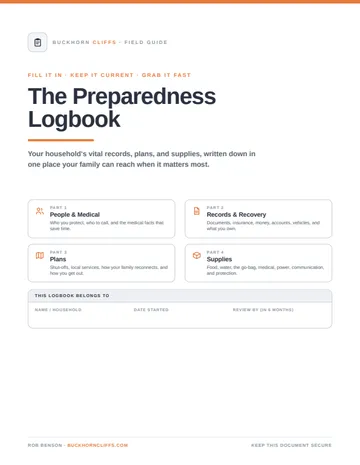
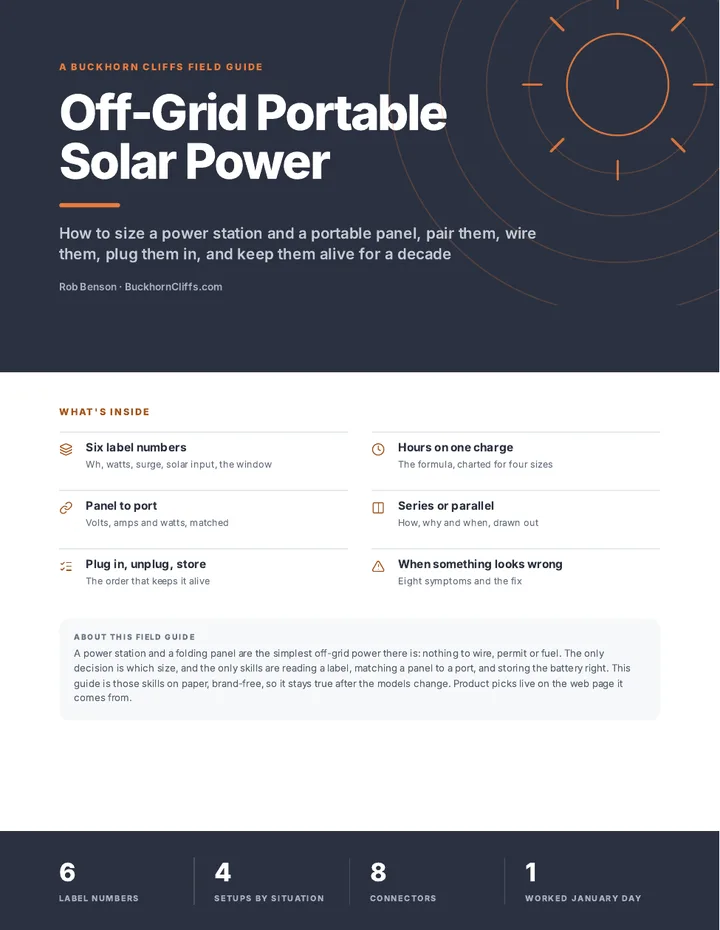
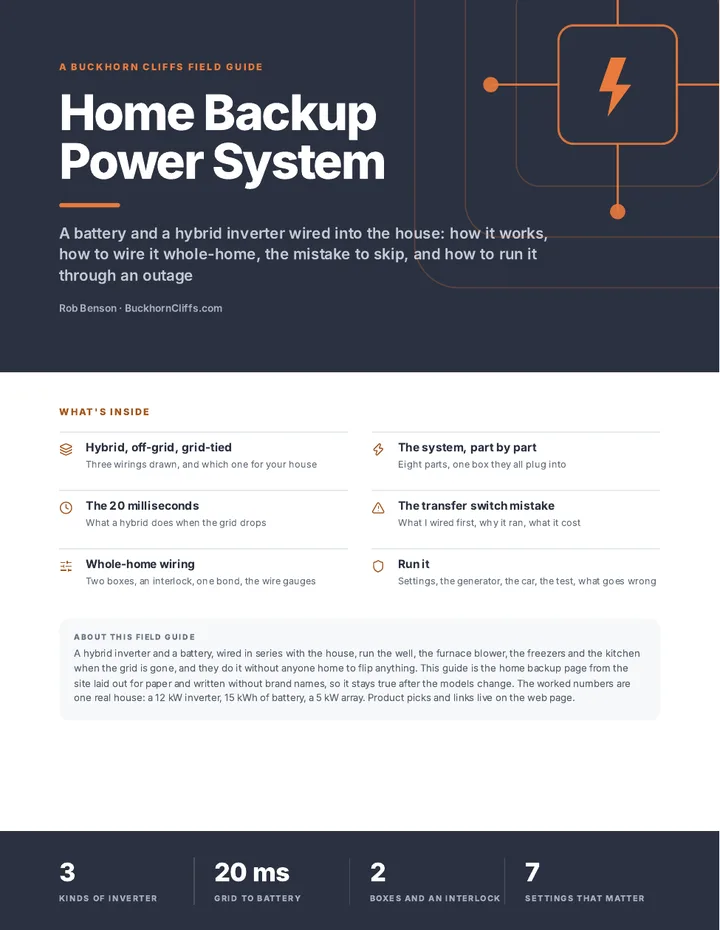
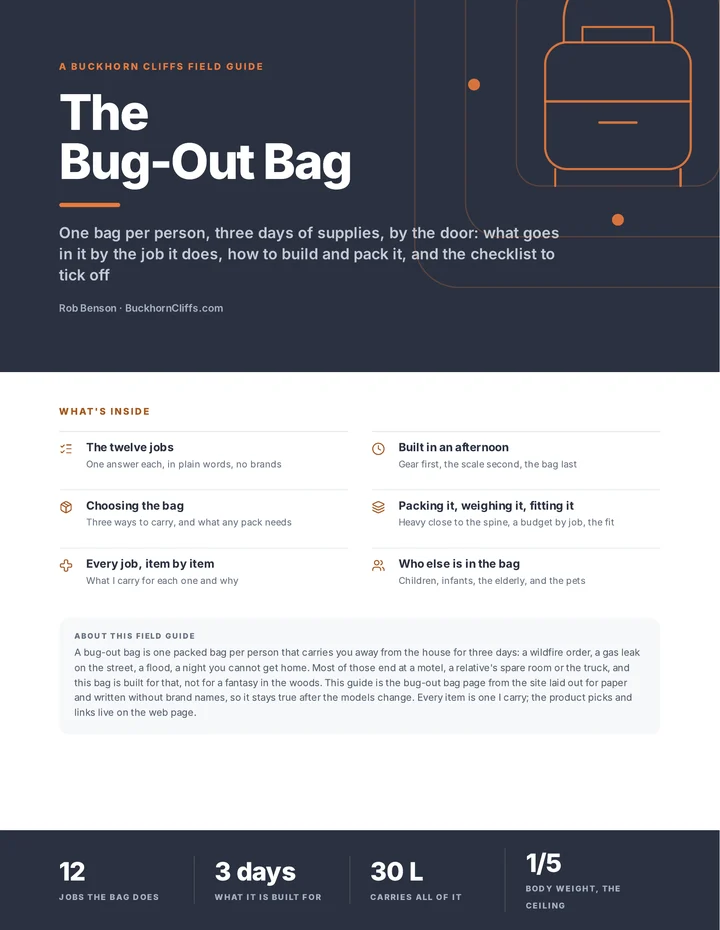
When the grid goes down, this site goes with it. Paper does not. Membership opens every member page and every recipe from the book, hands over all thirteen field guides as PDFs, and builds a binder from the pages your household uses.
- 158member pagesopen in full, every amount and every step
- 138compound recipesfrom the hardcover book, exact amounts. Pick any and add them to your manual
- 13field guides304 pages of PDFs, $130 bought one at a time
- 9military field guidesUS Army manuals cut to 66 pages and laid out to use
- 1manual of your ownbuilt from any page here, printed with your cover
- Every member page in full. the exact amounts, every step, every parts list
- Every recipe and resource from the book. all 138 from the Prepper's Chemical Survival Guide, searchable here
- All 13 field guides. read them here or download the PDFs, 304 pages
- A field guide for each of 9 Army manuals. the survival, first aid and other US Army manuals, each cut to 10 pages or fewer
- My Manual. save any page, recipe or whole guide, order it, print one binder with your own cover
- The audit and the logbook, saved. your scores and checklists on every device
- Print and Save as PDF on every page. and no ads
- One payment, $49.95 per year. Cancel any time and keep access to the end of the year you paid for.
- Sign in by email. No password, and the sign-in renews itself on every visit.
- Most of the site stays free. Membership is for the depth, the PDFs and the paper.



Stay Ready
New entries, updates, and useful instruction.
Stay one step ahead on your preparedness journey.