Quick facts
- Fridge, door shut4 hours
- Freezer48 hours full, 24 hours half-full
- DiscardMeat, poultry, fish, eggs, milk, leftovers after 2 hours above 40°F
- Eat in order
- fridge first
- freezer next
- shelf-stable last
- RefreezeOnly if it still has ice crystals or has stayed at 40°F or below
- NeverRun charcoal grills or generators indoors, in a garage, or in a tent
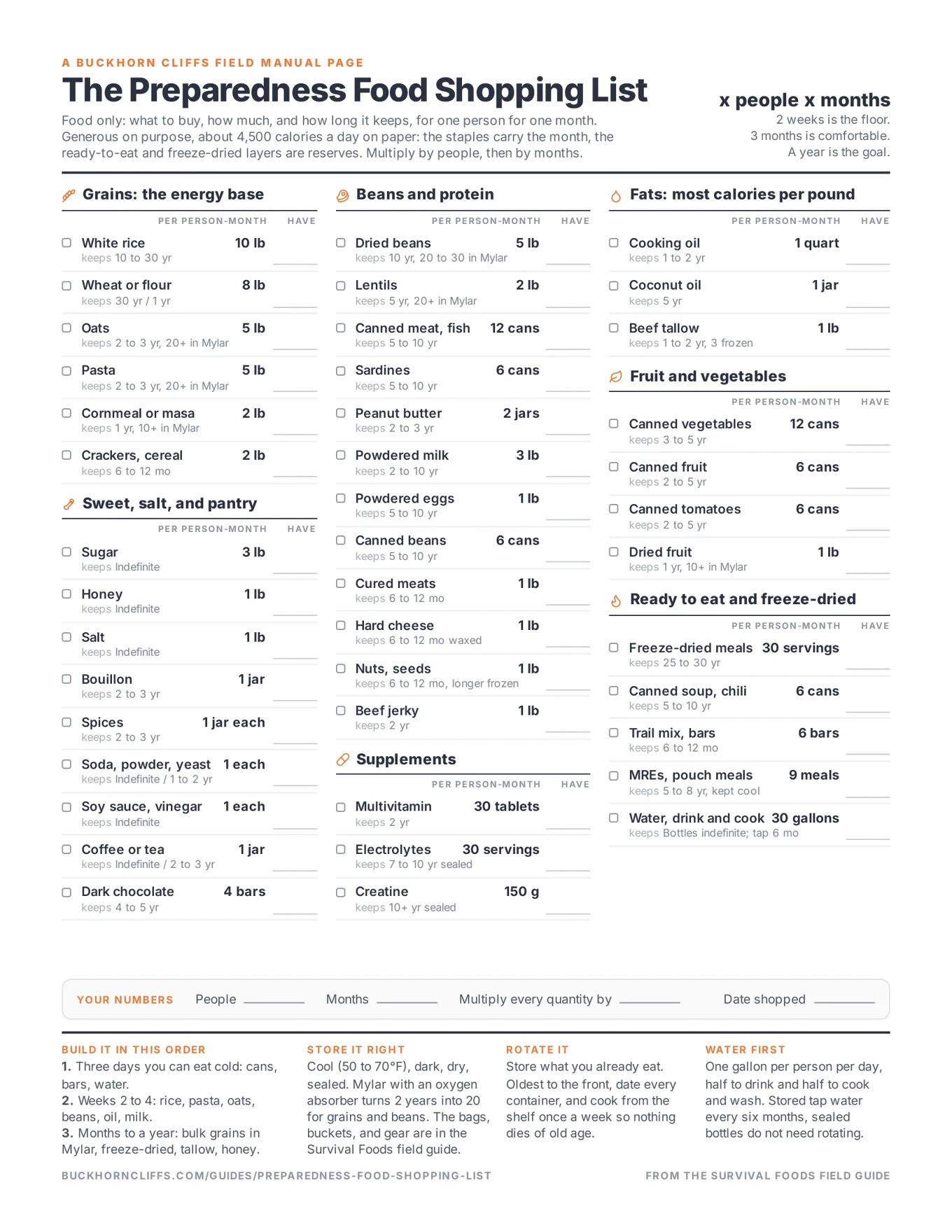
The food shopping list: what to buy, how much, shelf life
Eat in this order
- Fridge first Most perishable
- Freezer next As it thaws
- Shelf-stable last Cans and dry goods
- Cook what may spoil While it is safe
Keep it (still safe)
- Anything still at or below 40°F
- Food with ice crystals still in it
- Hard cheeses, butter, margarine
- Unopened condiments and shelf-stable items
Free download
Get the one-page food shopping list
What to store, how much of it for one person for one month, and how long it keeps. One page with checkboxes, built from the Survival Foods field guide. Print it, multiply by your people and months, and take it to the store.
The PDF comes by email, with my newsletter now and then. Already on the list? You still get it. Read the full page.
Recommended: discard after 2 hours above 40°F
- Meat, poultry, fish, and eggs
- Milk, soft cheese, and yogurt
- Cooked leftovers and casseroles
- Cut fruit and opened baby food
The 2-hour rule is stricter than the smell test, on purpose
Many of these foods still look and smell fine after two hours in the danger zone (40°F to 140°F), and that is the trap: warm meat and dairy can grow harmful bacteria with no visible sign. Treat two hours as the safe recommendation, judge borderline items with a fridge thermometer rather than your nose, and if these foods have been warm longer, discard them even when they seem fine.
Refreeze only if it is still cold
You can safely refreeze thawed food if it still has ice crystals or has stayed at 40°F or below, though quality may drop. Use appliance thermometers so you judge by numbers, not guesswork. Never taste food to decide.
Cooking without power
Propane / Butane
Camp stovesSimple and controllable; store spare fuel.
Rocket / Wood
Scavenged fuelBurn small sticks efficiently.
Grills
Outdoors onlyCharcoal or gas for boiling and reheating.
Canned Heat
Small jobsSterno and fuel tabs warm food and boil small amounts.
Burning Fuel Indoors
Charcoal grills and generators make so much carbon monoxide that they must never run indoors, in a garage, or in a tent, even with a window open. If you truly have no other option for a small stove or heater, use only a unit rated for indoor use, keep strong cross-ventilation, run it only while you are awake, and keep a working battery-powered carbon monoxide detector in the room. Here is why the detector is not optional: carbon monoxide is invisible and odorless, and it binds to your blood far more readily than oxygen, so it can knock you out and kill you before you notice a thing. The alarm is the only way to know it is building up.
Questions this answers
Tap a question for the short answer.
How long does food last in the fridge without power?
A fridge keeps food safe for about 4 hours with the door shut. Once meat, poultry, fish, eggs, milk, soft cheese, or cooked leftovers have been above 40°F for 2 hours, discard them. Hard cheeses, butter, and unopened condiments are still safe to keep.
How long does a freezer stay cold without power?
A full freezer holds for 48 hours and a half-full freezer for 24 hours when you keep the door shut. You can safely refreeze thawed food that still has ice crystals or has stayed at 40°F or below, though quality may drop.
Keep going
Related to this
Membership · $49.95 per year
There is a lot more behind the lock
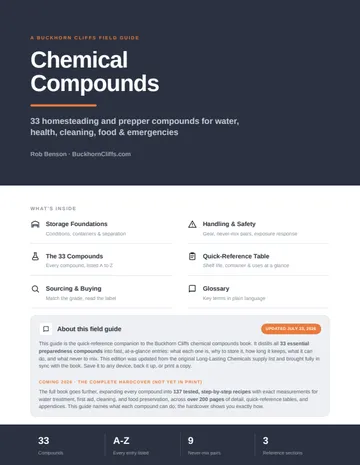
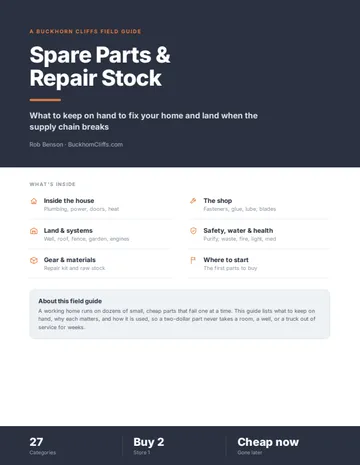
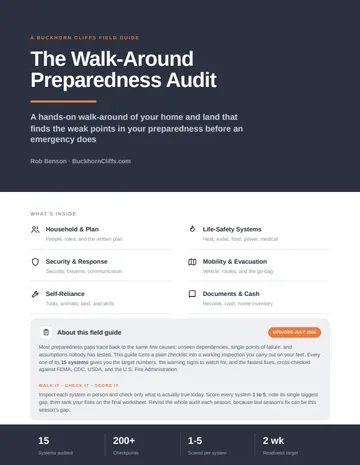
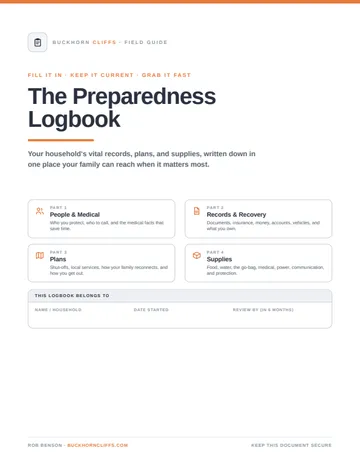
Every recipe and resource from the Prepper's Chemical Survival Guide, all six field guides to read here and download, the full audit and logbook, all twelve reference charts, and no ads.
My Manual · included
Build your own field manual
The most useful thing a membership gives you. Save any page on this site, recipes, charts, and whole field guides included. Arrange them in the order you want, name it, and print one manual with a cover and contents, or keep it as a PDF that opens with no signal.
- It works when this site does not
- Only your pages
- Anyone in the house can use it
- One current copy, not a pile of printouts
- The house binder
- A copy for the bug-out bag or truck
- A copy for family
- An offline PDF
Stay Ready
New entries, updates, and useful instruction.
Stay one step ahead on your preparedness journey.