6-12 MOFREEZE THEMFAT CALORIESWorks without power
Quick facts
- Real shelf life6 to 12 months; the oil turns
- Fridge and freezer4 to 6 months refrigerated; 6 to 12 frozen, and longer at good quality
- Best storageAirtight, cold; in the shell if you can
- Watch forA sharp, bitter, paint-like smell; mold; pests
Where this sits on the food shopping list
Nuts and seeds are the densest food in the store, 150 to 200 calories an ounce, mostly fat, with protein and the minerals the grains lack, and that fat is also their clock. Oxygen turns it rancid in months at room temperature, which is why the field guide puts them in the fridge or freezer and gives them 6 to 12 months. They are not a Mylar food. They are a rotating food, bought fresh, kept cold, and eaten within the year.
Which to buy
In the shell when you can: the shell is a natural barrier and in-shell nuts keep about twice as long. Raw over roasted for storage; roasting cracks the cells and speeds rancidity. The ones that keep longest are almonds, pistachios and hazelnuts; walnuts and pecans, high in the most fragile oils, go first; pine nuts fastest of all. Seeds: sunflower, pumpkin, chia and flax, with flax best bought whole and ground as used. Buy from a store with turnover, in sealed packs, and date them.
How long it really lasts
By how it is kept
| Form | Label says | Real, stored well |
|---|---|---|
| Shelled nuts, airtight, pantry | 12 months sealed | 2 to 9 months opened, by kind; almonds longest, walnuts and pecans shortest |
| Shelled nuts, refrigerated | 4 to 6 months at full quality | |
| Shelled nuts, frozen, airtight | 6 to 12 months at full quality; a year or two still good | |
| In-shell nuts, cool and dry | 6 to 12 months; about twice the shelled figure | |
| Sunflower, pumpkin seeds, sealed | Months in the pantry; a year frozen | |
| Whole flax seed, sealed | A year or more; ground flax weeks | |
| Nut flours and meals | Months refrigerated; a year frozen |
Free download
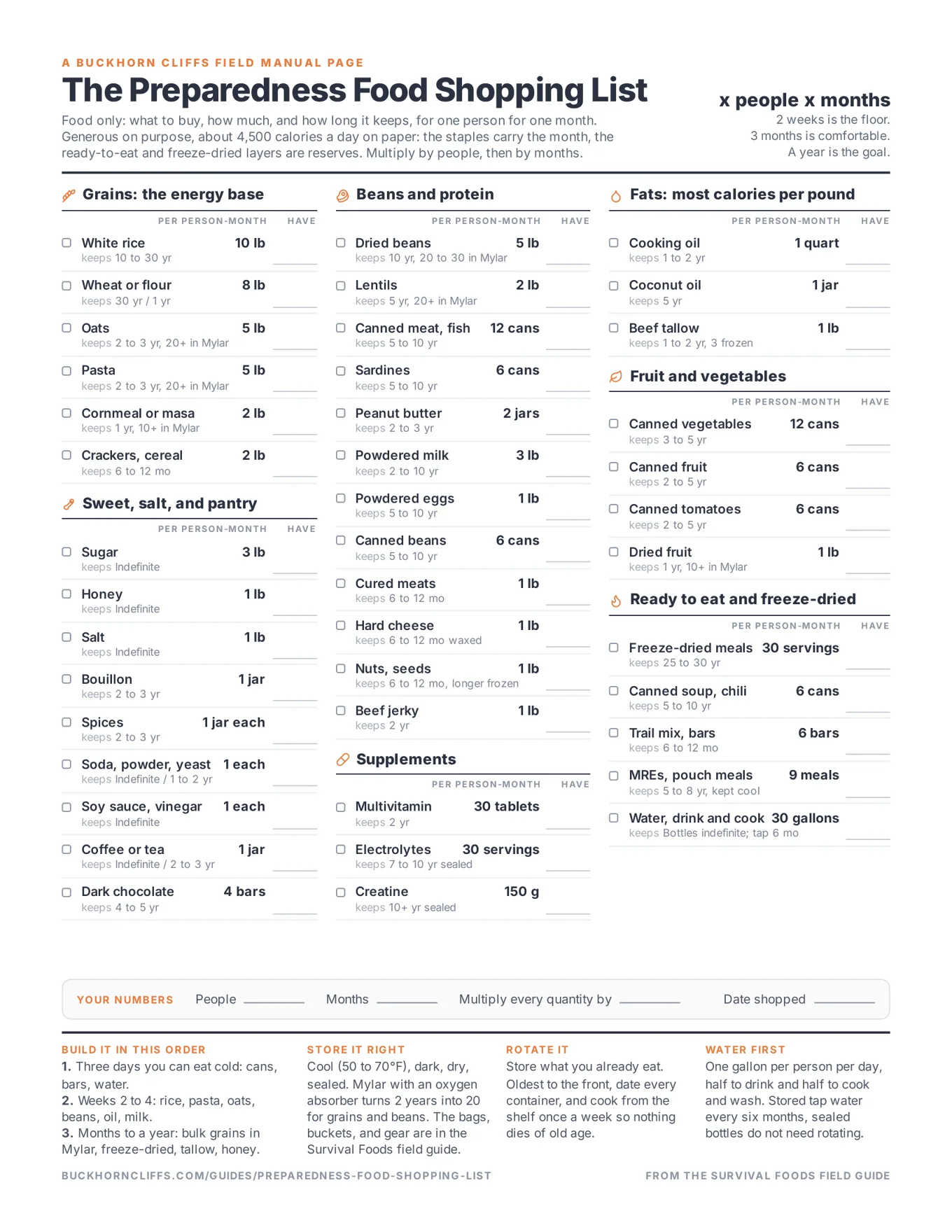
Get the one-page food shopping list
What to store, how much of it for one person for one month, and how long it keeps. One page with checkboxes, built from the Survival Foods field guide. Print it, multiply by your people and months, and take it to the store.
The PDF comes by email, with my newsletter now and then. Already on the list? You still get it. Read the full page.
How to store it
Airtight and cold is the whole method: a jar or a vacuum bag in the fridge for the month's supply and the freezer for the rest, where they keep a year at full quality and are still good after two. Keep them away from onions and anything that smells; nut oil absorbs it. The Mylar ranking puts nuts and seeds on the list of foods too oily for an oxygen absorber and warns that some sit above the moisture limit; the freezer is the long-term store, not the bucket.
How to tell it has turned
Smell first: rancid nuts have a sharp, bitter, paint-like or crayon smell that is unmistakable once you know it, and a bitter taste; they will not hurt you in a handful but they are done. Look for mold, especially on peanuts and in-shell nuts, which is a discard. Webbing or small moths mean pests. Shriveled, dark or soft kernels are old.
Nuts past the date that smell sweet and clean; a slightly soft nut that crisps in a low oven.
A bitter, sharp or paint-like smell, mold, webbing or insects, or nuts that taste bitter.
How much, and how to use it
An ounce a day per person, about a quarter cup, is 160 to 200 calories, protein and fat the rice and beans lack. Nut butter is the shelf-stable form and has its own page. Trail mix for the bag is nuts, dried fruit and chocolate, replaced every spring. Seeds sprout: a tablespoon of sunflower seeds in a jar is a salad in four days. Toast old nuts in a dry pan to bring the flavor back.
When the power goes out
Nuts need nothing to eat and belong in the first-week food. A freezer full of nuts that thaws in an outage is fine; move them to the coolest room, keep them sealed, and eat them over the following weeks before the oil turns.
Shelf-life figures are from the Survival Foods field guide; fridge, freezer and pantry times are from the USDA cold and pantry storage charts. Run the look, smell, taste check before eating anything past its date.
Questions this answers
Tap a question for the short answer.
How long does nuts & seeds last?
Nuts and seeds have a real shelf life of 6 to 12 months when stored well, which means in the fridge or freezer. Their oils go rancid, so check by smell before eating.
How do I store nuts & seeds long term?
Store them in the fridge or freezer. Even stored well, expect 6 to 12 months, and check for a bitter, rancid smell, mold, or insects before use.
How do I tell if nuts & seeds has gone bad?
Smell them first. Rancid oils give a sharp, bitter, unpleasant smell or taste. Also look for mold or insects. Discard any nuts with rancid, bitter oils on sight.
How long do nuts and seeds last?
Six to twelve months at full quality, longer in the freezer. Shelled nuts 2 to 9 months opened in the pantry by kind, 4 to 6 refrigerated, 6 to 12 frozen and still good after. In-shell nuts about twice the shelled figure.
How do I store nuts long term?
Airtight and cold: the fridge for the month's supply and the freezer for the rest. Buy in the shell, raw rather than roasted, from a store with turnover. They are not a Mylar food; the oil is too fragile.
How do I tell if nuts and seeds have gone bad?
A sharp, bitter, paint-like smell and a bitter taste mean rancid. Mold on peanuts or in-shell nuts, webbing or moths mean the bag goes.
Keep going
Related to this
Membership · $49.95 per year
Everything on this site, open, and your own manual that works with no internet
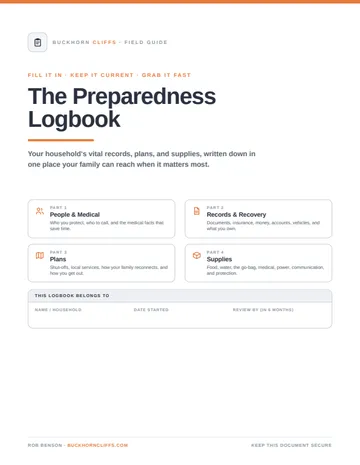
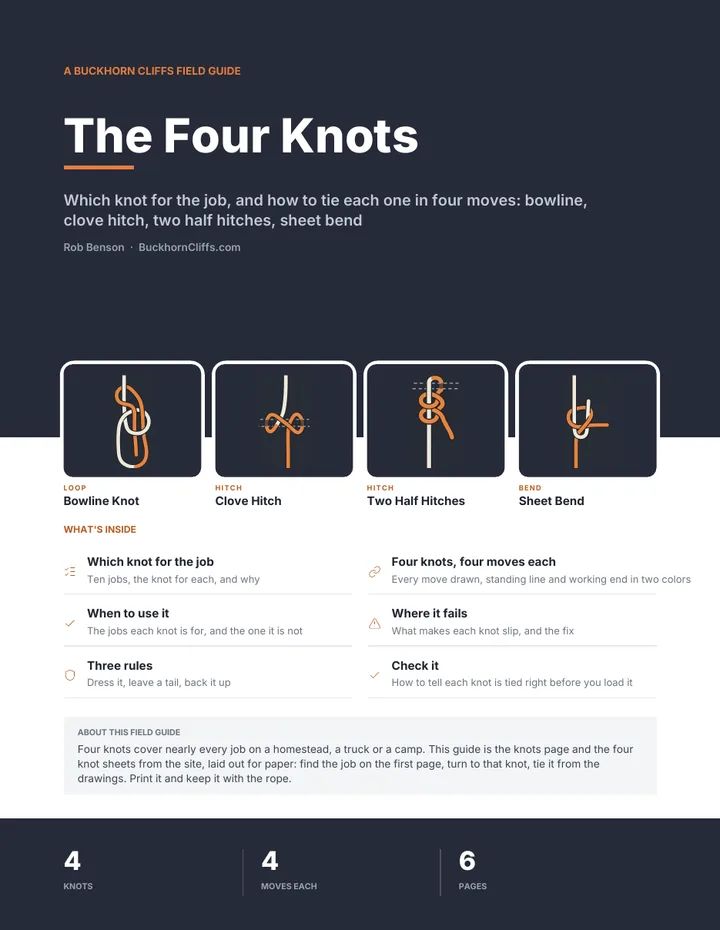
When the grid goes down, this site goes with it. Membership opens every member page and every recipe from the book, hands over all fourteen field guides as PDFs, and gives you your own manual built from the pages your household uses: searchable on your phone with no internet, and printable as one binder.
- 158member pagesopen in full, every amount and every step
- 138compound recipesfrom the hardcover book, exact amounts. Pick any and add them to your manual
- 14field guides313 pages of PDFs, $140 bought one at a time
- 9military field guidesUS Army manuals cut to 66 pages and laid out to use
- Offlineyour own manualbuilt from any page here, searchable on your phone with no internet
- Build your own manual on this site. pick any page, recipe, chart or whole field guide and put them in your order
- Download it and use it with no internet. it opens like an app on your phone or computer, searchable, with no power grid and no signal
- Print it or save it as one PDF. your cover, a contents page and every page you picked, laid out for paper
- All 138 recipes from my hardcover book. exact amounts for pool shock water purification, Lugol's iodine antiseptic, water glassing eggs, laundry powder and the rest
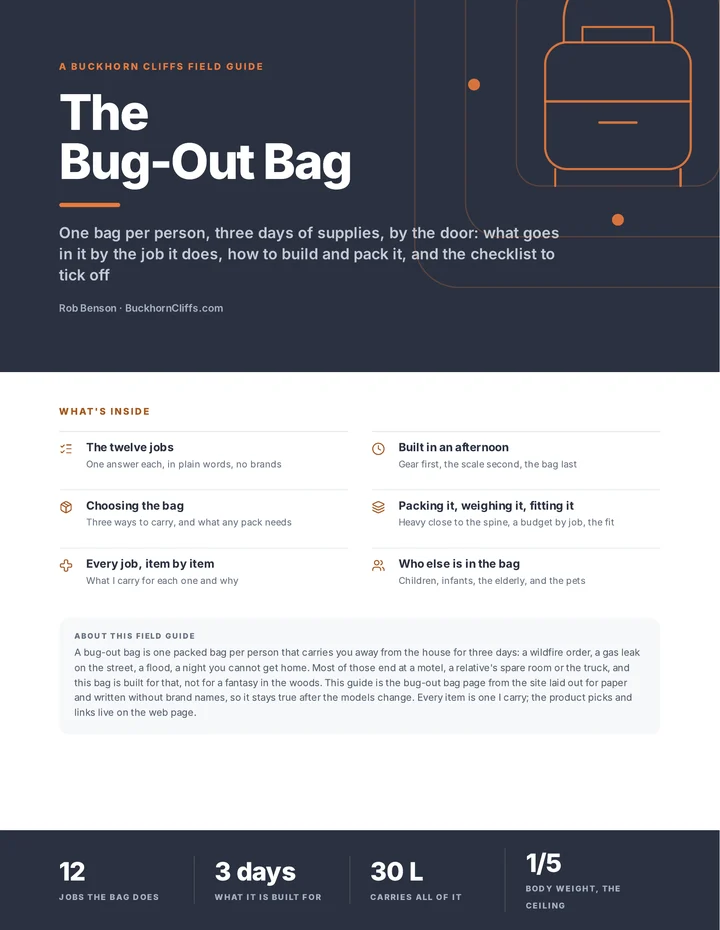
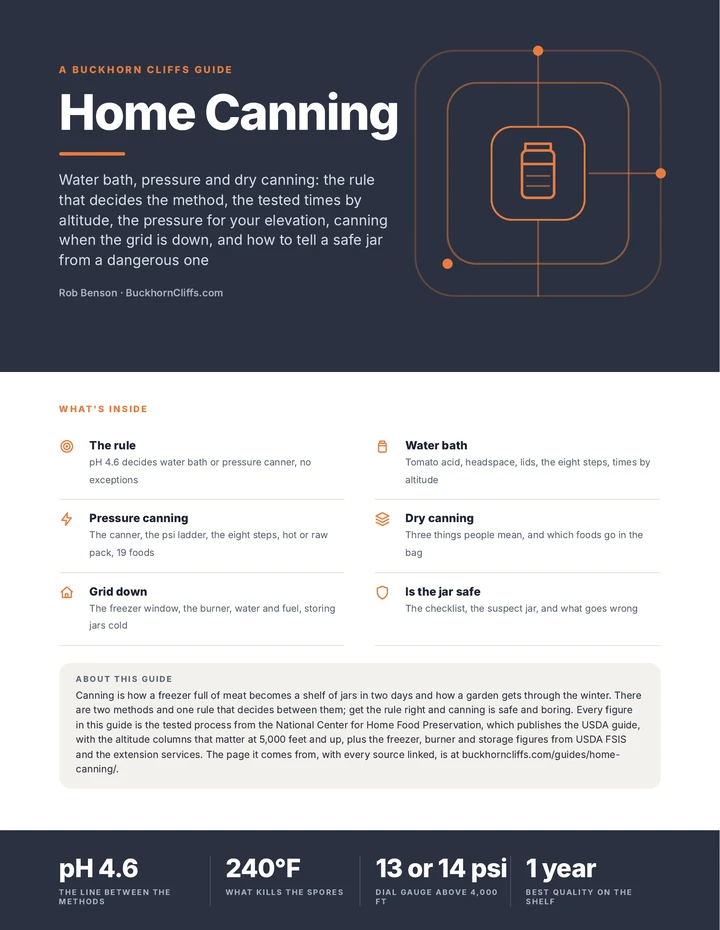
- All 14 field guides, 313 pages. Stockpile Essentials, Survival Foods, Bug-Out Bag, Home Canning, Solar Power and more, to read here or download
- 9 military field guides. Survival, First Aid, Mountaineering and the other US Army manuals, each cut to its most useful pages
- The Old Library, to print and keep. print any of 4,941 articles from the 1911 Britannica and two old formula books, or save them to My Manual
- 158 how-to pages in full. medical, hygiene, tools and repair, garden and livestock, food, water and more
- The audit, the logbook and the checklists. all 200 audit checkpoints, saved to your account on every device
- One payment, $49.95 per year. Cancel any time and keep access to the end of the year you paid for.
- Sign in by email. No password, and the sign-in renews itself on every visit.
- Most of the site stays free. Membership is for the depth, the PDFs and your own offline manual.






Stay Ready
New entries, updates, and useful instruction.
Stay one step ahead on your preparedness journey.