BUCKHORN CLIFFSA preparedness field manual

Tools and Repair · Skill

Two Half Hitches

Two turns round its own line. Works under load. When to use it, the four moves to tie it, and what makes it fail, with drawings.

Quick facts

  • TypeHitch
  • Holds whenAny steady pull, any post shape
  • Fails whenHitches turned opposite ways (a cow hitch), or a tail too short
  • Unties after load
    • Yes
    • it ties
    • unties while loaded

Two turns round its own line. Works under load.

Part of Knots: which knot for the job, where the knot is picked by the problem. This page is the one knot: when it's the right one, the four moves to tie it, and what makes it fail.

When to use it

Posts and ringsStakes, rails, rings.
Under tensionTies and unties loaded.
Square or slickWhere a clove hitch slips.
RidgelinesFixed end of a tarp line.

How to tie it

Twice around. Locked.

Standing lineWorking end
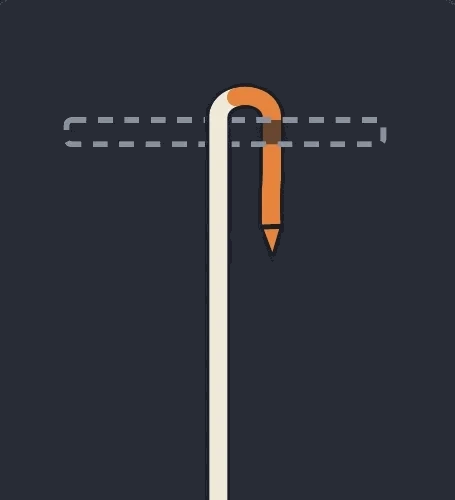
  1. Two Half Hitches step 1: Over the rail

    1

    Over the railPass the end up over the rail and down behind it.

  2. Two Half Hitches step 2: First half hitch

    2

    First half hitchAcross the front, round behind, then down over itself.
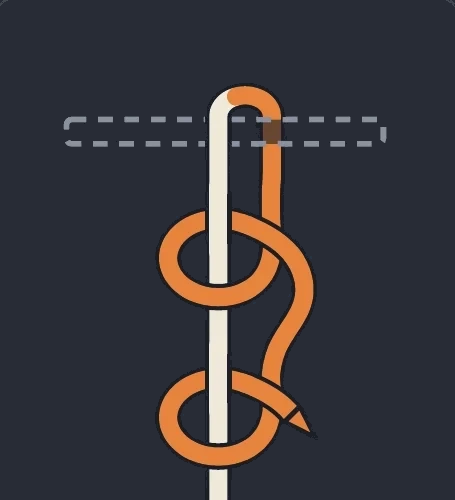
  3. Two Half Hitches step 3: Second half hitch

    3

    Second half hitchRepeat below the first, turning the same way.

  4. Two Half Hitches step 4: Snug it up

    4

    Snug it upSlide both hitches up to the rail and pull tight.
✓

Check it: both hitches turn the same way and stack snug against the rail. Turned opposite ways they will not hold. Retie the second one.

Where it fails

Watch out

Both hitches must turn the same way. Opposite turns make a cow hitch, and it slips.

  • Leave a tail. Four to six inches so it cannot pull through.
  • Heavy or jerking load? Take one full wrap round the post first. The wrap takes the strain.

Locks other knots

Clove hitchRolls loose when the pull shifts.Two half hitches with the tail round the standing line, snug to the hitch.
BowlineShakes loose when the rope goes slack.One or two half hitches with the tail round the loop leg, tight to the knot.

The other three

Questions this answers

Tap a question for the short answer.

How do you tie two half hitches?

Pass the end over the rail and down behind it. Bring it across the front of the standing line, round behind, and down over itself: that is one half hitch. Make a second one below it, turning the same way. Slide both up to the rail and pull tight. Leave a four to six inch tail.

What are two half hitches used for?

Tying a rope to a post, stake, rail or ring, including square or slick ones where a clove hitch slips, and the fixed end of a tarp ridgeline. It ties and unties under tension, which most knots will not.

What is a round turn and two half hitches?

The same knot with one full wrap round the post taken first. The wrap takes the strain, so it's the version for a heavy or jerking load, a boat on a line, or a tarp in wind.

Which knot ties to a post under tension?

Two half hitches. You can tie it while the standing line is already pulling and untie it the same way. Take a round turn first if the load is heavy.

How do you back up a clove hitch or bowline?

With half hitches from the tail. For a clove hitch that might roll loose, two half hitches with the tail round the standing line, snug to the hitch. For a bowline that will sit slack, one or two half hitches with the tail round the loop leg, tight to the knot.

Keep going

Read nextKnots: Which Knot to Tie for the Job, and How to Tie ItFour knots cover nearly every job. Pick by the problem: tie to a post, join two ropes, a loop that will not close, a tarp. Then the bowline, clove hitch, two half hitches and sheet bend, each drawn step by step with when it fails.Tools and Repair · Guide

Related to this

Membership · $49.95 per year

There is a lot more behind the lock

158member pages in full
125recipes with exact amounts
10field guide PDFs, 266 pages
1manual of your own, built from any page

Every recipe and resource from the Prepper's Chemical Survival Guide, all ten field guides to read here and download, the full audit and logbook, all twelve reference charts, and no ads.

My Manual · included

Build your own field manual

The most useful thing a membership gives you. Save any page on this site, recipes, charts, and whole field guides included. Arrange them in the order you want, name it, and print one manual with a cover and contents, or keep it as a PDF that opens with no signal.

  • It works when this site does not
  • Only your pages
  • Anyone in the house can use it
  • One current copy, not a pile of printouts
  • The house binder
  • A copy for the bug-out bag or truck
  • A copy for family
  • An offline PDF

Join for $49.95 per year

Tools and Repair · SkillLast reviewed 2026-09-25

Membership

Save to My Manual is a member tool

Members build their own manual from the pages that fit their household, then print it or keep it as a PDF.

Why it matters

When the grid goes down, this site goes with it. Paper does not. Membership is how you get the whole manual off the screen and onto the shelf: every page in full, every field guide, and a binder built for your own household.

The field guide library

All ten field guides. 266 pages. Included.

The complete Buckhorn Cliffs PDF set, yours to download, print, and keep from the day you join.

$100if bought one at a time

  • Cover of Stockpile Essentials Field GuideStockpile Essentials39 pagesEverything to keep on hand, category by category, plus the 20 multi-use items.
  • Cover of Survival Foods Field GuideSurvival Foods35 pagesStoring, extending, and using the food supply. Real shelf life by the numbers.
  • Cover of Chemical Compounds Field GuideChemical Compounds29 pagesThe 33 compounds: storage, top uses, hazards, and the never-mix chart.
  • Cover of Spare Parts and Repair Stock Field GuideSpare Parts and Repair Stock40 pagesWhat to keep on hand to fix the home and land when the supply chain breaks.
  • Cover of Walk-Around Preparedness AuditWalk-Around Preparedness Audit33 pagesFifteen systems scored 1 to 5, with the printable scorecard.
  • Cover of The Preparedness LogbookPreparedness Logbook30 pagesThe household information that needs to be on paper.
  • Cover of Off-Grid Portable Solar Power Field GuideOff-Grid Portable Solar Power16 pagesSize a power station and a folding panel, pair them, wire them, keep them alive.
  • Cover of Home Backup Power System Field GuideHome Backup Power System20 pagesA battery and a hybrid inverter wired into the house: hybrid against off-grid, the wiring, the mistake to skip.
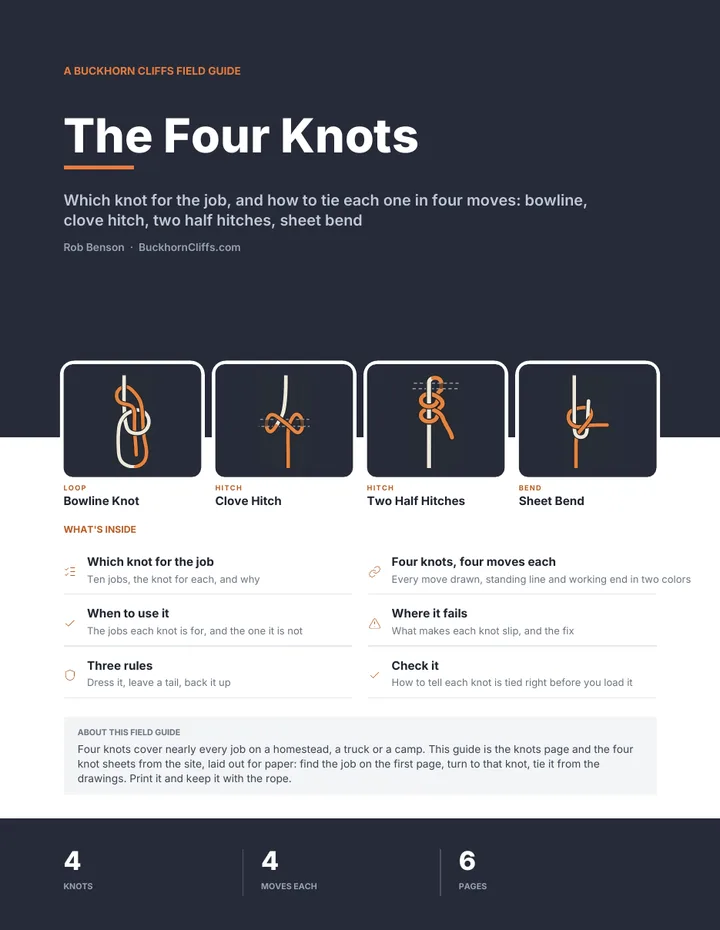
  • Cover of The Four KnotsFour Knots6 pagesWhich knot for the job, and how to tie each one in four moves.
  • Cover of The Bug-Out Bag Field GuideBug-Out Bag18 pagesOne bag per person for three days: the twelve jobs, the afternoon build, the packing plan, every item by job, and the checklist.

My Manual · included

Build your own field manual

The most useful thing a membership gives you. No book fits your household exactly. My Manual does. Save any page on this site, recipes, charts, and whole field guides included, arrange them in the order you want, and print one manual with your name on the cover. It holds only what is relevant to you, and nothing you would skip.

Why it matters

  • It works when this site does notNo power and no signal means no website. A printed manual and an offline PDF still open, which is the whole point of writing any of this down.
  • Only your pagesThis site covers every household. Yours needs a fraction of it. Your manual holds the pages that match your water source, your climate, and your gear, so nobody digs through the rest under stress.
  • Anyone in the house can use itThe person who reads this site may not be the one home when it counts. A binder on the shelf, in the order you chose, is something a spouse or a teenager can follow.
  • One current copy, not a pile of printoutsEvery page prints in the same field guide layout with a cover and the print date. Change a page, print again, and the old copy is easy to spot.

What to build with it

  • The house binderYour water source, your climate, your gear. Only the pages you would reach for.
  • A copy for the bug-out bag or truckA short version that travels: water, first aid, comms, and the recipes you rely on.
  • A copy for familyHand a parent or a grown kid a manual built for their house and their supplies.
  • The shop and the barnParts lists, repair skills, and the never-mix chart, kept where the work happens.
  • A recipe book of your ownThe cleaners, fuels, and remedies you make, with exact amounts, in one place.
  • An offline PDFSaved to a phone, a tablet, or a drive in the Faraday bag. It opens with no signal.

How it works

  1. 1Save what fitsPress "Save to My Manual" on any page: a recipe, a chart, a guide, a parts list, or a whole field guide.
  2. 2Arrange it your wayOn My Account, drag the pages into the order you want. Name the manual and add your household name.
  3. 3Print it or save a PDFOne button makes a real PDF file, laid out for 8.5 x 11 inch paper with a cover. Print it from any device or keep the file. Field guides go in exactly as the PDFs are laid out. No ads, no photos.
  4. 4Keep it currentAdd a page, pull one out, print again. The cover carries the date, so you always know which copy is the latest.

Also included

  • The entire site, unlockedAll 158 member pages open in full: exact amounts, every step, every warning, every parts list. Nothing held back.
  • Every recipe and resource in the bookAll 138 recipes and 33 compounds from Prepper's Chemical Survival Guide, with exact amounts, every step, every warning, and the reference charts.
  • A clean PDF of any entryOne press turns any page into a field guide sheet for the binder, the truck, or the shop wall.
  • Checklists and audit scores that follow youSaved to the account, so the phone, the laptop, and the shop computer always match.
  • No adsMembers read the whole site without a single ad.
$49.95per year. About 14 cents a day. Cancel any time and keep the year you paid for.