BUCKHORN CLIFFS

Compounds and Cleaning · Supply

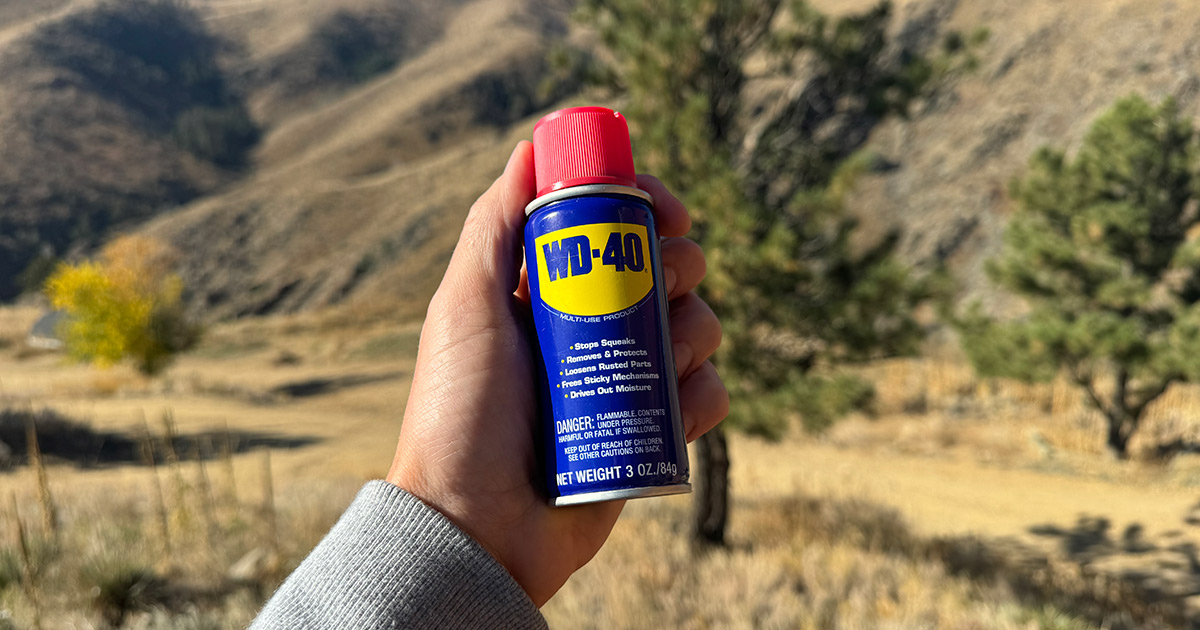
WD-40 uses, shelf life and storage

Lists general and emergency uses for WD-40, its hazards, shelf life and storage, and whether to stock small or large cans.

Quick facts

Shelf life
5 years from production date; often performs longer
Weak point
Propellant may dissipate over time
Storage
  • Cool
  • dry place below 120°F
  • out of direct sunlight
Hazard
Flammable; use in well-ventilated areas
Core uses
  • Loosen rusty parts
  • displace moisture
  • lubricate
  • prevent rust
Small cans
More portable for bags and multiple kits

In the realm of survival and emergency preparedness, you know just how important stocking the right gear and food can be. One item that earns a spot next to them is WD-40. This unassuming blue and yellow can might be more associated with garage tinkering than wilderness survival, but its versatility makes it a crucial addition to any prepardness stockpile.

From waterproofing gear and starting fires to preventing rust on tools and even fishing, WD-40's myriad uses can prove invaluable when you're up against the elements or in unexpected situations. Don't be caught unprepared; discover the power of WD-40 in nearly every scenario!


WD-40 General Uses

1Loosening Rusty PartsFrees up rusted screws, bolts, and nuts.
2Displacing MoistureDrives out moisture from electrical systems to restore shorted-out connections.
3CleaningRemoves grease, grime, and other residues from various surfaces.
4LubricationReduces friction on moving parts like hinges, locks, and wheels.
5ProtectionPrevents rust and corrosion on metal surfaces.
6Removing StickersHelps in peeling off stickers, labels, tape, and excess adhesive.
7Silencing SqueaksQuiets noisy hinges, wheels, and moving parts.
8Cleaning ToolsRemoves paint, grease, and dirt from hand and power tools.
9Preventing Snow Build-upSpraying on shovels or snow blowers to prevent snow from sticking.
10Cleaning Crayon MarksRemoves crayon from walls and other surfaces.
11Unsticking ZippersHelps zippers glide more smoothly.
12Removing GumHelps in removing gum from shoes, carpets, and hair.
13Cleaning Toilet BowlsHelps remove lime stains.
14Separating Stuck GlasswareFrees up glass dishes and cups that are stuck together.
15Protecting SilverKeeps silver from tarnishing.
16Cleaning Grill GratesHelps in breaking down and removing gunk from grills.
17Preventing RustSpray on garden tools, metal fixtures, and other items to prevent rust.
18Removing Coffee & Ink StainsHelps in lifting stains from fabric and clothing.
19Cleaning Guitar StringsRemoves dirt and extends the life of the strings.
20Lubricating Small ToysHelps toys with moving parts function better.
21Removing LipstickHelps in lifting lipstick stains.
22Preventing SplintersProtects wooden handles of tools.
23Cleaning ScissorsKeeps scissors moving smoothly.
24Removing RingsHelps slide off stuck rings from fingers.
25Cleaning Tar StainsRemoves tar from cars.
26Preventing MildewProtects shower curtains and other surfaces.
27Lubricating TracksFor sliding doors, windows, and drawers.
28Removing Water SpotsFrom mirrors and glass.
29Cleaning LeatherRemoves stains and gives a shine (but always test on a small area first).
30Protecting Ski EquipmentPrevents rust on ski edges and makes it easier to put on ski boots.
31Removing GlueHelps dissolve some adhesive residues.
32Cleaning BugsRemoves bugs from car grills and bumpers.
33Lubricating ChainsOn bicycles, chainsaws, and other equipment.
34Preventing Mud StickingSpray on the underside of lawn mowers or shoes.
35Cleaning Phone ScreensRemoves fingerprints and smudges (spray on a cloth first, then wipe).
36Lubricating WheelchairsFor smoother movement.
37Removing Rust StainsFrom fabrics and surfaces.
38Cleaning Stainless SteelRemoves fingerprints and smudges.
39Lubricating LocksFor smoother key insertion and turning.
40Preventing Ice Build-upOn windows and surfaces in winter.
Buy WD-40 on Amazon

BUY ON AMAZON


WD-40 Emergency Preparedness Uses

1Fire StarterSpray WD-40 on kindling or a cotton ball to help ignite a fire more easily in damp conditions.
2WaterproofingApply a thin layer on boots, gloves, and other gear to repel water and keep them dry.
3Emergency LightIn a pinch, a WD-40-soaked rag wrapped around a stick can act as a torch.
4Tool MaintenancePrevent your survival tools from rusting in damp conditions by applying a light coat.
5Water ContainersKeep WD-40 out of anything that holds drinking water. Plastic absorbs petroleum odors, so clean and sanitize water containers instead and store them away from fuel and solvent fumes.
6Improving Snow GearSpray on sleds or snowshoes to reduce friction and prevent snow buildup.
7Sealing LeaksTemporarily seal minor leaks in containers or tents.
8Improving Signal VisibilityIn daylight, a shiny, WD-40-coated surface can reflect sunlight, making you more visible to rescuers.
9Emergency Saw LubricationIf using a manual saw or chainsaw, WD-40 can act as a temporary lubricant.
10Protecting Electrical ConnectionsIf you have devices crucial for survival, like radios, WD-40 can displace moisture and ensure connections remain effective.
11Loosening Stuck ContainersOpen sealed or rusted-shut containers more easily.
12Cleaning HandsRemove sap, pitch, or other sticky substances when soap and water aren't available.
13Preventing Snow BuildupSpray on the bottom of tents or tarps in winter conditions to prevent snow and ice from sticking.
14Improving Trap EfficiencyIf hunting for food, a light coat on snares or traps can prevent them from rusting and reduce scent.
15Protecting Battery TerminalsPrevent corrosion on batteries in devices like flashlights or radios.
16Clearing IceSpray on locks or metal surfaces to help melt and clear ice.
17Maintaining ZippersEnsure that zippers on tents, bags, and clothing function smoothly and don't get stuck.
18Barrier Against RodentsSome users claim that spraying WD-40 can deter rodents, which can be useful if food storage is a concern.

Is WD-40 Toxic?

WD-40 is generally safe when used as directed, but like many household products, it can be harmful if misused or if exposure is excessive. Here are some points to consider regarding the potential toxicity of WD-40:

1InhalationBreathing in high concentrations of WD-40 spray mist or fumes can be harmful. It can cause nasal and respiratory irritation. In extreme cases, intentional inhalation (sometimes referred to as "huffing") can lead to serious health consequences, including damage to the lungs and central nervous system.
2Skin ContactProlonged or repeated direct contact with WD-40 can lead to skin irritation. It's a good idea to wash your hands after using it and to avoid prolonged skin contact.
3Eye ContactWD-40 can cause eye irritation. If it gets into the eyes, it's essential to rinse them immediately with plenty of water and seek medical attention if irritation persists.
4IngestionSwallowing WD-40 can be harmful. It can cause stomach upset and possibly more severe internal issues. If someone ingests WD-40, they should not induce vomiting and should seek medical attention immediately.
5Environmental ConcernsWhile WD-40 is not highly toxic to the environment, it's still a good idea to prevent it from entering waterways, as it can harm aquatic life.
6FlammabilityWD-40 is flammable. It can ignite if exposed to open flames or sparks. It's essential to use it in well-ventilated areas and keep it away from sources of ignition.
7PropellantThe propellant used in the aerosol cans can be harmful if inhaled directly.

What's the Shelf Life of WD-40?

WD-40 Company puts the shelf life at 5 years from the date of production, though the product often dispenses and performs as expected for considerably longer. When stored under normal conditions (i.e., kept out of extreme temperatures and not exposed to direct sunlight), a can of WD-40 can remain effective for many years. However, over time, the propellant in the can may dissipate, which means the product might not spray out as effectively or at all. The liquid product itself, though, remains useful.

To maximize the shelf life of your WD-40:

  1. Store it in a cool, dry place.
  2. Keep it away from direct sunlight.
  3. Keep it below 120°F. A closed vehicle, shed, or attic in summer can exceed that, and the can is pressurized and extremely flammable.

For long term preparedness, is it better to have a bunch small cans or large cans of WD-40?

When considering long-term preparedness and whether to stock up on small or large cans of WD-40 (or any other product), there are several factors to weigh:

1Shelf LifeAs mentioned earlier, the product itself doesn't degrade significantly over time, but the propellant in the can might dissipate. If you're thinking in terms of decades, even the propellant in large cans might not last that long.
2PortabilitySmaller cans are more portable, making them convenient for on-the-go situations, bug-out bags, or distributing among multiple kits.
3Storage SpaceLarge cans might be more space-efficient in terms of the volume of product per storage space. However, smaller cans offer flexibility in storage, allowing you to tuck them into various nooks and crannies.
4Usage RateIf you anticipate using WD-40 frequently and in large amounts, then having a few large cans might be more practical. On the other hand, if you're thinking of occasional use or for specific emergencies, smaller cans might be better to ensure you always have a can with propellant.
5Risk of ContaminationIf a large can gets contaminated (e.g., dirt in the nozzle), you risk losing a more significant amount of the product. With smaller cans, you only risk the amount in that particular can.
6Economic FactorsSometimes, buying in bulk (larger cans) can be more cost-effective. However, if you're not going to use all the product, it might be a false economy.
7RedundancyIn survival and preparedness, redundancy can be beneficial. Having multiple small cans means if one fails, gets lost, or is damaged, you have others as backup.

Questions this answers

Tap a question for the short answer.

What can I use wd-40 for?

Core uses are loosening rusted screws and bolts, driving moisture out of electrical connections, lubricating hinges, locks and chains, cleaning off grease and adhesive, and preventing rust on tools. In an emergency it also helps start fires in damp conditions, waterproofs boots and gloves, frees stuck zippers, and protects battery terminals.

Does wd-40 expire?

WD-40 Company puts the shelf life at 5 years from the date of production, though the product often dispenses and performs as expected for considerably longer. The weak point is the propellant, which can dissipate so the can sprays poorly or not at all, but the liquid itself remains useful.

How do I store wd-40 long term?

Keep cans in a cool, dry place, out of direct sunlight and below 120°F. A closed vehicle, shed, or attic in summer can exceed that, and the can is pressurized and extremely flammable, so store it away from open flames, sparks, and other ignition sources.

Is wd-40 toxic?

It is generally safe when used as directed but harmful if misused. Concentrated mist irritates the nose and lungs, prolonged contact irritates skin, and it irritates eyes. Swallowing it is harmful: do not induce vomiting and get medical attention immediately. It is also flammable, so use it with ventilation and away from flames.

Can I use wd-40 as a fire starter?

Yes. Spray it on kindling or a cotton ball to help a fire catch in damp conditions. A rag soaked in it and wrapped around a stick can also serve as a torch in a pinch. It is flammable, so keep the can itself away from flames and sparks.

Should I buy small or large cans of wd-40?

Small cans are more portable, fit bug-out bags and multiple kits, and tuck into odd storage spots. Large cans hold more product per unit of storage space, and your usage rate matters too. Either way the liquid does not degrade much, but the propellant can dissipate over time, even in large cans.

Keep going

Read nextFix-all repair kit: tapes, fasteners, plumbing and electrical bitsA checklist of tapes, fasteners and small plumbing and electrical items for a fix-all kit, with typical and improvised uses for each item.Tools and Repair · Guide

Related to this

Membership · $49.95 per year

There is a lot more behind the lock

158member pages in full
125recipes with exact amounts
6field guide PDFs, 206 pages
1manual of your own, built from any page

Every recipe and resource from the Prepper's Chemical Survival Guide, all six field guides to read here and download, the full audit and logbook, all twelve reference charts, and no ads.

My Manual · included

Build your own field manual

The most useful thing a membership gives you. Save any page on this site, recipes, charts, and whole field guides included. Put them in your order, name it, and print one manual with a cover and contents, or keep it as a PDF that opens with no signal.

  • It works when this site does not
  • Only your pages
  • Anyone in the house can use it
  • One current copy, not a pile of printouts
  • The house binder
  • A copy for the bug-out bag or truck
  • A copy for family
  • An offline PDF

Join for $49.95 per year

Compounds and Cleaning · SupplyLast reviewed 2023-10-25

Membership

Save to My Manual is a member tool

Members build their own manual from the pages that fit their household, then print it or keep it as a PDF.

Why it matters

When the grid goes down, this site goes with it. Paper does not. Membership is how you get the whole manual off the screen and onto the shelf: every page in full, every field guide, and a binder built for your own household.

The field guide library

All six field guides. 206 pages. Included.

The complete Buckhorn Cliffs PDF set, yours to download, print, and keep from the day you join.

$60if bought one at a time

  • Cover of Stockpile Essentials Field GuideStockpile Essentials39 pagesEverything to keep on hand, category by category, plus the 20 multi-use items.
  • Cover of Survival Foods Field GuideSurvival Foods35 pagesStoring, extending, and using the food supply. Real shelf life by the numbers.
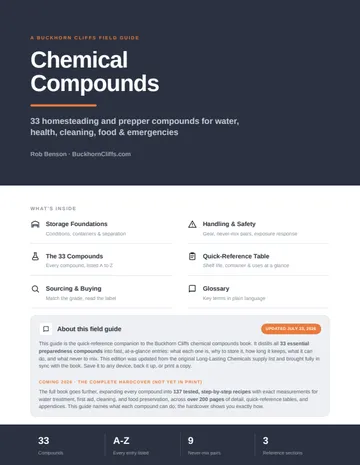
  • Cover of Chemical Compounds Field GuideChemical Compounds29 pagesThe 33 compounds: storage, top uses, hazards, and the never-mix chart.
  • Cover of Spare Parts and Repair Stock Field GuideSpare Parts and Repair Stock40 pagesWhat to keep on hand to fix the home and land when the supply chain breaks.
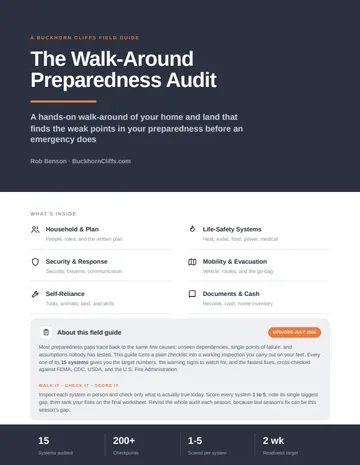
  • Cover of Walk-Around Preparedness AuditWalk-Around Preparedness Audit33 pagesFifteen systems scored 1 to 5, with the printable scorecard.
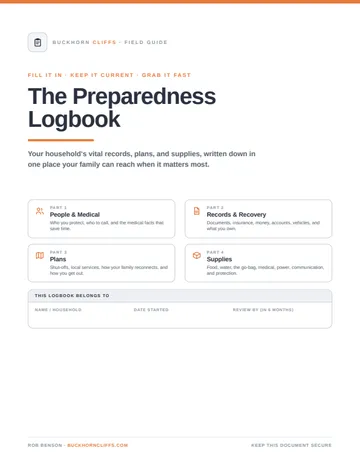
  • Cover of The Preparedness LogbookPreparedness Logbook30 pagesThe household information that needs to be on paper.

My Manual · included

Build your own field manual

The most useful thing a membership gives you. No book fits your household exactly. My Manual does. Save any page on this site, recipes, charts, and whole field guides included, put them in your order, and print one manual with your name on the cover. It holds only what is relevant to you, and nothing you would skip.

Why it matters

  • It works when this site does notNo power and no signal means no website. A printed manual and an offline PDF still open, which is the whole point of writing any of this down.
  • Only your pagesThis site covers every household. Yours needs a fraction of it. Your manual holds the pages that match your water source, your climate, and your gear, so nobody digs through the rest under stress.
  • Anyone in the house can use itThe person who reads this site may not be the one home when it counts. A binder on the shelf, in your order, with a contents page, is something a spouse or a teenager can follow.
  • One current copy, not a pile of printoutsEvery page prints in the same field guide layout with a cover, a contents page, and the print date. Change a page, print again, and the old copy is easy to spot.

What to build with it

  • The house binderYour water source, your climate, your gear. Only the pages you would reach for.
  • A copy for the bug-out bag or truckA short version that travels: water, first aid, comms, and the recipes you rely on.
  • A copy for familyHand a parent or a grown kid a manual built for their house and their supplies.
  • The shop and the barnParts lists, repair skills, and the never-mix chart, kept where the work happens.
  • A recipe book of your ownThe cleaners, fuels, and remedies you make, with exact amounts, in one place.
  • An offline PDFSaved to a phone, a tablet, or a drive in the Faraday bag. It opens with no signal.

How it works

  1. 1Save what fitsPress "Save to My Manual" on any page: a recipe, a chart, a guide, a parts list, or a whole field guide.
  2. 2Put it in your orderOn My Account, drag the pages into the order you want. Name the manual and add your household name.
  3. 3Print it or save a PDFOpen the preview, then print it or save a PDF. It is sized for 8.5 x 11 inch paper, with a cover and a contents page. Field guides go in exactly as the PDFs are laid out. No ads, no photos.
  4. 4Keep it currentAdd a page, pull one out, print again. The cover carries the date, so you always know which copy is the latest.

Also included

  • The entire site, unlockedAll 158 member pages open in full: exact amounts, every step, every warning, every parts list. Nothing held back.
  • Every recipe and resource in the bookAll 138 recipes and 33 compounds from Prepper's Chemical Survival Guide, with exact amounts, every step, every warning, and the reference charts.
  • A clean PDF of any entryOne press turns any page into a field guide sheet for the binder, the truck, or the shop wall.
  • Checklists and audit scores that follow youSaved to the account, so the phone, the laptop, and the shop computer always match.
  • No adsMembers read the whole site without a single ad.
$49.95per year. About 14 cents a day. Cancel any time and keep the year you paid for.