INDEFINITE IF SEALED, DRYMULTI-USEWorks without power
Quick facts
- PropertyVery low water
- FormThick liquid
- Hazard classLow
- Shelf lifeIndefinite if sealed, dry
- StorageSealed glass or HDPE
- What to avoidMoisture, direct heat
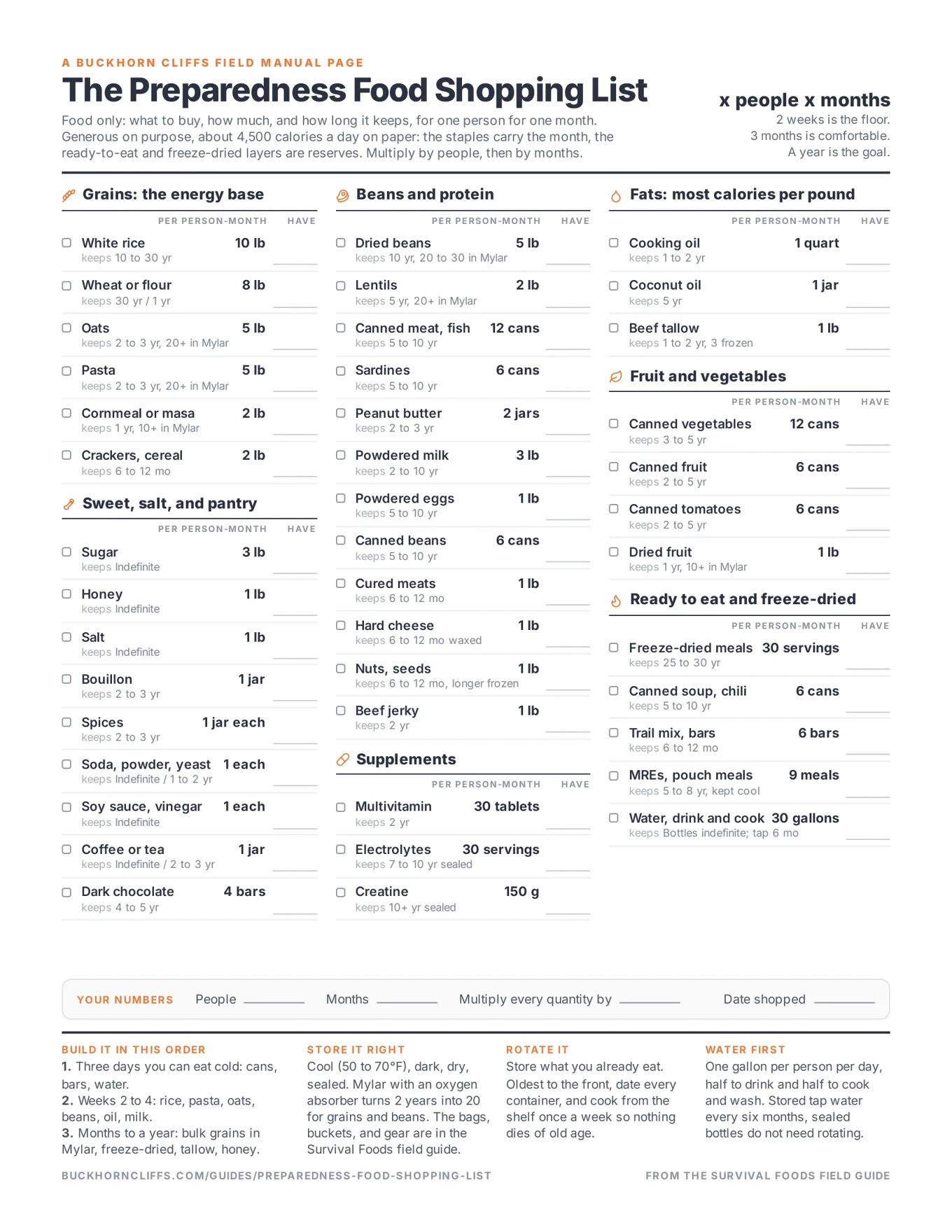
The food shopping list: what to buy, how much, shelf life
See everything honey must never touch
What it's good for
Food preservation
Preserves dried foods
Cough & throat
Soothes cough
Wound dressing
Shallow wounds, minor burns
Sweetener
Long-keeping sweetener
Very low water and a little acidity keep microbes from growing, so it preserves food and keeps nearly forever.
Good to know
Three defenses at once. Honey resists spoilage because its water is too low for microbes to survive, it is naturally acidic, and an enzyme the bees add slowly releases a trace of hydrogen peroxide. Together these keep sealed honey good for decades, and honey traces survive in pottery thousands of years old. Crystallized honey has not spoiled; gentle warming reliquefies it.
Handling and safety
Raw holds more
Raw, unheated honey keeps more of the enzymes and antioxidants that heat and heavy processing strip away.
Low water preserves
Its low moisture stops microbes, which is why it keeps so long.
Eases cough
It soothes a cough about as well as common over-the-counter syrups.
Wounds: clean honey only
It covers shallow wounds and minor burns, but never on a baby, and sterile medical honey beats raw.
Free download
Get the one-page food shopping list
What to store, how much of it for one person for one month, and how long it keeps. One page with checkboxes, built from the Survival Foods field guide. Print it, multiply by your people and months, and take it to the store.
The PDF comes by email, with my newsletter now and then. Already on the list? You still get it. Read the full page.
Eight jobs it does
- Wound dressing and antiseptic
- Dense calories and fast energy
- Cough and sore-throat relief
- Mead and fermentation starter
- Burn treatment applied raw
- Long-term sugar substitute
- Skin and lip moisturizer
- Preserves nuts, herbs, and fruit
If it goes bad Crystallizes but stays safe. Warm gently. Discard if fermented.
How to check it
Honey
Warning signs Any color change or off-odor. Crystallization is normal and harmless.
How to check Check color, consistency, and smell. Honey rarely spoils but can ferment if water gets in.
Field notes
Honey runs about 64 calories per tablespoon, and that energy is available fast. Its average pH is around 3.9, while many bacteria need something closer to neutral to multiply. The enzyme the bees add is glucose oxidase. The oldest honey traces found so far are residues in 5,500 year old pottery from a tomb in the mountains of Georgia. Nobody ate it, but it shows how long the sugars last.
- Bulk storage: I store my bulk honey in 5 gallon buckets with an airtight seal. One big bucket is easier to manage than a shelf of small containers. Keep it cool, dry, and out of direct sunlight. This is what I buy for bulk storage.
- Reseal every time: honey is hygroscopic. Left open, it pulls moisture out of the air, and that moisture is what lets it ferment.
- Infection: its antimicrobial action covers a wide range of bacteria and fungi, including some antibiotic resistant strains.
- Not empty calories: Honey carries trace vitamins, minerals and antioxidants that sugar lacks, but the amounts are tiny. Count it as calories.
- Barter: in a disrupted economy, honey could serve as a valuable trade item.
Recipes for honey
Questions this answers
Tap a question for the short answer.
What is honey used for?
Honey is a long-keeping sweetener that also preserves nuts, herbs, and fruit, soothes coughs and sore throats, and dresses shallow wounds and minor burns. It also serves as dense calories, a mead and fermentation starter, and a skin and lip moisturizer. Never put it on a baby's wounds.
How long does honey last in storage?
Honey keeps indefinitely if sealed and dry. Very low water, natural acidity, and an enzyme that slowly releases a trace of hydrogen peroxide keep it good for years, even millennia. Crystallized honey has not spoiled, but discard honey that has fermented.
How do I store honey?
Keep honey in sealed glass or HDPE, away from moisture and direct heat. It can ferment if water gets in. Crystallization is normal and harmless, and gentle warming reliquefies it.
Keep going
Related to this
Membership · $49.95 per year
There is a lot more behind the lock
Every recipe and resource from the Prepper's Chemical Survival Guide, all six field guides to read here and download, the full audit and logbook, all twelve reference charts, and no ads.
My Manual · included
Build your own field manual
The most useful thing a membership gives you. Save any page on this site, recipes, charts, and whole field guides included. Arrange them in the order you want, name it, and print one manual with a cover and contents, or keep it as a PDF that opens with no signal.
- It works when this site does not
- Only your pages
- Anyone in the house can use it
- One current copy, not a pile of printouts
- The house binder
- A copy for the bug-out bag or truck
- A copy for family
- An offline PDF




Stay Ready
New entries, updates, and useful instruction.
Stay one step ahead on your preparedness journey.