Quick facts
- Forever
- White sugar
- honey
- corn syrup
- unopened maple syrup
- Best withinBrown and powdered sugar 2 years, molasses 1 to 2 years, opened maple syrup 1 year in the fridge
- How muchAbout 60 pounds of sugar per adult per year, less if you do not can or bake
- NeverAn oxygen absorber in sugar (it sets like concrete) or a desiccant in brown sugar (it turns to brick)
- HoneyCrystallizes, does not spoil; warm the jar to fix it; never for a baby under one
Where this sits on the food shopping list
Sugar is the cheapest calorie you can store, it never spoils, and it does more in a pantry than sweeten coffee. It preserves fruit, cures meat, feeds the yeast that makes bread rise, makes stored food worth eating, and, as honey, dresses a wound. Seven sweeteners keep for years or forever with no freezer and no special packaging. The differences are what each one is for, how each one fails on the shelf, and how much of each a household actually uses. All of them are quick, high-glycemic energy; none is a food group.
The seven, compared
| Sweetener | Keeps | Store it | Best for |
|---|---|---|---|
| White sugar | Indefinitely | Sealed bucket or jar, dry; no oxygen absorber | Canning, jam, baking, curing, yeast, barter |
| Honey | Indefinitely | Sealed jar, dry; warm to clear crystals | Energy, wounds, coughs, baking, mead |
| Brown sugar | Indefinitely; best within 2 years | Airtight; keep the moisture in, no desiccant | Baking, curing, rubs, sauces |
| Powdered sugar | Indefinitely; best within 2 years | Airtight; keep it dry | Icing, candy, drinks |
| Maple syrup | Unopened indefinitely; opened, 1 year refrigerated | Cool and dark; fridge once open | Table syrup, glazes, baking |
| Molasses | Safe for years; 1 to 2 years for quality | Sealed, cool and dark; rotate | Gingerbread, baked beans, marinades, iron |
| Corn syrup | Indefinitely | Cool and dry; no fridge, even open | Candy, smooth textures, jams, pancake syrup |
| Sugar and honey powder | 20 years unopened | Sealed can, cool and dry | Drinks, cereal, rubs, a can that never needs attention |
Each one, and what it is for
Honey
Forever · the one with a second jobAbout 17 percent water and acidic enough that nothing that spoils food can live in it; sealed jars from Egyptian tombs were still edible. It crystallizes with age, which is not spoilage: set the jar in warm water until it clears. Keep it sealed, because honey pulls moisture from the air and diluted honey can ferment. Beyond the kitchen it is a wound dressing with real antibacterial action, a cough syrup by the spoonful, and the sugar for mead. Never give it to a child under one year; it can carry the spores that cause infant botulism. The honey compound page covers the medical uses. Buy it in bulk from a local producer if you can; the cheapest supermarket honey is fine for storage.
White granulated sugar
Forever · the workhorsePure sucrose with no water, so nothing grows in it and it never spoils. It is the sugar for canning and jam, for curing meat with salt, for feeding yeast in bread and brewing, and for barter, because everyone recognizes it. Store it in sealed food-grade buckets or jars in a dry place. Do not add an oxygen absorber: sugar does not need one, and the absorber pulls the moisture that sets the whole bucket into a brick. A brick is still sugar; break it up or dissolve it. Mylar bags and foods ranked covers which foods do want an absorber.
Brown and powdered sugar
Best within 2 years · opposite storage rulesBrown sugar is white sugar coated in molasses; it hardens as it dries, so seal it airtight and keep the moisture in. Never put a desiccant or an oxygen absorber with it. A slice of bread, a damp paper towel in a bag or a piece of damp terra cotta in the container softens a brick in a day. Powdered sugar is the reverse: it needs to stay dry or it clumps. Both are safe indefinitely and best within two years. Brown sugar is the one for rubs, curing and baked beans; if space is short, keep white sugar and a jar of molasses and make brown sugar when you need it, a tablespoon of molasses per cup.
Maple syrup
Unopened forever · fridge once openSucrose and water with trace minerals, boiled down from sap. Unopened it keeps indefinitely in a cool, dark place. Opened, there is nothing in it to stop mold on the surface, so it goes in the refrigerator and is best within a year; buy it in sizes you will finish. Pancake syrup is corn syrup with flavoring and keeps like corn syrup. The maple syrup page covers grades and making your own.
Molasses
1 to 2 years · the one to rotateThe dark syrup left after sugar is crystallized out of cane juice, with calcium, magnesium, potassium and iron that the white sugar lost. Unopened it is safe for years, but the makers and the USDA FoodKeeper rate it at one to two years for quality; it darkens and turns bitter past that, so buy it in normal quantities and rotate it through gingerbread, baked beans and marinades. Blackstrap is the strongest and most mineral-rich. Thickening or crystals are not spoilage; warm it.
Corn syrup
Forever · texture and candyA liquid sugar made from corn starch that keeps indefinitely in a cool dry place and does not need refrigeration even after opening. Its job is texture: it stops sugar crystallizing, which is why candy, fudge, smooth jams and homemade pancake syrup use it. Light is mild; dark has molasses added. The corn syrup page has the uses.
Sugar and honey powder blend
20 years sealed · the can you forgetDried sugar and honey in a sealed steel can from the long-term storage makers, rated at 20 years unopened. It is not cheaper than sugar and honey, but it is the one sweetener that needs no bucket, no rotation and no attention: stir it into drinks, cereal or a rub, or reconstitute it. One or two cans at the back of the long-term shelf cover the day the buckets are gone.
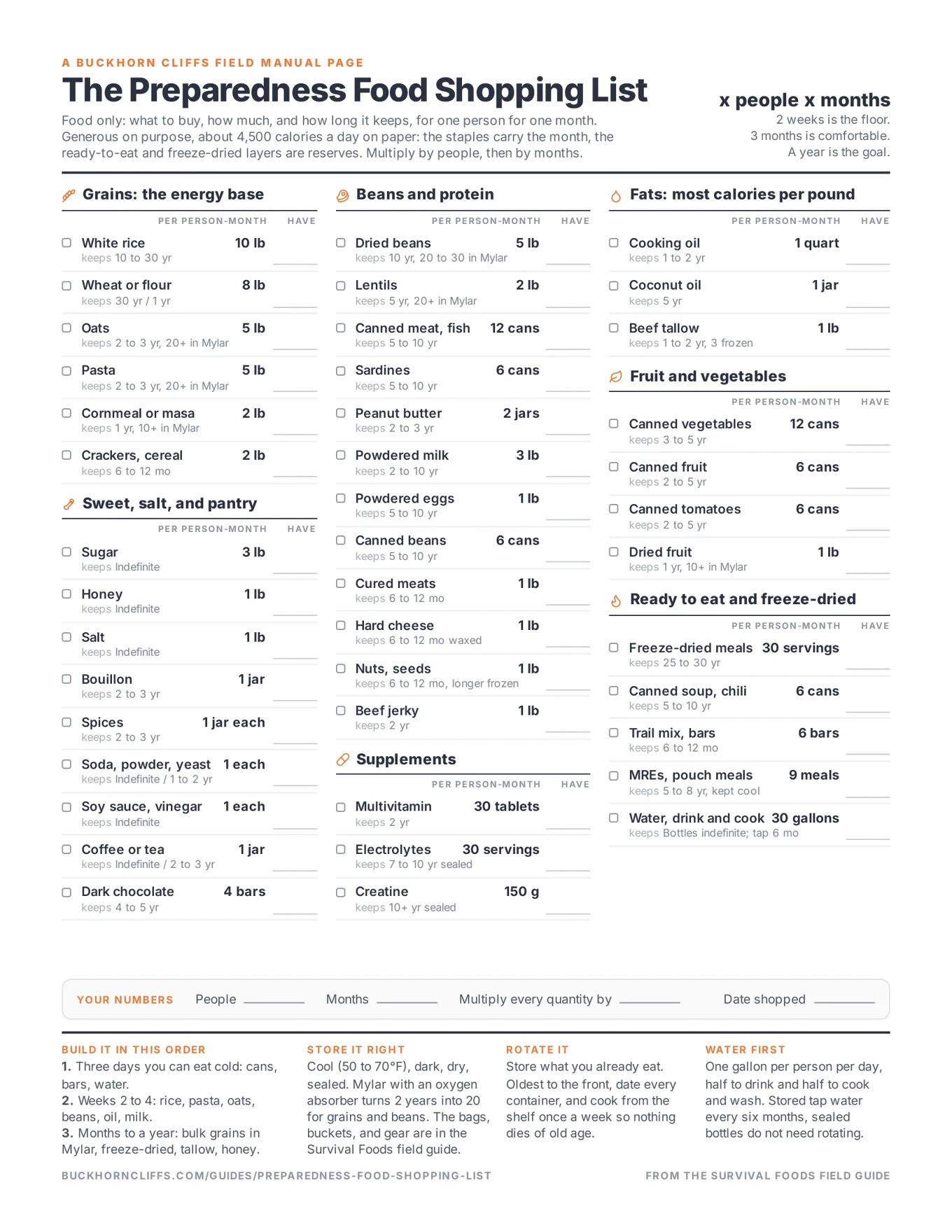
Free download
Get the one-page food shopping list
What to store, how much of it for one person for one month, and how long it keeps. One page with checkboxes, built from the Survival Foods field guide. Print it, multiply by your people and months, and take it to the store.
The PDF comes by email, with my newsletter now and then. Already on the list? You still get it. Read the full page.
How much to store
The old church food storage guideline is 60 pounds of sugar or equivalent per adult per year, and that assumes you are canning fruit, making jam, baking bread and brewing from what you grow. A household that does none of that uses far less. The honest number is what you buy now: look at a year of grocery receipts, add a third for the canning you would do if the store were closed, and store that. Split it four ways.
- White sugar, most of the weight, in sealed 5 gallon buckets (about 35 pounds each)
- Honey, a gallon or two, in glass or food-grade plastic
- Brown sugar, a few pounds, or molasses to make it
- One syrup you actually use, in sizes you finish
- A can or two of sugar and honey powder at the back
Sugar is also one of the most reliable trade goods there is; the barter items guide covers why. Where it sits in the whole pantry, with the salt, the oil and the spices that make stored food dinner, is on what to stock and in the survival foods field guide.
An oxygen absorber in white sugar turns the bucket to concrete. A desiccant in brown sugar turns the bag to brick. Sugar wants to be sealed and dry, brown sugar wants to be sealed and slightly moist, and neither wants anything else in the container.
Questions this answers
Tap a question for the short answer.
What sweeteners last the longest in food storage?
White granulated sugar and honey, which keep indefinitely in a sealed container kept dry; corn syrup and unopened pure maple syrup, the same. Brown and powdered sugar are safe indefinitely but best within two years. Molasses is safe for years but turns dark and bitter after one or two. A sugar and honey powder blend in a sealed can is rated at 20 years. Every one of them is quick energy and none of them needs a freezer.
How long does sugar last in storage?
White sugar never spoils. Bacteria cannot grow in it because there is no water in it. The only thing that happens is that it takes on moisture and hardens, so store it in a sealed food-grade bucket or jar in a dry place, and do not put an oxygen absorber in with it: sugar does not need one, and the absorber pulls the moisture that sets it into a brick you will chisel. A brick is still sugar; break it up or dissolve it.
Does honey expire?
No. Honey is about 17 percent water and acidic, and nothing that spoils food can live in it; sealed jars from ancient tombs were still edible. It crystallizes, which is not spoilage: set the jar in warm water until it clears. Keep it sealed and dry, because honey pulls moisture from the air and diluted honey can ferment. Never give honey to a child under one year old; it can carry the spores that cause infant botulism.
How long does molasses last?
Unopened, it is safe for years. For quality, the makers and the USDA FoodKeeper rate it at one to two years; after that it darkens and turns bitter. It is the one sweetener on this page to buy in normal quantities and rotate through the kitchen. Thickening or crystals are not spoilage; warm it.
Does maple syrup go bad?
Unopened pure maple syrup keeps indefinitely in a cool dark place. Once opened it is mostly sugar and water with no preservative, so mold can grow on the surface; refrigerate it and use it within a year for the best flavor. If mold appears, most producers say to skim it and bring the syrup to a boil, but the simpler rule is to buy it in sizes you will finish. Pancake syrup is corn syrup with flavor and keeps like corn syrup.
How do I keep brown sugar from hardening?
Keep the moisture in, which is the opposite of every other food in storage. Brown sugar is white sugar coated in molasses and it hardens as it dries, so seal it airtight and never put a desiccant or oxygen absorber with it. To soften a brick, put a slice of bread, a piece of damp terra cotta or a damp paper towel in a bag inside the container for a day. Powdered sugar is the reverse: it needs to stay dry or it clumps.
How much sugar should I store per person?
The old church food storage guideline is 60 pounds of sugar or equivalent per adult per year, and that assumes you are canning fruit, baking bread and making jam from what you grow. A household that does none of that goes through far less; look at what you actually buy in a year and store that much plus a third. Split it: mostly white sugar in sealed buckets, plus honey, some brown sugar and one syrup you use.
Why store sugar at all?
Because it is the cheapest calories you can store, it never spoils, and it does jobs nothing else does: it preserves fruit as jam and syrup, it cures meat with salt, it feeds the yeast that leavens bread and brews, it makes bland stored food eaten, and honey dresses a wound and quiets a cough. Sugar is also one of the most reliable barter goods there is.
Keep going
Related to this
Membership · $49.95 per year
There is a lot more behind the lock
Every recipe and resource from the Prepper's Chemical Survival Guide, all six field guides to read here and download, the full audit and logbook, all twelve reference charts, and no ads.
My Manual · included
Build your own field manual
The most useful thing a membership gives you. Save any page on this site, recipes, charts, and whole field guides included. Arrange them in the order you want, name it, and print one manual with a cover and contents, or keep it as a PDF that opens with no signal.
- It works when this site does not
- Only your pages
- Anyone in the house can use it
- One current copy, not a pile of printouts
- The house binder
- A copy for the bug-out bag or truck
- A copy for family
- An offline PDF






Stay Ready
New entries, updates, and useful instruction.
Stay one step ahead on your preparedness journey.