Handle with careWorks without power
How it works
Quick facts
- Fresh1 soda : 2 cream of tartar
- Jar mixadd 1 part starch
- Riseswith acid present
- Uses
- pancakes
- biscuits
- bannock
- Keepcornstarch dry
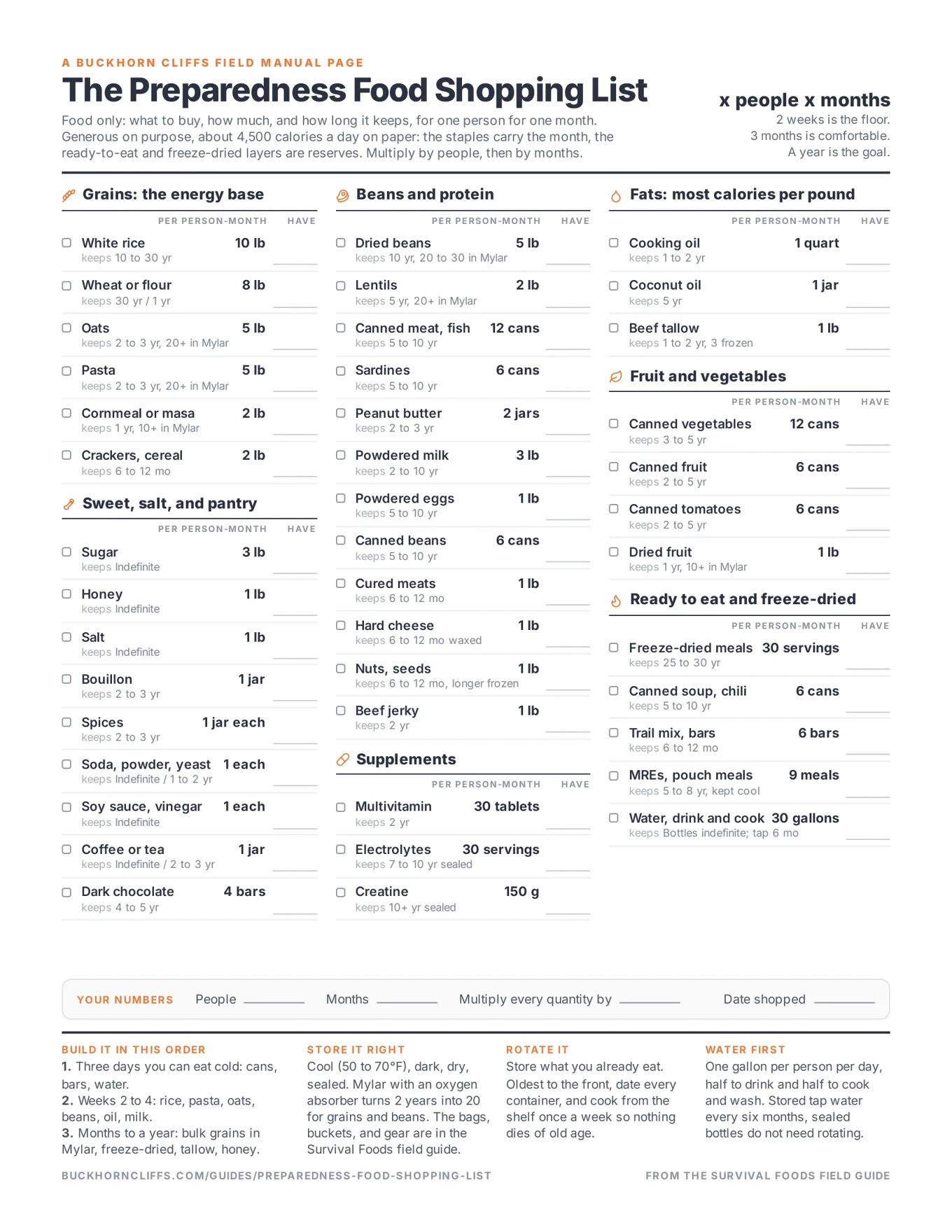
The food shopping list: what to buy, how much, shelf life
Hazard
Baking soda alone will not rise without an acid present, and too much soda without enough acid leaves a bitter, soapy taste. Keep the mix dry or it loses strength.
Storing baking soda and cream of tartar separately instead gives you a permanent leavening system from two shelf-stable powders that each last for decades.
What you'll need
- Baking soda (sodium bicarbonate)
- Cream of tartar (potassium bitartrate)
- Optional: cornstarch or arrowroot (to prevent premature reaction in humid storage)
- Optional: vinegar, yogurt, buttermilk, lemon juice, or other household acids
Free download
Get the one-page food shopping list
What to store, how much of it for one person for one month, and how long it keeps. One page with checkboxes, built from the Survival Foods field guide. Print it, multiply by your people and months, and take it to the store.
The PDF comes by email, with my newsletter now and then. Already on the list? You still get it. Read the full page.
Steps
- To make homemade baking powder fresh for a batch, mix 1 part baking soda with 2 parts cream of tartar. For example, 1/3 teaspoon baking soda plus 2/3 teaspoon cream of tartar equals 1 teaspoon of baking powder, which can substitute directly for commercial baking powder in any recipe. Mix only what you need for each batch; the homemade version starts reacting as soon as it meets moisture, so store it dry and use it promptly.
- To mix a small jar in advance for convenience, add 1 part cornstarch or arrowroot to the baking soda and cream of tartar. The starch absorbs ambient humidity and keeps the two reactive components from reacting with each other during storage. Kept tightly sealed and dry, the jar stays usable for several months; test a pinch before relying on an older batch.
- For recipes that already contain acidic ingredients like buttermilk, vinegar, yogurt, or lemon juice, use 1/4 to 1/2 teaspoon baking soda per cup of flour with no cream of tartar needed; the acid already in the recipe activates the soda. Mix wet and dry ingredients together quickly and move the batter to the heat source right away because the leavening reaction starts immediately and weakens if the batter sits.
- This system works well for pancakes, biscuits, cornbread, camp bread, bannock, and flatbreads cooked in a cast-iron skillet or Dutch oven. To test cream of tartar after long storage, mix a pinch with a pinch of baking soda in warm water; vigorous fizzing means it is still active.
Warnings
Baking soda alone will not cause dough to rise without an acid present, and too much baking soda without enough acid creates a bitter, soapy taste in the finished product. Homemade baking powder is single-acting; it reacts once when it meets moisture, so it does not produce the delayed second rise of commercial double-acting baking powder, which means batter should go into the heat source immediately rather than resting. This system is not suitable for yeast-based breads or long-fermentation doughs that rely on biological rather than chemical leavening.
Storage and shelf life
Store both components in airtight, dry containers. Both last indefinitely when kept sealed, dry, and free of contamination. Store cornstarch or arrowroot the same way. Keep all three in your long-term food storage as a permanent leavening solution. Best container: sealed HDPE container or glass jar, keep moisture-free. Avoid metal in humid conditions (promotes corrosion). See the Containers section.
Questions this answers
Tap a question for the short answer.
How do I make baking powder from baking soda?
Mix 1 part baking soda with 2 parts cream of tartar. For example, 1/3 teaspoon baking soda plus 2/3 teaspoon cream of tartar makes 1 teaspoon of baking powder. To premix a jar, add 1 part cornstarch or arrowroot and keep it sealed and dry.
How much baking soda do I use per cup of flour?
In recipes that already contain an acid like buttermilk, vinegar, yogurt or lemon juice, use 1/4 to 1/2 teaspoon baking soda per cup of flour, with no cream of tartar. Mix quickly and get the batter onto the heat right away, since the reaction starts immediately.
Can I bake bread without yeast?
Yes, for quick breads. Baking soda with an acid raises pancakes, biscuits, cornbread, camp bread, bannock and flatbreads in a cast-iron skillet or Dutch oven. Baking soda alone will not rise without acid, and this system does not suit yeast-based or long-fermentation doughs.
What can I use instead of baking powder?
Use 1 part baking soda to 2 parts cream of tartar, swapped in directly for commercial baking powder. It is single-acting, reacting once when it meets moisture, so mix only what the batch needs and cook the batter immediately instead of letting it rest.
How long do baking soda and cream of tartar last?
Stored separately in airtight, dry containers, both last indefinitely. Commercial baking powder loses potency within 1 to 2 years, and a premixed homemade jar stays usable for several months. Test old cream of tartar with a pinch of baking soda in warm water: vigorous fizzing means it is active.
Keep going
Related to this
Membership · $49.95 per year
There is a lot more behind the lock
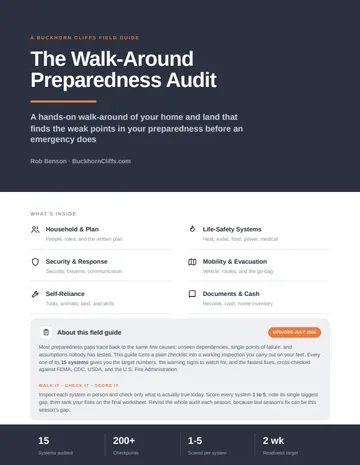
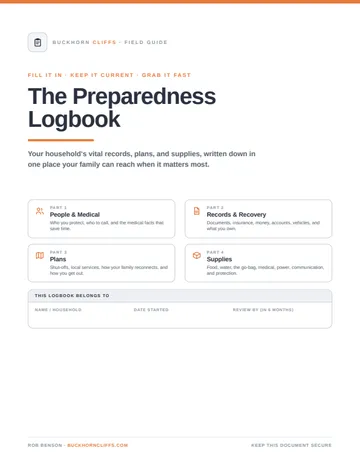
Every recipe and resource from the Prepper's Chemical Survival Guide, all six field guides to read here and download, the full audit and logbook, all twelve reference charts, and no ads.
My Manual · included
Build your own field manual
The most useful thing a membership gives you. Save any page on this site, recipes, charts, and whole field guides included. Arrange them in the order you want, name it, and print one manual with a cover and contents, or keep it as a PDF that opens with no signal.
- It works when this site does not
- Only your pages
- Anyone in the house can use it
- One current copy, not a pile of printouts
- The house binder
- A copy for the bug-out bag or truck
- A copy for family
- An offline PDF


Stay Ready
New entries, updates, and useful instruction.
Stay one step ahead on your preparedness journey.