US Army · ATP 3-50.21 · September 2018
The Army's current survival manual: 228 pages on medicine, water, food, fire, shelter, navigation and knots.
The Army PDF is free and in the public domain. The field guide comes with membership, or it's $10 as a PDF. All 9 manuals
- 228pages
- 8chapters, 1 appendix
- 140+figures
- 15knots drawn
- 12snares and traps
- 10ways to start a fire
Searches all 228 pages of the Army PDF and opens it at the page you pick.
Two versions of this manual
The official Army PDF
ATP 3-50.21 exactly as the US Army published it in September 2018. It's a work of the US government, so it's in the public domain, and it's marked "Approved for public release; distribution is unlimited."
- All 228 pages: 8 chapters, the knots appendix, 140+ figures
- Written for a soldier cut off from a unit and waiting on recovery
- The Army's file, unedited
The Buckhorn Cliffs field guide
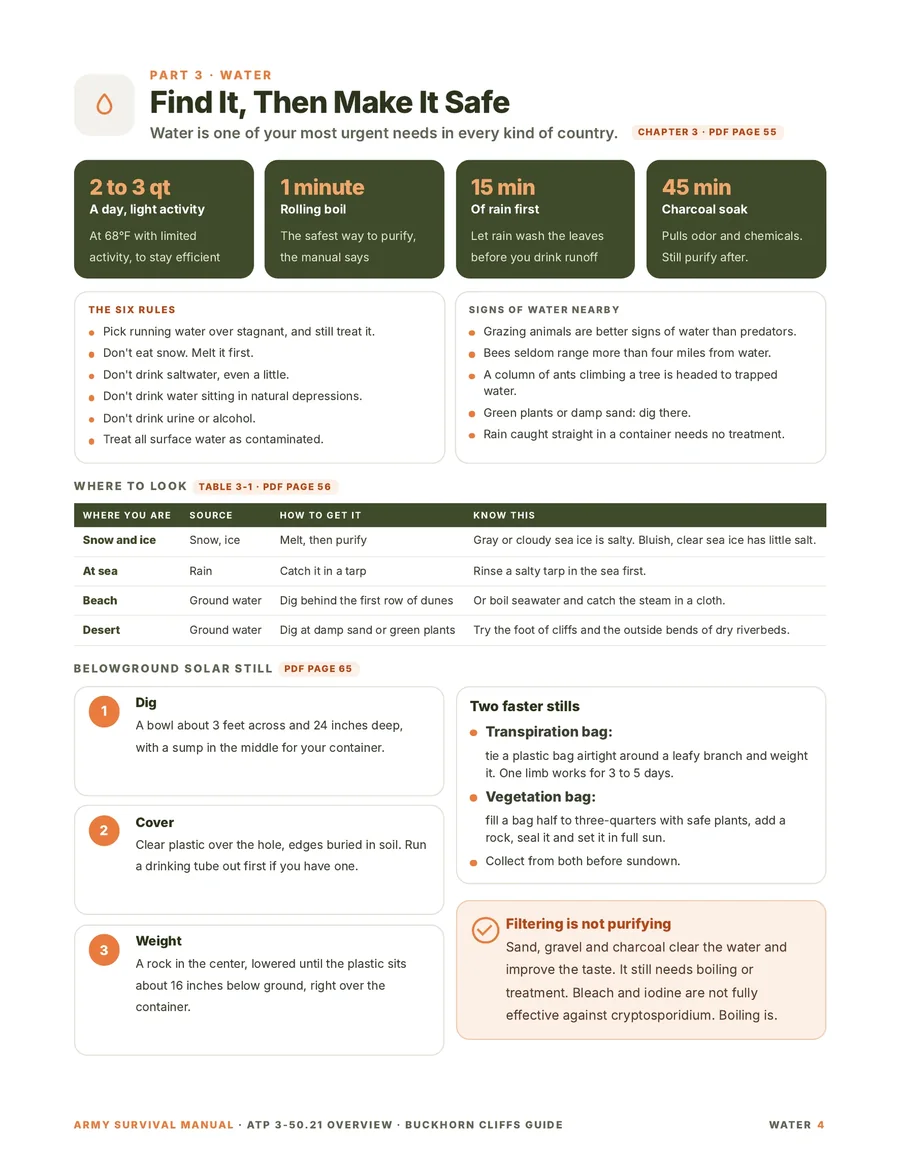
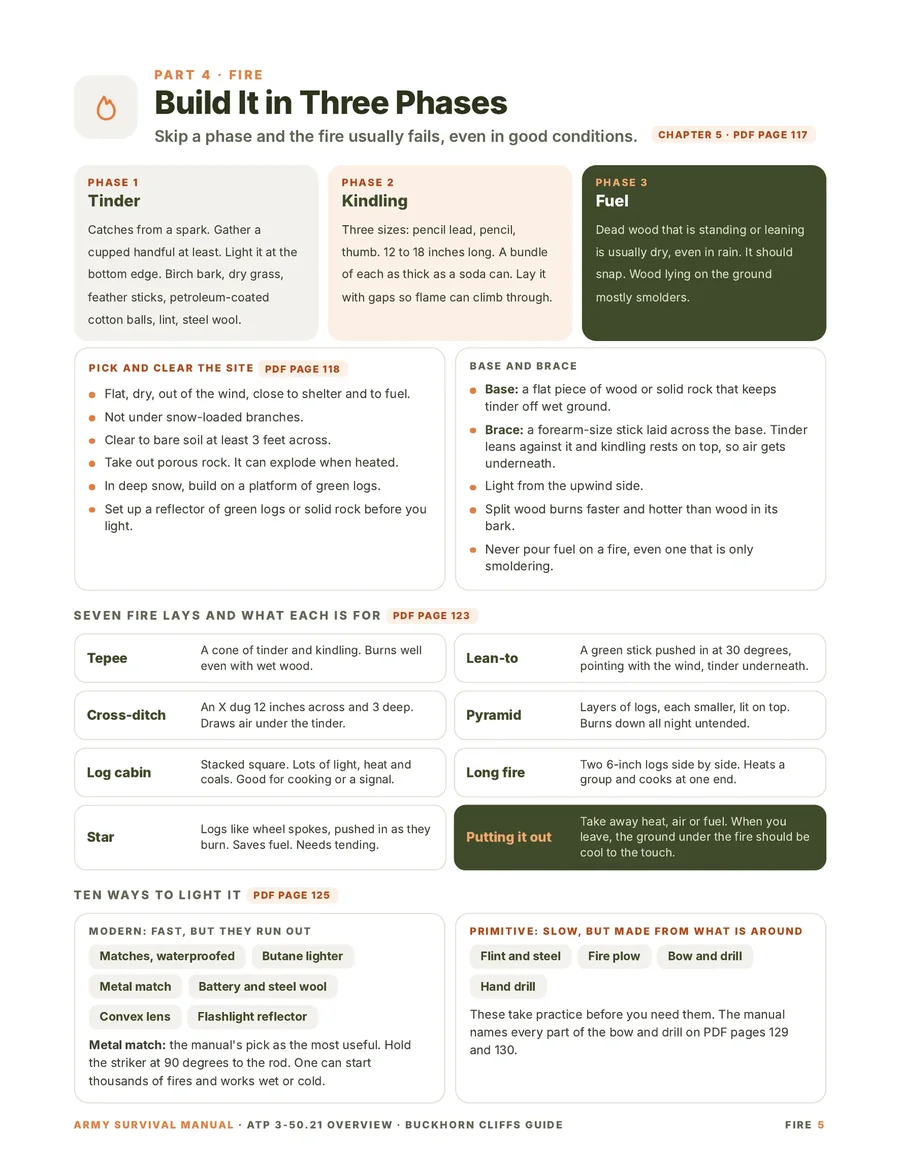
My 9-page overview of the same manual: priorities, bleeding and shock, water, fire, shelter, food, direction and knots. It's written from the Army's text and is not an Army publication.
- 9 pages in place of 228
- The methods and numbers that matter, without the recovery and reporting doctrine
- Boxes, charts, steps and checklists you can use at a glance
- Every section gives the page in the Army PDF for the full drawing
- Downloads as a PDF and saves to My Manual
Only want this one? Buy the field guide PDF for $10. This page is the free breakdown of the Army PDF. The field guide is the short version to print and keep.
- One book that covers every survival basic with a drawing for almost every method.
- The medical chapter is long and practical for a manual of this kind.
- The knots appendix stands on its own as a rope reference.
- It's written for a soldier waiting to be recovered, so some of it is about reporting in and linking up with a recovery force.
- Plants and animals are covered worldwide. It won't tell you what grows where you live.
- The editing slips in places. One list about mountain and cold travel is introduced as desert travel.
- You want one free survival reference on a drive or in a binder.
- You've never built a still, a snare or a debris hut and want the drawing in front of you.
- You need knots and lashings in one place.
How the 228 pages break down
The bars show how the 228 pages are split. Food and survival medicine take up more than a third of the book. Each bar opens the PDF at that chapter.
The last 8 pages are the glossary, references and index.
Chapter by chapter
Overview
6 pages, starts on PDF page 13
Why mindset comes first. Covers the signs of distress, how to manage stress, and the survival pattern: put medicine, protection, water and food in order for the place you are in.
Survival Medicine
36 pages, starts on PDF page 19
A long medical section for a survival manual, 36 pages. Lifesaving steps first, then a table of common illnesses with causes and treatments, then splints, slings and poisonous plants.
Water
16 pages, starts on PDF page 55
How much water a body needs, where to find it in each kind of country, how to build stills, and how to filter and purify what you collect.
Food
46 pages, starts on PDF page 71
The biggest chapter. Cooking and preserving, how to identify plants by flower, leaf and root, 12 snares and traps, butchering, birds, snakes, and fishing with improvised gear.
Fire
18 pages, starts on PDF page 117
Picking and clearing a site, building from tinder up, fire lays, and ten ways to start one: six modern and four primitive.
Shelter and Clothing
18 pages, starts on PDF page 135
Where to put a shelter and how to build one from a poncho, from brush, or from snow. Covers hot, cold, wet and desert ground.
Movement and Navigation
28 pages, starts on PDF page 153
Whether to stay put or move, crossing water, building rafts, and finding direction with a shadow, a watch, the stars or a floating needle. Ends with map basics.
Survival Equipment
14 pages, starts on PDF page 181
Keeping gear working and making what you lack: clubs, a stone knife, spears, a throwing stick, a bow, cordage, packs and containers for boiling.
Survival Knots and Rope
26 pages, starts on PDF page 195
Fifteen knots and hitches with a drawing for each, three lashings, how to twist and braid your own rope, and a table of natural fiber strength.
Numbers worth knowing
These are the manual's own figures. Each tile opens the page it comes from.
Water by environment
Table 3-1 lists where water turns up in each kind of country and how to make it drinkable. This is a short version of it.
| Where you are | Source | How to get it | Notes |
|---|---|---|---|
| Frigid areas | Snow and ice | Melt and purify | Never eat it unmelted. Gray or opaque sea ice is salty. Bluish, crystalline sea ice has little salt. |
| At sea | Rain, sea ice, the sea itself | Catch rain in tarps. Use a desalinator on seawater. | Wash a salt-crusted tarp in the sea first. Never drink seawater untreated. |
| Beach | Ground water | Dig behind the first group of dunes until water seeps in | With a container: boil seawater, catch the steam in a cloth, and wring it out. |
| Desert | Ground water | Dig where you find damp sand or green plants | Look at the foot of cliffs and rock outcrops, and at the outside bends of dry riverbeds. |
The same chapter gives six rules: pick running water over stagnant and still treat it, don't eat snow, don't drink saltwater, skip water sitting in natural depressions, don't drink urine or alcohol, and treat all surface water as contaminated. It also warns that iodine tablets and bleach aren't fully effective against cryptosporidium. Boiling or a micro filter is.
Ten ways to start a fire
Chapter 5 splits fire starting into modern methods, which are fast but run out, and primitive methods, which take skill but can be made from what is around you.
- 1MatchesWaterproof, in a waterproof case, with a striker
- 2LighterButane burns hotter and resists wind better than liquid fuel
- 3Metal matchThe manual calls it the most useful and versatile fire starter issued
- 4BatterySteel wool or wire across the terminals, figure 5-6
- 5Convex lensSunlight through a lens, figure 5-7
- 6Flashlight reflectorTinder goes in the center of the reflector, where the bulb sits
- 1Flint and steelFigure 5-8
- 2Fire plowFigure 5-9
- 3Bow and drillFigure 5-10, with every part named
- 4Hand drillFigure 5-11
Open fire starting techniques, PDF page 125 · Fire Without Matches on this site
Every snare and knot in the book
12 snares and traps, chapter 4
15 knots and hitches, appendix A
The appendix also draws square, diagonal and shear lashings, shows how to twist and braid cordage from plant fiber, and ends with whipping a rope end.
Edition and history
ATP 3-50.21 was published in September 2018. The Army split the revision of FM 3-05.70, Survival, into three smaller books. This is the second. ATP 3-50.20 covers preparation and planning, and ATP 3-50.22 covers evasion. FM 3-05.70 was the 2002 manual that followed FM 21-76, the survival manual most people know by number.
As of November 10, 2026 the Army lists it as the current edition.
ATP 3-50.21 is a US Army publication, in the public domain as a work of the US government and marked "Approved for public release; distribution is unlimited." The Buckhorn Cliffs field guide is my own summary of it and is not an Army publication. BuckhornCliffs.com is not affiliated with or endorsed by the US Army or the Department of Defense.
Questions this answers
Tap a question for the short answer.
What is the current us army survival manual
ATP 3-50.21, Survival, published September 2018. It is 228 pages and approved for public release.
Is atp 3-50.21 the same as fm 21-76
No. FM 21-76 was replaced by FM 3-05.70 in 2002, and ATP 3-50.21 came out of the revision of FM 3-05.70 in 2018. It covers the same ground in a shorter book.
How many pages is the army survival manual
ATP 3-50.21 is 228 pages: eight chapters, an appendix on knots and rope, a glossary and an index.
What does the army survival manual say about boiling water
A rolling boil for one minute. It calls boiling the safest method of purifying water.
Is the army survival manual free
Yes. ATP 3-50.21 is in the public domain as a work of the US government, approved for public release, and free to download from the Army Publishing Directorate.
What knots are in the army survival manual
Appendix A draws 15: overhand, round turn and two half hitches, figure-eight, square knot, single and double sheet bend, bowline, bowline on a bight, French bowline, Speir knot, half hitches, timber hitch, clove hitch, sheepshank and prusik.
What I use for this
Gear from my recommended list
Keep going
Related to this
Membership · $49.95 per year
Everything on this site, open, printable, and yours on paper
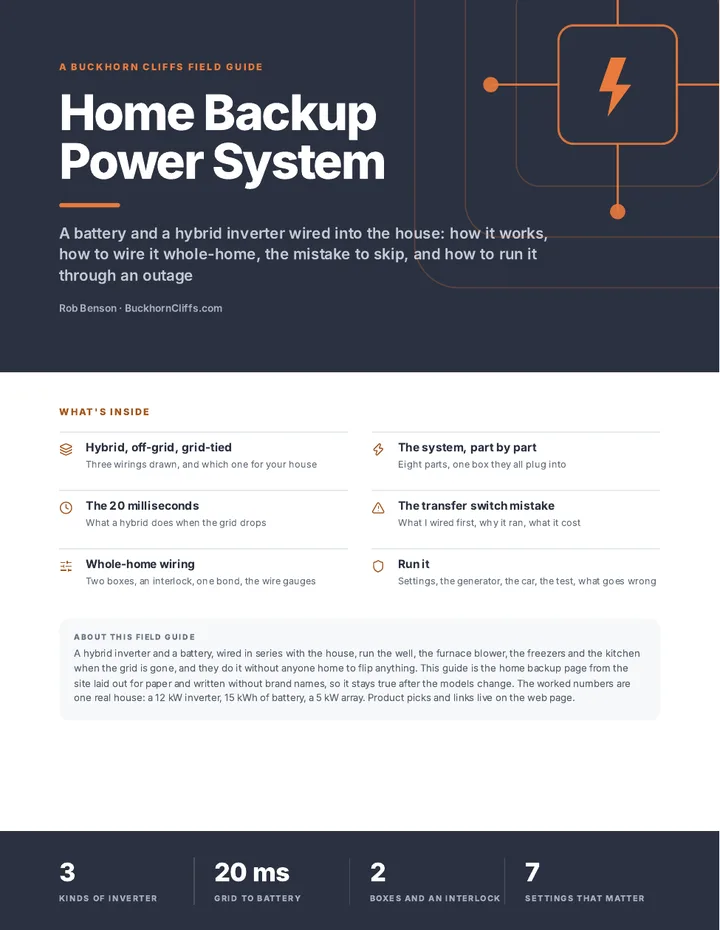
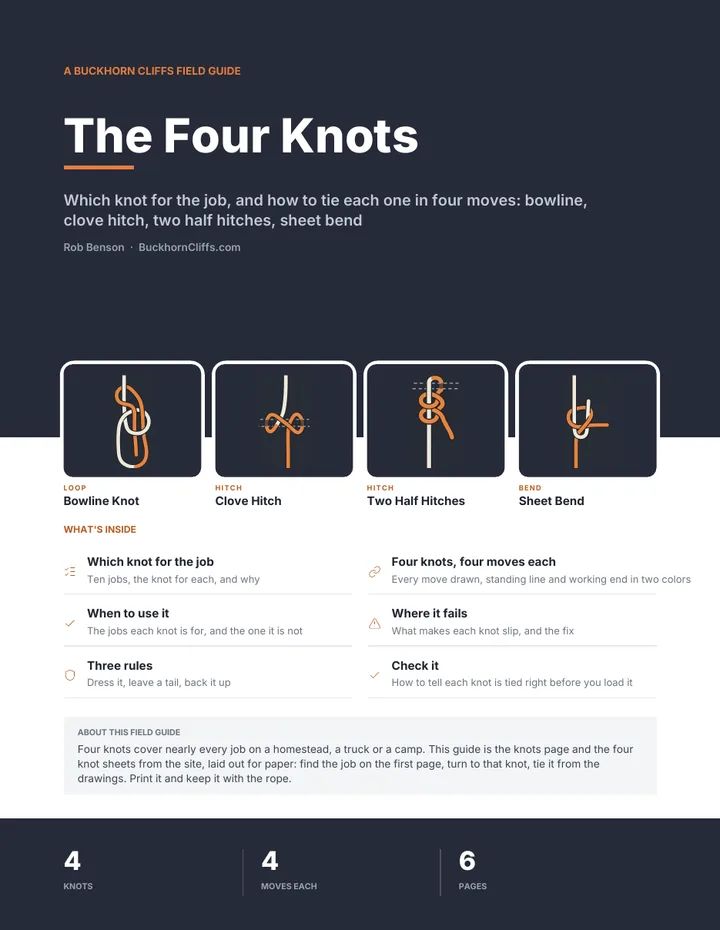
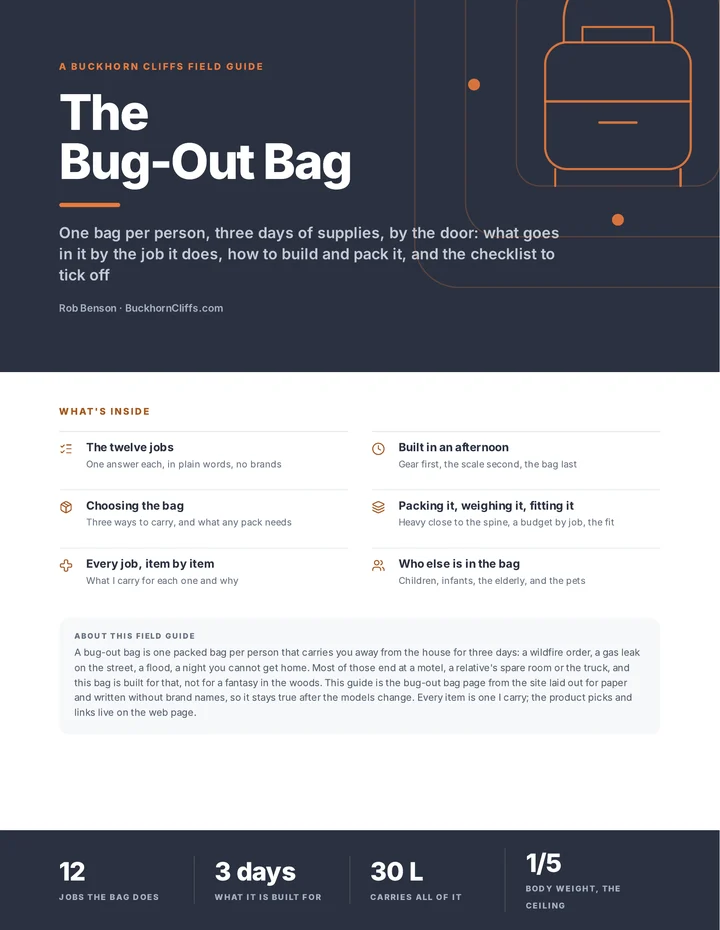
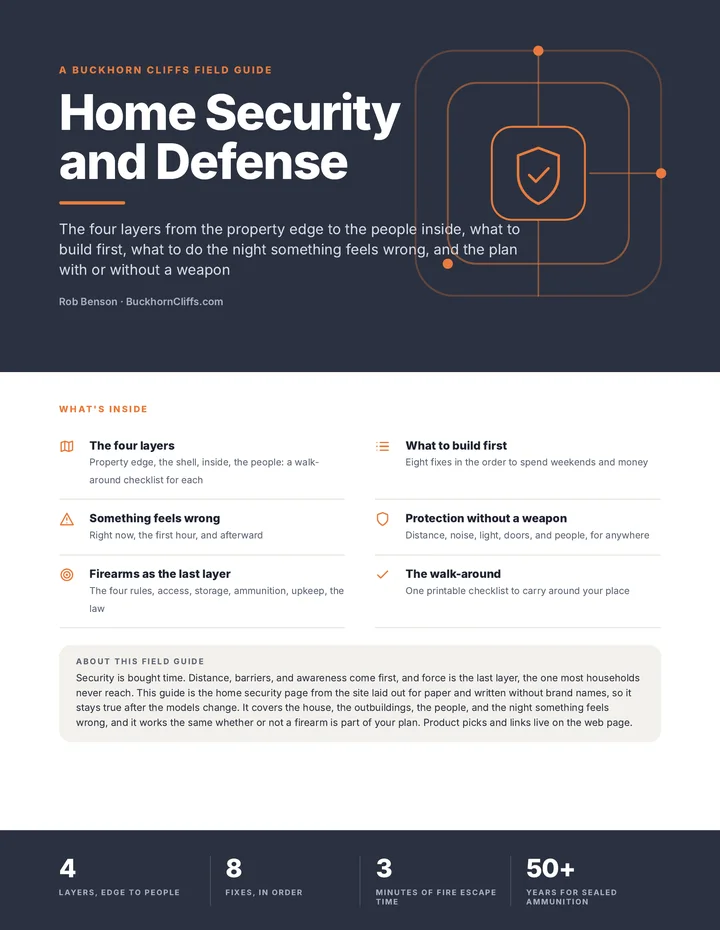
When the grid goes down, this site goes with it. Paper does not. Membership opens every member page and every recipe from the book, hands over all thirteen field guides as PDFs, and builds a binder from the pages your household uses.
- 158member pagesopen in full, every amount and every step
- 138compound recipesfrom the hardcover book, exact amounts. Pick any and add them to your manual
- 13field guides304 pages of PDFs, $130 bought one at a time
- 9military field guidesUS Army manuals cut to 66 pages and laid out to use
- 1manual of your ownbuilt from any page here, printed with your cover
- Every member page in full. the exact amounts, every step, every parts list
- Every recipe and resource from the book. all 138 from the Prepper's Chemical Survival Guide, searchable here
- All 13 field guides. read them here or download the PDFs, 304 pages
- A field guide for each of 9 Army manuals. the survival, first aid and other US Army manuals, each cut to 10 pages or fewer
- My Manual. save any page, recipe or whole guide, order it, print one binder with your own cover
- The audit and the logbook, saved. your scores and checklists on every device
- Print and Save as PDF on every page. and no ads
- One payment, $49.95 per year. Cancel any time and keep access to the end of the year you paid for.
- Sign in by email. No password, and the sign-in renews itself on every visit.
- Most of the site stays free. Membership is for the depth, the PDFs and the paper.


Stay Ready
New entries, updates, and useful instruction.
Stay one step ahead on your preparedness journey.