BUCKHORN CLIFFSA preparedness field manual

Food · Supply

Canned Fruit

How long canned fruit keeps and why the acid shortens it, juice-packed against syrup, which fruits hold up best, how to store and check the cans, and using the juice.

2-5 YRHIGH ACIDVITAMIN CWorks without power

Quick facts

  • Real shelf life2 to 5 years
  • Label date says1 to 2 years
  • Best storageCool, dry, to the front of the shelf
  • Watch for
    • Cloudy liquid
    • a sour or fizzy can
    • a metallic taste

Where this sits on the food shopping list

Canned fruit is the sweet thing in a stored diet and most of its vitamin C, and it has the shortest clock on the canned shelf because fruit is acidic and acid works on the can from the inside. Two to five years at full quality, stored cool; safe past that in a sound can with a darker color and a flatter taste. It belongs at the front of the shelf, rotated through every month.

Which to buy

Peaches, pears, pineapple, mandarin oranges, fruit cocktail, applesauce, cherries, in juice or water for everyday and in syrup if the calories are wanted. Whole and halved fruit holds better than diced. Pineapple and applesauce keep their flavor longest; berries and cherries fade first. Fruit in glass jars keeps the same way but shows its color loss sooner in the light; keep jars dark.

How long it really lasts

By how it is kept

FormLabel saysReal, stored well
Peaches, pears, pineapple, cocktail, in juice or syrup1 to 2 years2 to 5 years at full quality
Applesauce1 to 2 years2 to 5 years
Mandarin oranges, cherries, berries1 to 2 years2 to 3 years before the color and flavor go
Opened, refrigerated in a covered container5 to 7 days
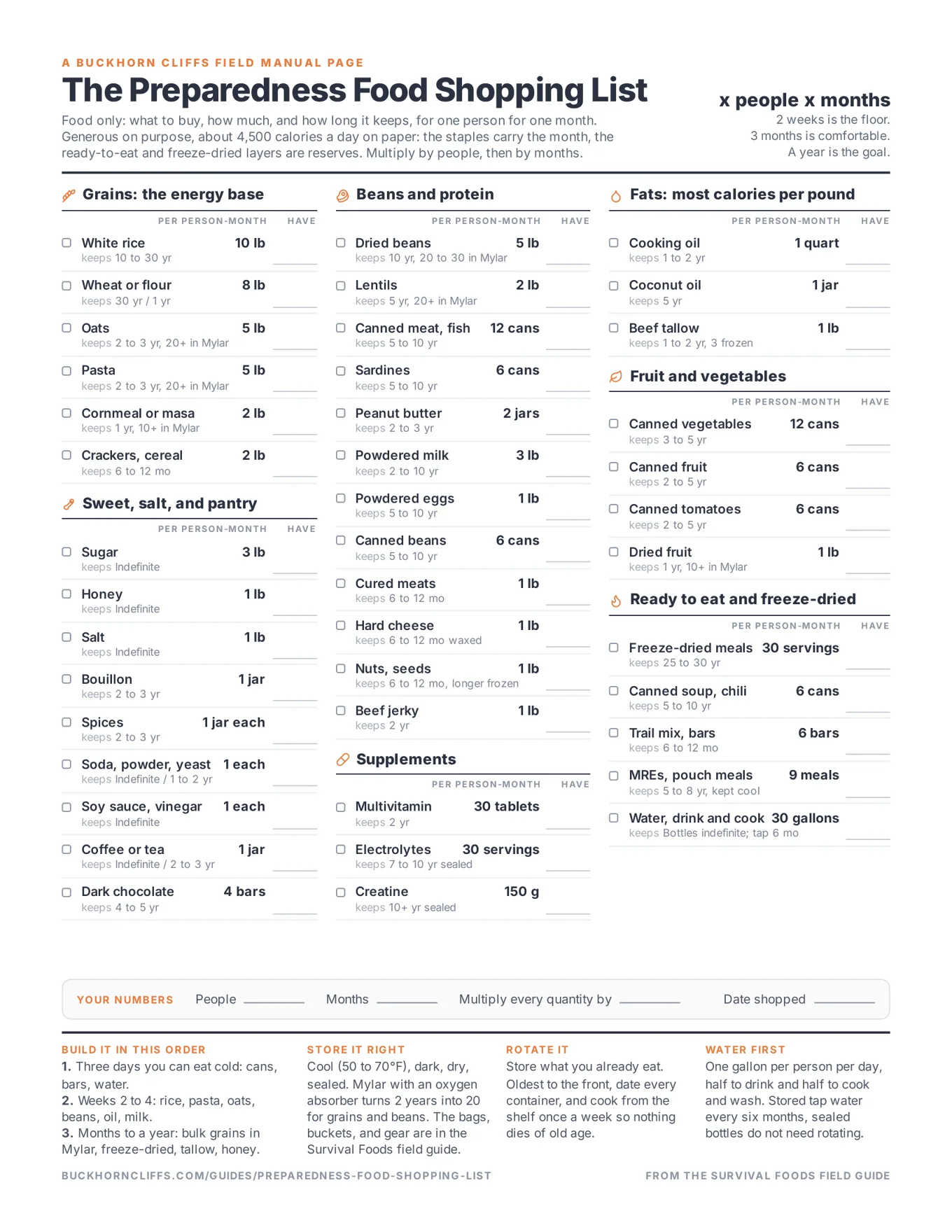
The Preparedness Food Shopping List (PDF), a one page printable PDF

Free download

Get the one-page food shopping list

What to store, how much of it for one person for one month, and how long it keeps. One page with checkboxes, built from the Survival Foods field guide. Print it, multiply by your people and months, and take it to the store.

The PDF comes by email, with my newsletter now and then. Already on the list? You still get it. Read the full page.

How to store it

Cool, dry, dark and off the floor, between 50 and 70°F if you can manage it; twenty degrees cooler, 70 down to 50°F, roughly doubles how long the contents stay at full quality. Never let cans freeze (the seams can fail) and never store them over a furnace, in a garage or in a vehicle. Rotate first in, first out, with the buy date written on the lid. A dented can is fine if the dent is small and not on a seam; a deep dent, a dent on a seam, rust that pits the metal, or any bulge means the can goes unopened.

Fruit is the first thing on the canned shelf to show its age, so it goes to the front and gets eaten first, two cans a week per person.

How to tell it has turned

Look before you open: bulging ends, a leak, rust that has eaten into the metal, or a seam dent. Listen and look as you open: spurting liquid, a hiss outward, cloudy liquid where it should be clear, foam, or a foul smell. Any of those and the whole can goes, unopened if possible, into the trash where nothing can get at it, because the thing you are guarding against is botulism, which has no taste and no cure outside a hospital. A can past its date with a sound seal and a clean smell on opening is food.

Darkened fruit and a faint metallic taste in an old can are age, not danger. A can that fizzes, smells of alcohol or has cloudy liquid has fermented and goes.

Keep it

Small dents off the seam, surface rust that wipes off, a date years past, and a can that opens quiet and smells normal. Darkened fruit and a flat taste in an old can.

Discard on sight

A bulge, a leak, a seam dent, rust that pits, spurting or foaming on opening, cloudy liquid, or a foul smell. Do not taste to decide. Fizzing, an alcohol smell, or cloudy liquid.

How much, and how to use it

Two cans a week per person keeps vitamin C in the diet with no fresh produce. The juice is sugar water: drink it, cook oatmeal in it, make a glaze, or pour it over the dry pancakes. Applesauce replaces oil and eggs in quick breads, half a cup for each. Canned peaches on hot oatmeal is a breakfast people remember from an outage.

When the power goes out

Shelf-stable and ready. In a long outage the opened can keeps less well at room temperature than a dry item, so open fruit for a meal and finish it.

Shelf-life figures are from the Survival Foods field guide; fridge, freezer and pantry times are from the USDA cold and pantry storage charts. Run the look, smell, taste check before eating anything past its date.

Questions this answers

Tap a question for the short answer.

How long does canned fruit last?

Two to five years at full quality stored cool, against a label of 1 to 2, and safe longer in a sound can with darker color. Opened and refrigerated, 5 to 7 days.

How do I store canned fruit long term?

Cool, dry and dark, dated, at the front of the shelf so it rotates faster than the vegetables and meat.

How do I tell if canned fruit has gone bad?

A bulge, seam dent, leak or rust; cloudy liquid, fizzing, or an alcohol smell on opening. Darkened fruit with a flat or faintly metallic taste is old but safe.

Keep going

Read nextCanned VegetablesHow long canned vegetables really keep, which ones to stock and why, how to store and check the cans, what to do with the liquid, and the serving math for a food store.Food · Supply

Related to this

Membership · $49.95 per year

There is a lot more behind the lock

158member pages in full
125recipes with exact amounts
11field guide PDFs, 278 pages
1manual of your own, built from any page

Every recipe and resource from the Prepper's Chemical Survival Guide, all eleven field guides to read here and download, the full audit and logbook, all twelve reference charts, and no ads.

My Manual · included

Build your own field manual

The most useful thing a membership gives you. Save any page on this site, recipes, charts, and whole field guides included. Arrange them in the order you want, name it, and print one manual with a cover and contents, or keep it as a PDF that opens with no signal.

  • It works when this site does not
  • Only your pages
  • Anyone in the house can use it
  • One current copy, not a pile of printouts
  • The house binder
  • A copy for the bug-out bag or truck
  • A copy for family
  • An offline PDF

Join for $49.95 per year

Membership

Save to My Manual is a member tool

Members build their own manual from the pages that fit their household, then print it or keep it as a PDF.

Why it matters

When the grid goes down, this site goes with it. Paper does not. Membership is how you get the whole manual off the screen and onto the shelf: every page in full, every field guide, and a binder built for your own household.

The field guide library

All eleven field guides. 278 pages. Included.

The complete Buckhorn Cliffs PDF set, yours to download, print, and keep from the day you join.

$100if bought one at a time

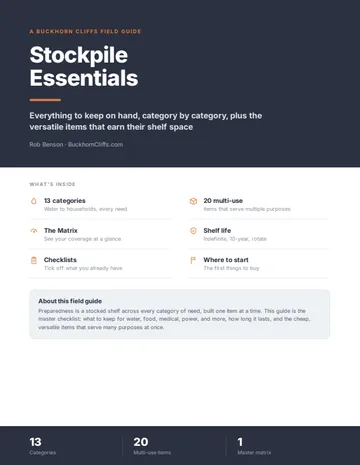
  • Cover of Stockpile Essentials Field GuideStockpile Essentials39 pagesEverything to keep on hand, category by category, plus the 20 multi-use items.
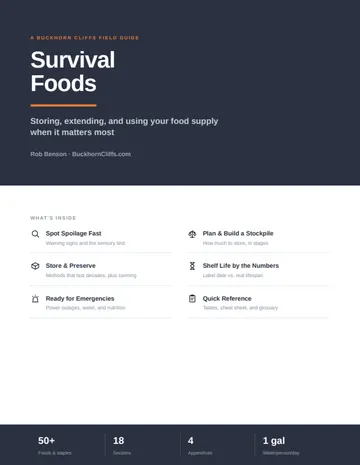
  • Cover of Survival Foods Field GuideSurvival Foods35 pagesStoring, extending, and using the food supply. Real shelf life by the numbers.
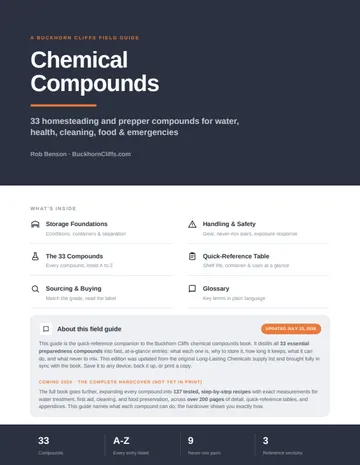
  • Cover of Chemical Compounds Field GuideChemical Compounds29 pagesThe 33 compounds: storage, top uses, hazards, and the never-mix chart.
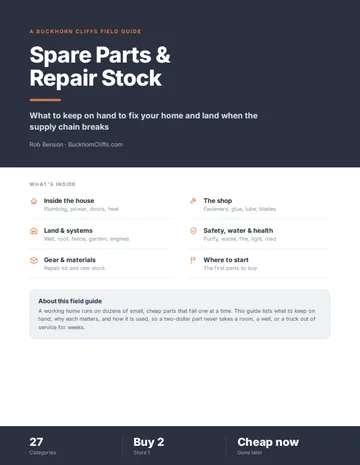
  • Cover of Spare Parts and Repair Stock Field GuideSpare Parts and Repair Stock40 pagesWhat to keep on hand to fix the home and land when the supply chain breaks.
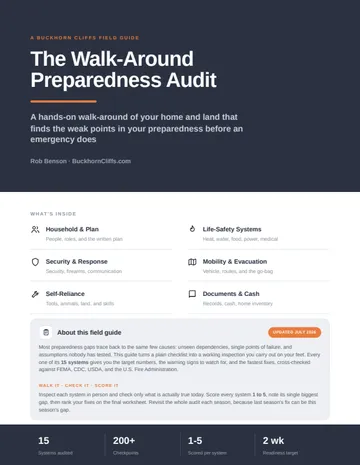
  • Cover of Walk-Around Preparedness AuditWalk-Around Preparedness Audit33 pagesFifteen systems scored 1 to 5, with the printable scorecard.
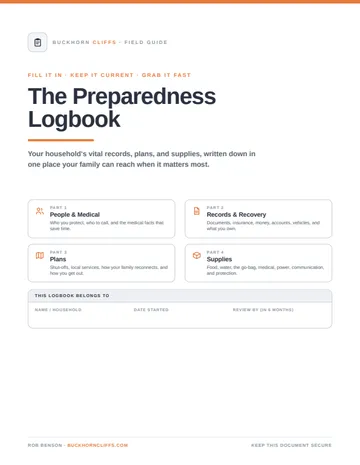
  • Cover of The Preparedness LogbookPreparedness Logbook30 pagesThe household information that needs to be on paper.
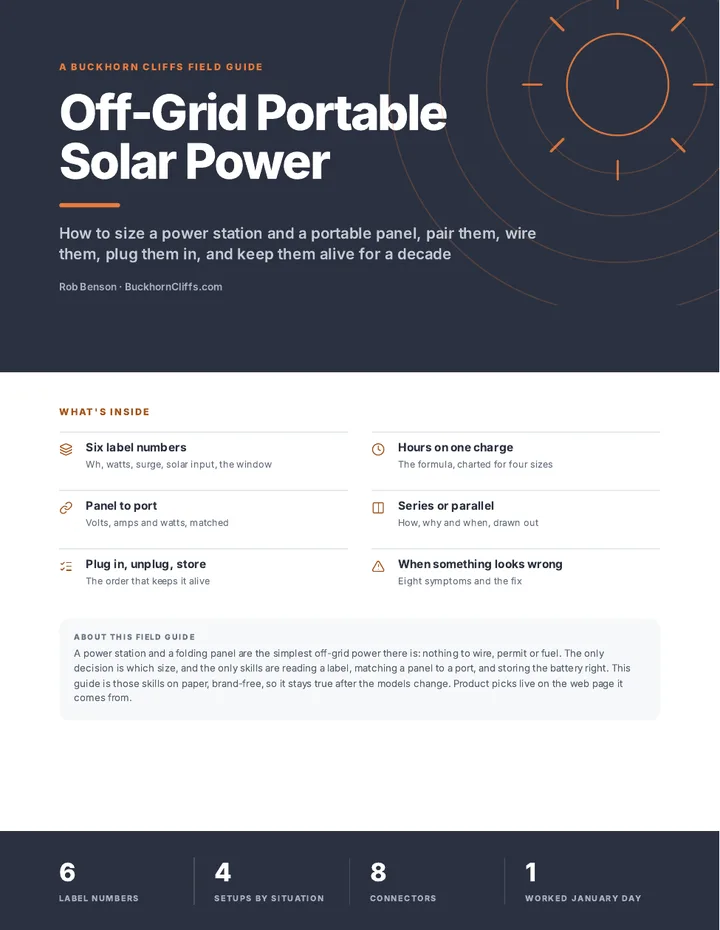
  • Cover of Off-Grid Portable Solar Power Field GuideOff-Grid Portable Solar Power16 pagesSize a power station and a folding panel, pair them, wire them, keep them alive.
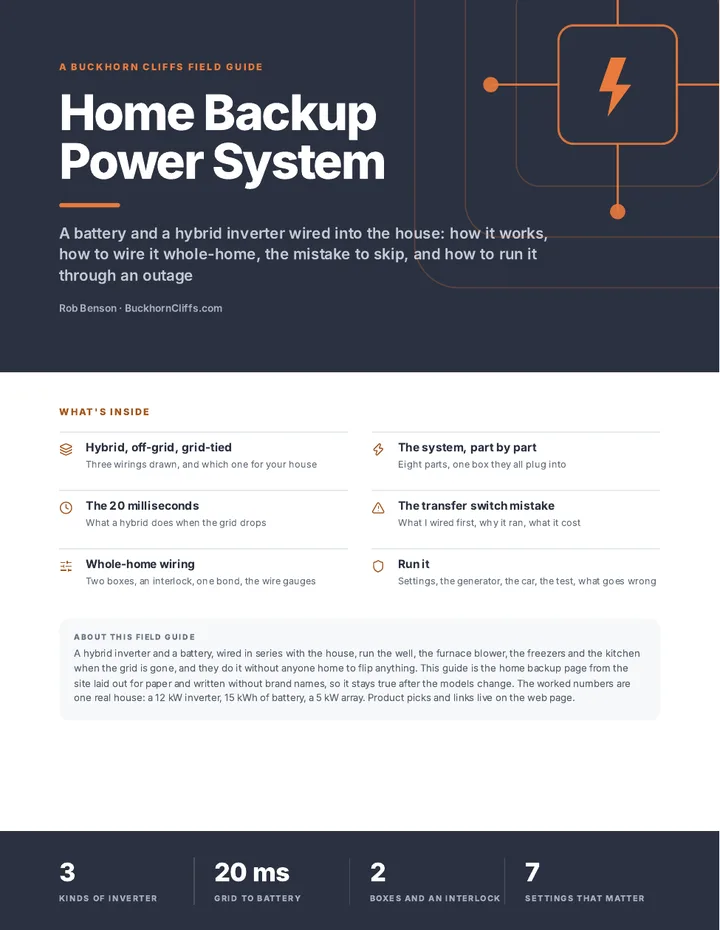
  • Cover of Home Backup Power System Field GuideHome Backup Power System20 pagesA battery and a hybrid inverter wired into the house: hybrid against off-grid, the wiring, the mistake to skip.
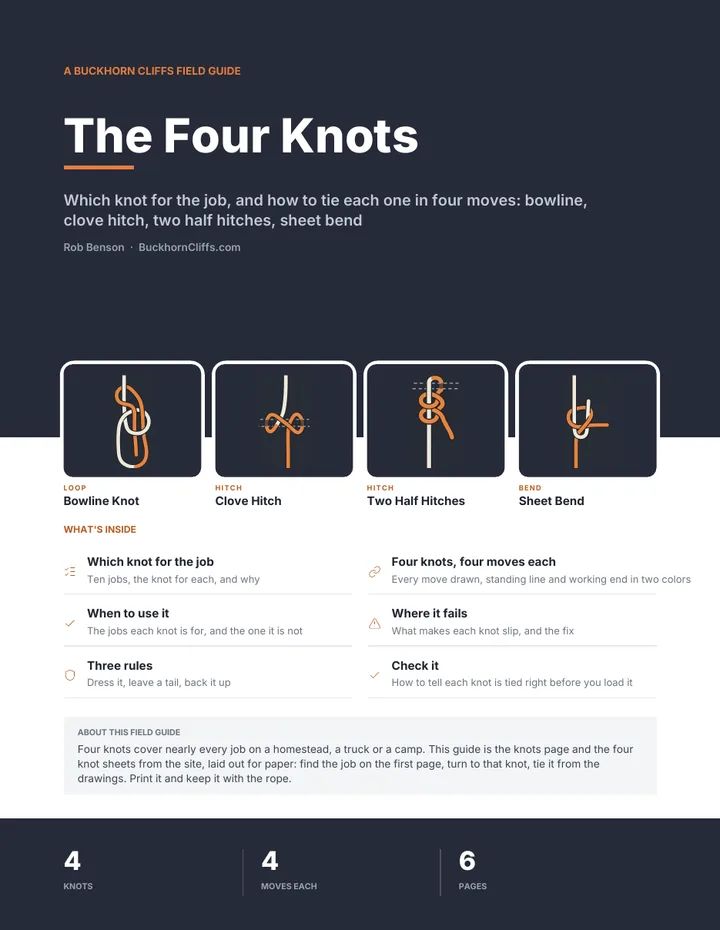
  • Cover of The Four KnotsFour Knots6 pagesWhich knot for the job, and how to tie each one in four moves.
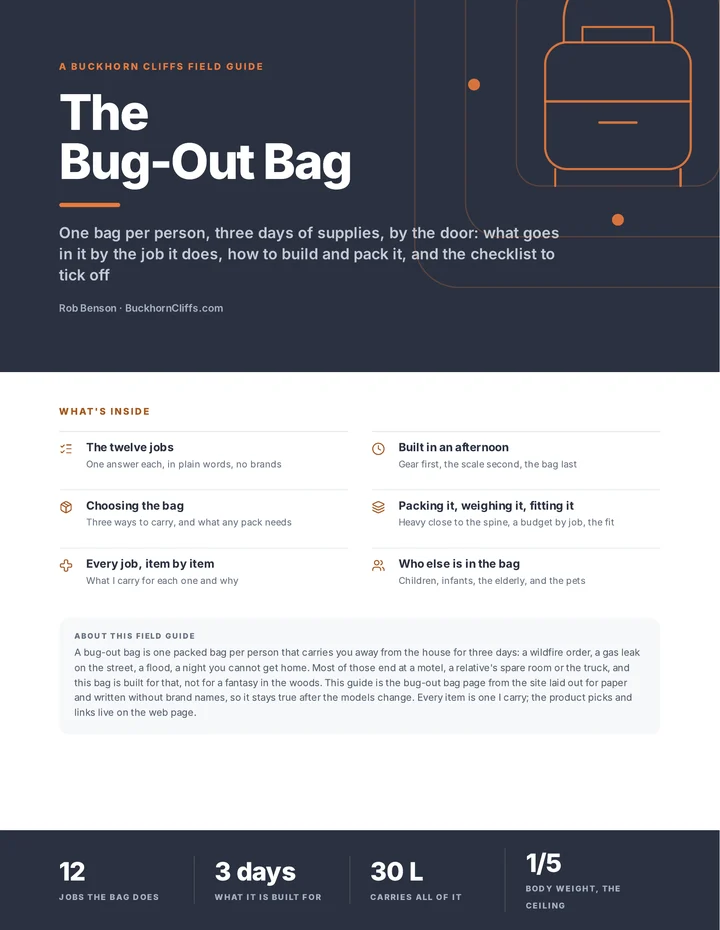
  • Cover of The Bug-Out Bag Field GuideBug-Out Bag18 pagesOne bag per person for three days: the twelve jobs, the afternoon build, the packing plan, every item by job, and the checklist.
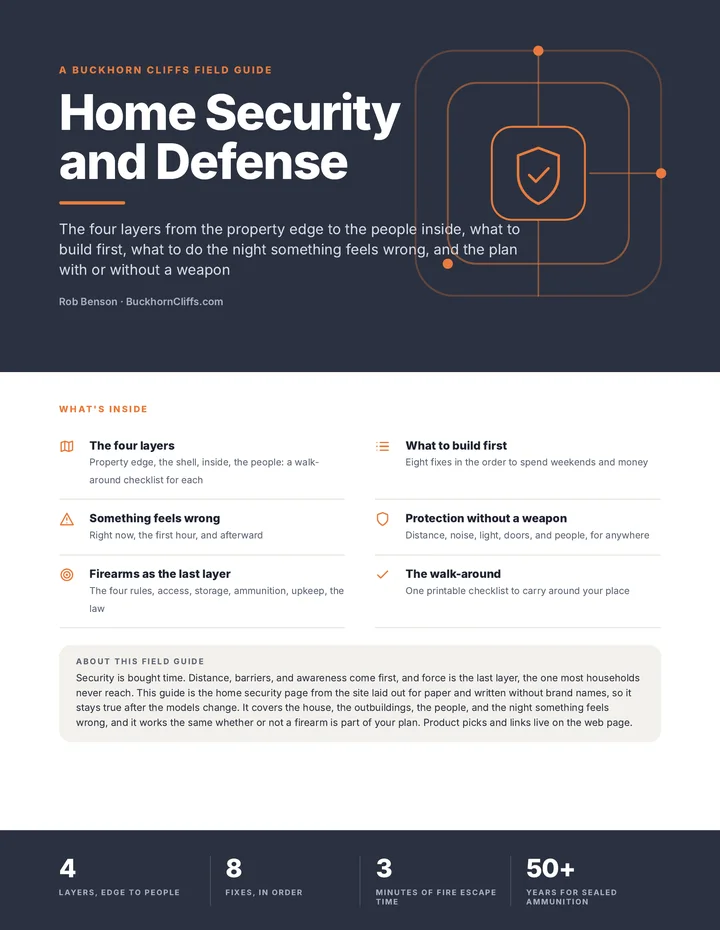
  • Cover of Home Security and Defense Field GuideHome Security and Defense12 pagesThe four layers from the property edge to the people inside, what to build first, the night something feels wrong, and the plan with or without a weapon.

My Manual · included

Build your own field manual

The most useful thing a membership gives you. No book fits your household exactly. My Manual does. Save any page on this site, recipes, charts, and whole field guides included, arrange them in the order you want, and print one manual with your name on the cover. It holds only what is relevant to you, and nothing you would skip.

Why it matters

  • It works when this site does notNo power and no signal means no website. A printed manual and an offline PDF still open, which is the whole point of writing any of this down.
  • Only your pagesThis site covers every household. Yours needs a fraction of it. Your manual holds the pages that match your water source, your climate, and your gear, so nobody digs through the rest under stress.
  • Anyone in the house can use itThe person who reads this site may not be the one home when it counts. A binder on the shelf, in the order you chose, is something a spouse or a teenager can follow.
  • One current copy, not a pile of printoutsEvery page prints in the same field guide layout with a cover and the print date. Change a page, print again, and the old copy is easy to spot.

What to build with it

  • The house binderYour water source, your climate, your gear. Only the pages you would reach for.
  • A copy for the bug-out bag or truckA short version that travels: water, first aid, comms, and the recipes you rely on.
  • A copy for familyHand a parent or a grown kid a manual built for their house and their supplies.
  • The shop and the barnParts lists, repair skills, and the never-mix chart, kept where the work happens.
  • A recipe book of your ownThe cleaners, fuels, and remedies you make, with exact amounts, in one place.
  • An offline PDFSaved to a phone, a tablet, or a drive in the Faraday bag. It opens with no signal.

How it works

  1. 1Save what fitsPress "Save to My Manual" on any page: a recipe, a chart, a guide, a parts list, or a whole field guide.
  2. 2Arrange it your wayOn My Account, drag the pages into the order you want. Name the manual and add your household name.
  3. 3Print it or save a PDFOne button makes a real PDF file, laid out for 8.5 x 11 inch paper with a cover. Print it from any device or keep the file. Field guides go in exactly as the PDFs are laid out. No ads, no photos.
  4. 4Keep it currentAdd a page, pull one out, print again. The cover carries the date, so you always know which copy is the latest.

Also included

  • The entire site, unlockedAll 158 member pages open in full: exact amounts, every step, every warning, every parts list. Nothing held back.
  • Every recipe and resource in the bookAll 138 recipes and 33 compounds from Prepper's Chemical Survival Guide, with exact amounts, every step, every warning, and the reference charts.
  • A clean PDF of any entryOne press turns any page into a field guide sheet for the binder, the truck, or the shop wall.
  • Checklists and audit scores that follow youSaved to the account, so the phone, the laptop, and the shop computer always match.
  • No adsMembers read the whole site without a single ad.
$49.95per year. About 14 cents a day. Cancel any time and keep the year you paid for.