HARD KEEPSSOFT 2 WEEKSCUT THE MOLDWorks without power
Quick facts
- Hard cheese6 to 12 months unopened, 3 to 4 weeks cut; 6 months frozen
- Soft cheese1 to 2 weeks; 6 months frozen for cooking
- Processed slices3 to 4 weeks; do not freeze
- Watch for
- Slime
- ammonia smell
- mold on anything soft
Where this sits on the food shopping list
Cheese is milk that was made to keep before there were refrigerators, and the harder and saltier it is, the truer that still is. A wheel of cheddar or parmesan is months of fat and protein; a tub of ricotta is a week. This page is the fridge kinds. The long-storage case, waxed wheels and the hard cheeses that ride out an outage, is on the hard cheese page.
Which to buy
For keeping: cheddar, parmesan, gouda, swiss, gruyere, the hard and semi-hard kinds, in a block or a wheel, not pre-shredded (shredded is coated with starch, dries out and molds faster). Vacuum-sealed blocks keep unopened for months. Soft cheeses, cream cheese, ricotta, brie, fresh mozzarella, are for eating this week. Processed slices and shelf-stable cheese spreads keep well sealed but are a different food. Powdered cheese from the long-term suppliers keeps for years and is for sauces.
How long it really lasts
By how it is kept
| Form | Label says | Real, stored well |
|---|---|---|
| Hard cheese, unopened block | Date on the pack | 6 months refrigerated |
| Hard cheese, cut | 3 to 4 weeks wrapped; longer if you cut away mold as it comes | |
| Hard cheese, frozen | 6 months; crumbly after, fine for cooking | |
| Soft cheese (brie, ricotta, cream cheese) | Date on the pack | 1 to 2 weeks opened |
| Processed slices | Date on the pack | 3 to 4 weeks; do not freeze |
| Shelf-stable cheese spread or powder | 1 to 2 years | Years sealed, cool and dry |
Free download
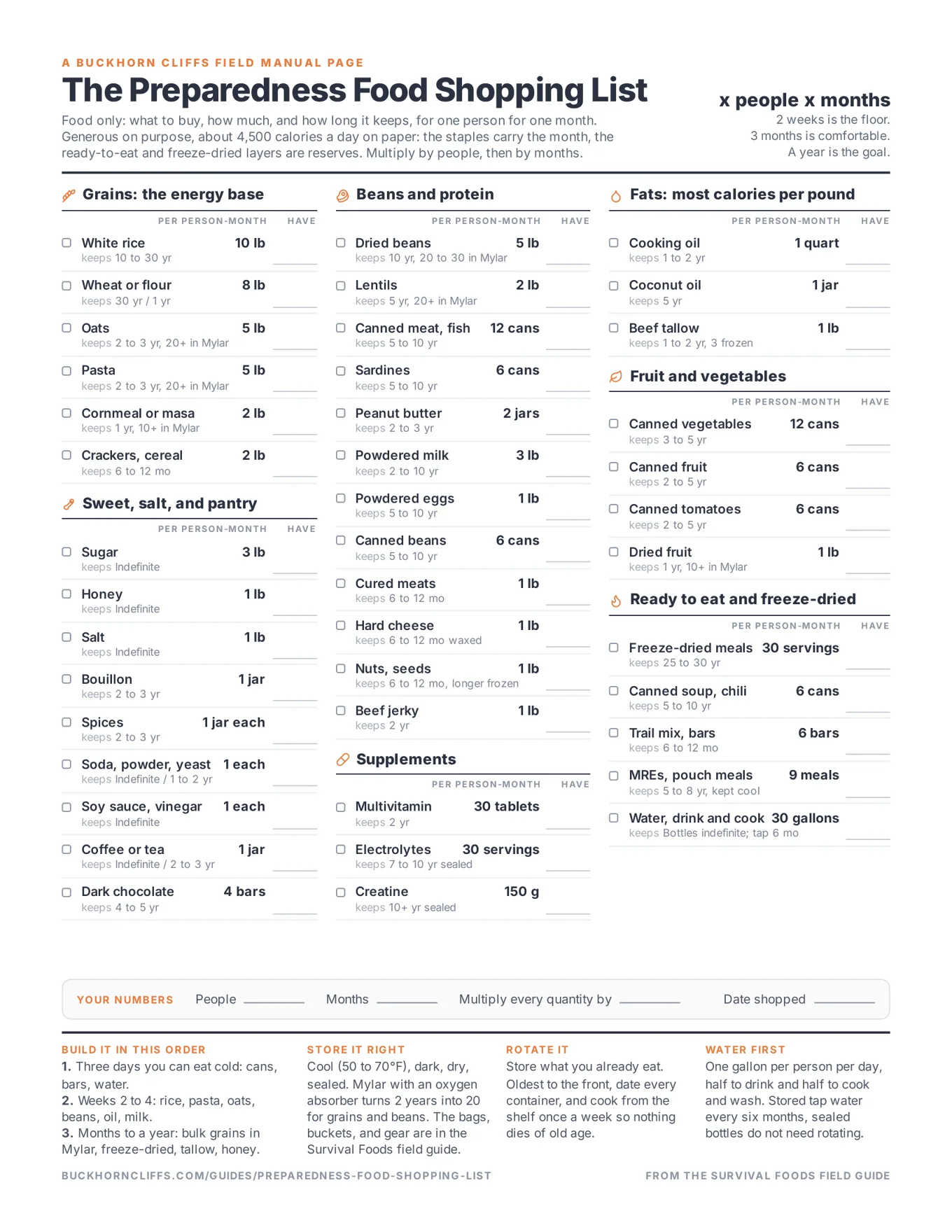
Get the one-page food shopping list
What to store, how much of it for one person for one month, and how long it keeps. One page with checkboxes, built from the Survival Foods field guide. Print it, multiply by your people and months, and take it to the store.
The PDF comes by email, with my newsletter now and then. Already on the list? You still get it. Read the full page.
How to store it
Wrap cut cheese in parchment or wax paper, then loosely in plastic or a zip bag, so it can breathe without drying; plastic alone makes it sweat and mold. The cheese drawer or the back of the fridge, not the door. Freeze hard cheese in half-pound pieces, wrapped tight; it comes back crumbly, which is fine for cooking and poor for slicing. Soft cheese freezes for cooking only. A wheel that will sit for months in a cool cellar can be dipped in cheese wax; that is the hard cheese page.
How to tell it has turned
On hard cheese, a spot of mold is surface mold: cut an inch around and below it with a knife that does not touch the mold, and the rest is fine. On soft, shredded, sliced or crumbled cheese, mold means the whole thing goes, because it spreads through the moist interior. Slime, a strong ammonia smell, or a pink or black cast on a soft cheese means it is done. Dry, cracked edges on a hard block are a texture problem, not a safety one.
A surface mold spot on a hard block, cut an inch around. Dry edges. The sharp smell of an aged cheese that was always sharp.
Mold on any soft, shredded, sliced or crumbled cheese; slime; ammonia; anything soft that sat above 40°F for more than two hours.
How much, and how to use it
Hard cheese is the protein and fat that makes beans and bread into a meal, grated over rice, melted into soup, or eaten in slices with jerky and crackers from the bag. A pound of cheddar is about 1,800 calories and 100 grams of protein. Parmesan rinds go into the soup pot. Powdered cheese and a little water or oil is a sauce for pasta from the bucket.
When the power goes out
The field guide keeps hard cheese on the safe list after an outage: a block of cheddar or parmesan that warmed for a day is still cheese, and a little oil on the surface wipes off. Soft cheese, cream cheese, ricotta, fresh mozzarella and anything shredded follow the dairy rule: two hours above 40°F and out they go. Eat the soft cheese first, let the hard cheese wait.
Shelf-life figures are from the Survival Foods field guide; fridge, freezer and pantry times are from the USDA cold and pantry storage charts. Run the look, smell, taste check before eating anything past its date.
Questions this answers
Tap a question for the short answer.
How do I tell if cheese has gone bad?
Slime, an ammonia smell, or mold on anything soft, shredded or sliced means it goes. A mold spot on a hard block is cut away an inch around and the rest is fine.
How long does cheese last?
Hard cheese 6 months unopened and 3 to 4 weeks once cut, 6 months frozen for cooking. Soft cheese 1 to 2 weeks. Processed slices 3 to 4 weeks. Shelf-stable cheese powder keeps for years.
Can you freeze cheese?
Hard cheese freezes for about 6 months and comes back crumbly, good for cooking and poor for slicing. Soft cheese freezes for cooking only; processed slices do not freeze well.
Is cheese safe after a power outage?
Hard cheeses are; a block that warmed for a day is still cheese. Soft and shredded cheeses follow the two-hour dairy rule and go.
Keep going
Related to this
Membership · $49.95 per year
Everything on this site, open, and your own manual that works with no internet
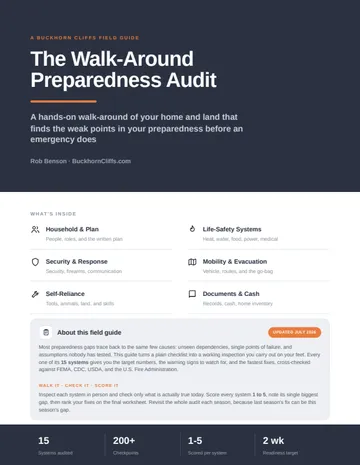
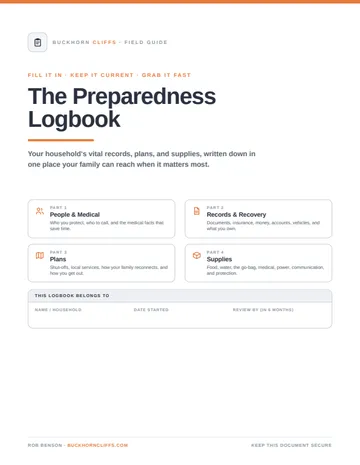
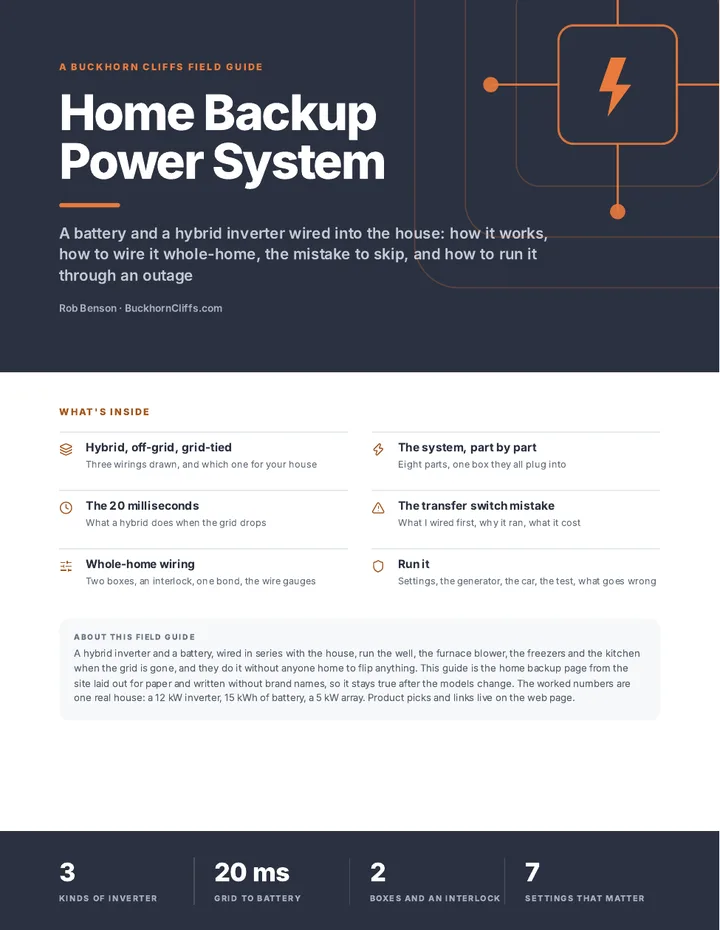
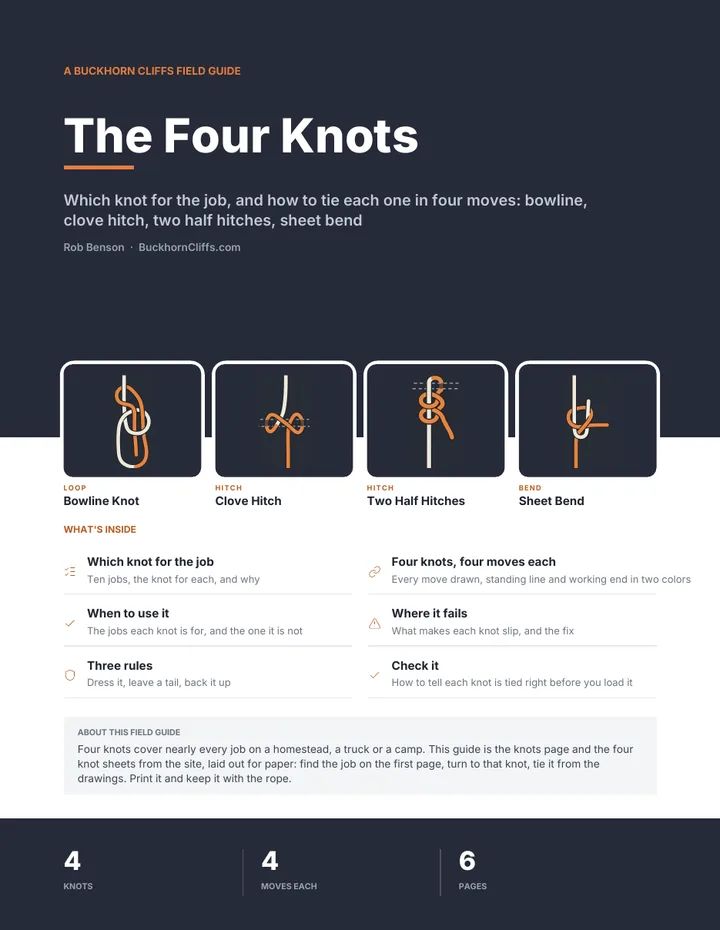
When the grid goes down, this site goes with it. Membership opens every member page and every recipe from the book, hands over all fourteen field guides as PDFs, and gives you your own manual built from the pages your household uses: searchable on your phone with no internet, and printable as one binder.
- 158member pagesopen in full, every amount and every step
- 138compound recipesfrom the hardcover book, exact amounts. Pick any and add them to your manual
- 14field guides313 pages of PDFs, $140 bought one at a time
- 9military field guidesUS Army manuals cut to 66 pages and laid out to use
- Offlineyour own manualbuilt from any page here, searchable on your phone with no internet
- Build your own manual on this site. pick any page, recipe, chart or whole field guide and put them in your order
- Download it and use it with no internet. it opens like an app on your phone or computer, searchable, with no power grid and no signal
- Print it or save it as one PDF. your cover, a contents page and every page you picked, laid out for paper
- All 138 recipes from my hardcover book. exact amounts for pool shock water purification, Lugol's iodine antiseptic, water glassing eggs, laundry powder and the rest
- All 14 field guides, 313 pages. Stockpile Essentials, Survival Foods, Bug-Out Bag, Home Canning, Solar Power and more, to read here or download
- 9 military field guides. Survival, First Aid, Mountaineering and the other US Army manuals, each cut to its most useful pages
- 158 how-to pages in full. medical, hygiene, tools and repair, garden and livestock, food, water and more
- The audit, the logbook and the checklists. all 200 audit checkpoints, saved to your account on every device
- One payment, $49.95 per year. Cancel any time and keep access to the end of the year you paid for.
- Sign in by email. No password, and the sign-in renews itself on every visit.
- Most of the site stays free. Membership is for the depth, the PDFs and your own offline manual.



Stay Ready
New entries, updates, and useful instruction.
Stay one step ahead on your preparedness journey.