2-5 YRHIGH ACIDFRONT OF SHELFWorks without power
Quick facts
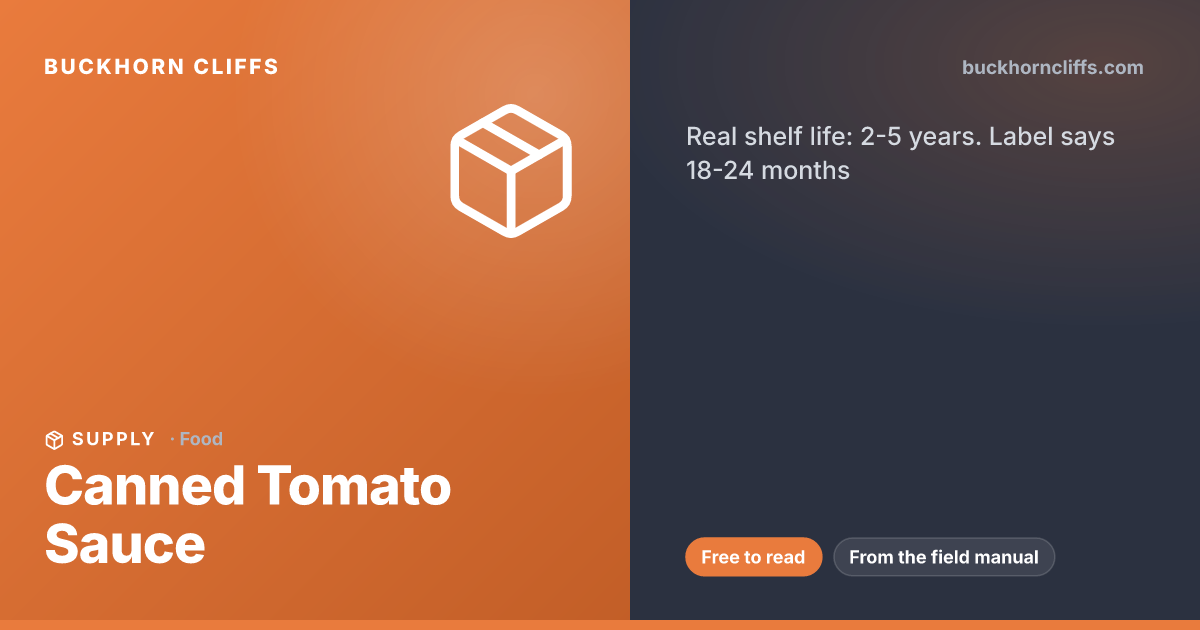
- Real shelf life2 to 5 years
- Label date says18 to 24 months
- Best storage
- Cool
- dry
- front of the shelf
- rotated fast
- Watch for
- Metallic taste
- darkened color
- a pinhole leak
- bulging
Where this sits on the food shopping list
Canned tomatoes are the flavor in half of what gets cooked from a food store: chili, pasta sauce, soup, rice, beans, stew. They are also the shortest-lived can on the shelf, because tomato acid works on the metal from the inside, which is why the label says 18 to 24 months where a can of beans says 5 years. Two to five years at full quality stored cool; safe past that in a sound can with a darker color and a flat, sometimes metallic taste.
Which to buy
Whole peeled tomatoes are the most versatile and hold texture longest; crushed and diced next; sauce and paste for cooking. Tomato paste in a can is the densest form and the one to stock most of: a tablespoon flavors a pot. Tomatoes in glass jars show no metallic taste and keep as long in the dark. Lined cans (most now are) hold up better than bare steel. Buy case lots at harvest when the price drops.
How long it really lasts
By how it is kept
| Form | Label says | Real, stored well |
|---|---|---|
| Whole, crushed, diced tomatoes | 18 to 24 months | 2 to 5 years at full quality |
| Tomato sauce and paste | 18 to 24 months | 2 to 5 years |
| Tomatoes in glass, kept dark | 18 to 24 months | 2 to 5 years with no metallic taste |
| Jarred pasta sauce | 18 months | 2 years at full quality |
| Opened, refrigerated in a covered container | 5 to 7 days; freeze paste in tablespoons |
Free download
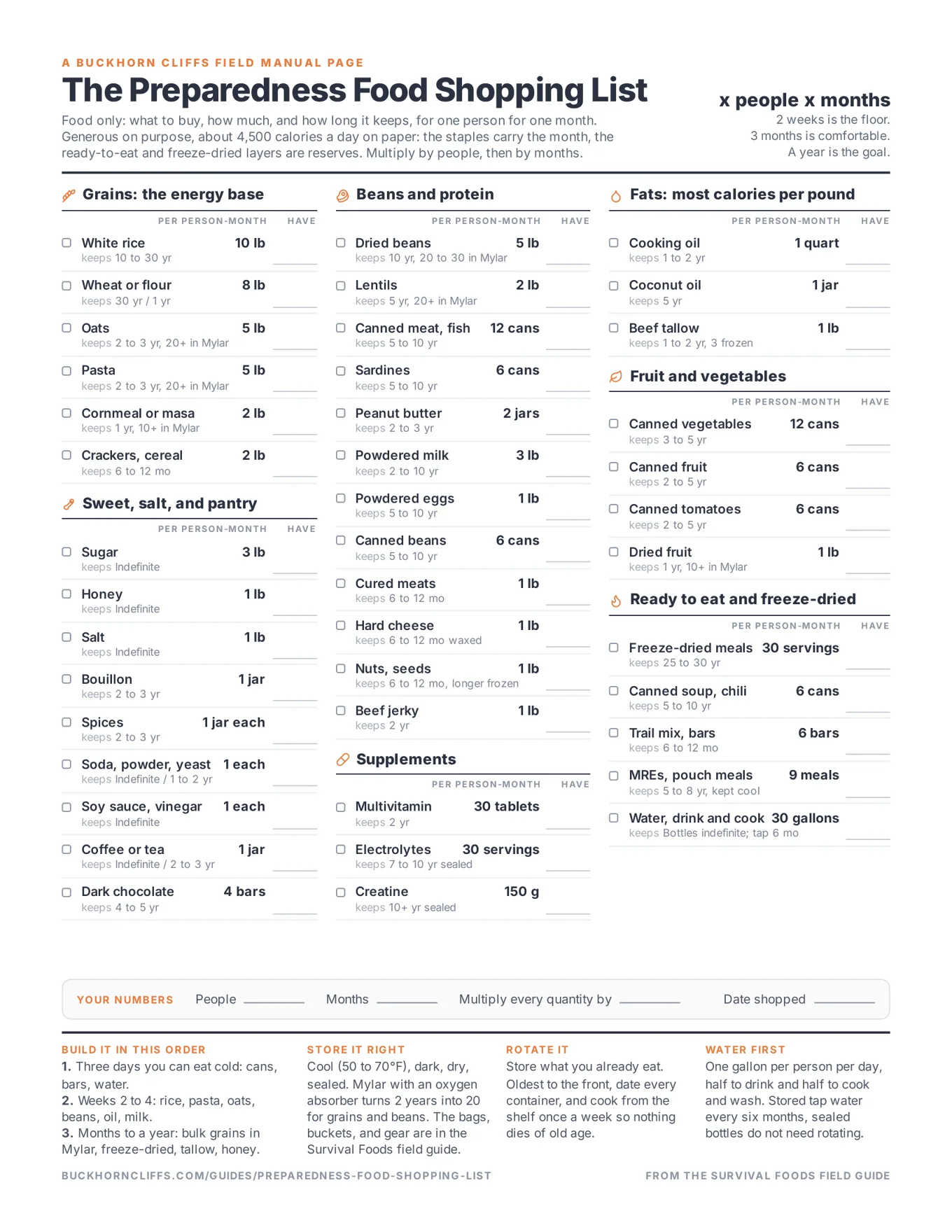
Get the one-page food shopping list
What to store, how much of it for one person for one month, and how long it keeps. One page with checkboxes, built from the Survival Foods field guide. Print it, multiply by your people and months, and take it to the store.
The PDF comes by email, with my newsletter now and then. Already on the list? You still get it. Read the full page.
How to store it
Cool, dry, dark and off the floor, between 50 and 70°F if you can manage it; twenty degrees cooler, 70 down to 50°F, roughly doubles how long the contents stay at full quality. Never let cans freeze (the seams can fail) and never store them over a furnace, in a garage or in a vehicle. Rotate first in, first out, with the buy date written on the lid. A dented can is fine if the dent is small and not on a seam; a deep dent, a dent on a seam, rust that pits the metal, or any bulge means the can goes unopened.
Tomatoes go at the front of the shelf and rotate through every few months; they are the first cans to show their age and the first to pinhole if the lining fails.
How to tell it has turned
Look before you open: bulging ends, a leak, rust that has eaten into the metal, or a seam dent. Listen and look as you open: spurting liquid, a hiss outward, cloudy liquid where it should be clear, foam, or a foul smell. Any of those and the whole can goes, unopened if possible, into the trash where nothing can get at it, because the thing you are guarding against is botulism, which has no taste and no cure outside a hospital. A can past its date with a sound seal and a clean smell on opening is food.
With tomatoes, watch the can itself: a pinhole leak at a seam or a rusty weep on the outside means the acid got through. A darkened color and a metallic taste in an old can are quality, not safety, if the can is sound.
Small dents off the seam, surface rust that wipes off, a date years past, and a can that opens quiet and smells normal. Darkened tomatoes with a flat taste in a sound can.
A bulge, a leak, a seam dent, rust that pits, spurting or foaming on opening, cloudy liquid, or a foul smell. Do not taste to decide. A pinhole leak or a rust weep on the can.
How much, and how to use it
A 28 ounce can of tomatoes, a can of beans and a can of meat is chili; a 15 ounce can and a tablespoon of paste over pasta is dinner. Tomato paste frozen in tablespoon blobs is the way to keep an opened can. Tomatoes are the vitamin C that canned vegetables mostly lack. Plan on a 28 ounce can per family meal three or four times a week, about a case a month, and rotate the oldest through the chili pot.
When the power goes out
Shelf-stable and ready; an opened can of tomatoes keeps poorly at room temperature, so open what the pot needs and finish it.
Shelf-life figures are from the Survival Foods field guide; fridge, freezer and pantry times are from the USDA cold and pantry storage charts. Run the look, smell, taste check before eating anything past its date.
Questions this answers
Tap a question for the short answer.
How long does canned tomato sauce last?
Two to five years at full quality stored cool, against a label of 18 to 24 months, and safe longer in a sound can with darker color and a flatter taste. Opened and refrigerated, 5 to 7 days.
How do I tell if canned tomato sauce has gone bad?
Inspect the can before opening it. Bulging, rusting or leaking cans are warning signs, as are a foul odor, cloudy liquid or spurting when opened. After opening, check for off-odors, discoloration and changes in texture.
Why do canned tomatoes have a metallic taste?
Tomato acid works on the can from the inside over time; a lined can slows it and glass jars avoid it. The taste is a sign of age, not spoilage, in a can that is not leaking or bulged.
How do I tell if canned tomatoes have gone bad?
A bulge, a pinhole leak or rust weep at a seam, or spurting, foam or a foul smell on opening. Dark color and a metallic taste in a sound can are age.
Keep going
Related to this
Membership · $49.95 per year
Everything on this site, open, and your own manual that works with no internet
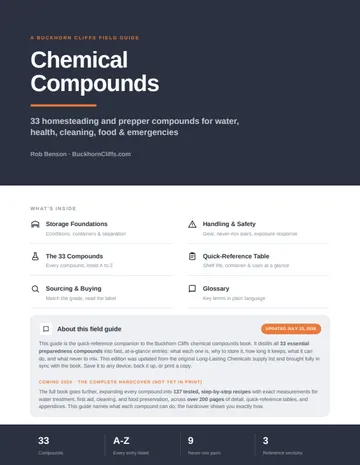
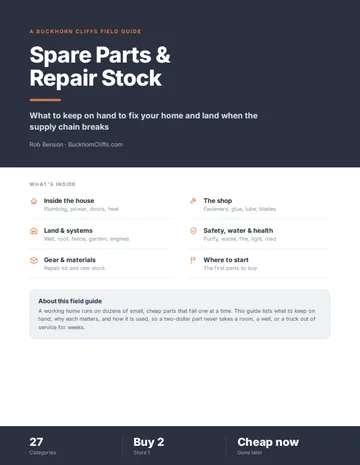
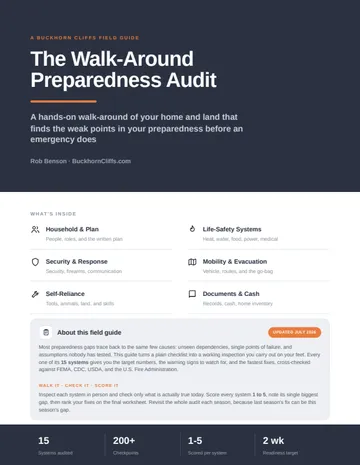
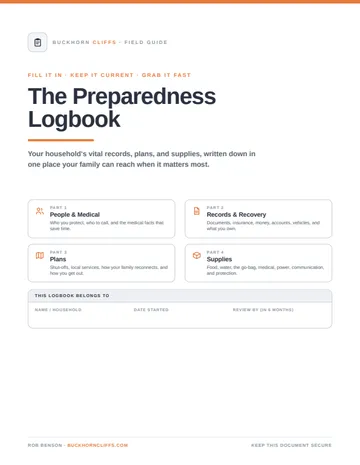
When the grid goes down, this site goes with it. Membership opens every member page and every recipe from the book, hands over all fourteen field guides as PDFs, and gives you your own manual built from the pages your household uses: searchable on your phone with no internet, and printable as one binder.
- 158member pagesopen in full, every amount and every step
- 138compound recipesfrom the hardcover book, exact amounts. Pick any and add them to your manual
- 14field guides313 pages of PDFs, $140 bought one at a time
- 9military field guidesUS Army manuals cut to 66 pages and laid out to use
- Offlineyour own manualbuilt from any page here, searchable on your phone with no internet
- Build your own manual on this site. pick any page, recipe, chart or whole field guide and put them in your order
- Download it and use it with no internet. it opens like an app on your phone or computer, searchable, with no power grid and no signal
- Print it or save it as one PDF. your cover, a contents page and every page you picked, laid out for paper
- All 138 recipes from my hardcover book. exact amounts for pool shock water purification, Lugol's iodine antiseptic, water glassing eggs, laundry powder and the rest
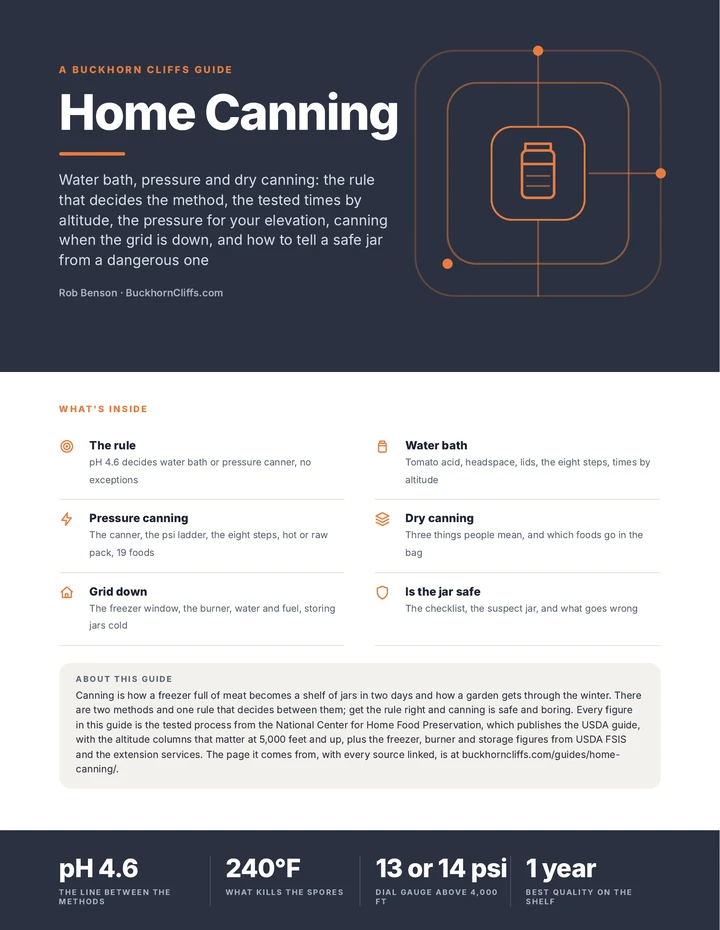
- All 14 field guides, 313 pages. Stockpile Essentials, Survival Foods, Bug-Out Bag, Home Canning, Solar Power and more, to read here or download
- 9 military field guides. Survival, First Aid, Mountaineering and the other US Army manuals, each cut to its most useful pages
- 158 how-to pages in full. medical, hygiene, tools and repair, garden and livestock, food, water and more
- The audit, the logbook and the checklists. all 200 audit checkpoints, saved to your account on every device
- One payment, $49.95 per year. Cancel any time and keep access to the end of the year you paid for.
- Sign in by email. No password, and the sign-in renews itself on every visit.
- Most of the site stays free. Membership is for the depth, the PDFs and your own offline manual.

Stay Ready
New entries, updates, and useful instruction.
Stay one step ahead on your preparedness journey.